Indianapolis NASCAR Tickets: Prices, Best Seats and Buying Guide
A source-first Indianapolis NASCAR ticket guide explaining the current 2027 application process, ticket types, price tiers, sightlines, parking and race-weekend planning.
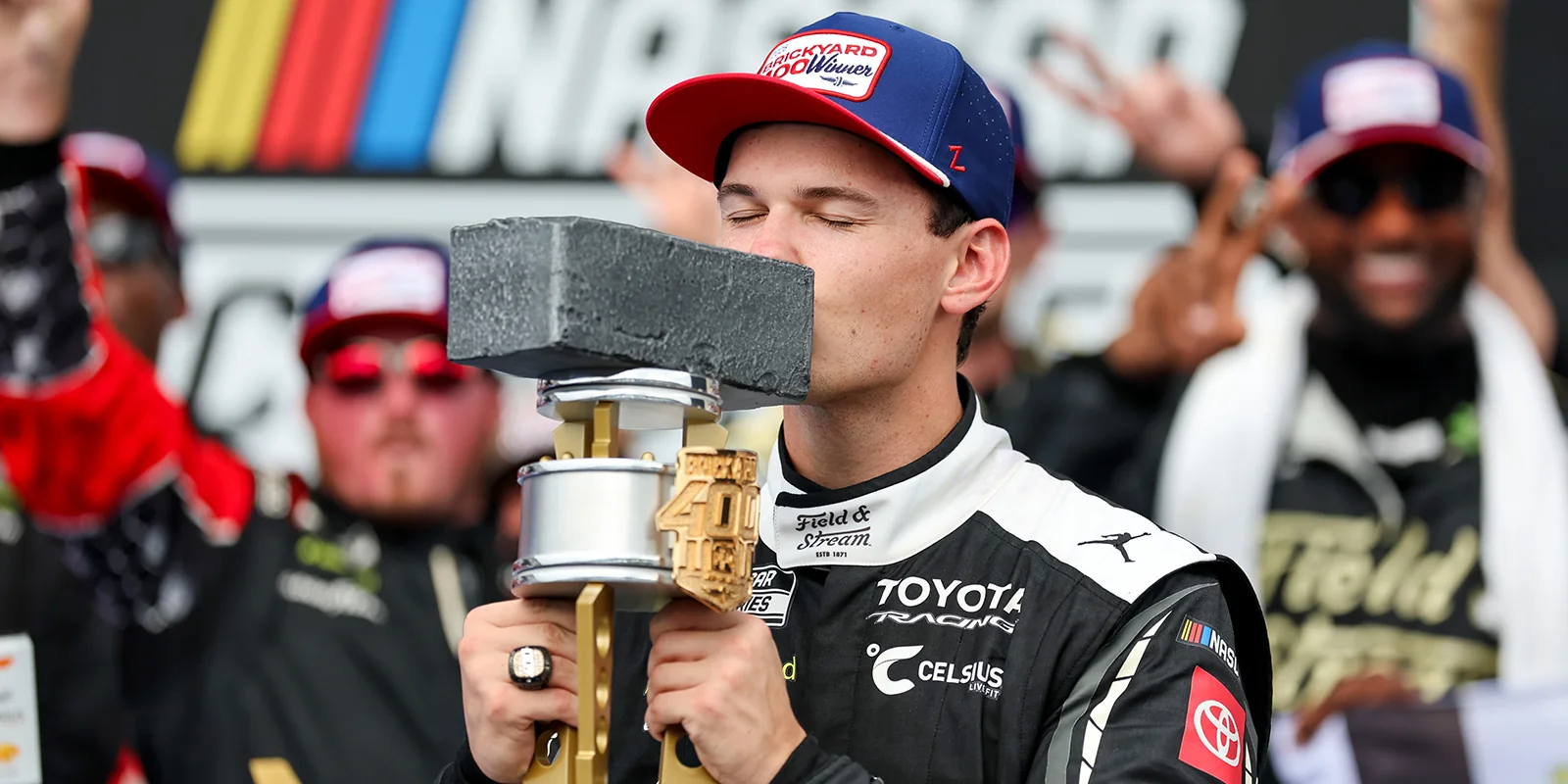
Indianapolis NASCAR tickets for the 2027 Brickyard Weekend are currently in the renewal and application stage through Indianapolis Motor Speedway. IMS lists practice for Friday, July 23, the O'Reilly Auto Parts Series Pennzoil 250 for Saturday, July 24, and the NASCAR Cup Series Brickyard 400 for Sunday, July 25. Returning 2026 customers can reorder or request changes; new buyers can apply for seats. An application is not a guaranteed assignment, so wait for confirmation before treating a specific stand or row as secured.
This guide uses the official 2026 face-value grid as dated price context because a complete 2027 public grid was not posted when checked on September 8, 2026. It explains how to choose among reserved, Flex and general admission, where different IMS grandstands place you relative to pit road and the four corners, and how parking or camping changes the real cost. Always confirm the latest price, event-day map and ticket terms with IMS before checkout.
Indianapolis NASCAR tickets: what is available now?
As of September 8, 2026, Indianapolis Motor Speedway is accepting 2027 Brickyard Weekend renewals and applications for the July 23-25 event. That is the safest starting point for Indianapolis NASCAR tickets. A renewal or application is not the same as finding an instantly assigned seat in open inventory, however. IMS describes a ticket order as an offer it may accept or reject, and the Speedway controls the eventual stand and seat assignment. Treat the confirmation you receive from IMS—not an application screen—as the point at which your race-day seat is secured.
Current buying status: returning 2026 customers can reorder or request changes for 2027; fans who did not hold 2026 tickets can file a 2027 application. IMS has not yet supplied the complete 2027 public price grid on the pages reviewed for this guide.
Returning ticketholders: reorder or request an upgrade
If you held Brickyard Weekend tickets in 2026, use the official reorder path while signed into the same IMS account. That route lets you keep the relationship attached to the prior order and request an upgrade or other change. Submit the request before the date displayed in your account or on the IMS renewal page, then read the resulting order details carefully. A request to move higher, change stands or add parking is not a promise that the inventory will exist.
Before confirming, compare the exact event day, number of seats and requested location with your group's plan. Saturday and Sunday are separate admissions, so a Sunday Cup Series renewal does not quietly become a weekend pass. Fans planning more than one NASCAR trip can also use our overview of NASCAR tickets for 2027 to track how renewals and public sales differ from venue to venue.
New buyers: submit a 2027 ticket application
Fans without 2026 tickets should use the official “Apply Now” option. Applying early places the request into the Speedway's assignment process and gives IMS a clear record of the desired event and quantity. IMS lists Friday practice for July 23, the Pennzoil 250 for Saturday, July 24, and the Cup Series Brickyard 400 for Sunday, July 25, 2027. Even with those dates published, do not tell the group that a requested row is guaranteed. Wait for IMS to communicate the assignment and charge details before treating the seats as secured.
If a form is unclear, contact the IMS Ticket Office through the contact details on the official site. That is especially worthwhile for adjacent seats, mobility needs or a large group. The central rule is simple: use the current IMS workflow, preserve every confirmation, and distinguish a submitted request from an issued ticket.
Choose the right Brickyard Weekend ticket
The right ticket depends on whether you want the Cup Series main event, a full points race at a lower entry price, or time to study cars and teams without the largest race-day crowd. Indianapolis Motor Speedway sells admissions by day and by access type. Start with the racing you want to see, then choose reserved, Flex or general admission; reversing that order is how buyers end up with a good-looking price for the wrong experience.
Friday, Saturday or Sunday?
Sunday is the Brickyard 400 choice. It delivers the NASCAR Cup Series field, pre-race ceremony, 400 miles on the 2.5-mile oval and the victory celebration at the yard of bricks. It is the day for a fan making one Indianapolis trip to see NASCAR's top series. The tradeoff is the weekend's largest crowd and greatest pressure on parking, gate queues and preferred reserved sections.
Saturday is a race day, not merely support practice. In 2026 it featured the Pennzoil 250 for the NASCAR O'Reilly Auto Parts Series, plus Cup qualifying. That combination lets a fan watch a complete points race and see Cup cars set the starting order. For someone who enjoys developing drivers, traffic in a shorter race and qualifying speed, Saturday can offer more varied on-track information per dollar than Sunday.
Friday favors observation and a lighter schedule. The 2026 program used Friday for Cup and O'Reilly practice. A practice-day ticket suits photographers, families testing how children handle the noise, and technical fans who want to compare entries, exits and long-run balance. Do not assume the exact 2026 format or a complimentary-Friday promotion will repeat in 2027. Confirm each day's sessions against the full NASCAR schedule and the IMS event page before purchase.
Reserved seats, Flex admission and general admission
A reserved ticket assigns a specific grandstand and seat. Buy it when the group must sit together, when a known pit-road or corner sightline matters, or when arriving early enough to claim a Flex area would be difficult. IMS requires a separate ticket for each of Saturday and Sunday; a Sunday reserved seat is not a two-day credential.
Flex admission admits the holder to the grounds and viewing mounds while also opening designated grandstands on a first-come, first-served basis. It rewards fans who arrive early and like moving between perspectives, but “Flex” does not mean any empty seat in the facility. General admission covers the grounds and viewing mounds rather than a designated seat. It is the simplest budget option, yet a lower angle can make it harder to follow a field spread around such a large oval.
Families should price the categories together. IMS says children 15 and under may enter with a paid adult GA or Flex holder, while every person needs a seat ticket to enter reserved seating. A family that values a fixed view may still prefer reserved seats; a family focused on cost and freedom to move may find Flex or GA considerably better.
How much do Brickyard 400 tickets cost?
Use the official 2026 grid as a planning baseline, not as a promise of 2027 pricing. For the 2026 Sunday Cup race, Indianapolis Motor Speedway listed advance general admission at $40, South Terrace at $45, Flex at $60 and many named reserved areas from roughly $60 to $105. Selected Deck and Penthouse locations opened at $170. In the final purchase window, those published amounts reached $50 for GA, $60 for South Terrace, $70 for Flex, as much as $120 in several reserved areas and $200 for the premium Deck/Penthouse tier.
| 2026 Sunday option | Early published price | Race-week published price | Best fit |
|---|---|---|---|
| General admission | $40 | $50 | Lowest face value; viewing mounds |
| South Terrace | $45 | $60 | Assigned-area value |
| Flex grandstands | $60 | $70 | Fans willing to arrive early and move |
| H, J and Vista bands | Mostly from $60 | Up to about $105-$110 | Elevated corner-oriented views |
| B, E, Paddock and Tower Terrace bands | Mostly $72-$105 | Up to $120 | Frontstretch or pit-area emphasis |
| Selected Deck/Penthouse areas | $170 | $200 | Height and premium location |
The useful lesson is not that a particular 2027 seat “will cost” one of those amounts. It is that IMS used timed tiers: buying later raised the official face value even before a reseller added fees. Compare the same section and row across sellers, and compare the checkout total rather than the first number in a search result. Our broader NASCAR ticket price guide explains common add-ons, but Indianapolis has its own stand names and purchase windows.
Build an all-in number before choosing the seat: admission for every required day, service charges, parking or camping, lodging, transportation, food, ear protection and merchandise. A pair of $60 tickets is not a $120 weekend if it requires paid parking and two hotel nights. Conversely, a higher official seat bought early can beat a supposedly cheap resale listing after fees, and free official parking may offset part of the difference. Keep a contingency for a weather-related schedule change; the IMS terms say sales and fees are non-refundable and direct buyers to the policy printed on the ticket for postponement treatment.
Best seats at Indianapolis Motor Speedway for NASCAR
There is no universal “best” Brickyard 400 seat. Indianapolis is a 2.5-mile oval with four distinct, relatively flat nine-degree corners, two long straights and two short chutes. Higher rows generally improve the amount of the lap you can read, but location determines which part of the race feels immediate. Choose pit-road detail, corner action or physical comfort first; then use the official 3D preview for the exact section and row before submitting an order.
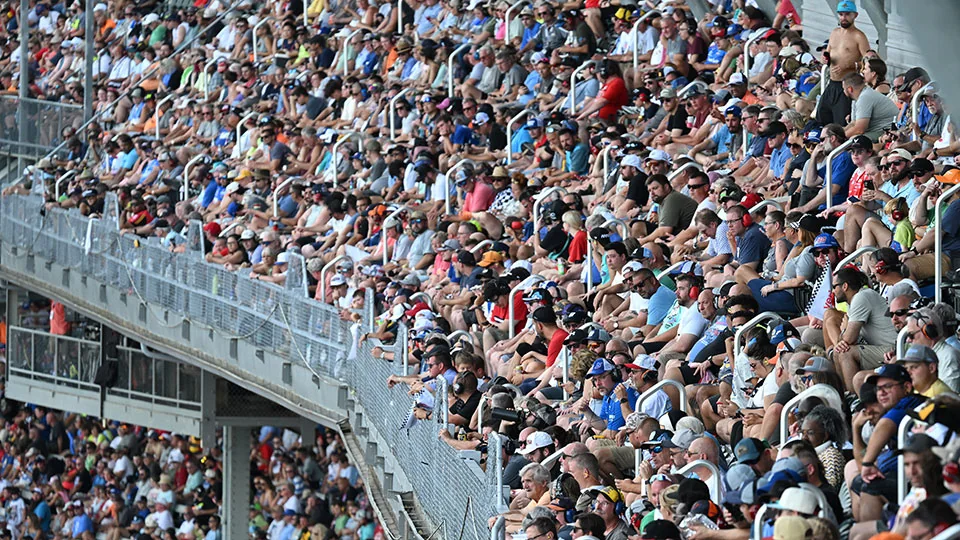
Frontstretch and pit-road views
Paddock is the clearest starting point for fans who want the ceremonial and strategic center of Sunday. The official venue guide places it across from start/finish, the Pagoda and Victory Circle. That means strong context for the green flag, stage finishes, checkered flag and the winner's post-race activity. It also puts the pit cycle into a more readable frame: you can compare cars braking for their stalls, crews executing service and drivers accelerating back toward pit exit instead of learning about the exchange only from a scoring pylon.
Stand A and Stand B also occupy the frontstretch/Turn 1 end, opposite parts of pit road and the Gasoline Alley suite area. These are attractive when restarts and pit sequencing matter most. The compromise is that a frontstretch seat prioritizes the line and pits over an intimate view of every far-side corner. If access beyond the spectator area is the real goal, do not assume a grandstand ticket includes it; compare the separate NASCAR VIP and garage-pass guide before paying for an add-on.
Turn and Vista seats for corner entry and exit
Turn-oriented seats suit fans who want to see drivers create or lose track position. Stand E and Southwest Vista sit around Turn 1, while South and Southeast Vista continue toward Turn 2. At IMS, a driver must slow a heavy Cup car for a flat corner and still protect exit speed for the following straight. A Turn 1 view highlights braking commitment after the frontstretch draft and the first chance to challenge after a restart. A Turn 2-area view emphasizes who can finish the corner cleanly and carry speed onto the backstretch.
Northwest Vista and the Turn 4 side provide the opposite storyline: cars complete the lap and launch toward the yard of bricks. That can make a final-lap run or a restart charge especially easy to understand. This is editorial seat advice, not a guarantee of overtaking frequency. The official map confirms locations; racing quality still depends on the package, tire behavior, cautions and how the field cycles through strategy.
Shade, seat backs and mobility considerations
Comfort can outweigh a theoretical sightline during a long, hot July afternoon. IMS says H, J and all Vista grandstands are uncovered and have no seat backs. Portions of Penthouse and higher Box areas are covered, while the detailed venue guide identifies covered rows and backs in parts of Paddock, A, B and E. Because coverage begins at different rows and can vary by box, verify the exact seat preview rather than purchasing from the stand name alone.
Fans who use a wheelchair or need companion seating should work directly with the IMS Ticket Office. The Speedway lists accessible positions around the facility and provides ramps or elevators where required, but quantities and companion-seat arrangements are purchase-specific. Also compare the closest suitable parking and gate at the same time. Saving money on a distant seat is poor value if the route from the lot makes the day unmanageable.
Where to buy tickets without an expensive mistake
Begin with Indianapolis Motor Speedway, even if a marketplace appears first in search. Direct inventory establishes the face-value benchmark and lets you inspect the official seating map before comparing a reseller's total. A secondary listing can be useful when IMS no longer has the section or adjacent-seat quantity you need, but scarcity should be verified rather than assumed.
Buy from IMS before comparing resale inventory
IMS sells tickets online, by telephone and in person at its ticket office. For most buyers, the official web path is easiest because the event, ticket type and account record remain together. The interactive map also reduces a common error: paying a premium for a familiar stand name without checking where the particular section sits. If a group needs accessible positions, companion seats or a block of adjacent seats, call the office instead of hoping an automated map interprets the request.
Only move to resale after checking the same day's direct inventory. A lower listing is not automatically cheaper, and a higher listing does not prove the race is nearly sold out. IMS's terms place the risk of third-party purchases on the ticket holder. Use a marketplace with a stated buyer guarantee and traceable payment method, never send an irreversible payment to a stranger, and retain the listing and order confirmation.
Verify the day, section, delivery and total price
Read the listing as if you were inspecting a pre-race setup sheet. First confirm Friday, Saturday or Sunday and the named event. Then confirm reserved versus Flex or GA, stand, section, row, seat quantity, whether seats are together, and any “obstructed” or limited-view notation. Next check whether parking, camping, pit access or hospitality is actually included. Those are separate products unless the package explicitly says otherwise.
- Compare the final checkout total, including every service and delivery charge.
- Require delivery through the supported digital-transfer process, not a screenshot of a barcode.
- Make sure the transfer is accepted into the recipient's IMS account before race morning.
- Save the ticket to Apple Wallet or Google Pay for offline access after it appears in the account.
- Check the postponement language printed on the ticket and the seller's separate guarantee.
IMS says a transferred ticket downloaded in the sender's wallet becomes invalid after the recipient accepts the transfer. That is exactly why account ownership matters more than an image sent in a message. Resolve delivery problems before traveling, and have the account holder's identification and order record available if the ticket office must help.
Parking, camping and lodging belong in the ticket budget
A Brickyard ticket answers where you watch; it does not answer how you reach that seat. IMS is a vast property, and the cheapest parking option may create the longest walk or put the car on the wrong side of a race-day traffic pattern. Price parking, camping or hotel nights at the same time as admission, then choose the combination that protects the experience your seat was meant to provide.
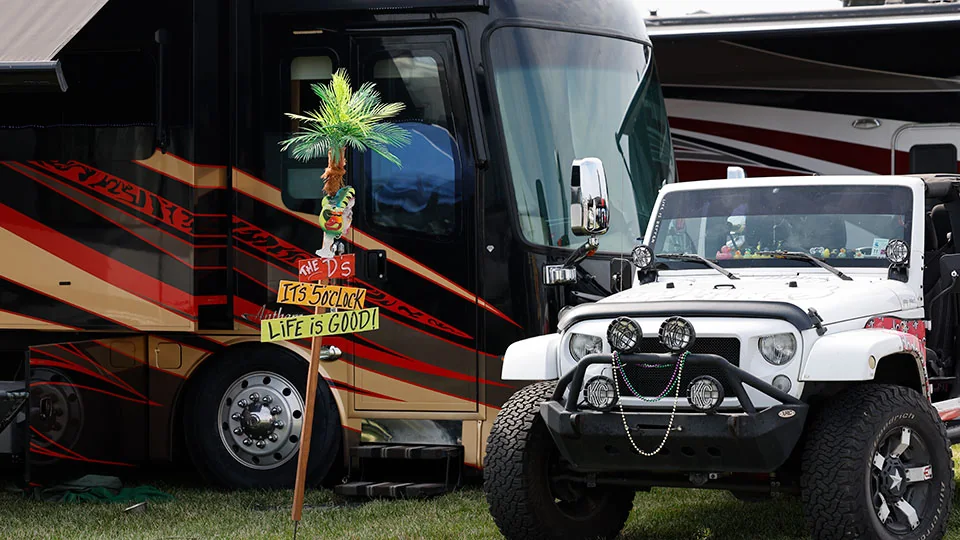
Match the parking lot, gate and arrival time
For the 2026 Sunday race, IMS offered free parking in Lot 7, the North 40, with entry from 30th Street through Gate 10. Paid choices included outside lots such as 1B, 2 and 3G. That is useful historical context, but do not print the old map and assume it is the 2027 plan. Road work, closures, open gates and available lots can change by day. Download the current map after it is published and follow its designated approach route.
Now connect the lot to the seat. A Turn 1/frontstretch buyer approaching from the southwest may value a paid option near the appropriate gate more than a free northern lot, especially with children or limited walking tolerance. A Turn 3 or Turn 4 fan may make the opposite calculation. Prepay when the desired lot requires it, save the parking credential offline, and arrive early enough to clear vehicle traffic, the pedestrian gate and the walk inside. “Gates open” is not a sensible target arrival time when the green flag matters.
Decide between camping near the track and a hotel
Camping is best viewed as a separate race-weekend product. In 2026, IMS listed RV and pull-behind camping across several exterior lots and the Turn 4 Infield, with tent camping in a smaller group of outside lots. Selected areas offered 30- or 50-amp service for an added charge, while Turn 4 Infield RV sites included 50-amp hookup. Each area had its own load-in window and access route. Verify site dimensions, vehicle allowance, electrical service, wristbands and departure deadline before paying.
The advantage is obvious for a multi-day fan: no daily commute, an established base for gear, and the social rhythm of a NASCAR campground. The costs are less obvious. Add the campsite, fuel, equipment, generator or power option, food storage and the value of arriving during the specified load-in period. Read the generator and carbon-monoxide safety guidance as operating rules, not fine print.
A hotel fits fans who prioritize air conditioning, a bed and separation from the late-night campground. Compare Speedway-area rooms with downtown Indianapolis, but do not judge by nightly rate alone. Include parking at the hotel, the race-day ride or vehicle pass, and the risk that a rideshare pickup after the race may require a long walk outside the traffic-controlled zone. Reserve cancellable lodging when possible, while remembering that the event ticket itself may have much stricter terms.
First-timer checklist for Brickyard Weekend
The best first trip begins the night before, not in the security line. Recheck the IMS schedule, open-gate map, weather and traffic notice; assign every digital ticket to the phone that will present it; and set a group meeting point. Indianapolis is a 2.5-mile facility occupying roughly 253 acres, so walking time and separation are real planning issues rather than minor inconveniences.
Children, coolers and grandstand comfort
Bring hearing protection for everyone. Cup cars at speed are not a sound children should simply “get used to,” and adults who want to follow scanner or radio audio also benefit from isolating headsets. Pack sunscreen, a hat, water and walking shoes appropriate for stairs and uneven ground. For an uncovered Vista or an unshaded viewing mound, heat management can determine whether the family stays through the final pit cycle.
IMS currently permits hard- or soft-sided coolers no larger than 18 by 15 by 15 inches, along with food and beverages in non-glass containers. It also lists binoculars, scanners and headsets as permitted. Regulations can change for a specific event, so measure the cooler and reopen the official list before departure. Do not bring glass and expect security to hold it; prohibited items can be refused without a storage service.
Under the current family policy, children 15 and under can enter with a paid adult GA or Flex holder, subject to the stated ticket conditions, but reserved grandstands require every person to have a reserved-seat ticket. Collapsible strollers and wagons are useful for the long walk, yet they cannot occupy a grandstand aisle or seat; IMS directs guests to secure them underneath or outside the stand. A seat cushion is a smart addition for an uncovered bench.
Digital tickets and accessible arrangements
Log into the IMS account before leaving reliable service, confirm each event-day barcode, and add the tickets to Apple Wallet or Google Pay for offline access. Send each person their ticket through the official transfer workflow, wait until it is accepted, and avoid relying on screenshots. Charge the phone, carry a small permitted battery pack, turn screen brightness up at the gate and keep the order confirmation accessible.
Arrange wheelchair-accessible seating, companion seats and ADA parking directly with the IMS Ticket Office well before race week. The official material lists accessible seating across multiple parts of the facility and assistance routes, but inventory and companion quantities are purchase-specific. Ask which parking area, gate, ramp or elevator serves the assigned position and whether any post-race service restrictions affect the return trip.
Finally, build a weather fallback. Tickets can carry specific postponement terms, travel products may carry different cancellation rules, and a delayed race can cross into the next day. Keep medication, hydration and the minimum essential gear with the group. If attending becomes impossible, the NASCAR TV schedule is the correct place to recheck the broadcast plan rather than trusting the time printed in an old search result.
About the author
NASCAR Schedule Editorial Team
The NASCAR Schedule editorial team turns verified schedules, timing and scoring, official announcements and race-weekend context into direct answers for fans.
View all articles by this author →Join the discussion
Comments
Sign in with Google to comment. Keep it race-focused; new comments are reviewed before publication.
Loading comments…