Martinsville Tire Strategy for 2026: Familiar Goodyears, 750 HP and What to Watch
Martinsville returns with an established tire combination and the 2026 Cup horsepower package. Learn the correct tire inventory and how grip, pit timing and traffic interact.
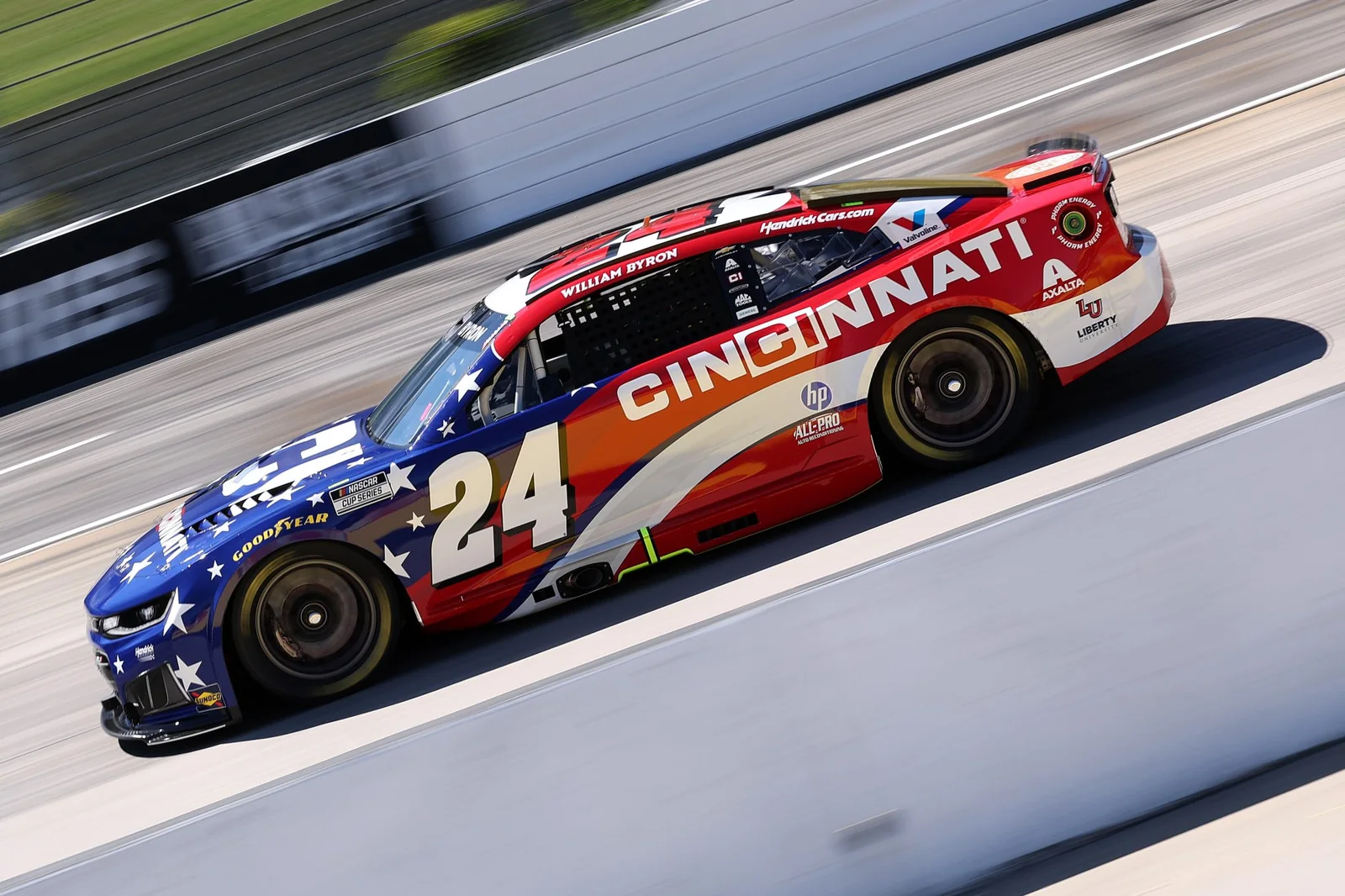
Martinsville’s November 1, 2026 Cup race uses a familiar Goodyear tire combination, rather than a newly introduced tire for this weekend. The left-side design arrived at the track last October, and the right-side tire dates to fall 2024. The 750-horsepower Cup package is part of the 2026 season’s rules, also established before this race week.
As of October 29, the useful strategy question is how teams turn that known equipment into forward drive, sustainable pace and track position. A familiar tire does not guarantee a familiar result. Nor does the published twelve-set Cup allotment mean twelve fresh race sets. This guide separates the equipment and inventory from the decisions fans can follow through the Martinsville weekend, without predicting a tire-wear rate before the event has happened.
Which Goodyear tires are coming to Martinsville?
Goodyear’s October 27 notes list D-5262 for the Cup left-side tires and D-5256 for the right sides. The combination is established equipment at Martinsville. It gives teams a relevant notebook for preparation, while leaving them to determine how their car responds in this weekend’s conditions.
| Cup tire | Code | Martinsville context |
|---|---|---|
| Left side | D-5262 | Introduced in October 2025 to increase fall-off |
| Right side | D-5256 | Used here since fall 2024 |
The established left-side and right-side combination
The same pairing has appeared at North Wilkesboro, Richmond and New Hampshire this season, as well as the spring Martinsville race. There is a narrower reference point from Phoenix: the right-side tire was used there two weeks ago. That does not mean the complete Martinsville left-and-right combination was used at Phoenix, and it should not be presented that way.
The left-side design’s purpose is to produce more fall-off than its predecessor. Fall-off means the loss of performance as a tire run develops; it is not a promise that every car will slow by the same amount on the same lap. The important viewing question is whether one team preserves usable grip better than another, and whether that difference creates an opportunity to pass.
Familiar tires do not mean identical race conditions
Martinsville combines tight concrete corners with long asphalt straightaways. That layout makes the transition from turning the car to accelerating it especially visible. A driver who can point the car cleanly off the corner may begin gaining before a following driver has finished correcting or waiting to apply power. Fresh rubber is only one part of achieving that behavior.
The tire code is a useful control in the comparison, but it does not eliminate setup choices, traffic or changing track conditions. If two cars use the same specification and one fades more quickly, the code alone cannot identify the cause. Look at how they enter the corner, whether they can hold their intended line and how their acceleration changes through the run.
That is why an established tire can still produce a substantial strategy contest. Teams know what has worked before, but they must decide what remains useful now. The race strategy guide explains the general trade-offs; this weekend’s evidence will show which teams turn the familiar equipment into a car that stays competitive for the required distance.
How 750 horsepower changes the tire-management question
The Cup horsepower increase was announced in October 2025 for the 2026 season. Martinsville is among the tracks using the 750-horsepower configuration, an increase from the previous 670 baseline. It is relevant context for this race, but calling it a new rule introduced for the November weekend would misrepresent the timeline.
NASCAR’s announcement presented the additional power as a way to place more emphasis on throttle control and tire management. That is an intended competitive effect. It does not mean adding eighty horsepower automatically creates a fixed amount of extra wear or guarantees that every race will have more passing.
Corner-exit traction matters more than the headline number
The practical issue is how much of the available power a driver can use while the car is still turning. If the rear tires cannot accept the demand, pressing the accelerator harder does not necessarily translate into useful acceleration. A driver may have to wait, make a correction or apply power more progressively. Those small differences repeat on every lap of a run.
There is a balance to watch between gaining position early and retaining grip later. A car that accelerates strongly at the restart might gain valuable places before the field settles down. A rival that gives up a little early pace may become relatively stronger if it preserves its tires. Neither approach wins automatically: the remaining distance, traffic and the likelihood of an interruption influence which advantage is useful.
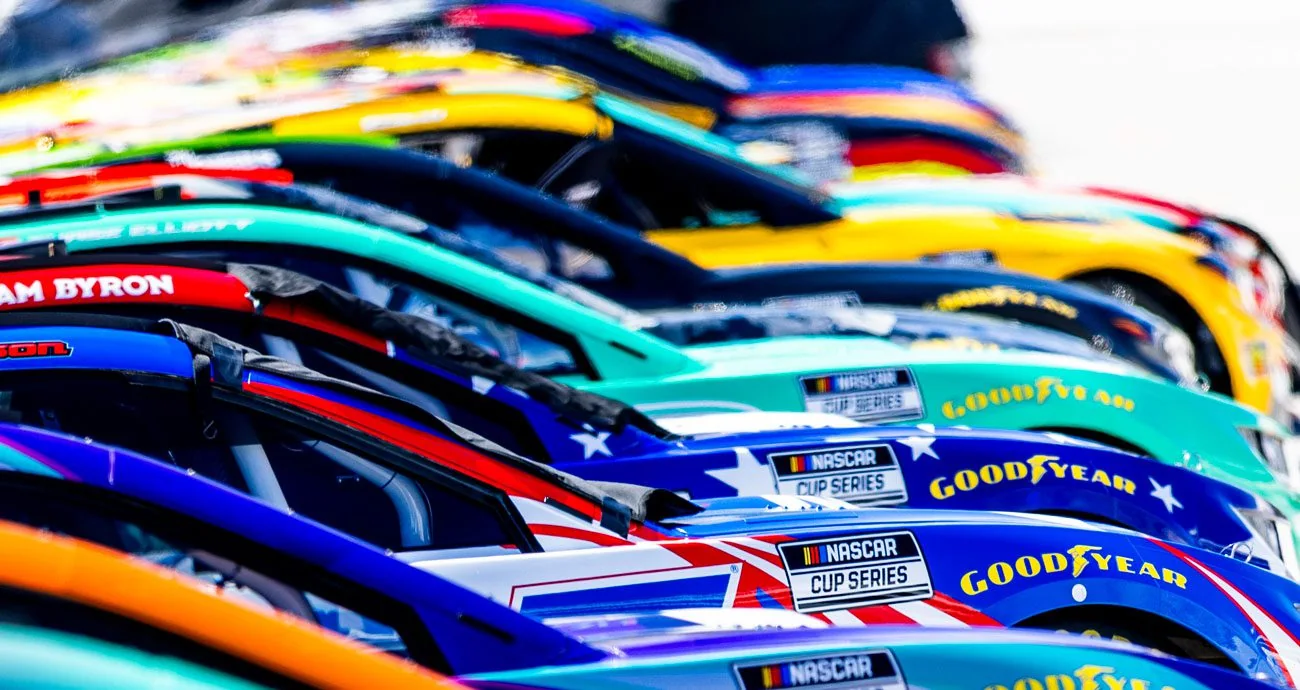
Primary interviews from the spring weekend illustrate the nuance. William Byron’s crew chief Rudy Fugle discussed giving his driver the cornering response he needed without sacrificing other parts of the corner. Ryan Preece’s crew chief Derrick Finley emphasized forward drive and the value of gaining positions early. Finley also cautioned against assuming the power change would transform everything, because drivers were already managing throttle application.
Those comments offer a useful way to read November’s racing. Watch whether a driver gains on entry but loses that advantage when accelerating away. Then compare the same pair after several more laps. A single quick lap cannot show whether the balance is sustainable, and a visible slide cannot by itself reveal whether the problem is the tire specification, the setup or the way the car was driven.
Keep the comparison within Cup, too. The horsepower figure explains this Cup package; it should not be copied into a description of the O’Reilly or Truck race simply because all three series share the venue. Their equipment and race situations need their own context.
How many tire sets does each series receive?
The dry-weather allotment is twelve sets for Cup, five for the O’Reilly Auto Parts Series and four for the Craftsman Truck Series. Those are weekend totals with different uses assigned. The current Goodyear notes and NASCAR’s summary separate practice, qualifying carryover and new race tires as follows.
| Series | Practice | Qualifying set transferred to race | New race sets | Total dry sets |
|---|---|---|---|---|
| Cup | 2 | 1 | 9 | 12 |
| O’Reilly | 1 | 1 | 3 | 5 |
| Trucks | 1 | 1 | 2 | 4 |
Separate new race sets from qualifying carryover
The carryover set is included in the race inventory, but it is not another unused set in the new-race column. For Cup, nine new sets plus the qualifying carryover make ten sets assigned to the race side of the weekend. The two practice sets explain the difference between that figure and the headline total of twelve.
The same reading gives O’Reilly three new race sets plus one qualifying carryover, and Trucks two plus one. That distinction matters when a broadcast discusses a team’s remaining fresh tires. Count the supply the team has actually used, rather than subtracting stops from the weekend total and assuming every remaining set is untouched.
An allotment is not a forecast of the number of pit stops. A team might make a stop for another reason, while choosing whether a tire change is worth the position and the inventory it consumes. The count tells you the resources available for decisions. It does not tell you when every decision must occur or how many cautions will create an attractive opportunity.
Wet-weather tires are a different inventory
Wet-weather tires are listed separately: four sets per Cup team and three per team in each of the other two series. They are not extra fresh dry sets to add to the table. Their availability also does not promise that a race can proceed in every weather condition; the actual race-control decisions still matter.
The support series need separate equipment context as well. Goodyear lists D-6118 left sides and D-6120 right sides for both O’Reilly and Trucks, rather than the Cup pairing. The Truck notes identify first use in that series during 2026. That phrase should not be expanded into a claim that Goodyear invented a new tire design for this weekend.
Use the O’Reilly results and Truck results to follow their own races. A successful tire decision on Friday can provide an interesting question for the rest of the weekend, but it does not prove that the same timing will work with a different car, inventory and race distance on Sunday.
Why fresh tires do not settle every pit decision
The correct question is whether a tire change creates enough usable speed to recover what the team gives up. That includes time on pit road, the positions surrendered and the traffic faced afterward. A faster pit stop helps execution, but it cannot remove the larger strategic cost of leaving the racing surface at the wrong moment.
Compare grip with the cost of giving up track position
Consider a hypothetical choice between staying near the front on older tires and restarting deeper in the field on fresh tires. The fresh tires may offer more grip, but the driver must convert that advantage into passes before it fades or another caution interrupts. Remaining ahead may provide control of the pace, yet it also exposes the driver to rivals with a tire advantage. The stronger choice depends on the circumstances, rather than a universal rule that new tires always win.
Watch the quality of the passing opportunity as well as the apparent speed difference. Catching a car is different from completing a pass around it. If the faster driver has to spend several laps finding a route through, the time available to use the fresh tires against the next car is reduced. Traffic can therefore change the value of a stop without changing the tire itself.
The spring race supplies a dated illustration. Chase Elliott short-pitted on Lap 261 and ultimately took the lead for good after a restart with 68 laps remaining. Denny Hamlin had led 292 of the 400 laps, but Elliott won. The lesson is that strategy and the position created for the decisive run can overcome an afternoon’s earlier pattern; it is not that copying Lap 261 is a November winning formula.
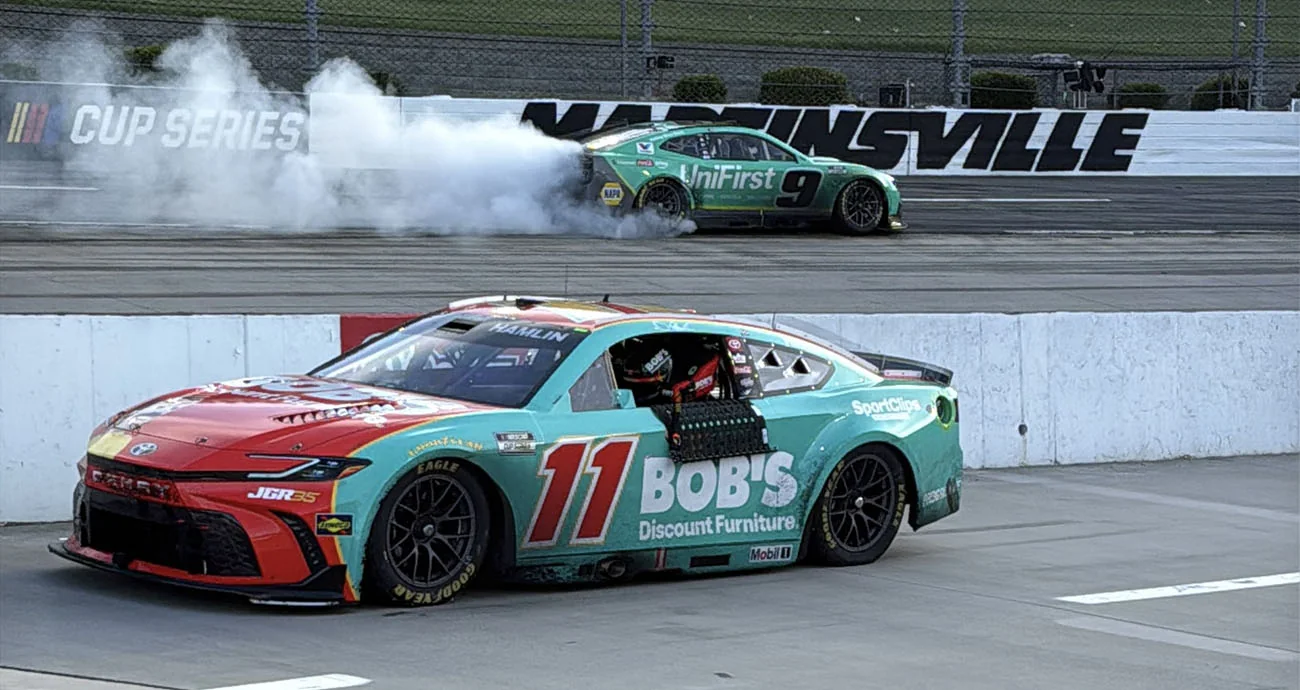
Caution timing can change the value of a stop
A green-flag stop initially puts the pitting car at a disadvantage until the other cars make their stops. If a caution arrives before that cycle develops as expected, the team can be left in a much worse situation. Hendrick Motorsports vice chairman Jeff Gordon highlighted this risk in the team’s October 25 discussion of Martinsville preparation. The threat is the timing of the interruption, rather than a fixed penalty applied to every stop.
That makes the length of the next green-flag run central to evaluating the call. A long run can provide time to recover the stop’s cost through better lap times. A short run can preserve the advantage of cars that stayed out. Use the Cup race results to confirm what happened, but judge the decision with the information available when the team made it, rather than assuming the crew chief knew the next caution was coming.
What fans should watch before and during the Xfinity 500
The clearest sign of a useful tire strategy is sustained competitive pace that the driver can convert into position. November practice and the race will provide that evidence. The equipment announcement tells fans what to look for, while the weekend itself must establish who has the best balance and whether a particular approach works.
Read the long run, the traffic and the remaining tire supply
When practice data becomes available, compare cars over similar parts of their runs. A driver on nearly new tires and another well into a stint are answering different questions. Building Speed’s analysis of the spring Martinsville session examined how lap times changed through a run, rather than relying only on the fastest single lap. That method is useful again, without treating March’s order as November’s forecast.
Also ask what the driver was doing during those laps. Traffic can interrupt an otherwise steady sequence, and a car preparing for qualifying may have a different immediate objective from one completing a race-oriented run. A flat lap-time trend is encouraging only if the underlying pace is competitive. Preserving tires while running too slowly would not, by itself, demonstrate a winning strategy.
- Corner exit: Watch whether the car accelerates cleanly or needs repeated corrections as the run develops.
- Relative pace: Follow whether a driver closes on the same opponent over several laps, rather than reacting to one unusually quick lap.
- Traffic: Note whether the driver can complete passes and escape the queue, turning speed into usable track position.
- Tire supply: Track the new sets remaining and the condition of the set currently on the car before judging the next pit call.
Race length belongs in the comparison too. The scheduled Cup Xfinity 500 covers 500 laps, while the spring Cup event was 400. A longer event does not guarantee a longer uninterrupted run, because cautions can divide the distance differently. It does give the teams a different total task from the one they completed in March, so the earlier race should inform preparation rather than dictate every decision.
The TV and streaming schedule carries current coverage information. As of October 29, there is no November race outcome to assess. The worthwhile questions are already clear: who retains forward drive, who can use a tire advantage in traffic, and who spends the available sets at moments when the gain is likely to repay the cost?
About the author
NASCAR Schedule Editorial Team
The NASCAR Schedule editorial team turns verified schedules, timing and scoring, official announcements and race-weekend context into direct answers for fans.
View all articles by this author →Join the discussion
Comments
Sign in with Google to comment. Keep it race-focused; new comments are reviewed before publication.
Loading comments…