NASCAR Race Strategy Explained: Tires, Fuel, Pit Stops and Track Position
Understand the choices behind NASCAR pit calls, from tire crossover and fuel windows to stage points, caution risk and the value of clean air.
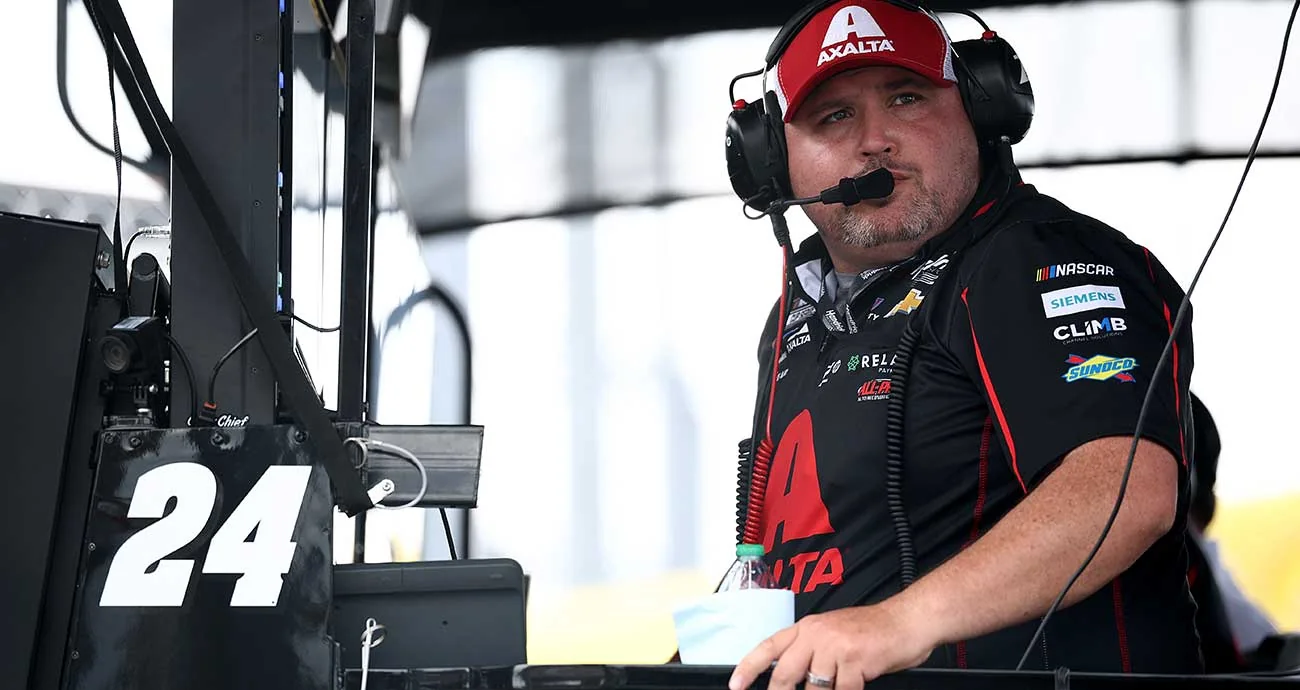
NASCAR race strategy balances track position, tire grip and fuel over the distance that still matters. The quickest single lap does not always produce the quickest race, and the shortest pit stop does not always leave the strongest car. A useful call spends one resource to gain another while keeping enough flexibility for cautions and restarts.
This guide focuses on contemporary Cup Series decisions and the 2026 points context. Follow the sequence from race objective to tires, pit timing and fuel, then use the final checklist to assess a call with the information available before the outcome was known.
NASCAR strategy starts with the race the team needs
The best strategy depends on the team's objective and the car's actual situation. A contender with strong long-run pace needs a path to use that advantage. A car struggling in traffic may need a different sequence to reach clean air. A driver seeking reliable points can value an available stage score differently from a driver with a realistic chance to win. There is no single pit call that maximizes every reward for every car.
Before the race, the team combines its understanding of tire behavior, fuel use, pit-road time and expected pace into several possible plans. Once racing begins, those estimates meet real traffic, changing grip and uncertain cautions. A useful plan identifies what would make the team change course. It cannot predict the exact lap of every yellow flag, and a call made under uncertainty should not be judged as if it could.
Track position changes what the same car can do
Track position is more than a place on a scoring list. A car near the front can have better access to undisturbed airflow, a clearer choice of line and fewer rivals to pass. In traffic, the same setup can encounter aerodynamic imbalance and spend tire grip trying to recover positions. A short stop that moves a car forward may therefore change its subsequent pace without the team making a major mechanical adjustment.
Position also changes the value of risk. If a driver is already buried, copying the leaders' stop can preserve that disadvantage. An alternative may provide a route forward even when it introduces more uncertainty. A leader has something valuable to lose and may prefer to keep its rivals on a comparable sequence. Two teammates can make different calls without either crew misunderstanding the race.
Venue is part of the calculation. A position gained where passing is difficult can be harder for a rival to reverse than a similar gain where fresh tires create a large speed advantage. A drafting partner can matter at a superspeedway, while braking, traction and pit loss reshape the problem on a road course. Use the race schedule to establish the track before comparing calls from different weekends. The common principle is to improve the whole remaining race, not merely the next lap.
When two tires, four tires or staying out makes sense
Four fresh tires usually offer a different grip and balance package from replacing only two. A two-tire call can shorten service and gain immediate position; staying out avoids the stop entirely. Each option spends a different resource. The question is how much useful racing remains before the next reset, and whether the car can survive that interval competitively on the tires it retains.
Read the tire falloff and the likely length of the next run
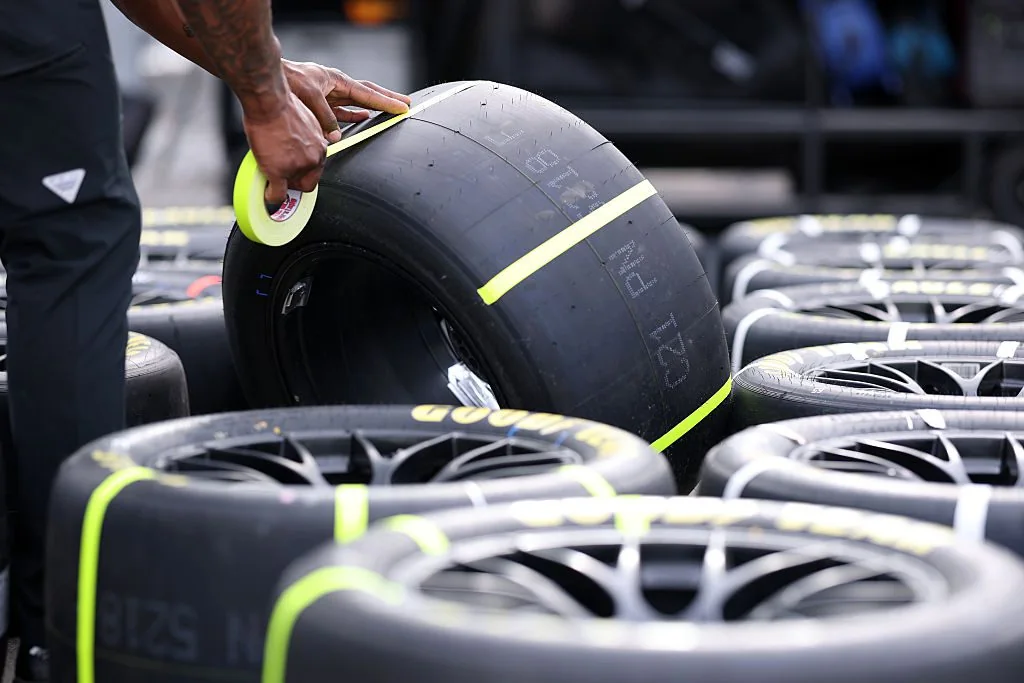
Tire falloff is the loss of pace through a run. High falloff makes fresh rubber more valuable because its speed advantage can recover time lost in the pits. Low falloff increases the attraction of position. Physical wear still needs attention separately: an apparently competitive lap time does not guarantee that a heavily used tire has enough material remaining for the planned distance.
Teams must use the evidence from this race. Goodyear's public discussion after the unusual Bristol tire behavior in March 2024 emphasized how differently the same tire specification could perform across visits. The sensible spectator takeaway is to follow current lap times, balance reports and tire inspections. A track's reputation is background information, not a substitute for the conditions unfolding now.
A simple crossover calculation shows the trade
Consider a deliberately simplified hypothetical: a four-tire stop costs four seconds more than a two-tire stop, but the four-tire car then gains four-tenths of a second per green-flag lap. With equal fuel, clear track and constant pace differences, it needs ten green laps to erase that initial cost:
4.0 seconds divided by 0.4 seconds per lap equals 10 green laps. At five laps, the fresher car has recovered only two seconds. At twenty, it has gained eight, leaving a net four-second advantage over the initial service cost. These are teaching assumptions, not stop times or tire measurements from a real NASCAR race.
The actual crossover is a changing curve. Passing traffic can consume the tire advantage. Fresh tires may alter balance; the two-tire car can defend the preferred line; another caution can arrive before recovery is complete. Under a caution, positions gained through different service choices also cannot be translated perfectly into a clean-track time gap. The calculation identifies what matters without pretending to settle every call.
Refueling adds a further check. Tire and fuel work overlap, so taking two tires is useful for stationary time only if it shortens the job that keeps the car stopped. If the car must wait for fuel anyway, four tires may cost less extra time than the tire-change comparison suggests. Count what the crew leaves on the car, what it needs to add, and how long the next run is likely to last.
Pit timing works only if you understand the whole cycle
A car can lead during a pit cycle without having gained the strongest position. If it has not stopped while its rivals have, part of that lead is a service bill still waiting to be paid. Compare the order after cars have received comparable service, and ask what each car has left for the next run. A timing screen taken halfway through the exchange can tell a very different story from the completed cycle.
Short-pitting means stopping before the car needs to for fuel, usually to use fresh tires sooner or create a different sequence. The driver can bank time while rivals continue on older rubber. That advantage must cover the trip through pit road, service, the blend back into traffic and any time spent passing slower cars. Meanwhile, those early tires will be older when the later-stopping rival returns. The best entry lap depends on the whole run, rather than the fastest first lap after the stop.
A caution can change who has paid for service
Green-flag stops spread the field because the race continues at speed while a car receives service. A caution arriving before the remaining leaders stop can interrupt that exchange. It may compress a gap the early stopper hoped to recover, or leave cars with different lap status and different amounts of service completed. That is why broadcasters track who has already pitted, who still needs fuel and where each car sits relative to the leader.
The exact scoring is more precise than the phrase "caught by a caution" suggests. NASCAR's freeze-the-field procedures use timing lines for track order, while pit-lane traffic remains active under its speed limit; pit-road start-finish and exit lines matter to lap status. A driver cannot simply speed to erase the problem. For the broader procedures, use the NASCAR rules guide. Race control instructions matter too: under NASCAR's September 2026 wet-weather update, caution stops are noncompetitive when pit road is declared damp, so a quick crew cannot turn that particular service into positions in the usual way.
Waiting also carries risk. The team might surrender too much pace, use its last safe fuel margin or rejoin behind difficult traffic. An early stop is therefore a trade between a potential tire advantage and exposure to a disrupted cycle. A yellow that hurts the call does not establish that the decision was unreasonable when the car entered pit road.
Fuel windows decide what a fast lap is worth
A fuel window is the estimated distance a car can cover with the fuel available under the assumed conditions. It changes with consumption, rather than operating as a fixed lap number printed on the tank. Teams model fuel use from driving data and communicate targets to the driver. A television estimate that a car is "two laps short" therefore describes a calculation at that moment, not a dashboard countdown immune to a change in pace.
Saving can have two different payoffs: reaching the finish without another stop, or needing a shorter fill at the next one. Modern Cup tire service can finish before the desired amount of fuel is delivered. Leaving then protects immediate position, but sends the driver into the next run with less reserve. Adding fuel protects later options while potentially costing places now. NASCAR's August 2025 interviews with drivers and engineers explain why teams repeatedly make that compromise rather than automatically filling the tank.
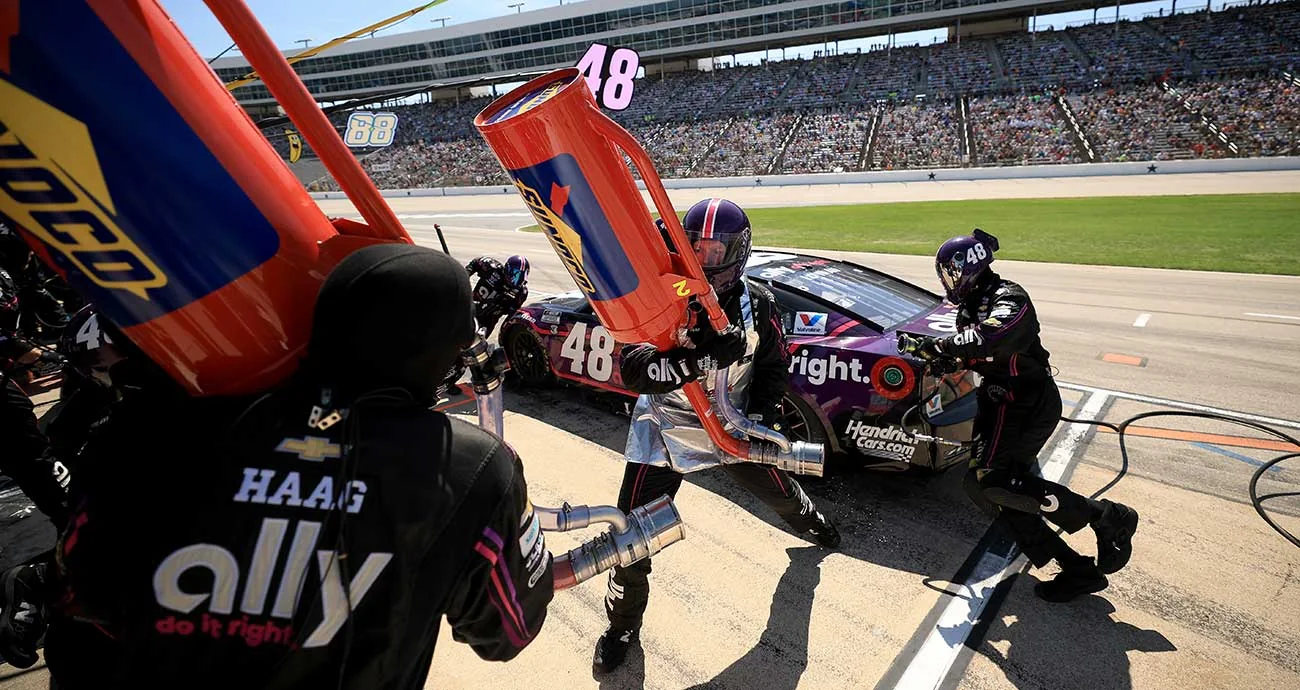
The useful comparison is total time to the objective. If conserving costs a small amount each lap but removes a whole pit-road trip, accepting slower laps may be quicker overall. If the saved fuel only trims a little service time while the driver loses several positions, the same instruction may offer poor value. Ask which stop or how much service the saving is meant to avoid. Without that answer, the throttle trace alone cannot tell you whether the team is protecting a winning option or simply surrendering speed.
Context can change that balance quickly. A caution changes the remaining race and fuel demand; a restart asks the driver to accelerate and defend; another overtime attempt adds distance beyond the scheduled finish. A margin allows the crew chief to respond instead of committing to the narrowest possible route. It also has a price if rivals use less time in the stall. There is no universally correct reserve that covers every race.
Race structure influences the incentive too. In April 2026, NASCAR announced changes to the spring Talladega stage lengths to address superspeedway conservation. That specific intervention illustrates why a fuel plan belongs to an event's actual distances and procedures. Carrying a successful plan from another race straight into the next weekend can miss the very condition that made it work.
Stages and late restarts can change the best objective
Ten laps remaining in a stage and ten laps remaining in the race create different incentives. At the stage line, a team may secure points but still have a long race in which to recover position. At the finish, there is no later run to repair a costly stop. Before judging a crew chief's call, identify which scoring opportunity the team is approaching and how much competitive distance remains afterward.
Stage points and race position are separate rewards
For Cup in 2026, the top ten at a points-paying stage finish receive ten through one points. Those are earned at that scoring moment. A team choosing service before the stage ends may improve its position for the next sequence while surrendering points now. Staying on track may collect those points but create a worse starting position after the pit exchange. The useful comparison includes both rewards, along with the car's realistic ability to pass later.
The current championship context matters. NASCAR's 2026 Chase is based on points qualification and has no elimination rounds or "win and in" entry. Cup victories pay 55 finishing points, compared with 35 for second, while stage points remain part of the calculation. That large victory premium encourages pursuing wins, but does not make every gamble worthwhile. A damaged car, a poor restart spot or a major points deficit can change the sensible risk. Read the current standings alongside the race situation rather than applying an old elimination-race assumption.
Overtime turns spare fuel and restart grip into options
A late caution compresses the tire decision into a short contest. Staying out preserves a place near the front; fresh rubber may provide acceleration and corner grip, but only if the driver can use it through traffic. Service that would repay itself over twenty uninterrupted laps may have little opportunity to do so in a brief finish. Position, the age of rivals' tires and the number of cars likely to pit all belong in the call.
Lane selection adds another decision. Under the choose procedure, a driver can weigh the preferred lane against moving farther forward in the other queue. A better row is not automatically a better launch if the cars ahead struggle or the lane lacks grip. Watch the actual formation and nearby cars instead of assuming the inside or outside is always correct.
Overtime is also a fuel problem. If a caution interrupts the attempt before the leader reaches the white flag under green, another attempt can follow; after that white flag, the next flag ends the race. The planned finish distance is therefore insufficient as a fuel budget. A team with reserve has more freedom to defend its position through extra attempts, while a narrow-margin car may face a stop at precisely the moment position is most valuable.
Judge the call with what the team knew at the time
The fairest time to assess a decision is the moment the team commits. Note the running position, remaining distance, age of the tires, estimated fuel margin and whether another stop is necessary. Then identify the objective: protect points, gain clean air, avoid another stop or create a chance to win. Those details let you compare the chosen option with an alternative the team could actually execute.
Keep the call and its execution separate. Taking four tires can be a sound plan that loses time through a problem in the stall. Staying out can be an ambitious plan that succeeds through an excellent restart. Hendrick Motorsports' crew interviews describe how the service instruction must be communicated across the crew and translated into coordinated movement. The instruction, the physical stop and the driver's entry and exit are connected, but each can explain a different part of the outcome.
Also separate a forecast from a guarantee. If the team expected a long green run and the yellow appeared immediately, ask whether that expectation was defensible, not whether it was perfect. If it chose two tires, ask what advantage it expected to preserve and whether the balance of the car made that plausible. Compare the alternative with its costs too: four tires might have meant restarting deeper, and staying out might have meant defending on much older rubber. Giving the unchosen option all its benefits and none of its risks produces an unfair comparison.
During a broadcast, follow the next pit cycle rather than just the next position update. The NASCAR TV schedule helps you find the coverage; afterward, the race results establish the finish but cannot reveal every fuel estimate or communication behind it. For an event-specific application, read the Southern 500 strategy breakdown with these questions in mind.
When a surprising call works, identify what made the opportunity possible: enough tire life, enough fuel, a favorable restart position or a rival committed to another sequence. When it fails, locate the assumption or execution that failed. That habit makes the next race easier to understand, because the same trade between position, grip and distance appears again even when the winning answer changes.
About the author
NASCAR Schedule Editorial Team
The NASCAR Schedule editorial team turns verified schedules, timing and scoring, official announcements and race-weekend context into direct answers for fans.
View all articles by this author →Join the discussion
Comments
Sign in with Google to comment. Keep it race-focused; new comments are reviewed before publication.
Loading comments…