Why Was Zane Smith Fined $50,000 After Phoenix? NASCAR Retaliation Penalties Explained
The Phoenix fine followed cool-down contact and an earlier NASCAR warning. Follow the incident timeline, the comparison with Charlotte, and the confirmed decision not to appeal.
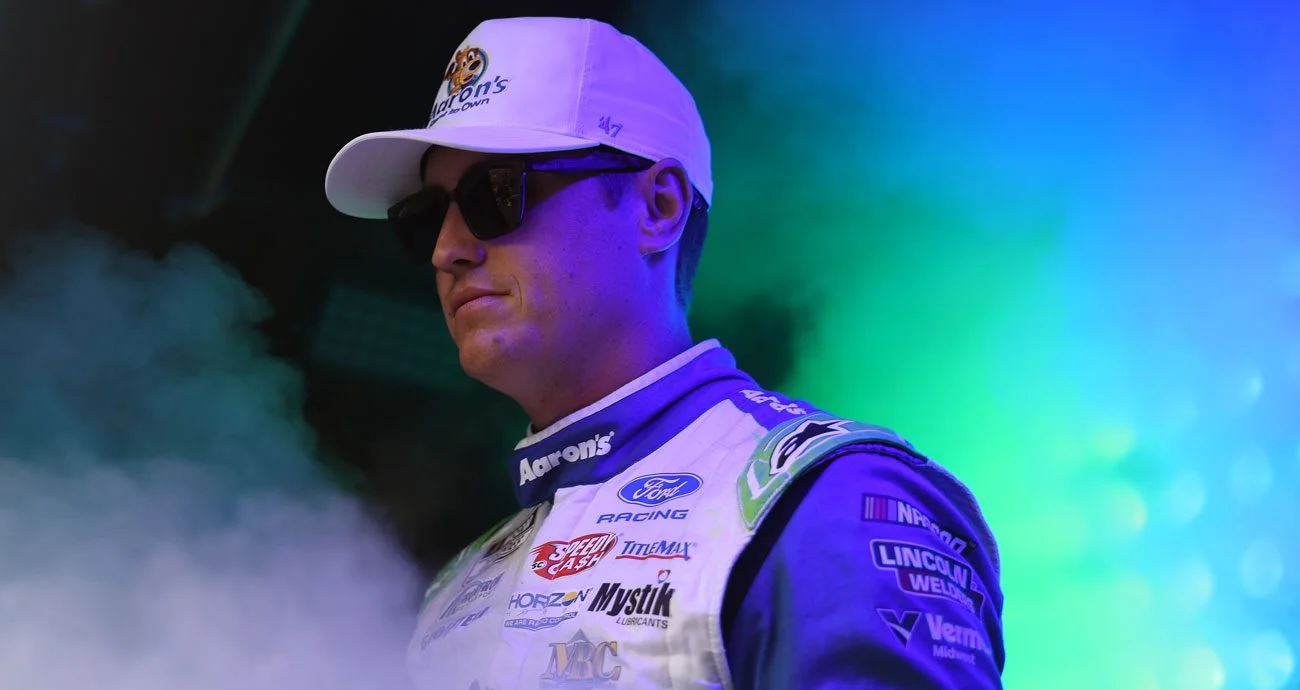
NASCAR fined Zane Smith $50,000 for hitting Carson Hocevar after the October 18, 2026 Cup Series race at Phoenix Raceway. The sanction was for the cool-down contact, and NASCAR identified an earlier warning to the two drivers as a major reason it escalated its response. It was not simply a bill calculated from how dramatic the collision looked.
The October 20 announcement initially left an appeal possible. That is no longer the current status: NASCAR's October 24 reporting says Front Row Motorsports did not appeal. As of October 29, the questions worth separating are what happened at Phoenix, why a July meeting mattered, why the previous week's Charlotte incident produced no fine, and how safety concerns continue after the checkered flag.
What Smith was penalized for after the Phoenix race
The penalty report identifies Smith's sanction as behavioral and lists a $50,000 fine. It cites Sections 4.4a and 10.5.2.5a, covering penalty options and safety violations. The report does not list a points deduction or a suspension for this incident. That matters when comparing headlines: a monetary fine, a loss of championship points and an instruction to sit out a race are different consequences.
NASCAR's accompanying explanation describes safety-related violations as matters to be considered individually and seriously. The wording does not supply an impact-speed chart that converts a collision into a dollar amount. The public explanation has to be read alongside the circumstances officials identified, including the earlier conversation with the drivers.
The late-race chain reaction came before the cool-down contact
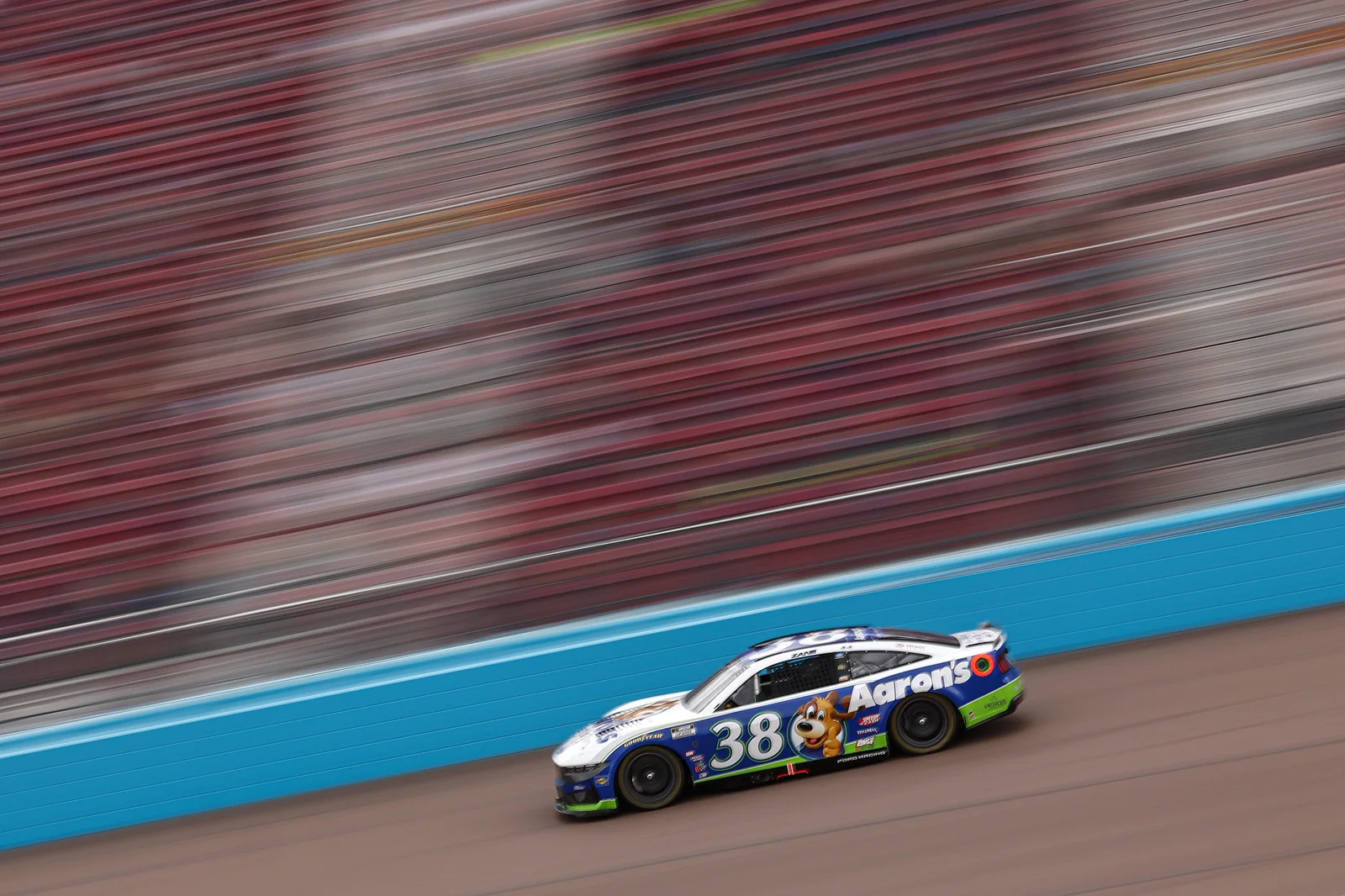
There were two distinct parts to the Phoenix sequence. On Lap 296, Ross Chastain made contact with Hocevar entering Turn 3, sending the No. 77 Spire Motorsports Chevrolet into Smith's No. 38 Front Row Motorsports Ford and Josh Berry's No. 21 Ford. The involvement of a third car matters: the race contact was a chain reaction, rather than proof that Hocevar simply chose to drive into Smith.
After the checkered flag, Smith accelerated into the rear of Hocevar's car. That was the action for which NASCAR issued the fine. The two moments explain the immediate conflict, but they should not be collapsed into a single racing incident. The race had ended, the cars were beginning their cool-down laps and Smith's post-finish approach created a new event for officials to assess.
The order also explains why a driver's radio frustration is not a complete account of responsibility. A driver may feel the impact without seeing the contact that started it. Team information and a longer replay can supply that missing part. Understanding why Smith was upset does not establish that his response was permitted or that the first impression on the radio was the whole sequence.
Hocevar finished 12th and Smith 15th. Those positions describe the race result, while the later report describes the sanction. Readers checking the Cup Series results should not expect the fine to appear as an invented change in finishing order. The relevant official record in this case is the combination of the result and the separately issued behavioral penalty.
Why the earlier warning changed NASCAR's response
NASCAR did not describe Phoenix as an isolated first conversation with these drivers. Mike Forde, its vice president of racing communications, identified the earlier warning as a major reason for the fine. That makes the history part of the explanation for the October sanction, without turning the new penalty into a retroactive punishment for July.
The July meeting followed the Chicagoland clash
After the drivers' Chicagoland incident on July 5, NASCAR called Smith and Hocevar to a meeting at EchoPark Speedway in the Atlanta area on July 11. The location and sequence are worth keeping straight: the earlier clash was in Illinois, the meeting was in Georgia, and the later fined contact was in Arizona. They were not three descriptions of one race weekend.
The July reporting also made clear that the meeting did not settle their personal differences. Smith remained openly unhappy with Hocevar, while Hocevar expressed surprise about being called in. NASCAR could instruct the drivers about their conduct without requiring them to like each other. Personal hostility and permission to act on it are different things.
In October, Forde explained that officials believed their request had been largely ignored. His public account supplies the important disciplinary context. It does not make the entire private meeting available to readers, and it should not be expanded into an invented list of promises, a word-for-word contract or a claim that every future contact was automatically prohibited regardless of circumstances.
A warning is an instruction, not a forecast of a fixed fine
The useful reading is that NASCAR expected the drivers to change how they handled the conflict. A later retaliatory act could therefore prompt a stronger response than another episode considered on its own. That is different from saying the July meeting announced that the next touch would cost exactly $50,000. The published explanation does not establish such a schedule.
Nor should the meeting be casually renamed formal probation. A warning discussed by an official and a probation sanction listed in a penalty report are not interchangeable records. The Phoenix report lists the fine. Readers should resist adding disciplinary terms merely because they sound like a plausible description of escalating tension.
This is also where a useful consistency comparison begins. Before comparing two collisions, ask what instructions the drivers had already received and what officials said about them. The latest contact is visible on television; an earlier warning may become publicly relevant only when NASCAR explains its next action. That additional context can change how apparently similar incidents are assessed.
From an editorial perspective, the clearer the expected conduct is, the easier that approach is for fans to follow. A warning should help competitors understand what they must stop doing. A subsequent explanation should identify which conduct crossed that boundary. It does not need to turn a sporting rivalry into a friendship to accomplish that.
Why the Charlotte incident did not produce the same fine
NASCAR considered the October 11 Charlotte contact between Michael McDowell and Ricky Stenhouse Jr. close to warranting a penalty, but ultimately issued none. That was not a declaration that cool-down contact is always acceptable. Forde's October 13 account describes a lengthy review involving several camera angles before officials reached their decision.
Similar-looking contact does not make the full circumstances identical
Officials described Charlotte as an emotional incident that cooled quickly once the drivers reached pit road and spoke. Both window nets remained up. Forde said wall contact or damage to another car would likely have changed the decision. Those were factors he identified for that case, rather than a published guarantee that any collision avoiding a wall is free from punishment.
A useful comparison therefore needs more than two clips of a front bumper hitting a rear bumper. At minimum, compare the action, the surrounding safety circumstances and the relevant prior instructions. The first may look similar while the others differ. Phoenix's earlier warning was the difference NASCAR emphasized when asked why Smith received a fine.
| Question | Charlotte | Phoenix |
|---|---|---|
| What was reviewed? | McDowell-Stenhouse cool-down contact | Smith's post-finish hit on Hocevar |
| What context did NASCAR emphasize? | Emotion, quick de-escalation and safety circumstances | An earlier warning officials believed was ignored |
| What was announced? | No penalty | A $50,000 behavioral fine |
That does not make consistency complaints meaningless. A case-by-case system asks fans to trust how officials weigh context. If the explanation stops at saying the cases are different, it leaves the audience guessing. Identifying the prior warning makes the distinction more concrete, even if a reader still believes the penalties should have been handled another way.
Visible damage alone is an incomplete yardstick. A collision that does not produce a dramatic broken part can still involve a safety concern or a previously prohibited response. Equally, a spectacular racing accident does not automatically establish intentional retaliation. The governing question and available evidence have to be identified before comparing the severity of the pictures.
Nor can the Charlotte outcome be turned into an entitlement for the next driver. Officials did not announce that a no-call erased the safety provision or canceled warnings issued to other competitors. Their explanation was specific to the incident they reviewed. Treating that outcome as permission for Smith would discard the very context NASCAR gave for his fine.
The separate Bristol penalty discussion supplies another dated example of why the trigger and explanation matter. It should be read as its own case, rather than merged with Phoenix into a single rule that all emotional encounters must receive the same sanction.
Why the checkered flag does not end the safety question
The checkered flag ends the contest for finishing position; it does not make contact with another car consequence-free. NASCAR's safety provision remains relevant while cars are circulating after the finish. A driver's frustration may explain why an incident developed, but it does not remove officials' responsibility to assess that new action.
Cars and drivers are transitioning out of race conditions
During a cool-down lap, drivers are reducing pace and preparing to reach pit road. The driver ahead may no longer be responding as if another car is attempting an ordinary racing pass. A sudden hit therefore needs to be evaluated in the circumstances in which it occurred, rather than treated as a continuation of the fight for the previous corner.
The 2024 Chicago example shows why specific safety details can matter. NASCAR fined Bubba Wallace $50,000 after contact with Alex Bowman's car on the cool-down lap. Bowman had lowered his window net, and the contact sent him toward the concrete barrier. Those are documented circumstances of that case. They should not be transferred to Hocevar's Phoenix car without evidence that the same conditions existed.
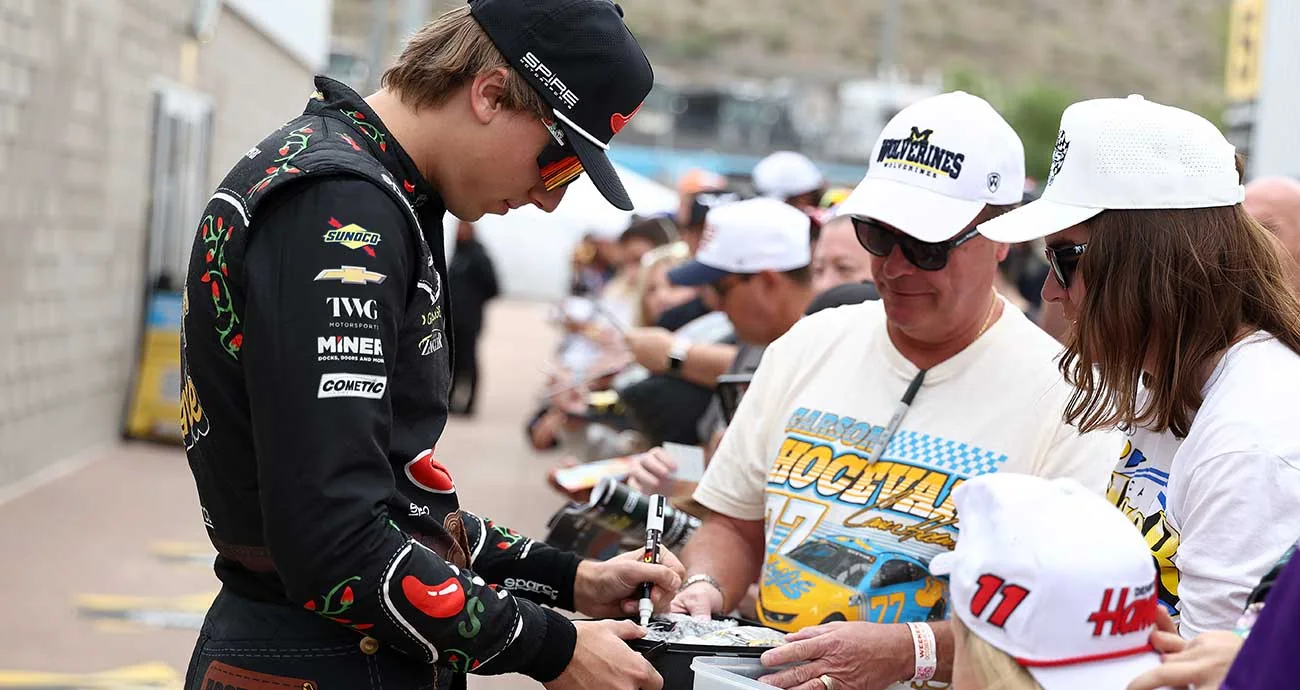
Hocevar later described the Phoenix hit as unexpected and said he initially thought he had struck a car in front before realizing he had been hit from behind. That is his participant account of the moment. It does not establish a medical diagnosis, an exact impact force or a technical conclusion about how much protection any safety equipment provided.
For viewers, the practical lesson is to follow the race phase as well as the car movement. A replay under green, an incident while slowing after the finish and contact near pit road involve different surroundings. Judging only the amount of visible body damage misses that context and can encourage comparisons that omit the main safety concern.
Matching dollar amounts do not create a universal tariff
Wallace's Chicago fine and Smith's Phoenix fine were the same amount, but that does not prove they were interchangeable incidents. One comparison concerns documented post-finish safety circumstances; the other also includes a prior warning NASCAR emphasized. A shared number is an outcome to note, not a formula from which every other penalty can be predicted.
A fine is also not an invoice for repairing the other car. Reading $50,000 as NASCAR's estimate of the damage bill would give the amount a meaning the penalty report does not assign. The report identifies a behavioral sanction. It does not settle a team's repair costs or establish who privately pays every expense.
That leaves a reasonable demand for clear explanations. Fans should be able to understand which actions and contextual factors officials considered. They should also distinguish that demand from an invented schedule in which every cool-down collision must produce the same fine, a points loss or a suspension. The published case-by-case framework supports scrutiny of the reasons, not a fictional universal tariff.
What happened to the appeal and how to read the next report
The Phoenix fine is not awaiting an appeal decision in the reporting available as of October 29. NASCAR's October 24 article states that Front Row Motorsports did not appeal the penalty. That later information supersedes the original October 20 descriptions of an appeal still being available.
Front Row did not appeal the penalty
This is a procedural distinction worth getting right. Having the option to appeal, filing an appeal and receiving an appeals-panel decision are three different stages. The updated fact here is that the team did not file. It would be inaccurate to describe a panel as having upheld or reduced Smith's fine when that is not what the later report says happened.
Not appealing also does not tell readers everything about the team's reasoning. It is not a published admission that Smith agreed with every part of NASCAR's explanation, and it does not establish a private financial or legal strategy. The same NASCAR report notes that team representatives declined an interview request for Smith. A missing explanation should remain missing rather than be filled with a plausible motive.
For the next penalty story, check five concrete fields: the date of the incident, the action being penalized, the cited provision, the announced consequence and the latest appeal status. That small checklist prevents a common mix-up in which an old announcement, a new driver comment and a separate historical penalty are treated as one current ruling.
Then compare like with like. A penalty report showing only a fine should not acquire an extra points deduction because another driver's case involved one. A warning should not become a suspension, and a no-call should not become a permanent exemption. Reading the actual consequence is especially important when championship graphics make every disciplinary headline feel like an immediate change in the title race.
No published explanation here supplies an automatic amount for any future Smith-Hocevar encounter. Officials would have to assess the new action and its circumstances. The existing warning and this fine are relevant history, but predicting an exact next sanction would go beyond the record.
Use the NASCAR schedule for the next Cup event and the standings for current points rather than carrying forward a table printed before Talladega. For the broader distinction between in-race calls and later sanctions, the rules explainer is the next useful read. The Phoenix case turns on a specific post-finish action, the warning that preceded it and the penalty NASCAR actually issued.
About the author
NASCAR Schedule Editorial Team
The NASCAR Schedule editorial team turns verified schedules, timing and scoring, official announcements and race-weekend context into direct answers for fans.
View all articles by this author →Join the discussion
Comments
Sign in with Google to comment. Keep it race-focused; new comments are reviewed before publication.
Loading comments…