Did Chevrolet Help Kyle Larson at Talladega? Drafting and Manipulation Claims Explained
An explanation of the Chevrolet alliances behind the Talladega debate, the reported NASCAR data review and the distinction between useful drafting and surrendering a result.
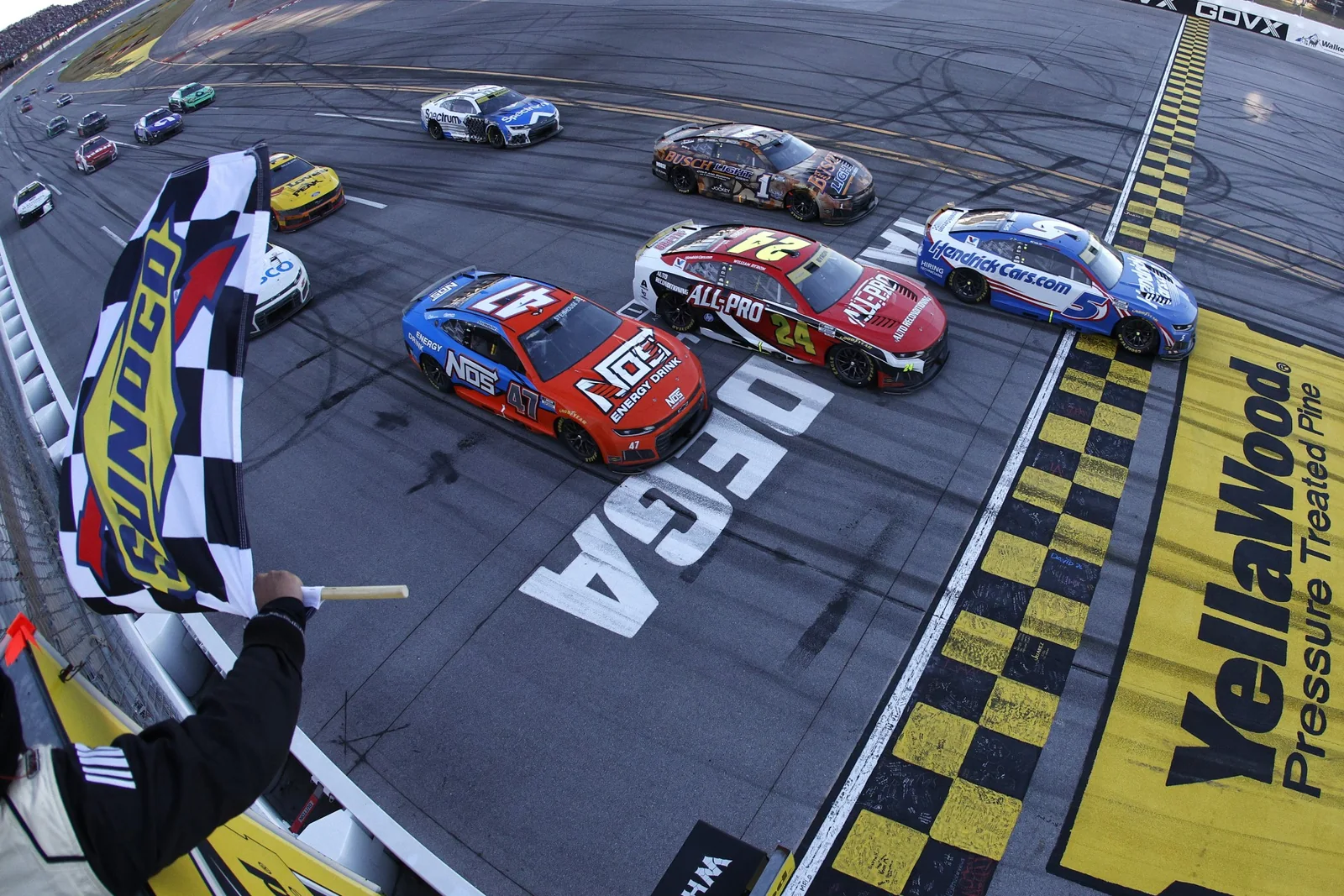
Chevrolet cooperation was a real part of the discussion before Kyle Larson won at Talladega on October 25, 2026. That does not establish that Chevrolet drivers surrendered the finish to him. Post-race reporting says NASCAR reviewed SMT (SportsMEDIA Technology) car data, including throttle inputs, and found William Byron, Ricky Stenhouse Jr. and Cole Custer stayed on full throttle from Turn 3 to the checkered flag.
The distinction matters: a manufacturer alliance can help a driver find a productive drafting partner, while an allegation of deliberately giving away a result requires evidence about specific conduct. As of October 29, the reported review contradicts the particular claim that those three drivers lifted to let Larson win. It does not turn every wider question about team orders into the same issue, or make a pre-race rumor proof of an illegal arrangement.
What the Chevrolet controversy is actually about
There are two different propositions in the argument. The first is that Chevrolet drivers were aware of Larson’s championship position and could help him in the draft. The second is that drivers intentionally gave up the race victory. Evidence for the first proposition does not automatically establish the second, even when the same drivers appear in both discussions.
The October 25 result gave the argument a dramatic setting. Larson beat Hendrick Motorsports teammate Byron by 0.041 seconds, with Stenhouse third, Chastain fourth and Custer fifth. The track’s published NASCAR Wire Service report includes the full final classification. Those finishing positions are established results; the motivation behind every choice on the final lap cannot be read directly from the order.
Pre-race cooperation and a contested finish are different claims
NASCAR’s October 24 preview had already examined the manufacturer incentives. Among the seven drivers it considered realistically central to the title battle, Larson was the Chevrolet representative against four Toyota drivers and two Ford drivers. That was a description of the leading championship group, rather than a statement that no other Chevrolet driver had qualified for the Chase.
The preview included participants discussing how they expected drafting support to work. Separately, reporter Danielle Trotta relayed pre-race garage chatter that Chevrolet wanted teams to avoid leaving Larson stranded near stage finishes. A reported preference about maintaining drafting support is a lead worth examining. It is not a manufacturer document ordering drivers to surrender the win, and it is not proof that any such surrender occurred.
| Question | What would answer it? |
|---|---|
| Did drivers discuss manufacturer cooperation? | Named participant comments and reporting about the plan |
| Did a partner help Larson gain momentum? | The sequence of drafting moves and the partner’s own position |
| Did someone lift to give him the win? | Relevant car data and the timing of the alleged action |
| Was there a rules violation? | The conduct, applicable obligation and NASCAR’s finding |
Keeping those questions separate also prevents a different Talladega controversy from becoming evidence for this one. A yellow-line ruling concerns track limits and gaining position. Minimum-speed enforcement concerns maintaining race pace. Neither ruling, by itself, demonstrates that the finishing order was arranged. The Cup Series results provide the common starting point, but each allegation still needs its own evidence.
Why drivers from different Chevrolet teams work together
A driver can benefit from helping another car because drafting makes progress dependent on the cars nearby. NASCAR’s terminology guide describes cars running closely nose-to-tail, using the airflow created by the car ahead. The important point for this controversy is mutual benefit: the trailing driver can improve his own position while helping the car he follows gain ground.
A drafting partner can advance both cars
Imagine two cars with a productive run toward a slower line. The second driver may have a better immediate opportunity by staying behind the first and advancing with him than by pulling out alone. The fact that the lead car gains positions does not mean the following driver gave positions away. To judge the choice, compare the alternatives actually available at that moment.
Larson’s final lap illustrates how quickly the relationship can change. NASCAR’s race analysis describes Austin Hill moving to Larson’s low side after pushing him, disrupting the No. 5’s position. Later, Chastain provided drafting support as Larson advanced down the low lane. Those are different choices by different Chevrolet drivers during the same lap. A single, permanently obedient manufacturer formation does not describe that sequence well.
None of that requires believing every driver selected the theoretically perfect move. Decisions happen with incomplete information and limited time. A blocked lane, a closing gap or a partner changing direction can make a reasonable plan look ineffective seconds later. The drafting explainer provides the broader mechanics; this case depends on what each driver could gain from the specific arrangement.
Manufacturer loyalty does not make every team one organization
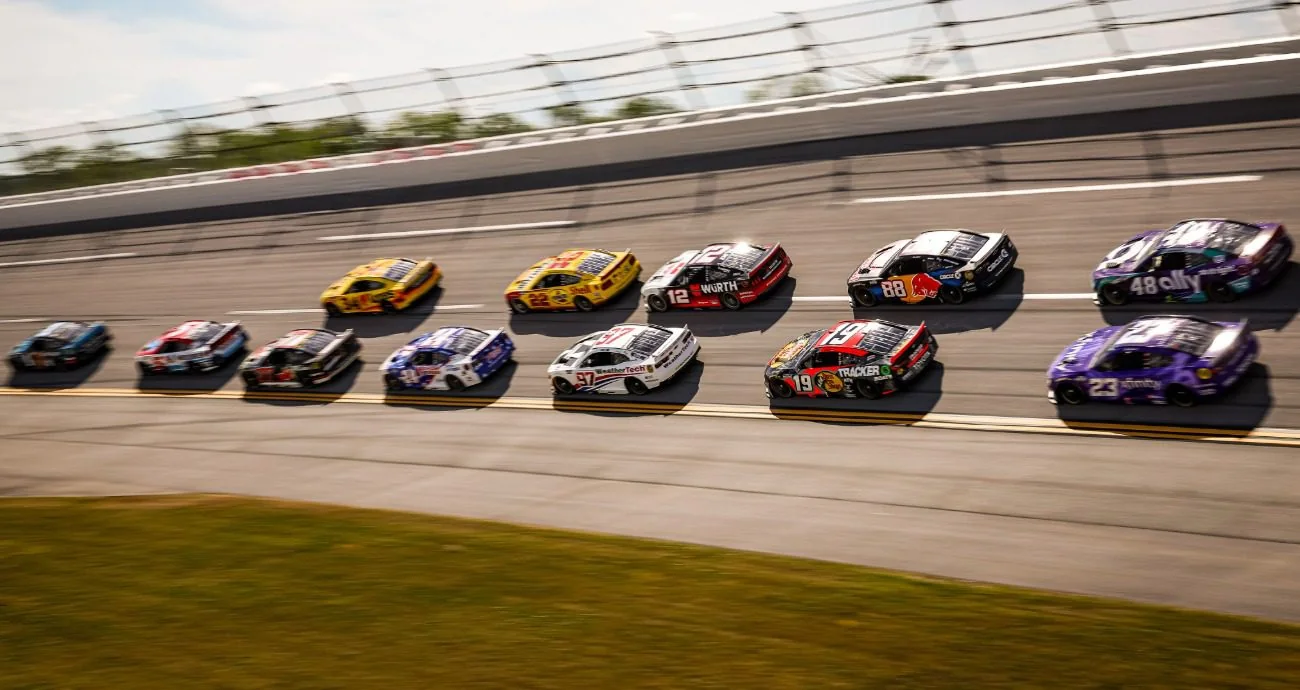
Larson and Byron are Hendrick teammates. Chastain races for Trackhouse, Stenhouse for HYAK Motorsports and Custer for Haas Factory Team. They can share the Chevrolet badge while competing for different organizations. Describing all of them simply as Larson’s teammates obscures the actual team relationships and invites assumptions about who controls whose race.
The team ownership guide helps separate the organizations from the manufacturers. A shared badge can create a reason to look for familiar drafting support. It does not prove identical private instructions, a common financial arrangement or an obligation to finish behind one particular driver. Claims about those arrangements need their own reporting, rather than an inference drawn from the logo on the nose.
For a fan, the useful test is the competitive transaction: did the cooperation also provide a plausible way for the assisting car to advance? That question does not automatically clear every move. It focuses the analysis on the choice being criticized, instead of assuming that every helpful push is a sacrifice or that a shared manufacturer settles the issue.
What the reported SMT review establishes
The reported data finding addresses a particular mechanism alleged by fans: lifting off the throttle to allow Larson past. Yardbarker reproduced reporter Jeff Gluck’s account that NASCAR checked the data and found Stenhouse, Byron and Custer wide open from Turn 3 to the finish. Speedcafe also reported that NASCAR rejected the lifting claim. Those are reports of the review, rather than raw telemetry reproduced here.
The three drivers named in the throttle finding
The names and interval are important. A statement about those three drivers during that portion of the final lap is not a complete audit of every Chevrolet driver throughout the race. It answers whether the named cars lifted in the specified stretch. Extending it into a claim that every action all afternoon was examined and approved would exceed the information being reported.
Speedcafe also reported Stenhouse and crew chief Mike Kelley rejecting the idea that their team intended to give away the win. Their comments explain the team’s stated position. The reported data check addresses the allegation more directly than a statement of intent alone, because it concerns an action that would have been observable in the car information.
NASCAR’s October 27 Hauler Talk article separately identifies the final-lap SMT review as a subject covered in the episode. The article’s main subject is minimum speed; its short list of other topics should not be mistaken for a published set of the underlying final-lap traces. A fan asking to see more data is asking for a further level of transparency.
What a throttle trace cannot establish by itself
A throttle input and a car’s speed are different things. A car can lose momentum relative to another without the driver lifting, because the surrounding airflow and the way the group moves also matter. Seeing Larson close rapidly on a car is therefore not, on its own, a measurement of what that driver did with the accelerator.
Equally, full throttle does not answer every imaginable question about lane choice or competitive intent. A trace relevant to one allegation should be used to test that allegation. Evaluating a different accusation would require the information relevant to that different action: the timing, the available alternatives, the surrounding cars and any communication that explains the choice.
The evidence standard should work in both directions. A fan does not need to abandon a preference for clearer explanations just because NASCAR has reached a decision. But a desire for more public information is different from possessing evidence that the information was falsified. The defensible conclusion here is specific: the reported review contradicts the claim that the three named drivers lifted in the identified final-lap interval to hand Larson the win.
Where cooperation can cross the competitive-integrity line
The relevant distinction is between pursuing a competitive result with a partner and improperly influencing the event to serve another objective. NASCAR’s published performance-obligation framework addresses that distinction. It does not supply a simple rule under which every shared-manufacturer push is prohibited or every helpful act is automatically acceptable.
The performance obligation and the 2024 Martinsville comparison
In its February 2025 rule update, NASCAR described language covering attempts to improperly influence an outcome, including encouraging others to do so. The published framework identifies intentional planning or conduct that prioritizes something other than the team’s best possible competitive result. That is the policy principle behind asking what the assisting team was trying to achieve, rather than judging the paint scheme alone.
There is a concrete historical enforcement comparison. Following the November 2024 Martinsville race, NASCAR penalized the teams of Chastain, Austin Dillon and Bubba Wallace after examining on-track data and team radio. Each driver lost 50 points and received a $100,000 fine, with corresponding owner penalties and personnel suspensions. NASCAR described Chastain and Dillon forming a blockade behind Byron, while Wallace slowed elsewhere on the track.
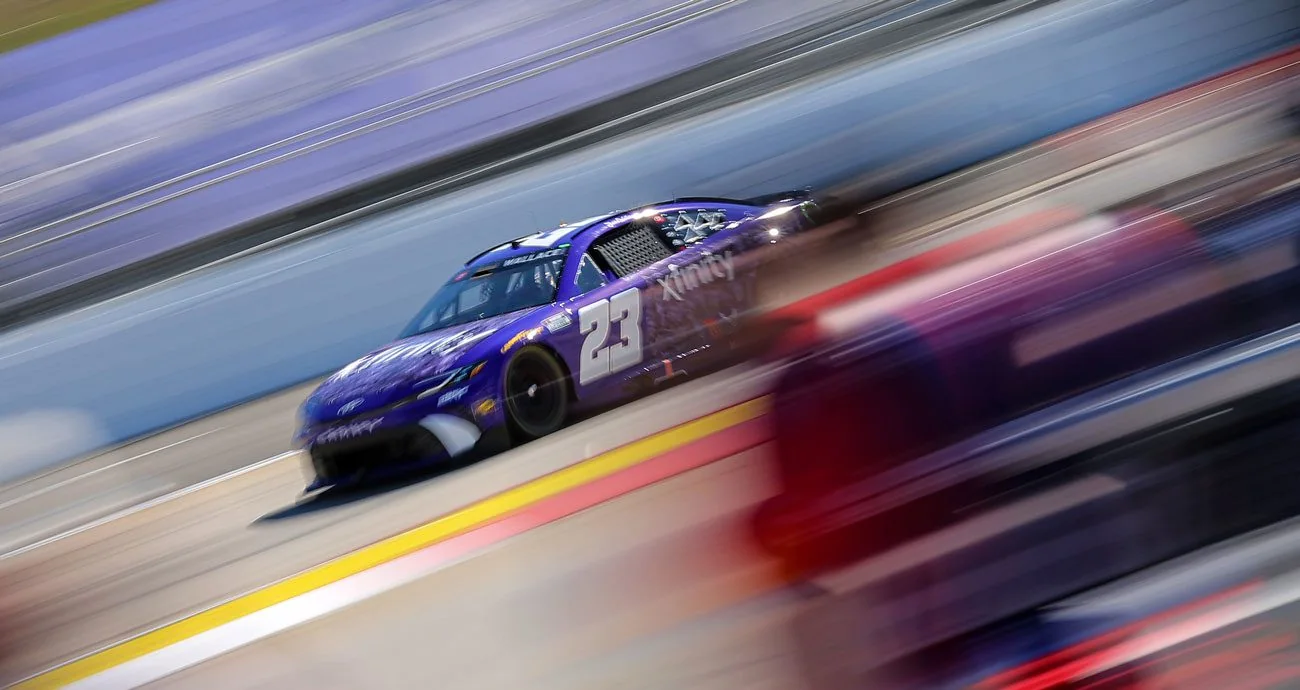
That episode explains why fans recognize the concern. It also demonstrates why the conclusion must follow an investigation of conduct. The presence of familiar names or a championship benefit is not enough to transfer the 2024 finding to a different race. Talladega’s reported final-lap throttle review concerns its own evidence, and its conclusion cannot be replaced by the result of the Martinsville case.
The useful comparison is therefore about the test: what action occurred, what competitive purpose it served and what the available evidence supports. It is not a demand to impose the same penalty whenever manufacturer assistance is visible. The rules guide covers broader race procedures, while each manipulation allegation requires a separate account of the specific behavior.
The dated public announcements also deserve their proper scope. The 2025 manufacturer framework allows sanctions against a manufacturer when NASCAR finds wrongdoing; the existence of that authority is not evidence that Chevrolet committed an offense at Talladega. A power to investigate or penalize and an actual finding of a violation are different stages of the process.
How to judge the next team-orders argument
The most productive argument starts by identifying which decision is being criticized. A general dislike of manufacturer influence is a legitimate sporting preference. An allegation that a named driver deliberately surrendered the race is a factual claim. They can coexist, but they require different kinds of explanation and cannot be settled by exchanging the same conclusion in louder terms.
Separate a preference about racing from an allegation of wrongdoing
The Talladega Reddit discussion contains both frustration with manufacturer alliances and questions about how helpful drafting should be distinguished from manipulation. A fan may want fewer cooperative arrangements even while accepting the reported throttle finding. Another may consider cooperation an unavoidable part of racing in a pack. Neither preference establishes what happened inside a particular car.
For officials, clear communication should identify the action reviewed, the relevant part of the race and the reason the evidence supports the decision. For reporters and viewers, the corresponding responsibility is to preserve that scope. A finding about throttle inputs should remain a finding about throttle inputs, while a broader criticism of the sport’s incentives should be discussed as a policy argument.
That separation leaves room for useful disagreement. Fans can ask whether manufacturer relationships create too much influence, how independently teams can act, or whether more review information should be made public. Those questions do not require presenting an unproven accusation as established fact. They concern the racing environment and how confidence in decisions can be maintained.
Follow the decision, the benefit and the evidence
Start with the actual move and its timing: a push before a stage finish, a lane change in Turn 2 and a throttle input approaching the flag are separate actions. Next, examine the assisting car’s opportunity. Was there a plausible way for that driver to gain places too, and what would the alternative have required? Finally, compare the available evidence with the allegation being made.
Results and championship benefits belong in that assessment, but they cannot supply the missing steps. Larson gaining points does not by itself establish why another driver made a choice. Likewise, an unfortunate outcome for a rival does not prove that the event causing it was planned to help Chevrolet. The strength of the explanation comes from linking a documented action to a supported conclusion.
As the series moves to Martinsville, use the current weekend schedule to follow the next event and judge any new dispute on its own record. The established Talladega distinction remains straightforward: cooperation was openly discussed, while the reported review rejected the specific lifting claim about the three named drivers. Those findings can be understood without declaring every alliance harmless or every dramatic finish arranged.
About the author
NASCAR Schedule Editorial Team
The NASCAR Schedule editorial team turns verified schedules, timing and scoring, official announcements and race-weekend context into direct answers for fans.
View all articles by this author →Join the discussion
Comments
Sign in with Google to comment. Keep it race-focused; new comments are reviewed before publication.
Loading comments…