NASCAR DFS Scoring Explained: Place Differential, Laps Led and Lineup Basics
Understand NASCAR DFS through named contest rules, fictional scoring examples, qualifying context and race strategy. Separate Classic lineups from Snake and Pick6.
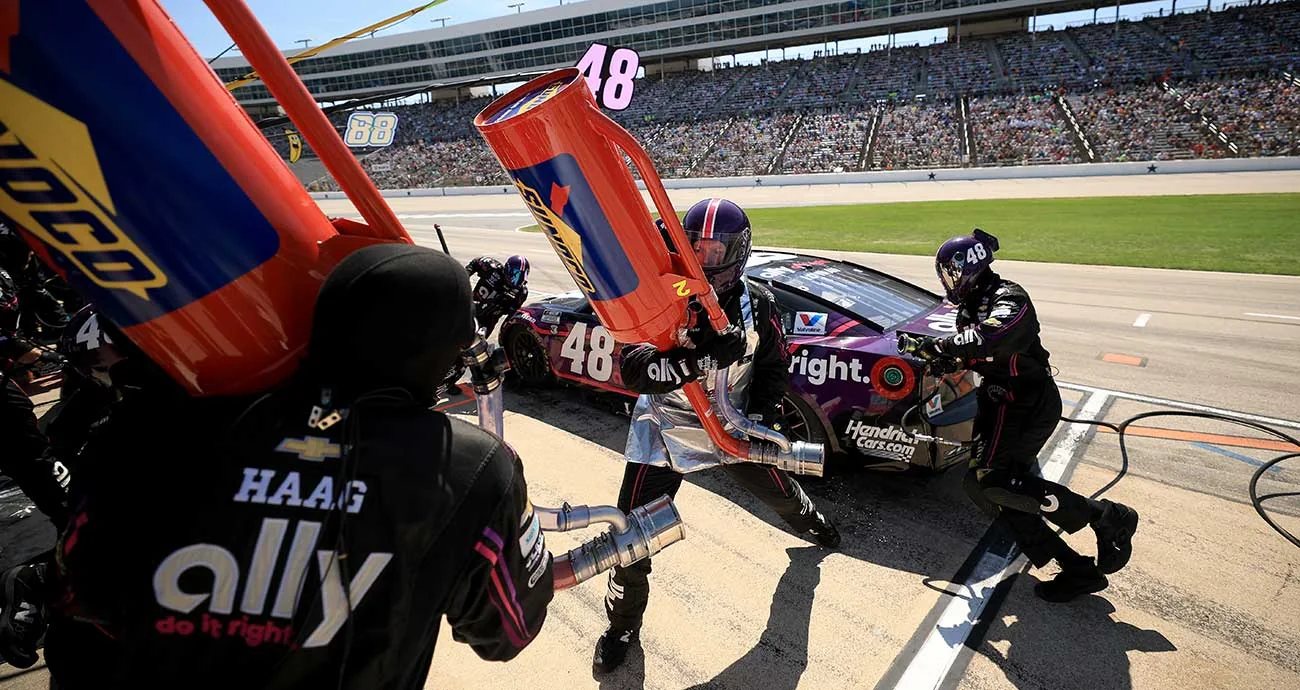
NASCAR DFS scoring rewards more than the driver who wins the race. In DraftKings NASCAR Classic, finishing points combine with place differential, laps led and fastest laps, so starting position and race length can change a driver's value substantially. The useful approach is to identify the exact contest, calculate its points correctly and evaluate how a driver might earn them. This guide explains those steps with fictional examples and rules checked on November 11, 2026. It covers lineup methods rather than today's picks, and keeps Classic, Snake and Pick6 separate throughout.
Choose the exact contest before building a lineup
Start with the platform, contest format, series and race. “NASCAR DFS” is a category, not one universal scoring system. A useful driver assessment can become a poor lineup decision if it is applied to the wrong rules or player pool. This guide uses DraftKings NASCAR Classic for its numerical examples, with the rules checked on November 11, 2026. It does not supply a live slate or today's recommended drivers.
The series deserves its own check. A Cup race and an O'Reilly Auto Parts Series race at the same venue involve different fields, equipment and race distances. A familiar name may appear in both, but a statistic from one event does not automatically describe the other. The O'Reilly series guide helps identify that competition and its naming context.
Classic, Snake and Pick6 are different formats
DraftKings NASCAR Classic uses six drivers and a $50,000 salary cap. That makes the combined cost of the roster part of the decision. You are evaluating combinations, rather than simply selecting the six drivers you expect to finish highest.
Under the separately published NASCAR Snake rules, entrants draft five drivers, with the highest-scoring four counting and one becoming the bench. The draft changes who is available to you. A salary-based recommendation cannot simply be carried over unchanged to that format.
Pick6 instead uses selections against projected statistics. Although a NASCAR fantasy-points statistic can appear there, the decision is about the selected projection, not assembling a Classic salary-cap roster. The product's own grading and void rules matter.
Likewise, one race on a slate does not automatically establish a Showdown Captain position. DraftKings' generic Showdown help describes sport-dependent roster rules; it is not a substitute for the NASCAR contest page. Read the exact format before importing a multiplier, bench rule or lineup template from another sport.
How DraftKings NASCAR Classic scoring works
The published Classic scoring table combines finishing-position points, place differential, laps led and fastest laps. For this format, the calculation is: finishing points + starting position − finishing position + 0.25 × laps led + 0.45 × fastest laps. These are fantasy points, not the championship points awarded by NASCAR.
Finishing position and place differential
A win is worth 45 finishing points; second pays 42, third 41 and eighth 36. Use the full platform table for other positions rather than assuming every step has the same value. Place differential adds one point for each position gained from the scoring starting position and subtracts one for each position lost.
For example, a hypothetical driver starting 25th and finishing eighth gains 17 differential points. A hypothetical pole starter finishing eighth loses seven. Both have the same finishing-position score, but their differential contributions are very different. That is why a list of likely top finishers is only one part of a DFS assessment.
Starting farther back does not make a driver automatically attractive. A car still needs a credible path to improve its finish, and a deeper starting position may reflect weak pace rather than a temporary setback. Differential creates a scoring opportunity; it does not supply the speed, reliability or clean race needed to realize it.
Laps led and fastest laps
Classic awards 0.25 points per lap led and 0.45 per fastest lap. The categories are separate: leading a lap does not necessarily mean recording its fastest time. A driver can collect pace-related points and later lose track position, so the final running order will not tell the whole fantasy story.
The following examples are entirely fictional. They illustrate the formula, not actual drivers, projections or an available contest.
| Fictional driver | Start / finish | Laps led / fastest | Calculation | Total |
|---|---|---|---|---|
| A | 2nd / 1st | 10 / 10 | 45 + 1 + 2.5 + 4.5 | 53 |
| B | 25th / 8th | 0 / 4 | 36 + 17 + 0 + 1.8 | 54.8 |
Driver B outscores the race winner in this example because the positional gain offsets the lower finish. Change the winner's laps-led and fastest-lap totals and the comparison can reverse. The useful question is therefore how each driver can earn points under plausible race scenarios, rather than which one has the most appealing finishing prediction.
Which starting position counts for place differential?
For DraftKings Classic, the scoring starting position is not always where a car physically lines up immediately before the green flag. The platform's scoring notes distinguish a disallowed qualifying position from other changes, including a move to a backup car. That distinction can change the entire assessment of a driver starting at the rear.
Here is a fictional example: a driver qualifies third, changes to a backup car and must drop back, then finishes 15th. If the original third-place qualifying position remains the platform's scoring base, the differential is 3 − 15, or −12. Calculating the gain from the car's physical position at the rear would produce a different answer and overstate its fantasy return.
A disallowed qualifying position is the exception described in the rules: the new position at the back becomes the scoring base. Do not assume that every penalty has that effect. Read the actual reason for the change and the position shown in the contest before assigning any differential upside. A television graphic saying “to the rear” is useful race information, but does not by itself answer the platform-specific calculation.
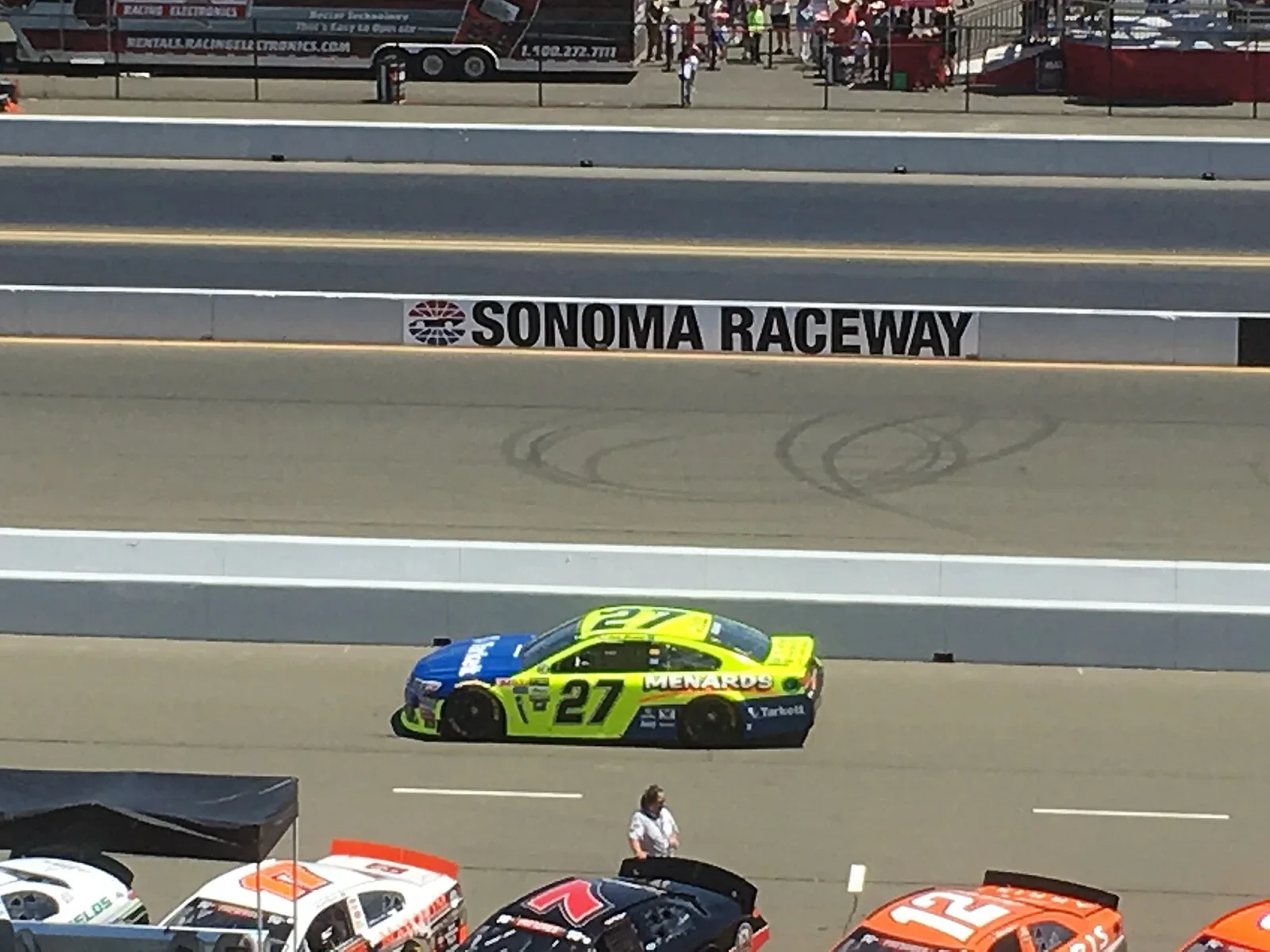
Weather adds another wrinkle. At the September 2026 Darlington Cup weekend, rain canceled practice and qualifying, and the lineup was assigned under NASCAR's procedures. There was no completed timed session to treat as the normal starting-point evidence. Use the assigned lineup and the contest's corresponding scoring position for that event.
Our qualifying explainer covers how the racing lineup is established. Keep a separate note for the fantasy scoring base, the physical rear-start instruction and any further penalty. Combining all three into one “starting position” column is an avoidable source of error.
Why track type changes your lineup
A driver's route to points depends on the race being run. NASCAR's 2026 track-type preview separates intermediates, short tracks, drafting tracks and road courses. That article concerns NASCAR Fantasy Live, a different game; its categories are useful racing context, but its driver recommendations and scoring should not be copied into a Classic lineup.
Long races create more opportunities to score through pace
Consider two hypothetical races of 300 and 80 completed laps. At 0.25 points per lap led, the total laps-led component across the field would be 75 points in the first and 20 in the second. That arithmetic says nothing about which driver receives those points, but it explains why the lap count deserves attention before selecting expensive front-runners.
“Dominator” is fantasy shorthand for a driver expected to accumulate substantial laps-led and fastest-lap production. It is not an official status or an assurance that one car will control the whole race. Long green-flag runs, changing tire performance, pit cycles and restarts can redistribute that production. Leading early and running well late are related possibilities, not the same forecast.
NASCAR's fuel-strategy reporting shows another complication: teams may trade outright lap speed for a shorter stop or a better fuel position. A sensible DFS interpretation considers the likely race plan rather than treating every slower lap as proof that a car lacks speed. Our race-strategy guide explains those tradeoffs.
Drafting tracks and road courses create different tradeoffs
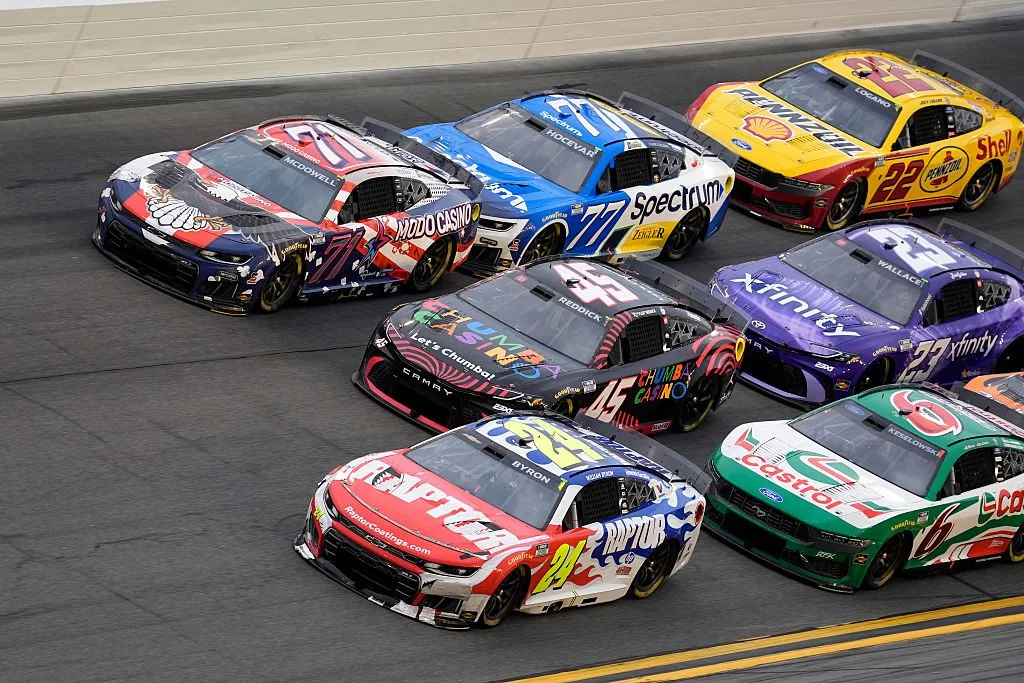
At a drafting track, a driver's progress depends partly on the lanes and cars around them. A pack incident can affect several selections at once, so choosing multiple cars is not automatically a collection of independent risks. Starting deep may offer differential upside, but it does not remove the risk of losing the draft or being caught in traffic.
Road-course analysis needs a different balance of passing opportunities, track position and pit timing. In a race with fewer laps, finishing position and differential may carry more relative weight because there are fewer laps available to lead. That is a consequence of the scoring formula, not a rule that the front row should always be avoided.
Check the current package as well as the track name. NASCAR announced changes for the summer 2026 Daytona race, illustrating why a February sample need not describe the same technical conditions later. Use our drafting explainer for the mechanics, then apply the actual event's rules and data.
How to evaluate a driver beyond qualifying
Qualifying tells you something about a car's short-run performance and establishes an important scoring reference. It does not describe every condition the driver will face in a race. NASCAR's Insights performance framework separates long-run speed, short-run speed, clean-air pace and speed in traffic. Those distinctions suggest better questions than simply asking who posted the quickest lap.
When practice data exist, compare similar runs. Fresh tires, an older set, traffic and the point in the session can change what a lap represents. A ten-lap average is most useful when you understand the run behind it. NASCAR's historical practice reports explicitly require ten consecutive laps for that chart. A driver missing from the chart has not necessarily demonstrated poor long-run pace; they may simply lack a qualifying sample.
Read previous finishes alongside the race account. A car that ran competitively before a late tire problem presents a different question from one that spent the race struggling to maintain position. Neither guarantees the next result, but the distinction helps identify what needs to improve. Was the problem underlying pace, execution, damage, a penalty or an unusual race sequence?
Keep historical comparisons relevant. A result at the same track may come from another car generation, manufacturer package, team or crew-chief combination. A large collection of old starts can look persuasive while measuring a different competitive situation. Recent comparable races and current-weekend evidence should be weighed for what they actually describe, rather than combined into an unexplained average.
Also avoid counting the same evidence several times. NASCAR driver rating is a composite performance statistic, not a fantasy-points total. If your assessment already uses its underlying finishing and running-position information, adding the rating again is not necessarily a new independent reason to favor the driver. Use the race results to establish what happened, then ask which part of that performance is relevant to the next event.
Building a lineup that fits your contest
Build combinations with a coherent route to points. A lineup containing the highest-ranked individual drivers is not necessarily possible under the cap, and fitting under the cap does not make every combination equally useful. The task is to compare what you gain from one selection with what its cost forces you to give up elsewhere.
Salary value and lineup construction
Suppose, purely as a budget illustration, you select two drivers costing $10,500 each in a $50,000 Classic lineup. You have $29,000 for the remaining four slots, an average of $7,250. Before committing to the expensive pair, identify whether the remaining pool offers credible ways to score. These are fictional salaries, not a recommendation based on a current slate.
Ask what makes a cheaper driver useful. Is there competitive equipment behind a poor qualifying result? Does the likely finishing range support the salary? Or is the low price simply attached to a car with little evidence of pace? “Value” should describe a relationship between cost and opportunity, rather than being another word for inexpensive.
Then read the payout structure. Double-ups distribute equal prizes across nearly half the field, while a tournament may concentrate much more of its payout near the top. As a strategic inference, those structures reward different tradeoffs between a plausible ordinary outcome and a rarer high-scoring outcome. Neither structure makes crash risk disappear.
For a paid tournament, duplication also matters. DraftKings' tie policy generally splits the prizes associated with tied positions. An unusual lineup is not automatically better, but identical high-scoring lineups may share a prize rather than each receiving its advertised first-place amount. Check the rules for special contests and other formats.
Entry deadlines, withdrawals and settlement
Classic's published rules lock drivers at the scheduled race start. Follow the contest's displayed deadline; do not wait for a delayed television green flag and assume editing remains available. Confirm that the intended lineup was submitted, rather than leaving an old reservation or a previous draft unchanged.
Nonparticipation rules differ by product. A driver who does not start receives zero under Classic's eligibility rule, whereas Pick6's minimum-play rules can void a selection. A delay or shortened event also needs the relevant settlement policy, rather than an automatic assumption that every entry will be refunded.
Finally, fantasy settlement can differ from the racing classification. Classic specifically states that same-day post-race inspection disqualifications do not change its finishing-position, laps-led or fastest-lap statistics. A later official race table should therefore not be used to reconstruct a paid contest without checking its rules. Live fantasy scores are a running display; the platform's validation determines the settled result.
A race-day checklist and a useful post-race review
Use a short sequence before the deadline so that racing research becomes the lineup you actually intended to submit. The NASCAR schedule establishes the event and series; the contest page establishes the fantasy product, player pool and lock time.
- Confirm the event. Match the series, track and date, especially when several NASCAR divisions race during the same weekend.
- Confirm the calculation. Use that contest's scoring table, roster requirements and salary cap rather than a saved template for another product.
- Resolve the grid. Check qualifying, assigned positions and the reason for any late change before valuing differential.
- Review participation and cost. Check the actual pool for withdrawals or substitutions, and verify that the combination remains valid.
- Check the submitted entry. Open the contest entry and make sure it contains the intended drivers before the displayed deadline.
That final step is distinct from saving a draft. DraftKings' lineup-upload instructions explicitly distinguish uploaded lineups from their assignment to entries. Its contest-viewing guide explains where Upcoming, Live and completed entries appear.
Afterward, review the reasoning as well as the score. Write down the assumptions you made before the race: expected finishing range, likely laps-led opportunity, qualifying context and the evidence behind each. Then compare those assumptions with the race account. A car that lacked the expected pace asks a different question from one whose competitive run ended in an incident.
Keep a mistaken input separate from an uncertain outcome. Using the wrong starting-position base is a process error that can be corrected. A properly identified car being caught in a pack crash does not, by itself, show that every part of the assessment was wrong. A favorable result also does not validate a calculation that used the wrong rules.
The useful record is the contest format, the information available before lock and the explanation afterward. That makes future comparisons more honest than judging a method only by the latest winner, while keeping this educational guide separate from a live picks service or an optimizer.
About the author
NASCAR Schedule Editorial Team
The NASCAR Schedule editorial team turns verified schedules, timing and scoring, official announcements and race-weekend context into direct answers for fans.
View all articles by this author →Join the discussion
Comments
Sign in with Google to comment. Keep it race-focused; new comments are reviewed before publication.
Loading comments…