Talladega’s 3.5-Inch Spoiler and New Stage Lengths: What NASCAR Changed in October 2026
The October Cup package combined a smaller spoiler with a familiar revised stage layout. Separate the hardware changes, fuel incentives, tire construction, and actual race evidence.
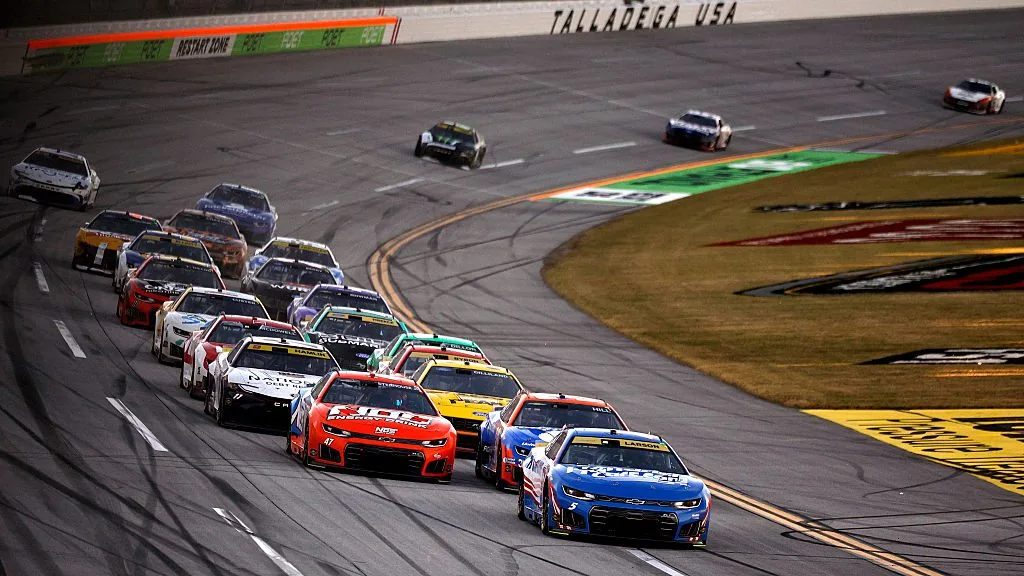
For the October 25, 2026 Cup Series race at Talladega, NASCAR specified a 3.5-inch rear spoiler and stage endings at Laps 98, 143 and 188. The smaller spoiler continued the direction taken at Daytona in August; the stage map matched Talladega's revised spring layout. These were specific Cup arrangements, not a new specification for every NASCAR race or series.
The changes addressed two connected problems through different mechanisms: how a car can build and use a run in the draft, and why a team might choose to conserve fuel rather than race at maximum pace. Understanding that distinction is more useful than assuming a smaller spoiler automatically solves fuel saving. As of October 29, the announcement and the completed race allow a careful comparison of the plan with the evidence.
The October Talladega changes at a glance
The October update shortened the spoiler another half-inch from the four-inch version introduced for Daytona's August race. Talladega retained the reduced-power configuration associated with that Daytona package. The stage layout also used the longer opening segment and two shorter closing segments already introduced at Talladega in the spring.
| Item | Earlier reference | October Talladega arrangement |
|---|---|---|
| Rear spoiler height | 7 inches before the August Daytona update; 4 inches at Daytona | 3.5 inches |
| Power configuration | 510 horsepower before the Daytona reduction | 465 horsepower retained from Daytona |
| Scheduled stage endings | Original plan: Laps 60, 120 and 188 | Laps 98, 143 and 188, matching revised spring Talladega |
That chronology prevents two common mistakes. The horsepower reduction was not first announced for the October Talladega race, and the October stage arrangement was not an entirely new experiment that had never been used there. NASCAR combined a further aerodynamic adjustment with an existing change to how the race was divided. Each decision had its own baseline.
The scope is equally important. A Cup superspeedway configuration is not a specification for every Next Gen venue. It also should not be transferred to the O'Reilly Auto Parts Series or Craftsman Truck Series because they raced at Talladega during the same weekend. The stock-car explainer provides the broader vehicle context; the numbers here belong to this particular Cup package.
Pre-race reporting also said teams were asked to bring a four-inch spoiler as backup equipment. Having a spare option available was not itself an announcement that NASCAR had canceled the 3.5-inch plan. A hardware contingency and an actual revision need different evidence, just as a proposed rule and a rule used in competition do.
When an old stage table conflicts with the October announcement, use the later event-specific instruction. A preseason document can accurately describe what was planned at publication and still be outdated by race week. The useful comparison includes the date of the specification, the series and the event, rather than assuming that every document labeled 2026 remains the final word for October.
What the smaller spoiler was intended to change in the draft
The objective was to make a useful run easier to turn into a passing opportunity. That is more specific than simply making the cars faster. A pack can travel quickly while drivers struggle to gain places, especially if leaving a sheltered line costs enough momentum to stall the attempted move.
Less drag and lower power need to be considered together
NASCAR's July explanation for the Daytona package paired a shorter spoiler with reduced horsepower to account for lower downforce. The pieces were part of the same balance. Reading only the engine number misses the change in the aerodynamic resistance the engine has to overcome and the change in how the car responds in traffic.
Drag resists the car's forward motion. Downforce contributes load that helps the tires grip. Those are different effects, even though a component can influence both. Reducing a spoiler's height therefore does not mean that every aspect of the car becomes easier for the driver. Less resistance and less aerodynamic support need to be considered together rather than collapsed into a single claim about speed.
The configuration can also behave differently in clean air and in a draft. Airflow around several closely spaced cars is not the same situation as an isolated qualifying lap. A performance expectation for one setting cannot simply be pasted onto the other. This is why a lower horsepower figure alone cannot establish that every race lap must be slower.
A stronger run is different from an automatic pass
A run is an increase in relative momentum that closes the gap to another car. Completing a pass then requires somewhere to take that momentum. The intended benefit of less drag was to reduce the penalty for moving out of line, so a driver could use the run instead of reaching the side of another car and losing the opportunity.
Space, timing and cooperation still matter. A driver who moves out without help can lose the push that built the run. A rival can occupy the desired lane, while a third car changes which route is available. Better potential to make a move does not guarantee a completed pass on every attempt. The drafting explanation covers those interactions in more detail.
Jamie McMurray's October preview welcomed the further change after drivers reported stronger runs at Daytona. That was an informed expectation for Talladega, not a controlled measurement of the additional half-inch by itself. Drivers' reactions are useful evidence about how a car feels, while the race record supplies another kind of evidence about how opportunities developed.
The same discipline applies to accidents. A dramatic incident is not proof that the smaller spoiler caused a particular loss of control. Establishing that would require the actual sequence and technical investigation. Describing the package's intended behavior should not turn into a diagnosis based only on the fact that the changed part was on the car.
Why the stage map became 98, 45 and 45 laps
The stage change reorganized when teams would face a fuel decision. Instead of two shorter opening stages and a longer run to the finish, the revised map put most of the scheduled distance into Stage 1. The two later segments were each 45 laps. That sporting change works on the incentive to pit and conserve; it does not directly change a car's aerodynamic response.
Lap 143 is the end of Stage 2, not its length
Stage information is commonly written in two ways: cumulative ending laps and individual segment lengths. They describe the same schedule but cannot be read interchangeably. Subtract the previous stage endpoint to find the length of the next segment.
| Segment | Scheduled ending lap | Scheduled length |
|---|---|---|
| Stage 1 | 98 | 98 laps |
| Stage 2 | 143 | 45 laps |
| Final stage | 188 | 45 laps before overtime |
The arithmetic is straightforward: 143 minus 98 is 45, and 188 minus 143 is another 45. By comparison, the original 60-120-188 endpoints describe segments of 60, 60 and 68 laps. Calling Stage 2 a 143-lap stage would dramatically misrepresent the fuel window and the kind of strategy teams were planning.
The final endpoint also describes regulation, not an absolute promise about the last lap of a completed race. Overtime can extend the distance. A crew chief therefore plans around both the scheduled window and the possibility that the finish will require extra running. A stage map should not be used as a guarantee of the fuel that will be needed under every ending.
Shorter final stages change the pit-stop incentive
When NASCAR introduced the spring arrangement, John Probst explained the intention to make the last two stages short enough to complete without a fuel stop. He also identified the opening 98 laps as a possible contest between one-stop and two-stop approaches. Those were the strategic questions the layout was designed to create.
The attraction is that a team expecting to reach the next endpoint without a green-flag fuel stop has less reason to spend that segment reducing how much it must add at an intermediate stop. Track position can be won through racing rather than only through the amount of fuel required on pit road. That explains the incentive; it does not promise every team will choose the same pace.
The long first stage leaves a different calculation. A faster approach may require more service, while a conserving approach may seek to reduce a stop or shorten one. The faster cars can also change the pressure on the conserving group by opening a gap. The strategy guide explains why the entire pit cycle matters when comparing those choices.
Even a shorter closing segment does not remove every contingency. A caution changes track position and the opportunities to stop; restarts change the immediate race; overtime can add distance. Teams still need a plan for those possibilities. The new map changed the decision they faced, rather than removing decision-making from the race.
Why tires and series differences still belong in the explanation
The spoiler was not the only relevant equipment detail at Talladega. Goodyear's October notes described a construction update for the Cup tire setup. Ignoring that context would make it too easy to attribute every handling observation to the half-inch spoiler change, even though a race car responds as a complete system.
Cup changed left-side construction, not the compound
For Cup, the left-side tire construction was updated while the tread compound stayed the same. The right-side tire remained the same configuration used at Talladega and Daytona since the beginning of the previous season. The distinction matters: new construction does not automatically mean a newly softer compound or a promise of greater tire wear.
Construction concerns how the tire is built; compound concerns the rubber formulation. A familiar compound can be paired with a revised structure. The phrase new tire can conceal that distinction if it is repeated without the manufacturer's explanation. Here, the current notes specify which side changed and what stayed familiar, rather than describing an entirely new four-tire grip package.
The other national series had a different update. The O'Reilly Auto Parts Series and Craftsman Truck Series used updated right-side construction, with their left-side tires remaining familiar. That is the opposite side from the Cup update. Sharing a venue and a weekend did not make their tire arrangements identical, and it certainly did not give them the Cup spoiler specification.
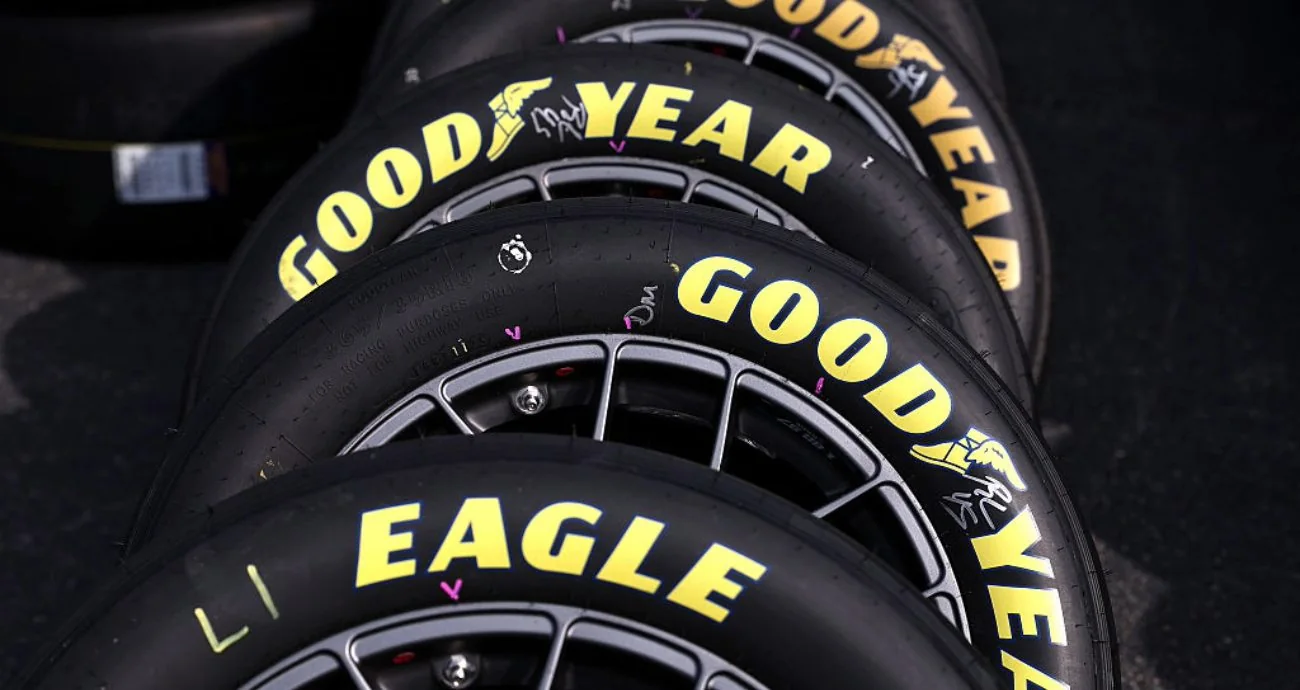
Cup teams were allotted seven total sets for the weekend: six new race sets and the qualifying set transferred to the race. Seven total should not be retold as seven fresh race sets in addition to qualifying rubber. Allocation is a limit on the equipment available, not a prediction that each team will make the same number of four-tire stops.
For a viewer comparing long-run behavior, the useful evidence would include pace over a stint, what service the team took and what the driver reported. A lap following a tire change differs from a lap late in a stint; traffic differs too. Those comparisons need context before they become an assertion that a construction change increased grip or that the spoiler caused a handling problem.
The published tire notes establish the specification and allocation. They do not provide a controlled separation of every component's contribution to the completed race. Keeping that boundary clear allows the equipment update to add understanding without turning a technical announcement into a performance claim it never made.
What the October race showed and what one race cannot prove
The completed race does not support calling the package a complete cure for fuel-saving racing. Conservation remained part of the opening stage, while other phases produced different kinds of competition. A useful assessment separates those observations instead of making the most exciting finish stand in for the entire afternoon.
Fuel-saving remained an issue in the opening stage
NASCAR's race report describes RFK Racing's three cars taking a faster approach while much of the field conserved. Chris Buescher, Ryan Preece and Brad Keselowski swept the first three places at the opening stage finish. That outcome shows a meaningful strategic split within the revised 98-lap segment.
NASCAR later confirmed that it had warned teams about minimum speed during that period. The enforcement story is distinct from whether the aerodynamic package improved the opportunity to pass. A car can have a different response in the draft while its team still chooses conservation for a pit-stop objective. The presence of one does not logically rule out the other.
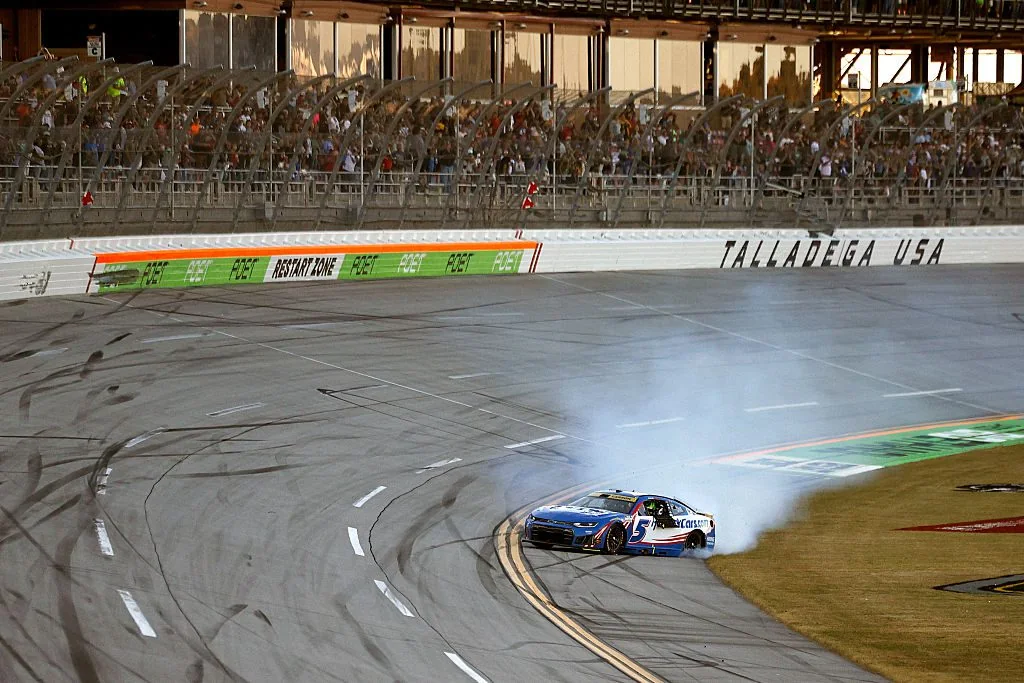
Kyle Larson ultimately won an overtime race completed over 189 laps, rather than the scheduled 188. His final-lap recovery supplies evidence that an opportunity developed at the finish. It does not quantify how much of that opportunity came from the spoiler, the evolving lanes, drafting help or the immediate traffic pattern. Nor does a memorable last lap erase a fan's complaint about the pace earlier in the race.
Judge the package with several kinds of evidence
For the racing objective, useful questions include whether drivers could build runs, whether those runs could become passes and whether they had choices after moving out of line. For the strategy objective, look at when teams conserved and what their pit cycles rewarded. Those questions assess different parts of the plan and should not be reduced to the winning margin alone.
A serious comparison also needs comparable context. An isolated qualifying lap does not reproduce a large draft. A stint interrupted by cautions does not reproduce a long green-flag run. A driver escaping an incident faces a different situation from one trying a planned pass. These differences matter before anyone credits a single part with every favorable or unfavorable observation.
The same standard protects the safety discussion from premature conclusions. A crash investigation can consider the actual sequence, the car and the conditions. An argument about whether the racing was entertaining cannot substitute for that work. No unsupported claim that the 3.5-inch spoiler caused a particular crash is needed to question or defend the racing product.
As of October 29, the sound conclusion is that NASCAR changed the Cup equipment and race structure to create better opportunities, while the race supplied mixed questions to examine about how teams used them. Future revisions would need their own announcement. Use the Cup results for the actual finish and the schedule for upcoming events, rather than assuming this Talladega specification automatically carries to every track or the next season.
About the author
NASCAR Schedule Editorial Team
The NASCAR Schedule editorial team turns verified schedules, timing and scoring, official announcements and race-weekend context into direct answers for fans.
View all articles by this author →Join the discussion
Comments
Sign in with Google to comment. Keep it race-focused; new comments are reviewed before publication.
Loading comments…