What Is a Stock Car? NASCAR Cars Explained for 2026
A Cup-specific explanation of the stock-car name, 2026 manufacturer bodies, Next Gen construction, drivetrain, aerodynamics and safety.
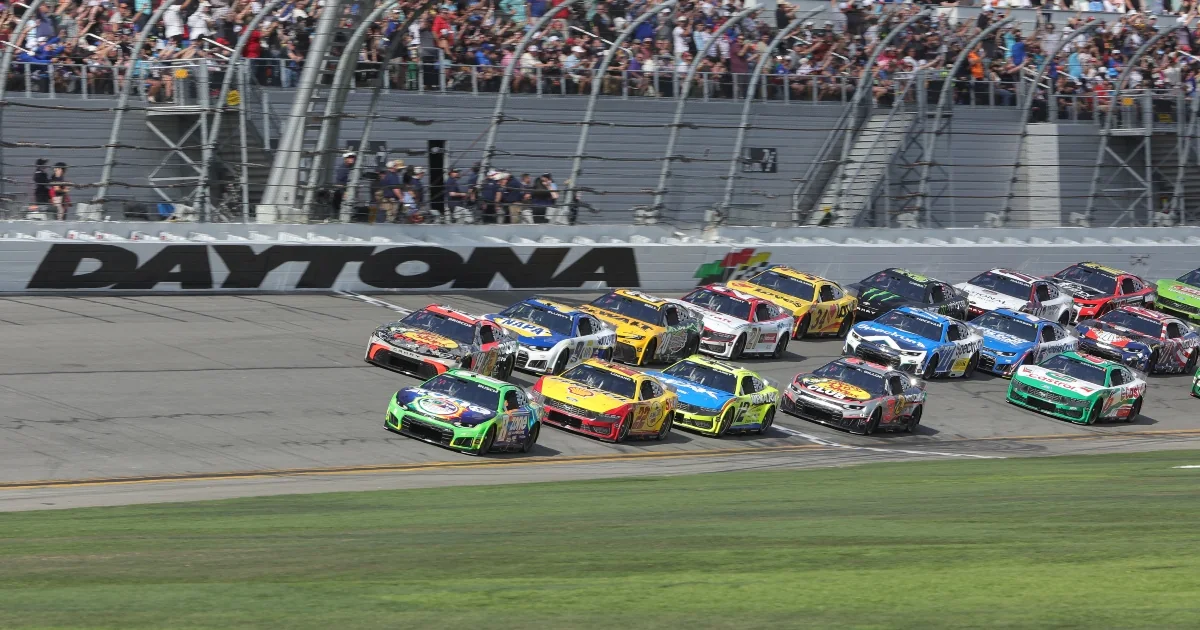
A 2026 NASCAR Cup stock car is a purpose-built Next Gen racing machine, not a modified car from a dealer lot. “Stock” survives from NASCAR's production-car roots and from the manufacturer identities fans still see in the Chevrolet Camaro ZL1, Ford Mustang Dark Horse and Toyota Camry XSE. Beneath those approved composite bodies is a common steel-tube platform with a 358-cubic-inch V8, sequential transaxle and track-specific aero and power packages. This guide, checked August 13, 2026, explains what the name means, how the current Cup car works and where its resemblance to a street car ends.
What is a stock car in NASCAR?
A stock car is a closed-wheel, closed-body racing car from a discipline that began with production automobiles. In the 2026 NASCAR Cup Series, however, it is not a showroom Chevrolet, Ford or Toyota modified for competition. It is a purpose-built Next Gen race car constructed to NASCAR's Cup rules, then clothed in an approved manufacturer-specific body. “Stock” now describes the sport's lineage, category and model identity more than the origin of its individual parts. These definitions and the 2026 scope were checked August 13, 2026.
The name was once much more literal. NASCAR's premier division started as Strictly Stock, and its first race under that banner was held at Charlotte Fairgrounds on June 19, 1949. Early entrants used stock frames and bodies, with racing changes and safety equipment layered onto cars recognizable from the street. As speeds rose and production cars changed, NASCAR permitted purpose-built chassis because a road-car structure was no longer the best foundation for repeated high-speed impacts, close contact and long races.
What are NASCAR cars actually called?
“Stock car” is the broad answer. In this guide, the precise answer is a NASCAR Cup Series Next Gen stock car. Fans and teams also say “Cup car” or “Next Gen car.” NASCAR is the sanctioning body rather than the make or model, so calling one vehicle “a NASCAR” is understandable casual speech but not the technical description. Other NASCAR series also race stock cars or stock-car-derived vehicles, yet they do not automatically use the Cup car's chassis, wheels, transmission or power package.
The Next Gen platform entered competition in 2022 and remains the Cup foundation in 2026. Its steel-tube structure, modular clips, composite body, rear transaxle and independent rear suspension were designed as racing hardware from the outset. Chevrolet, Ford and Toyota still supply visual model character and engine programs, while NASCAR controls the architecture and approval targets. That blend is the modern meaning of “stock”: the cars preserve manufacturer rivalry and a production-model silhouette inside a dedicated racing formula.
This distinction is useful whenever a specification sounds contradictory. A Cup car can resemble a Camry without sharing the hybrid road car's powertrain; it can carry Camaro headlight graphics without working headlamps. The resemblance helps a fan identify the brand at speed, while the purpose-built construction makes the vehicle suitable for drafting, road-course braking, pit stops and contact. For more terminology built around the rulebook, browse the site's NASCAR rules explainers.
Which stock cars race in the 2026 NASCAR Cup Series?
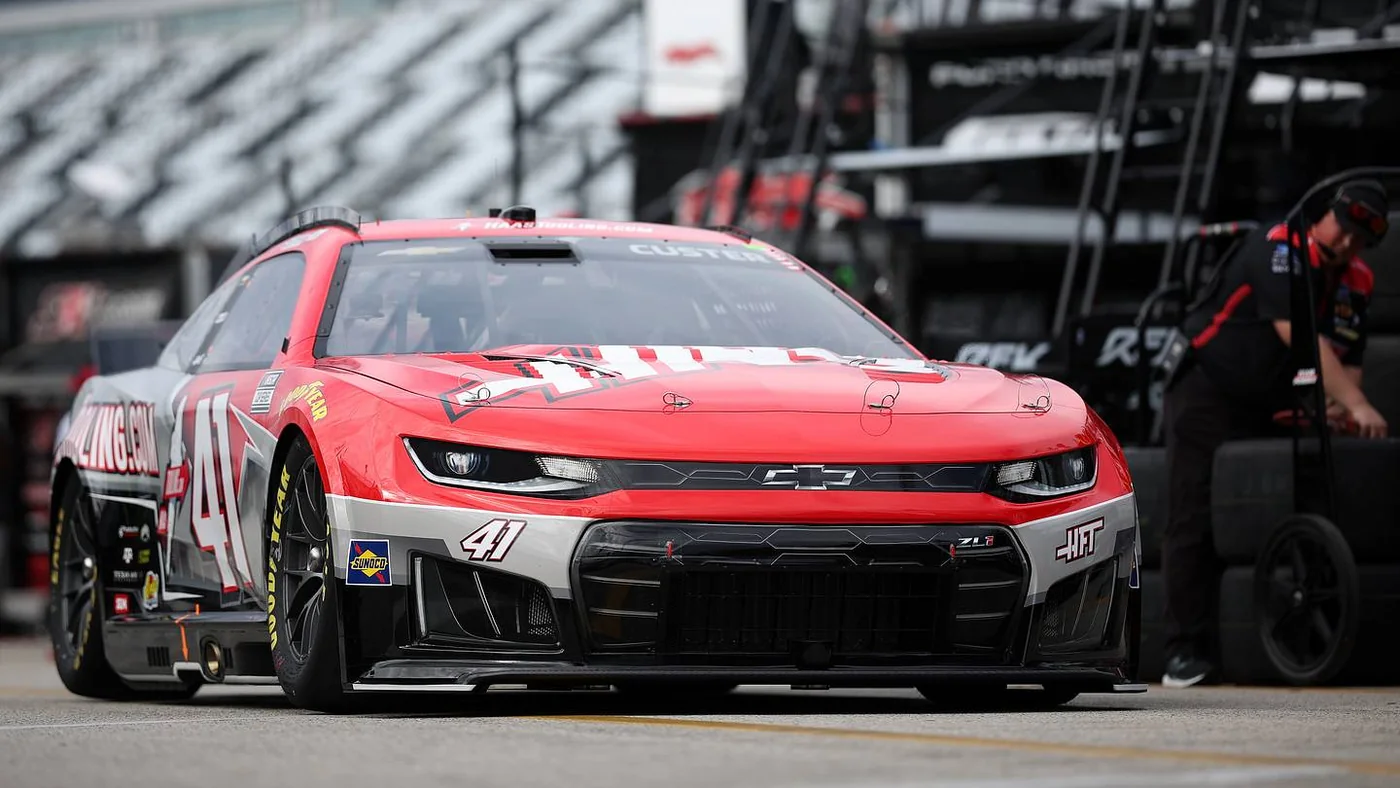
The 2026 Cup field has three manufacturer identities: the Chevrolet Camaro ZL1, Ford Mustang Dark Horse and Toyota Camry XSE. Those names matter because fans can still recognize a Chevy, Ford or Toyota in the grille, headlights and body-side styling. They do not mean a Cup team starts with a production car from a dealership. Each company develops a competition body that fits NASCAR's common Next Gen platform and aerodynamic requirements.
| Manufacturer | 2026 Cup body | What to know |
|---|---|---|
| Chevrolet | Camaro ZL1 | An updated 2026 competition body has a larger hood dome, revised grille and redefined rocker panels. |
| Ford | Mustang Dark Horse | The Dark Horse entered Cup racing in 2024 and remains the 2026 model. |
| Toyota | Camry XSE | The XSE body replaced the Camry TRD for 2024 and continues in 2026. |
Why does Chevrolet still race a Camaro?
Chevrolet ended passenger-car Camaro production after the 2024 model run, but that did not instantly remove the name from NASCAR. The sanctioning body approved Chevrolet's updated Camaro ZL1 competition body for 2026. It is a useful illustration of what “stock car” means today: the badge and exterior identity connect racing to a showroom brand, while eligibility and technical approval determine what can race.
Do the badges change the mechanical platform?
Not in the way they would on street cars. A road-going Camry can be a hybrid, for example, but the Cup Camry XSE is not the showroom car's hybrid drivetrain in racing trim. Chevrolet, Ford and Toyota work inside tightly controlled body and aerodynamic boundaries, while teams use the same basic Next Gen architecture. That combination preserves visible manufacturer rivalry without turning the field into three unrelated engineering formulas.
One easy 2026 naming trap is Ford's Mustang Dark Horse SC. NASCAR announced that newer competition model for a debut at the 2027 Daytona 500. For the 2026 season, the correct Ford name is still Mustang Dark Horse. These model labels also apply specifically to the Cup Series; other NASCAR divisions use their own vehicle specifications and body identities.
How is a modern Next Gen stock car built?
A 2026 Cup car begins with a purpose-built steel-tube racing chassis, not a production Camaro, Mustang or Camry shell. NASCAR's official Next Gen specification lists bolt-on front and rear clips, plus front and rear bumper structures. The center structure, clips and approved components form a modular architecture that teams assemble and prepare for competition. A damaged end can sometimes be replaced as a module, but this is still specialized race-shop work—not a street-car repair.
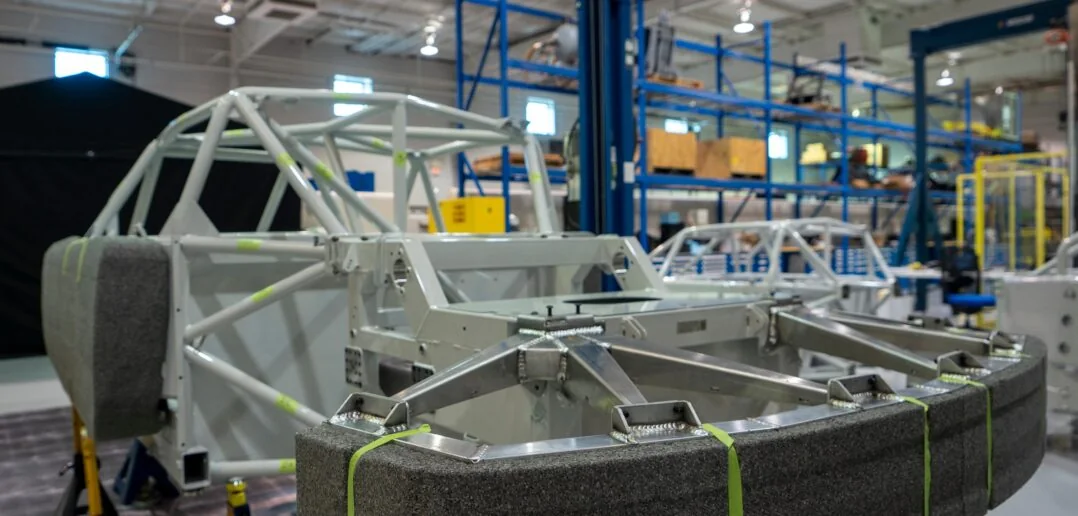
A common platform beneath three different bodies
Durable, flange-fit composite body panels attach over that structure. They supply the model-specific hood, nose, doors and rear styling that let viewers distinguish Chevrolet, Ford and Toyota. “Composite” is the accurate description for the body; it should not casually be called an all-carbon-fiber shell. The separate flat undertray is the part identified as carbon in NASCAR's specification.
The Next Gen body is also symmetrical. Earlier Cup teams worked with body skew and a tail offset to build sideforce into the car. The newer platform moved away from that asymmetric shape, placing more emphasis on mechanical grip and the driver's management of the car. This is one reason a current Cup car can resemble a production coupe in silhouette while remaining a tightly regulated racing machine underneath.
Dimensions and running gear
NASCAR lists the car at 193.4 inches long, 78.6 inches wide and 50.4 inches high, with a 110-inch wheelbase and an approximate weight of 3,300 pounds. Those figures help describe the platform; they are not permission to assume that every track setup, ride height or loaded race condition is visually identical.
The suspension is double-wishbone at both ends, using billet-aluminum control arms and adjustable coil-over shock absorbers. Independent rear suspension replaced the solid rear axle used by the previous Cup generation, while rack-and-pinion steering replaced the former steering-box approach. NASCAR paired those changes with larger, wider wheels and tires to give the car more mechanical grip.
Standardized architecture narrows the areas in which a team can invent unique hardware, but it does not make every car perform the same. Teams still make permitted setup choices, tune suspension and balance, prepare parts, execute pit work and interpret data. The shared platform defines the engineering box; people determine how effectively a car operates inside it. The engine and rear-mounted gearbox are another major part of that explanation, so they deserve their own look next.
What engine and transmission does a 2026 Cup car use?
The familiar sound is a naturally aspirated V8, but it is not an engine lifted from any showroom model. NASCAR's Next Gen specification calls for a 358-cubic-inch engine—about 5.86 liters—with electronic fuel injection and a dry-sump oil system. It breathes without turbochargers, and cooling air leaves through the hood louvers. Split side-exit exhausts help produce the unmistakable Cup-car note.
2026 Cup drivetrain at a glance
- Engine: 358-cubic-inch, naturally aspirated, fuel-injected V8
- Lubrication: dry-sump oil system built for sustained racing loads
- Fuel: Sunoco Green E15 in an approximately 20-gallon fuel cell
- Gearbox: five-speed manual sequential transaxle
- Power: determined by NASCAR's track-specific rules package, not one universal figure
Is a NASCAR Cup car automatic?
No. “Sequential” can sound like an automatic-car term, but the Cup system has a mechanical shift lever and changes gears in sequence. The driver pulls the lever backward to upshift and pushes it forward to downshift. That is very different from the four-speed H-pattern gearbox used in the previous Cup car, where the lever moved through a gate to select individual gears. It is also not a paddle-shifted street automatic.
The word transaxle is another important clue that this is specialized machinery. Instead of describing the gearbox and rear gearing as the old layout did, NASCAR's five-speed unit combines the transmission and differential functions in a rear assembly. The official specification identifies a ramp-and-plate differential. The layout was one of the major drivetrain changes introduced with Next Gen.
Fuel injection does not make it a showroom engine
Cup racing moved from carburetors to electronic fuel injection in 2012, and the current engine continues that technology. It burns Sunoco Green E15, a racing gasoline blend containing 15 percent ethanol, from a fuel cell listed at roughly 20 gallons. Those are modern features, but the combination is still engineered for competition and governed by NASCAR rules.
The 2026 Cup car is not hybrid, even though early Next Gen discussions noted that the architecture could accommodate future electrification. Likewise, the Toyota body name does not install a road Camry's hybrid powertrain. How much power the V8 is permitted to make depends on the track package, so one permanent horsepower number would be misleading. That changing 2026 figure makes more sense alongside the spoiler, underbody, tires and brakes that turn engine output into lap time.
How do aerodynamics, tires, brakes and 2026 rules packages change the car?
A Cup stock car is not one frozen specification used identically at every venue. NASCAR combines engine output, spoiler size, underbody configuration, tires and other settings into a rules package for a type of track. That is why the accurate answer to “How much horsepower does a NASCAR car have?” begins with another question: at which 2026 race?
The air underneath matters, too
At the front, a splitter manages airflow; beneath the car, a flat carbon undertray leads toward a rear diffuser. The rear spoiler and diffuser configuration influence downforce and drag, which affect grip, wake behavior and how easily a driver can build a run on another car. Manufacturer bodies retain recognizable shapes, but each must work inside NASCAR's aerodynamic limits.
What is the 750-horsepower package?
For 2026, NASCAR raised the target from 670 to 750 horsepower at the five road courses and a named group of shorter ovals. The road-course list is COTA, Watkins Glen, San Diego, Sonoma and the Charlotte Roval. The oval list includes Bowman Gray, Phoenix, Darlington, Martinsville, Bristol, Dover, Nashville, North Wilkesboro, Iowa, Richmond, New Hampshire and Gateway. NASCAR's 2026 technical update pairs that target with a three-inch rear spoiler and fewer diffuser strakes.
The change uses a larger tapered spacer to let more air reach the engine. NASCAR's stated objective was to put more emphasis on throttle control and tire management. It does not mean every 2026 Cup event uses 750 horsepower, and superspeedway-style racing was specifically outside that expansion.
Why Daytona has a different number
NASCAR made a separate, event-specific change for the August 29, 2026 Cup race at Daytona. The summer Daytona package reduces the spoiler from seven inches to four and the target from 510 to 465 horsepower. Officials expected lower drag to make solo runs about 3 mph faster while pack speeds stayed roughly similar. That announcement covered this Daytona event; NASCAR had not yet confirmed the same settings for future superspeedway races.
Racing tires and brakes complete the package
The car rides on 18-by-12-inch forged-aluminum wheels with Goodyear Eagle racing tires. Compound and construction can be selected for an event, so “Goodyear Eagle” does not mean one tire behaves the same at Bristol, Sonoma and Daytona. Tire wear changes grip across a run and can turn a driver's throttle discipline into a strategic advantage.
Braking hardware is equally specialized. The official Next Gen specification lists six-piston front and four-piston rear monobloc calipers, with 15-inch front and 14-inch rear rotors plus heavy- and light-duty disc packages. Road courses and short tracks demand repeated deceleration; faster ovals ask different questions. The visible body may say Camaro, Mustang or Camry, but this coordinated package of airflow, power, rubber and braking is what makes it behave like a Cup car.
How does a NASCAR stock car protect the driver?
A modern Cup car manages risk through layers rather than one “safety feature.” The rigid center structure and reinforced door area help preserve space around the driver, while engineered front and rear zones are designed to deform in controlled ways. Energy-absorbing foam on the crash structures and around the doors helps dissipate part of an impact. None of that makes racing injury-proof; it gives engineers systems to manage forces in a crash.
Why some parts are designed to crush
It may sound safer to make every tube as stiff as possible, but a structure that never yields can pass more acceleration into the cockpit. After the Next Gen car's 2022 debut, NASCAR revised the center and rear clips with selected changes to bars, tubing and deformation “triggers.” Further 2023 updates softened parts of the front clip to create a larger crush zone and added reinforcement at the right-side door bars to resist intrusion.
Those changes show why the modular chassis matters beyond repairability. NASCAR can revise a front or rear structural assembly as testing and race data identify a better way to manage energy. “Softer” in a designated crush zone does not mean the entire car is weak; it means that area is intended to consume energy before it reaches the protected center.
Flaps help counter lift during a spin
Roof flaps deploy when airflow reverses over a spinning car, and Next Gen also links them with a flap at the rear diffuser. For 2026, NASCAR added another layer: A-post flaps are mandatory at every Cup track. The A-post runs beside the windshield from the hood edge toward the roof. Its flap deploys with the roof flaps to help reduce the chance of liftoff, expanding a measure that had previously been used only in superspeedway events.
Race incidents feed the next revision
The car itself records information through an incident-data system, including synchronized channels and GPS data. Engineers combine those measurements with high-speed video, driver input, crash reconstruction, physical testing and computer models. NASCAR has also studied the height, positioning and gaps of SFI-approved foam around the driver's head.
This feedback loop is the most important safety takeaway. The 2026 car is not simply the exact design unveiled in 2021: rear-impact lessons led to clip changes, frontal and side-impact work produced more revisions, and the A-post rule expanded anti-liftoff equipment. A Cup stock car remains a high-energy competition vehicle, but its purpose-built construction gives NASCAR structures and data to keep refining.
How is a Cup stock car different from a street car?
A Chevrolet Camaro ZL1 Cup car and a road Camaro share design language, not a chassis or production powertrain. The same principle applies to the Mustang Dark Horse and Camry XSE. OEM designers create real grille, hood, headlight and body-side identities, but those panels attach to NASCAR's purpose-built platform. A street vehicle serves everyday transportation; a Cup car is optimized for closed-course competition under one technical rule book.
| Area | 2026 Cup stock car | Road-car connection |
|---|---|---|
| Structure | Steel-tube Next Gen chassis | No production unibody is used |
| Exterior | Approved composite competition panels | Recognizable model styling and proportions |
| Powertrain | 358-cubic-inch V8 and sequential transaxle | Not the showroom model's engine or gearbox |
| Purpose | NASCAR Cup competition | Brand recognition and relevant design cues |
What should a new fan watch for?
Look closely in the garage or during a slow-motion pit stop. Flange lines reveal sections of the composite body. Hood louvers vent radiator air. Each 18-inch wheel is retained by one center-locking lug, and the diffuser is visible beneath the rear. On track, notice how a driver uses throttle, braking and tire life differently at a short oval, road course or superspeedway. The common platform sets boundaries, but setup, strategy and execution still separate the field.
The term “stock car” therefore carries its history forward without pretending that a 2026 Cup machine came off an assembly line. Early NASCAR raced much closer to actual production automobiles; successive generations became specialized as speed, competition and safety demands grew. That larger cars-over-the-years story deserves its own timeline. For today, the practical definition is simple: a manufacturer-shaped, purpose-built NASCAR race car.
Can a Cup model outlive the showroom car?
Yes. Chevrolet ended passenger Camaro production with the 2024 model run, yet NASCAR approved a refreshed Camaro ZL1 competition body for 2026. The example makes the distinction especially clear: eligibility, manufacturer identity and an approved racing body can continue even when buyers cannot order a new equivalent road model.
To see where each package appears next, use the NASCAR schedule. After the checkered flag, compare the race results with the updated Cup standings; the car is common architecture, but the outcomes remain unmistakably competitive.
About the author
NASCAR Schedule Editorial Team
The NASCAR Schedule editorial team turns verified schedules, timing and scoring, official announcements and race-weekend context into direct answers for fans.
View all articles by this author →Join the discussion
Comments
Sign in with Google to comment. Keep it race-focused; new comments are reviewed before publication.
Loading comments…