NASCAR Rules Explained: Stages, Flags, Overtime, Pit Road and Penalties
A race-sequence guide to the NASCAR Cup Series rules that most often change track position and the official finishing order in 2026.
NASCAR rules turn a race into much more than cars running until the checkered flag. In the 2026 Cup Series, stages create planned scoring breaks, yellow flags freeze and reorganize the field, lap-down cars may recover a lap through specific procedures, drivers choose restart lanes, and late cautions can trigger overtime. Pit road has its own speed, boundary and crew rules, while an on-track finish can remain unofficial until inspection is complete. This guide explains that full race-control sequence in plain English, including the exceptions that matter. It is a practical public explainer rather than a substitute for NASCAR’s event-specific instructions or member Rule Book: when a track layout, weather plan or special format changes a procedure, the official event communication controls.
How NASCAR stages divide a Cup race and change strategy
A NASCAR Cup Series points race is not scored only at the checkered flag. Most events are divided into three stages, with the first two acting as in-race scoring checkpoints and the last stage ending at the finish. The Coca-Cola 600 is the familiar four-stage exception. Stage lengths are set for each event, so the lap numbers are something to check on the race broadcast or weekend information rather than assume from the track length.
What happens at a stage finish
When the leader reaches the end of an opening stage, the flag stand shows a green-and-white checkered flag. The top ten at that scoring line earn points: 10 for first, nine for second and so on down to one point for 10th. A planned caution normally follows, bunching the field and opening a pit-stop decision before the next stage. That is why a stage finish feels like more than a lap counter: it awards something permanent, wipes out an on-track interval and creates a fresh fight for pit-road and restart position.
The 2026 distinction matters. Stage points still use the 10-to-1 scale, but NASCAR no longer awards bankable playoff points. The Cup champion is decided through the season-ending Chase, and the points earned during stages help determine who qualifies and how the title race develops. Race wins now carry a larger 55-point award, so the rules reward both collecting points throughout the afternoon and converting speed into a victory. For the complete finishing-position and championship math, see the complete 2026 NASCAR points system.
Why a team may willingly give up stage points
The fastest strategy is not always to stay on track until the stage flag. At a road course, for example, a contender may pit shortly before a stage ends. That car gives up the chance to score at the checkpoint, but it completes service before most of the leaders stop under the following caution. When the order cycles, the short-pitting car can begin the next run closer to the front, with fresher track position and a clearer path to the race win.
The decision depends on where the car is running and what the team needs. A midpack driver near the Chase cut line may value five or six stage points more than a speculative position gain. A car with winning pace may accept zero stage points to protect its path to the final-stage restart. At drafting tracks, the known stage distance also shapes fuel saving and the timing of green-flag stops. The useful broadcast question is therefore not simply, “Who won the stage?” It is, “Who scored now, who pitted early, and where will each group restart?”
What every NASCAR flag means—and what a yellow actually does
NASCAR flags are messages from race control, not decoration at the flag stand. Some change the state of the entire race; others direct one driver. The quickest way to read them is to separate “the race is running or stopped” from “this car must respond.”
| Flag | What it tells a Cup driver |
|---|---|
| Green | The race has started or restarted and is under full-speed competition. |
| Yellow | A caution is in effect. Slow to pace speed, hold position and follow race-control instructions. |
| Red | The race is stopped, usually for a major cleanup, track repair, weather or another unsafe condition. |
| White | The leader has begun the final lap. |
| Black-and-white checkered | The race is complete; the field is scored to the finish, subject to officiating review. |
| Green-and-white checkered | An opening stage has ended. |
| Blue with a yellow diagonal stripe | Faster lead-lap traffic is approaching a slower car. |
| Black | The indicated car must report to pit road for a penalty, inspection or unsafe condition. |
| Black with a white cross | The driver has not obeyed the black flag; NASCAR can stop scoring that car until it complies. |
A caution freezes the race; it does not invite a sprint to the line
When the yellow appears, drivers reduce speed and form behind the pace car. They do not race back to the start/finish line. NASCAR establishes the on-track order from the most recent timing-and-scoring line each car crossed before the caution. Transponders, scoring loops and video give race control several ways to check the lineup. That detail explains why the order shown after a replay may not match the nose-to-nose picture a television camera captured elsewhere on the track.
Pit lane introduces another layer. The field can be frozen on the track while pit road remains active at its speed limit. Depending on where a car is during a green-flag pit cycle, it may need to cross the start/finish scoring line on pit road or the pit-out line before the leader reaches the corresponding track line to remain on the same lap. Trying to beat that race with excess pit speed is not a shortcut; NASCAR’s public procedure warns that the driver can lose a lap and be sent to the rear.
Why a yellow changes more than the lap time
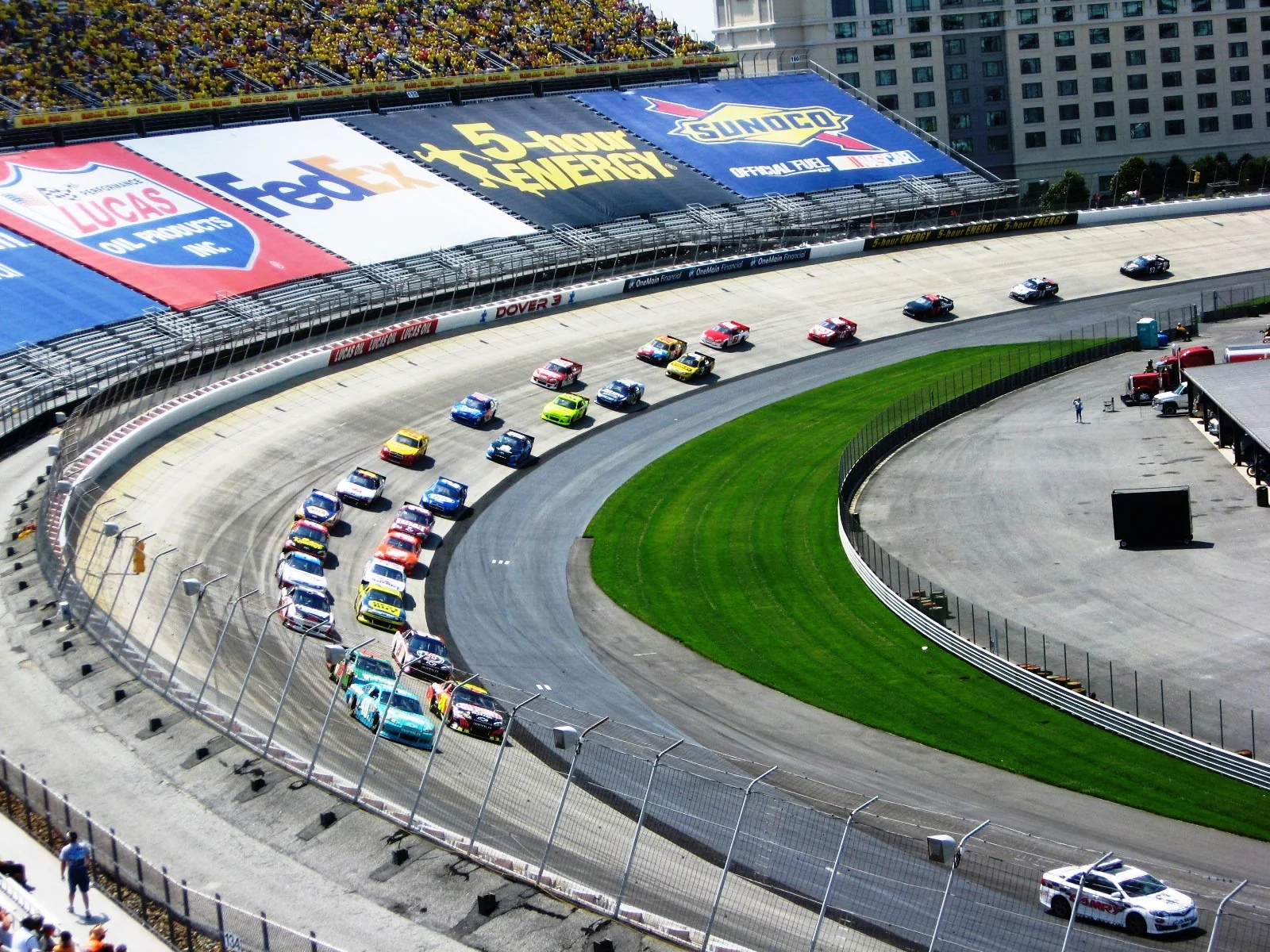
A caution compresses every interval the leader earned under green. It lets safety crews work, closes and then reopens pit road under race-control direction, identifies the free-pass car, sorts penalties and prepares the field for a restart. That makes it a strategy event as well as a safety procedure. A crew chief must decide whether tires and fuel are worth surrendering track position, while the driver must know whether the car is on the lead lap, eligible for lap recovery or being sent to the tail.
A red flag is different: competition is halted rather than paced. The field stops where officials direct it, and teams wait for permission before the race can resume. At the other end of the spectrum, the white flag tells the field that one lap remains. A clean final lap leads to the checkered flag; an incident can instead require NASCAR to display yellow and use the same scoring tools to freeze the finishing order safely.
Free pass vs. wave-around: two different ways to regain a lap
A free pass and a wave-around can both put a driver one lap closer to the leader, but they are not the same award. The free pass is a single designation made by race control. A wave-around develops from where lapped cars are positioned after the leaders make their caution-flag pit stops. The difference matters because one procedure identifies a beneficiary, while the other requires a team to skip service and accept the risk that follows.
The free pass goes to one eligible lapped car
The free-pass car—often called the “lucky dog” on a broadcast—is normally the first car one lap down when the caution begins. NASCAR confirms the beneficiary from the frozen running order and directs that car around the pace vehicle to recover one lap. In a 2026 Kansas stage finish, for example, a last-corner change in which lapped car remained ahead of the leader determined which driver occupied that valuable first-car-one-lap-down position.
“Normally” is important. Penalty status, the cause of a caution and an unusual scoring sequence can affect eligibility, and those edge cases belong to race control rather than a fan’s visual guess. The useful information on the broadcast is the car NASCAR has officially named as the beneficiary. It is also only one lap: a driver three laps down becomes two laps down, not automatically a lead-lap contender.
A wave-around trades tires and fuel for lap status
Picture a caution interrupting a green-flag pit cycle. Some lapped cars can wind up in front of the leader because the lead-lap group pits while they stay on the track. Near the restart, race control can direct those cars past the pace vehicle so the leader heads the field. Each wave-around car gains a lap and drops to the rear of the restart order.
The price is the skipped stop. Once a team takes the wave-around, it cannot come down pit road during that same caution and then keep the benefit; the car must return to green before it can pit. If another yellow arrives quickly, the gamble looks brilliant: the driver has recovered a lap and soon gets another chance for tires and fuel. If the race stays green, the car may have to pit earlier than its lead-lap rivals and can lose the recovered lap again.
That is why “back on the lead lap” is only half the story. Ask whether the car received the free pass or took a wave-around, how much fuel remains, how old the tires are, and how long the next green-flag run may last. The official race results and lap-by-lap consequences make more sense once that pit-cycle trade is visible.
How NASCAR restarts work and why drivers use the choose rule
A restart has two distinct steps: race control establishes who belongs in the lineup, then drivers make a lane choice before the leader launches the field. Mixing those steps causes much of the confusion. The free pass, wave-arounds and penalties determine who reaches the restart queue; the choose rule determines whether each eligible driver takes the inside or outside row.
The leader controls the launch inside the restart zone
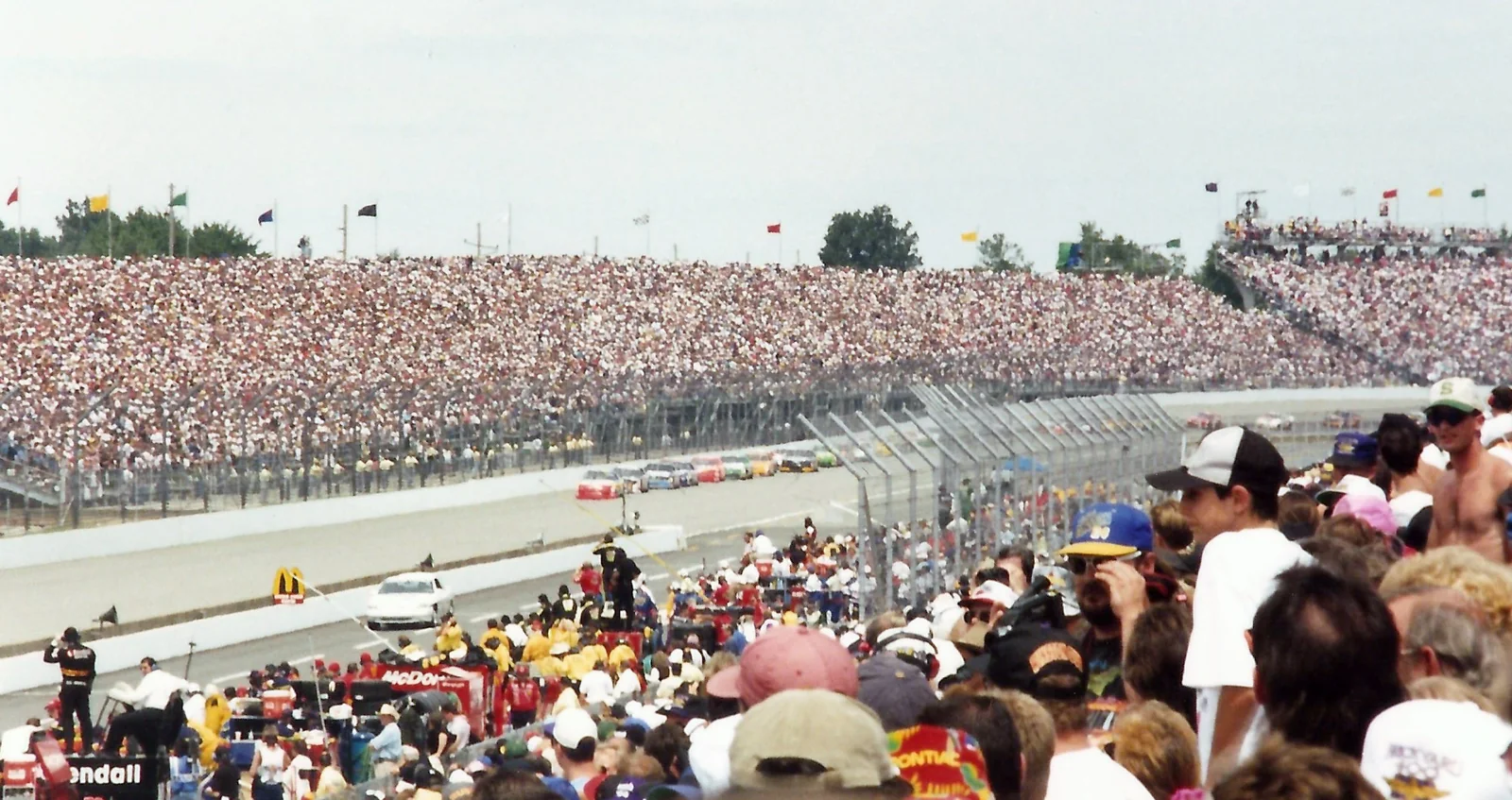
Before green, the field forms nose-to-tail and door-to-door at pace-car speed. The leader is the control car. After the pace vehicle leaves, the leader must initiate the restart within the marked restart zone; if the leader reaches the end without going, the starter can display green. NASCAR watches the zone and formation because laying back, accelerating early or leaving an improper gap can manufacture a run before the race is fairly released.
The car alongside the leader is not required to surrender simply because it reaches the start/finish line first after a legal launch. Once green is displayed, a second-place driver who reacts better—or whose rival spins the tires—can win the drag race to the line. The key distinction is that the front-row challenger cannot jump ahead before the control car legally starts the race.
Preferred lane or a better row?
During the choose process, drivers approach a marked commitment area in running order and select the inside or outside. The choice can produce uneven columns. If the first four cars all take the preferred outside, the next driver might stay outside and line up fifth, or take the empty inside spots and move forward several rows. That is a legal strategic trade, not race control randomly reshuffling the field.
The best answer changes by track and moment. One groove may have more rubber and acceleration grip; the other may offer clean air or a better angle into Turn 1. Fresh tires may make the shorter inside route attractive, while worn tires make wheelspin more dangerous. At a drafting track, a driver may choose the lane containing a strong teammate or manufacturer partner. Late in a race, gaining a row can justify the worse groove because there may not be enough laps to recover positions conventionally.
An old explainer may say the choose rule excludes road courses or the superspeedways at Daytona and Talladega. That was true when NASCAR introduced the national-series procedure in 2020, not after the 2023 expansion. NASCAR added superspeedways and then road courses, so current viewers should rely on the event’s race-control instructions for the precise choose location and restart-zone markings rather than an outdated track-type exception.
NASCAR overtime: when the distance is no longer the distance
NASCAR overtime is a green-white-checkered attempt to finish a race under green after a late caution disrupts the scheduled ending. It does not guarantee exactly two extra laps, and it does not guarantee a green-flag finish in every circumstance. The advertised distance can grow until race control gets a valid attempt or determines that weather, visibility or safety requires another ending.
- Green: The field takes an overtime restart with the leader controlling the launch in the restart zone.
- Overtime line: If the leader returns to the start/finish line under green, the attempt is valid and the white flag signals the final lap.
- Next flag: After that valid crossing, the next flag ends the race—normally checkered after the final lap, but yellow if an incident freezes the field first.
If a caution appears before the leader reaches the start/finish line on the first green lap, the attempt has not reached NASCAR’s overtime line. Race control can reset the lineup and try again. There is no preset maximum number of attempts. That is why “green-white-checkered” is useful shorthand for the intended sequence, not a promise that the official race distance will increase by only two laps.
Unlimited attempts create limited-resource decisions
Every extra caution consumes fuel while the field circulates, and every launch heats or wears the tires. A crew chief who calculated enough fuel for the scheduled distance may ask the driver to save aggressively under yellow. A team with more fuel but older tires may stay out for track position; another may pit, accept the rear of the lineup and hope fresh grip can carry it forward. The five-overtime 2024 Nashville finish, which added 31 laps, is an extreme reminder that the uncertainty is real even though most overtime races do not become that long.
Driver cooperation also changes. During a long drafting run, the car behind may keep pushing because both cars benefit. With only a lap or two to decide the race, that same driver has every reason to pull out and make the pass. At Kansas in 2026, a late caution erased a leader’s advantage before white, and the overtime lane choice plus an immediate three-wide move reordered the front. At EchoPark later that season, the car leading at white did not win; a last-lap push helped produce a different winner and a three-wide finish.
For viewers, the clean test is simple: watch whether the leader reaches the start/finish line under green after the overtime restart. Before that crossing, another caution can create another attempt. After it, the next flag closes the contest and race control freezes any incident order for review. The lap total and classification shown in the official NASCAR results are the records that matter, not the originally advertised distance or the first car visible in an incomplete replay.
Pit-road rules that decide races
A pit stop begins before the car reaches its stall and remains under scrutiny after it leaves. Entry commitment, speed, open/closed status, box position, crew timing, tire control and the exit blend are separate officiating points. A team can complete flawless tire and fuel service yet lose the race because the driver was too fast in one segment or a crew member touched the service side too soon.
Pit speed is measured through timed segments
NASCAR sets a pit-road speed for each event; it is not one universal Cup limit. Enforcement operates between the marked entry and exit speed lines. Timing lines divide pit road into sections, and the system calculates speed from distance over time in each one. That is why a broadcast may show a driver briefly above the posted number without an automatic call, or show a penalty even when the dashboard looked acceptable—the official measurement is the timed segment, not a single camera frame.
Drivers learn where those lines sit and manage the average. Stopping in the pit box consumes time in that segment, so a driver can accelerate after a timing line near the stall and still remain within the measured average. That is legal optimization only if every segment passes. There is no safe fan rule such as “the posted limit plus five”; NASCAR communicates and enforces the event procedure. Speeding while serving a pass-through also creates another pass-through rather than clearing the first mistake.
Commitment, the pit box and crew control
At entry, the commitment line tells NASCAR that the car is coming to pit road. Once the driver crosses it, the car must continue through pit road rather than dart back onto the racing surface. Under yellow, the entry light/flag controls whether pit road is open. The public penalty card describes a red light as closed, so hearing an anticipated opening on the radio does not excuse driving past a closed signal.
A standard four-tire Cup stop uses two tire changers, a tire carrier, a jackman and a fueler. Their work is choreographed around when the car is close enough for service, where equipment may be staged, and who controls each removed wheel or tool. The fueler’s job has extra restrictions because of the hazard. NASCAR’s public guidance also recognizes special or dual-purpose situations, so five named roles should be understood as the normal stop—not a license to infer every personnel allowance from television.
Common pit-road calls fall into three practical groups:
- Driver/vehicle: speeding, missing the commitment procedure, driving through too many pit boxes, stopping outside the assigned box, entering while closed or blending out incorrectly.
- Crew: going over the wall too early, having too many people in contact with the service area or performing a task a role is not authorized to perform.
- Equipment: an uncontrolled tire, a pit gun or other equipment not returned properly, or gear leaving/interfering beyond the assigned area.
Cameras and software help flag a possible violation, but officials review the stop and make the ruling. For many routine calls, an offense under green results in a pass-through, while the comparable yellow-flag call sends the car to the tail for the restart. Safety violations, interference, damaged-vehicle procedures and other serious circumstances can bring different consequences at NASCAR’s discretion. That is why a broadcast graphic should identify both the violation and how it must be served.
Before the next race, use this weekend’s NASCAR schedule as the starting point, then listen for event-specific pit speed and entry instructions. The governing question is always what NASCAR communicated for this event, not what applied at the previous track.
Penalties, black flags, disqualification and the official result
“Penalty” can mean four different things in NASCAR: a sanction served during the race, a change to the finishing order, a technical disqualification, or a later fine/points/suspension decision. Those outcomes are not interchangeable. To understand what a driver actually lost, identify when the call was made, how it was served and whether NASCAR has completed inspection.
| Type of call | Typical effect | What the fan should verify |
|---|---|---|
| In-race procedure | Pass-through, stop-and-go, lost lap or tail of field, depending on the violation and flag state | Whether the car served correctly and whether work was permitted |
| Order adjustment | Driver is placed behind specified cars or at the end of a scoring group | The revised official finishing position |
| Post-race DQ | Noncompliant car loses its finish and is moved to the bottom under the disqualification policy | Inspection status and the promoted official winner/order |
| Later penalty notice | Fine, driver/owner points, crew suspension or another stated sanction | The official notice and any appeal outcome |
A black flag is an instruction, not automatically a disqualification
Race control may black-flag a car for an infraction, for failing to maintain required speed or because damage makes it unsafe. The crew chief normally tells the driver what NASCAR requires. A pass-through means traversing pit road at legal speed without using the stop as an ordinary service visit. If the driver ignores the instruction, NASCAR can show the black flag with a white cross and stop scoring that car until further notice.
Flag state helps determine the immediate cost of many routine calls. A pit-road violation under green often requires a pass-through, costing the time needed to slow, travel pit road and rejoin. The comparable call under yellow often moves the car to the tail for the restart. Other violations bring a stop-and-go, lap loss or a discretionary ruling. The correct broadcast question is not merely “Was there a penalty?” but “What must the car do, and under which flag must it do it?”
The checkered-flag order can still change
An order adjustment is not necessarily a technical disqualification. At EchoPark in July 2026, Bubba Wallace crossed the line in what appeared to be second. NASCAR reviewed his final-lap move below the double yellow line and officially placed him 29th, last among the lead-lap cars. The penalty changed 27 finishing positions and the points attached to them, but the mechanism was an officiating decision about the race, not a failed post-race technical inspection.
A DQ is different. NASCAR inspects selected cars after the race and can disallow a finish when a car fails technical requirements. In the 2026 Daytona Duels, Anthony Alfredo appeared to claim a Daytona 500 transfer spot, but post-race inspection disallowed the result after NASCAR found transmission-cooling hose issues that affected cooling and airflow. BJ McLeod received the race berth instead. Under NASCAR’s post-race inspection policy, a disqualified car is moved to the bottom and the compliant cars behind it advance.
Then there are sanctions announced after officials evaluate conduct or equipment. NASCAR deducted 25 points and fined Ryan Preece $50,000 after a 2026 Texas incident; the team pursued an appeal. That penalty affected the championship standings without rewriting every position in the Texas finishing order. A penalty notice and a DQ therefore answer different questions: one punishes a rules violation through specified sanctions, while the other invalidates the inspected result.
For a trustworthy record, wait for inspection status and use the final NASCAR results or the dedicated Cup Series results. Then check the updated NASCAR standings after any points notice or appeal. The first live-scoring screenshot at the checkered flag can be historically interesting, but it is not a substitute for NASCAR’s official classification.
A fan’s race-control checklist
A caution can look chaotic, but Race Control is working through a recognizable sequence. Use this checklist when the running order, pit cycle or restart suddenly becomes hard to follow:
- Identify the race state. Is the field still green, under yellow, at the end of a stage, under a red flag or preparing for NASCAR overtime? That determines which procedures come next.
- Wait for the order to be confirmed. Timing loops and transponders help establish where cars were when the caution began, but officials can correct the displayed order while reviewing data and video. A driver shown in one position during the first seconds of yellow may line up somewhere else.
- Watch pit-road status and the pit cycle. Note whether pit road is open, which lead-lap cars stop, which lapped cars remain out and whether anyone is sent to the rear for an infraction. Strategy can change the visible order even before the beneficiary and wave-arounds are settled.
- Separate the lap-recovery procedures. Listen for the free-pass car, then identify any wave-around cars that stayed out in front of the leader. They reach the lead lap by different routes and may not share the same restart position or tire situation.
- Find the control car and lane choices. Once drivers choose lanes, look at the front row rather than assuming odd positions form one lane and even positions the other. The leader or designated control car governs the restart within NASCAR’s restart zone.
- Treat the first result as provisional. Live scoring is the best tool for lap times, positions, pit stops and the evolving order, but announced penalties and post-race inspection can still change the classification. Confirm the official result after those procedures are complete.
NASCAR’s race-weekend pages usually collect useful documents and links such as the entry list, starting lineup, pit-stall assignments, stage results and race results. Check the current NASCAR schedule for updated session times, especially when weather changes the plan, and use our TV and streaming guide to find the broadcast. Event instructions still control when a track layout or weekend format creates an exception, so the pre-race information for that event outranks a generic rule-of-thumb.
About the author
NASCAR Schedule Editorial Team
The NASCAR Schedule editorial team turns verified schedules, timing and scoring, official announcements and race-weekend context into direct answers for fans.
View all articles by this author →Join the discussion
Comments
Sign in with Google to comment. Keep it race-focused; new comments are reviewed before publication.
Loading comments…