NASCAR Points System 2026: Race Points, Stage Points and Chase Scoring
A calculation-first explanation of how 2026 NASCAR Cup Series race finishes, stages, fastest lap and the 10-race Chase combine to decide the championship.
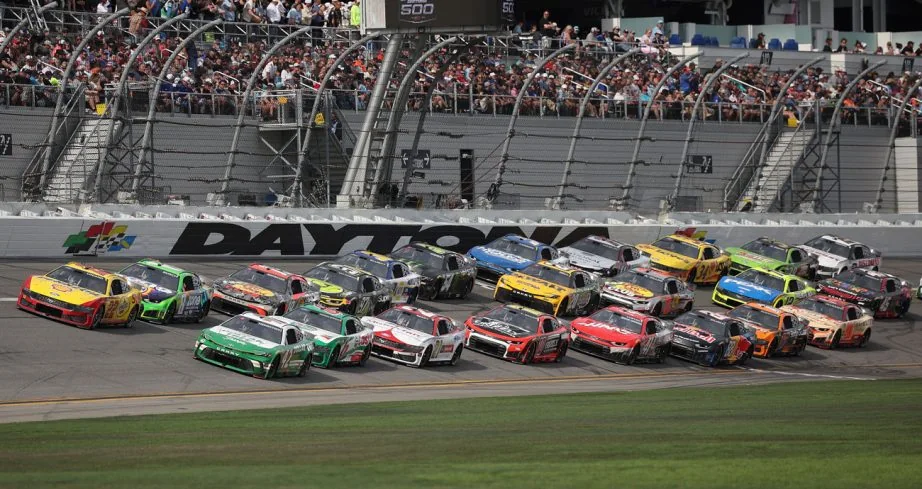
In the 2026 NASCAR Cup Series, a race win is worth 55 finishing points. Second place receives 35, the award then drops by one point per position through 36th, and positions 36 through 40 receive one point. In a standard points race, a driver can also collect up to 20 stage points and one Xfinity Fastest Lap point, making 76 the usual maximum. Those race-by-race totals build the standings through the 26-race regular season. NASCAR then reseeds the top 16 once for the 10-race Chase, where the highest final points total wins the championship.
How are NASCAR Cup points awarded in 2026?
A Cup driver’s score from a normal race weekend can have three parts: points for the final finishing position, points earned by running in the top 10 at the end of Stage 1 and Stage 2, and the single bonus point for the Xfinity Fastest Lap. NASCAR adds those items to the driver’s season total. That makes the official finishing order the starting point for the calculation, not the whole calculation.
- Final result: 55 points for first, 35 for second, then a descending scale to one point at the back of a 40-car field.
- Stage results: 10 points to the stage winner, nine to second and one fewer per place through 10th.
- Fastest lap: one additional point in the relevant driver championship and one in the owner standings.
- Standard maximum: 76 points for a win, both stage wins and fastest lap in a normal three-stage event.
The distinction between a race result and a points day is important. A driver can finish behind a rival but leave the track with more points by banking strong stage finishes. Conversely, a late crash can erase a strong final result while the stage points already earned earlier in the race still soften the standings loss. The scoring system therefore measures performance across more of the afternoon than the checkered flag alone.
Not every Cup event adds to the championship. The Cook Out Clash and NASCAR All-Star Race are exhibitions, so their finishing positions do not add points to the season standings. For points-paying events, use the NASCAR results page to find the race outcome and the current NASCAR standings to see the accumulated total. This article explains the rulebook arithmetic; the standings page is the right place for changing positions and gaps.
2026 NASCAR finish points table: 55 for a win
NASCAR did not create a smooth 55-to-1 ladder for 2026. The winner receives 55 finishing points, but the runner-up receives 35. From there, the award falls one point per position through 36th; every finisher from 36th through 40th receives one. Stage points and the fastest-lap point are added separately.
| Finish | Points | Finish | Points |
|---|---|---|---|
| 1st | 55 | 21st | 16 |
| 2nd | 35 | 22nd | 15 |
| 3rd | 34 | 23rd | 14 |
| 4th | 33 | 24th | 13 |
| 5th | 32 | 25th | 12 |
| 6th | 31 | 26th | 11 |
| 7th | 30 | 27th | 10 |
| 8th | 29 | 28th | 9 |
| 9th | 28 | 29th | 8 |
| 10th | 27 | 30th | 7 |
| 11th | 26 | 31st | 6 |
| 12th | 25 | 32nd | 5 |
| 13th | 24 | 33rd | 4 |
| 14th | 23 | 34th | 3 |
| 15th | 22 | 35th | 2 |
| 16th | 21 | 36th | 1 |
| 17th | 20 | 37th | 1 |
| 18th | 19 | 38th | 1 |
| 19th | 18 | 39th | 1 |
| 20th | 17 | 40th | 1 |
Why the 20-point winner’s premium matters
The gap from first to second is 20 finishing points; the gap from second to 22nd is also 20. NASCAR designed that jump to make the final position worth considerably more than merely moving from one other spot to the next. A driver who converts a runner-up into a victory gains 20 base points before any stage or fastest-lap awards are considered. Four wins instead of four seconds would therefore produce an 80-point swing in base finish points.
That reward does not make the rest of the order irrelevant. From second through 36th, each position is normally worth one point, and those small differences accumulate over 26 regular-season races. A team that turns a damaged 30th-place car into a 24th-place finish saves six points. At the other end, repeated finishes in the 30s leave only a handful of base points, which can quickly erase the benefit of an earlier top-five day.
A DNF does not automatically mean zero. NASCAR classifies the car in the official finishing order, and that position supplies its base points unless a penalty changes the result. Check the latest NASCAR Cup Series results before doing the arithmetic; an unofficial running order or broadcast graphic may not reflect a post-race ruling.
How stage points and the fastest-lap point work
Stage points are ordinary championship points earned before the finish. In a standard Cup race, NASCAR scores the top 10 at the end of Stage 1 and again at the end of Stage 2. The final stage determines the finishing order and its 55-to-1 base award. A driver keeps stage points even if a crash, mechanical problem or poor pit cycle later produces a deep finish.
| Stage finish | Points | Stage finish | Points |
|---|---|---|---|
| 1st | 10 | 6th | 5 |
| 2nd | 9 | 7th | 4 |
| 3rd | 8 | 8th | 3 |
| 4th | 7 | 9th | 2 |
| 5th | 6 | 10th | 1 |
Sweeping both intermediate stages in a normal race is worth 20 points. Add a 55-point victory and the Xfinity Fastest Lap point, and the standard perfect day is 76. The Coca-Cola 600 is the notable exception: its four-stage format includes three points-paying intermediate stages, so its theoretical maximum is 86. Event stage lengths can differ, so the weekend’s official race information remains the authority on when each stage ends.
There is no separate stage-win bonus to save for later in 2026. Under the discontinued elimination format, a stage victory also produced a bankable playoff point. The new Chase removed those playoff points. A 2026 stage winner gets 10 points in the running season total—valuable immediately, but not a second currency carried into a later reset.

What does Xfinity Fastest Lap add?
The fastest eligible lap in each points-paying national-series race adds one point to the driver and owner standings. For the driver championship, the person must be eligible to score points in that series; otherwise the team can still receive the owner point. It is only one marker, but it can break a tie in a close weekly comparison or offset one lost position elsewhere.
NASCAR tightened eligibility for 2026 after damaged cars had returned from lengthy garage repairs and then set fast laps. A lap recorded before a car enters the garage can still count. A faster lap recorded after garage work cannot earn the point, while repairs made in the pit stall do not by themselves remove eligibility. The official NASCAR results should be used to confirm the awarded point; raw lap-time screens alone do not resolve every eligibility condition.
Worked NASCAR points examples from one race
The calculation is simple once the three score lines are separated: finish points + stage points + eligible fastest-lap point = race points. The July 5, 2026 Cup race at Chicagoland Speedway provides a useful completed example because the official results show several very different ways to build a strong total.
| Driver | Finish | Stage 1 | Stage 2 | Fastest lap | Total |
|---|---|---|---|---|---|
| Chase Briscoe | 1st: 55 | 5th: 6 | 2nd: 9 | 0 | 70 |
| William Byron | 4th: 33 | 1st: 10 | 1st: 10 | 0 | 53 |
| Bubba Wallace | 6th: 31 | 3rd: 8 | 11th: 0 | 1 | 40 |
| Christopher Bell | 2nd: 35 | 12th: 0 | 6th: 5 | 0 | 40 |
Example 1: the winner builds a 70-point day
Briscoe’s victory supplied 55 base points. Fifth in Stage 1 added six, and second in Stage 2 added nine: 55 + 6 + 9 = 70. He did not need the fastest-lap point to post the largest total. His example also shows the power of the winner’s premium: even without a stage sweep, the 20-point jump over second gave him room to lead the points score.
Example 2: stage dominance beats a better final finish
Byron won both stages, banking 20 points before the checkered flag. Fourth place was worth 33 more, so 33 + 10 + 10 = 53. Bell finished two positions ahead in second but scored only five stage points, producing 35 + 5 = 40. Byron therefore earned 13 more points despite finishing behind Bell. The race recap explains the racing reason: Byron controlled the earlier portions, but Briscoe’s final green-flag pit sequence changed the track-position battle late.
Example 3: two different paths to 40
Wallace paired 31 points for sixth with eight for third in Stage 1 and one for fastest lap. Bell paired 35 for second with five for sixth in Stage 2. Both scored 40, although their finishing positions and in-race performance were different. That is not a statement about a season standings tie-break; it simply shows that equal race totals can be assembled from different components.
When checking another event, record the two stage results first, then the official finishing position, then confirm the fastest-lap award and any post-race ruling. The Cup Series results page is a better starting point than trying to infer points from a driver’s finishing position alone.
How drivers qualify for the 2026 NASCAR Chase
The Cup Series sets its Chase field strictly by the points standings after the 26th regular-season race. The top 16 advance to the 10-race championship run. The cut line is therefore the boundary between 16th—the final provisional qualifier—and 17th, the first driver outside. Until Race 26 is official, both sides of that line can change every weekend.
A win helps, but it does not lock in a berth
“Win and in” ended with the old elimination format. A driver who wins in 2026 receives the valuable 55-point finish award, but the victory itself is not an automatic Chase invitation. The driver must still finish the regular season among the top 16 in accumulated points. Likewise, a winless driver who is inside that group qualifies on position.
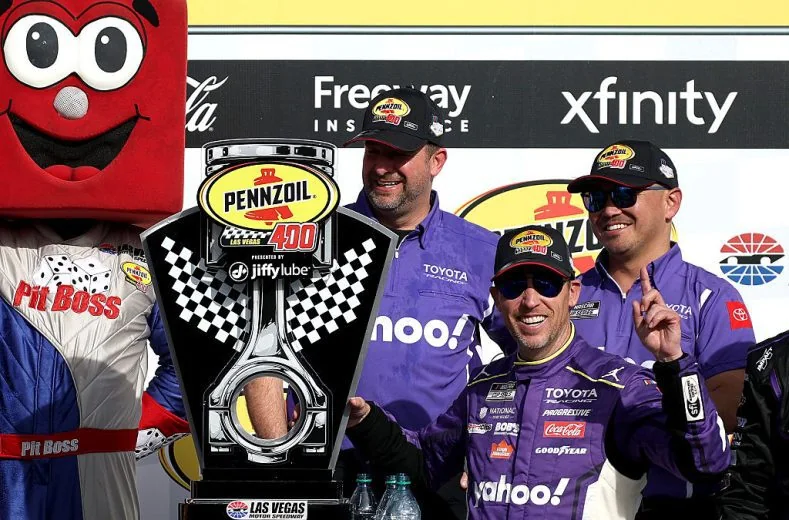
This structure keeps winning powerful without letting one result erase the rest of a season. The 20-point premium over second can make a major difference near the cut, yet a string of deep finishes can consume that advantage. Stage points matter for the same reason: a driver who repeatedly scores five or eight points before the finish can build a buffer that does not appear in the win column.
What to watch around the cut line
For a bubble driver, the useful number is not simply points behind the championship leader. It is the gap to the driver on the other side of 16th. A competitor in 17th needs to outscore 16th over the remaining regular-season races; a competitor in 16th needs to protect or extend the margin. Because a standard weekend offers as many as 76 points, the possible movement is larger than the finishing-position ladder alone suggests.
That changes how fans should read a race. A driver may stay out for stage points while a rival pits early for final-stage track position. One plan can strengthen the immediate cut-line total; the other can create a better chance at the 55-point win. Neither choice creates separate playoff points for later—those bankable bonuses no longer exist.
Use the NASCAR standings for the current top 16 and cut-line gaps, and the full NASCAR schedule to see how many regular-season opportunities remain. A static explainer should describe the qualification rule, not freeze an unfinished 2026 field and present it as final.
The 2026 Chase reset and 10-race scoring table
After the 26-race regular season, NASCAR reseeds the 16 Cup qualifiers once. The regular-season leader starts at 2,100, second starts at 2,075, third at 2,065, and the remaining positions step down by five points to 2,000 for 16th. Those are starting totals for the Chase, not an extra award added to the points each driver accumulated through Race 26.
| Regular-season seed | Chase start | Regular-season seed | Chase start |
|---|---|---|---|
| 1st | 2,100 | 9th | 2,035 |
| 2nd | 2,075 | 10th | 2,030 |
| 3rd | 2,065 | 11th | 2,025 |
| 4th | 2,060 | 12th | 2,020 |
| 5th | 2,055 | 13th | 2,015 |
| 6th | 2,050 | 14th | 2,010 |
| 7th | 2,045 | 15th | 2,005 |
| 8th | 2,040 | 16th | 2,000 |
The shape of that table matters. The regular-season champion gets a 25-point cushion over second, larger than the five-point steps that separate most other seeds. Second has a 10-point cushion over third. First begins 100 points ahead of 16th. NASCAR is compressing the field into a championship contest while preserving a meaningful advantage for where each driver finished over the first 26 races.
One reset, then every Chase race counts
The same race, stage and fastest-lap scoring continues after the reset. There is no Round of 16, Round of 12, Round of 8 or Championship 4 in 2026. There are also no additional resets after three-race blocks. The Cup Chase begins at Darlington Raceway and runs for 10 consecutive championship events through Homestead-Miami Speedway.
Suppose second seed outscores first seed by eight points at Darlington. The original 25-point gap falls to 17. If the first seed responds by outscoring that rival by 12 the next week, the margin grows to 29. That ordinary addition and subtraction continues all the way through the final race. A victory during the Chase is worth 55 finishing points, but it does not automatically advance anyone because there is no next round to enter.
How is the 2026 Cup champion decided?
The Chase-qualified driver with the highest total after Homestead-Miami is champion. Winning the finale is neither required nor an automatic title: the championship depends on the cumulative 10-race score. There are no scheduled cuts, although a driver can become mathematically unable to erase a deficit as available points run out. That mathematical reality is not the same as NASCAR eliminating four drivers at the end of a round.
Follow the changing gaps on the NASCAR standings page and use the NASCAR schedule to see where each remaining points opportunity falls. Bracket graphics and Championship 4 calculators built for 2014-2025 do not describe the 2026 title race.
Why the new points system changes race strategy
The strategic conclusions in this section are analysis, not a rulebook prescription. The arithmetic creates incentives, but the correct call still depends on tire falloff, fuel range, caution risk, passing difficulty and a driver’s position in the standings. A 55-point win is the biggest prize; stage points and finishing consistency determine how much risk a team can afford to reach it.
Stage points versus final-stage track position
The classic choice is whether to stay out through a stage end or pit before it. Staying out can secure as many as 10 stage points, but pitting early may place the car ahead of those who stop during the break. That track position can be especially valuable at a road course or anywhere passing is difficult. NASCAR documented Denny Hamlin’s Sonoma plan to flip both stages—surrendering possible stage points for a better final-stint position—and the associated risk of leaving with little if the finish went wrong.
There is no universal answer. A bubble team that urgently needs points may bank a fifth-place stage finish rather than gamble it away. A fast car already secure near the front may short-pit because the 20-point difference between first and second outweighs a modest stage award. At Talladega, the same decision also involves fuel saving, drafting partners and the likelihood that a caution scrambles the cycle.
Why minimizing bad days still matters
A Chase contender cannot erase a poor result by winning a later race and automatically advancing. That makes damage limitation valuable: repair the car within the rules, regain laps when possible and fight from 30th to 24th for six base points. Stage points collected before a problem can also turn a one-point back-end finish into a survivable total. Over 10 Chase races, several modest recoveries can equal a large slice of the seed advantage.
Why late-race aggression is still rewarded
Consistency does not mean settling for second. Moving from second to first is worth 20 finishing points, far more than any other single-position gain. With five laps left, that can justify a more aggressive restart lane, a two-tire call or stretching fuel—provided the upside exceeds the chance of crashing or running dry. NASCAR’s stated goal was to preserve authentic moves for wins without returning to an automatic-berth system.
What fans should watch on race day
- Which contenders stay out to score at the stage line and which pit early to flip the stage.
- Whether fresh tires can recover the track position sacrificed for a stage result.
- How a crew chief changes the risk level after learning the rival’s points day.
- Whether a damaged car keeps earning positions instead of retiring to the garage.
Use the NASCAR schedule this weekend to identify the next track. The same points table applies, but a superspeedway draft, a tire-wearing oval and a road course can produce very different ways to maximize it.
Driver points, owner points and common scoring edge cases
A NASCAR points total sometimes looks wrong even when the basic addition is right. The usual reason is that the viewer is comparing two different records or working from an unofficial running order. NASCAR publishes separate driver, owner and manufacturer standings. Driver points follow the eligible person credited with the start, while owner points follow the entered car. Those totals often move together, but a few important exceptions keep them from being interchangeable.
Who receives the points?
| Situation | Driver standings | Owner standings |
|---|---|---|
| Eligible driver completes the race | The credited driver receives the race, stage and eligible bonus points | The entered car's owner receives the corresponding owner points |
| A relief driver takes over | The driver who started the race receives the points earned by the entry | The points remain with the entered car in the owner standings |
| Fastest lap is set by a driver ineligible for that series' championship | No fastest-lap driver point is awarded in that series | The team still receives the one owner point |
| NASCAR changes the finish after review | Use the official classification and any announced driver-point deduction | Use the official classification and any owner-specific ruling |
The relief-driver rule can be counterintuitive. If Driver A starts and Driver B takes over, Driver B may produce the on-track finish, but the points earned by the entry are credited to Driver A. The fastest-lap eligibility rule creates a different split: every competitor can set the Xfinity Fastest Lap, yet a driver collecting championship points in another series does not receive that series' driver point. The team still earns the owner point.
Official results beat live arithmetic
Do not lock a points calculation when the checkered flag falls. At EchoPark in July 2026, Bubba Wallace initially appeared to have finished second. NASCAR then issued a yellow-line penalty, credited him with 29th place and described the change as a 27-point swing. That revised classification—not the order viewers first saw—became the scoring basis. Later technical or conduct penalties can also subtract points when NASCAR's ruling specifies a deduction.
When a total still seems off, audit it in this order: open the final NASCAR results, add finish points, stage points and the fastest-lap bonus, confirm the driver's championship-series eligibility, then check for a penalty notice. Finally, compare the number with the appropriate driver or owner table in the latest NASCAR standings. If two displayed totals are equal, trust NASCAR's published order rather than guessing at a tiebreak formula. That sequence resolves most apparent scoring contradictions without mixing live timing, unofficial finishes and separate championships.
About the author
NASCAR Schedule Editorial Team
The NASCAR Schedule editorial team turns verified schedules, timing and scoring, official announcements and race-weekend context into direct answers for fans.
View all articles by this author →Join the discussion
Comments
Sign in with Google to comment. Keep it race-focused; new comments are reviewed before publication.
Loading comments…