Who Owns NASCAR Teams? Owners, Co-Owners and Charters Explained
A guide to publicly identified Cup team ownership, equity partners, charters, driver owners and the changes that require an effective-date check.

NASCAR teams are owned by racing entrepreneurs, families, driver-owners and investment partners. A famous founder may remain the public face while co-owners hold other interests in the business. A Cup charter is a separate participation and economic asset; it is not a share in NASCAR itself. This guide uses publicly disclosed examples as of October 19, 2026, including RFK's announced transition involving Brad Keselowski, to explain the difference between owning a company, operating a car, buying a charter and supporting a team as a manufacturer.
What does it mean to own a NASCAR team?
Owning a NASCAR organization means holding an ownership interest in the racing business. That business can operate several car entries, employ drivers and crew members, enter commercial partnerships and hold or use Cup Series charters. The person most visible on television may be the founder, a co-owner, a senior executive or a driver. Those descriptions help identify a role, but they do not all mean the same thing.
Keep three layers separate. The organization is the business, such as Joe Gibbs Racing. A numbered entry is one of its competitive programs. The race-day team includes the driver, crew chief, engineers, spotter and pit crew carrying out that entry's work. When a broadcast says the No. 20 team made a decision, it is usually talking about that competitive unit rather than announcing a company-wide ownership action.
Ownership also differs from management. Joe Gibbs Racing's leadership page identifies Joe Gibbs as owner and founder, Heather Gibbs as co-owner and Dave Alpern as president. A president can direct the business while a crew chief calls a race, and neither title alone supplies the private ownership percentages. A full legal ownership register is more detailed than the short owner field on a sports directory.
For fans, the distinction explains why a driver change, executive appointment and equity investment can all affect the same organization without being interchangeable news. Use the 2026 Cup driver and team guide for the car-and-driver lineup. Read ownership announcements for who holds the business interests and what, specifically, is changing. This article focuses on Cup ownership examples and the Cup charter framework; other NASCAR series do not automatically follow every arrangement described here.
Who owns some of the best-known Cup Series organizations?
The following examples identify publicly named owners and ownership partners as of October 19, 2026. They are a useful map of different structures, rather than a complete register of every private stake. Where an organization has announced a transition, the timing belongs beside the name. Omitting that qualification can turn a familiar ownership list into a misleading one.
| Organization | Publicly identified ownership figures or entities | Qualification to remember |
|---|---|---|
| Hendrick Motorsports | Rick Hendrick | The team's current profile identifies him as owner; executive titles elsewhere describe additional leadership roles. |
| Joe Gibbs Racing | Joe Gibbs and Heather Gibbs | Its leadership page identifies owner/founder and co-owner roles; that page is not a full private investment register. |
| 23XI Racing | Michael Jordan, Denny Hamlin and Curtis Polk | The December 2025 joint statement identifies all three as co-owners. |
| Front Row Motorsports | Bob Jenkins | Publicly identified as owner in the same statement. |
| RFK Racing | Roush Enterprises and Fenway Sports Group, with Brad Keselowski's existing interest in transition | The September 29, 2026 announcement separates his end-of-season driving departure from the ownership steps still to be worked through. |
| LEGACY MOTOR CLUB | Jimmie Johnson, Knighthead and a subsequently announced strategic ownership group | The January 2025 partnership and July 2026 group announcement describe different stages. |
| Trackhouse Racing | Justin Marks and parent company Trackhouse Entertainment Group, with Avenue Sports Fund investment | Avenue's announced minority investment was in the parent company. |
A team name is a starting point, not a complete ownership register
A founder's surname may remain on the transporter after other capital partners join. Equally, a recognizable celebrity can be one participant in a broader ownership structure. Neither the logo nor the most famous name tells you the voting rights, exact percentage or distribution of management responsibilities. Use the organization's announcement to establish what it actually disclosed.
Trackhouse offers a clear example of the corporate layer. Its official story identifies Trackhouse Entertainment Group as the owner of its racing operations, while Avenue's 2024 announcement describes an investment in that parent. That wording is more informative than treating every related company, investor and racing program as one interchangeable asset. It also explains why a change involving one program needs careful reading before being applied to the NASCAR business.
How do co-owners and outside investors fit together?
A co-owner holds an interest alongside other owners. An outside investment can add capital, business relationships or expertise while leaving the founder as the main public leader. To understand a particular deal, look for the entity receiving the investment, whether the stake is described as minority or controlling, and any management changes announced with it. A familiar name joining the group does not answer those questions by itself.
Equity does not automatically mean running race-day decisions
Ownership and operating authority can overlap, but they need not be identical. A driver-owner may contribute detailed competition knowledge. A financial partner may support longer-term commercial growth. The crew chief still has a distinct job when deciding how to manage a race. Unless the announcement specifies a new operating role, avoid turning a new investor into the person supposedly choosing tire calls from the pit box.
Nor does a minority investment by itself prove that the existing owner has left. The specific rights belong to the agreement, and public releases often disclose only part of the structure. For a fan assessing likely sporting impact, the useful follow-up is what resources or responsibilities change: facilities, staffing, leadership or the scale of the program. A headline valuation alone cannot show that a car will be faster on its next long run.
LEGACY shows why an ownership list needs a date
LEGACY MOTOR CLUB's January 2025 announcement positioned Jimmie Johnson as majority owner and Knighthead as a minority partner. In July 2026, the team announced a broader strategic ownership group, including figures such as Bryce Harper, Guy Fieri and Scott Dixon. Reading the two announcements together provides a more useful picture than freezing the business at the first deal or treating the later group as a complete replacement of everyone who came before.
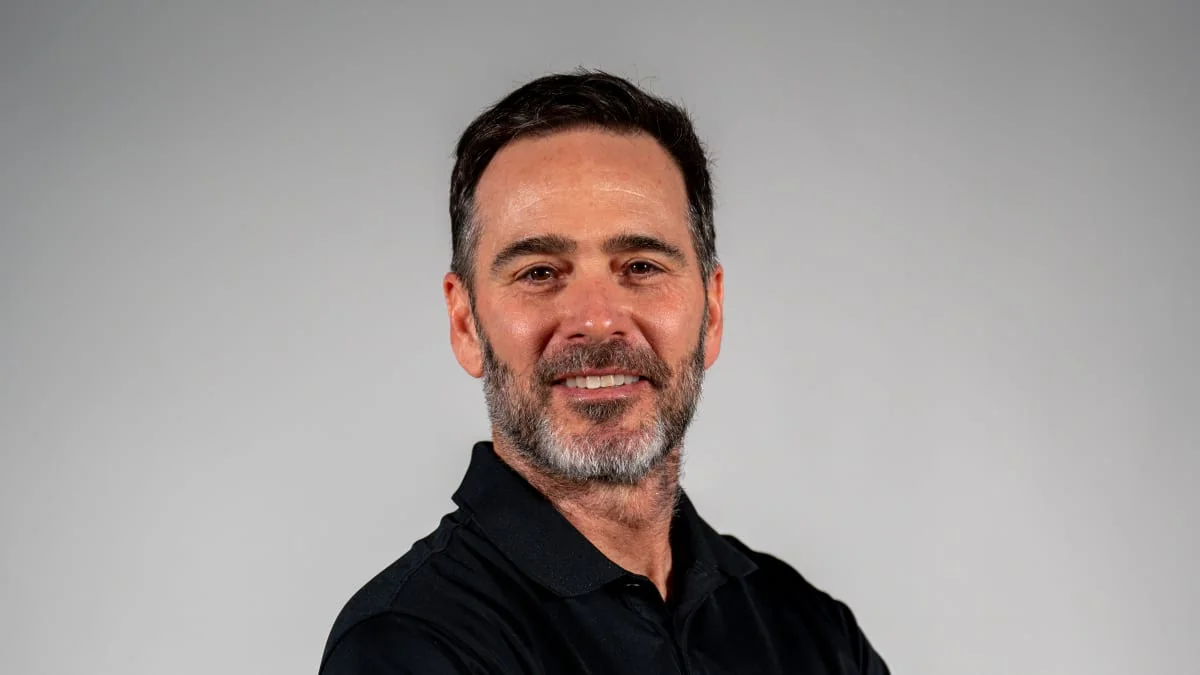
The team's current leadership page identifies Richard Petty as Club Ambassador. His historical connection to the No. 43 is central to the organization's identity, but that history should not be substituted for a current description of his role. The same principle applies throughout NASCAR: preserve the history, check the latest disclosed position and leave private percentages unstated when they have not been released.
What is a NASCAR charter, and who owns it?
A Cup charter is part of the business framework for an individual competitive entry. The system introduced in 2016 established guaranteed entry into Cup points races and economic benefits under the charter agreement. That is different from owning the NASCAR sanctioning business, owning every asset of a race team or having the fastest qualifying lap. Its importance lies in making participation and associated revenue more predictable for the entry operating under it.
The word team can create confusion here. One organization can run several chartered entries, so a reference to 36 charters is not a reference to 36 separate racing companies. A car number is the visible racing identity; the charter is a contractual business asset behind participation. To understand a transaction, establish which entry and rights are involved instead of assuming a number on a door is the entire asset being sold.
Buying a charter is different from buying the whole organization
A charter transaction and an equity investment answer different questions. Buying equity changes who owns part of a business. Buying a charter changes the participation asset available to the buyer, subject to the applicable agreement and approval process. A wider transaction may also include facilities, equipment or other arrangements, but none of those should be added to the deal merely because a charter is mentioned.
For the same reason, an open entry is not necessarily an amateur or an unowned team. It is an entry competing without a charter. Its route into the field follows the applicable entry and qualifying rules, with separate provisions where approved. NASCAR's 2026 Open Exemption Provisional announcement for Jimmie Johnson illustrates why a claim that every modern field must always stop at 40 cars would be too broad. A provisional mechanism and a charter are different arrangements.
Follow the Cup standings for competitive progress, but do not read a position in that table as a company valuation. A charter can improve the basis for planning a season; the organization still has to prepare its cars, recruit personnel and execute races. Business security and sporting speed influence one another without becoming the same measure.
Did the settlement make Cup charters permanent?
The December 11, 2025 joint statement from NASCAR, 23XI Racing and Front Row Motorsports announced a resolution and a process for amended charter terms that included a form of evergreen charters, subject to mutual agreement. That is the precise public wording to keep in mind when reading headlines describing permanent charters. The same statement said the financial settlement terms were confidential.
The practical significance is the long-term footing of the business. If an owner can plan beyond a short renewal horizon, that can affect how the organization approaches investment in people, equipment and facilities. That is a business implication, not a guarantee of profitability or a promise that every possible sporting and contractual condition disappears. Do not translate evergreen into an unconditional right detached from the agreement.
Older charter explainers remain useful for understanding why the system was introduced, but their dates and clauses need context. An article discussing an extension through 2024 cannot describe the entire position in October 2026. Equally, a report written during the 2025 dispute should not be used to present the case as still awaiting that year's trial outcome. The announcement date and the stage of the dispute matter as much as the headline.
For fans, the safe reading is that the settlement changed the publicly described long-term charter framework. It did not turn a team investor into an owner of NASCAR itself, and it did not publish a universal price for buying a charter. If a later report claims an exact payment, ownership percentage or newly imposed clause, look for a separate disclosed basis for that claim. The public statement establishes the resolution and amendment process; it is not a complete copy of every private agreement.
Can a driver own a team while racing for another one?
Yes. Denny Hamlin is a clear current example: Joe Gibbs Racing identifies him as the driver of its No. 11 Toyota, while he is a co-owner of 23XI Racing. His employment as a driver and his ownership interest sit in different organizations. Watching him race a JGR car therefore does not contradict his role in building another Cup business.
That arrangement is a reminder to read the relationship attached to each name. A driver can be an employee in one setting and an investor or owner in another. It does not follow that every car they drive belongs to them, that a teammate shares their ownership or that a future seat announcement automatically transfers their business interests. The sporting contract and equity arrangements have to be understood separately.
RFK separates a driving departure from an ownership decision
RFK Racing's September 29, 2026 announcement about Brad Keselowski makes that distinction particularly important. It says he will finish the 2026 season driving the No. 6 and then conclude that driving tenure. It separately says the parties intend to work through the next steps concerning his existing ownership interest, with Roush Enterprises and Fenway Sports Group continuing as owners.
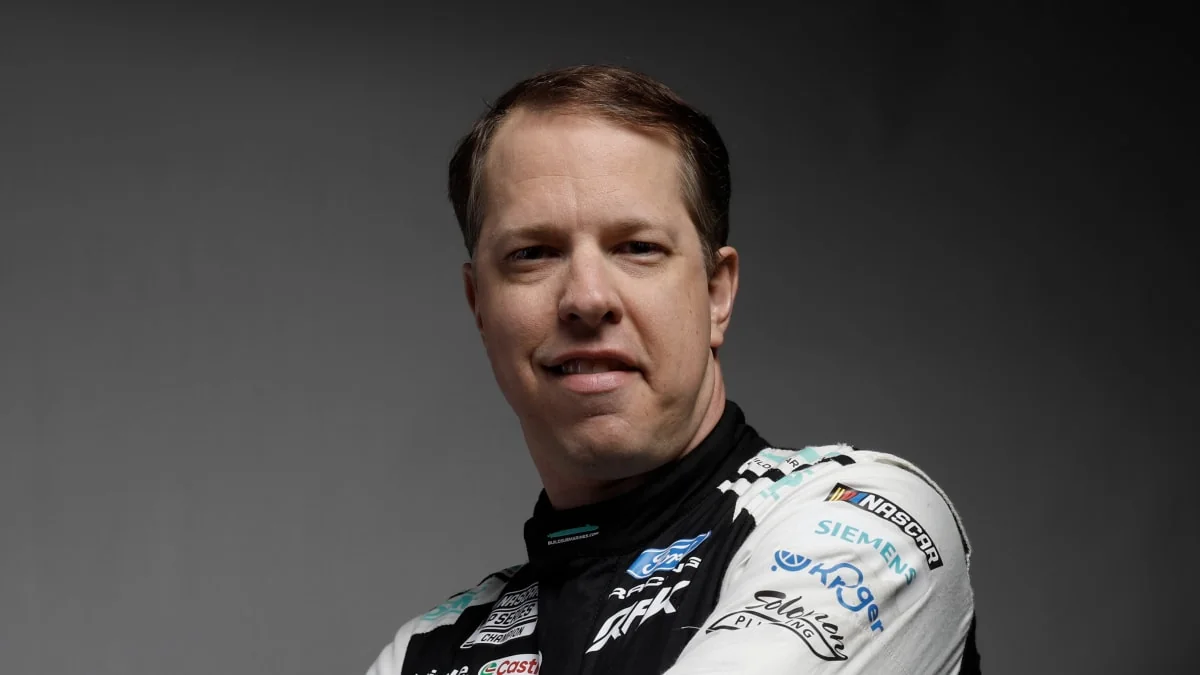
For this dated snapshot, it would be premature to turn the driving announcement into a completed sale of his stake. It would also be misleading to ignore the announcement and present the familiar three-name RFK ownership description as an unchanged long-term forecast. The useful account preserves both facts: a confirmed future end to the driving role and an ownership process described as still needing its appropriate next steps.
Whenever a driver-owner moves, look for the effective date and the capacity being discussed. A farewell from the cockpit, departure from a management position and disposal of equity can happen on different schedules. Understanding that sequence is more useful than assuming the letters on a team name tell the whole story.
Do Ford, Chevrolet or Toyota own the teams they support?
A manufacturer badge establishes the racing relationship, not the complete ownership structure of the organization. NASCAR lists teams under Chevrolet, Ford and Toyota while identifying them as separate competitive businesses. Joe Gibbs Racing describes its operation as competing in partnership with Toyota; Front Row Motorsports describes its Ford program alongside its own organizational history. That support should not be converted into a claim that the manufacturer owns the team.
The distinction matters because fans often use factory support as shorthand for resources or technical strength. Whatever support a specific agreement supplies, ownership still requires an identified equity relationship. A new manufacturer arrangement can change the cars and technical connections a team uses without necessarily changing who owns the organization. Read the announcement for both subjects rather than assuming one follows from the other.
A technical alliance does not merge two owners
NASCAR's team directory uses Wood Brothers Racing's technical alliance with Team Penske as an example of cooperation between organizations. An alliance can explain why independently entered cars have an important working relationship. It is not, by itself, a statement that the organizations have merged or that one has bought the other's shares. The scope of the cooperation must come from what the parties actually disclose.
On a race weekend, distinguish organizational teammates from other cars carrying the same manufacturer's badge. Shared interests can create reasons to cooperate, but each entry still has its own competitive task. Avoid assuming that every decision by two cars proves a common owner or a single instruction from a manufacturer. A useful race analysis identifies the actual relationship and the circumstances before inferring coordinated strategy.
This also helps interpret business news during the offseason. An alliance extension, a manufacturer switch, a sponsorship renewal and an ownership investment can all be significant. They change different parts of the operation, so an accurate account says which relationship moved and which responsibilities were included in the announcement.
How should fans read the next team-ownership headline?
Start by identifying the object of the transaction. Is someone buying part of the parent company, a stake in the racing business, a charter or a collection of assets? Then identify the role: controlling owner, minority investor, executive, ambassador or commercial partner. Those two answers usually reveal more than the celebrity name or the biggest dollar figure in the headline.
- What exactly changes hands? A charter, shares and a sponsor agreement produce different consequences.
- Which entity is involved? An investment in a parent or another racing program may not describe a direct purchase of the Cup operation.
- When does it take effect? Announced plans, a completed transaction and an end-of-season departure can have different dates.
- What is actually disclosed? Named participants do not establish percentages, control rights or private financial terms that the release does not supply.
After those checks, ask how the change could affect racing. A confirmed staffing expansion, new facility or management responsibility offers something concrete to follow. Broad promises about growth are ambitions until the organization turns them into operational improvements. Our editorial view is that the more useful test is sustained execution: preparation, pace, reliability and the team's response across different types of tracks.
Use the race results and the NASCAR calendar to follow that story over time. An ownership announcement can explain a new direction without explaining every subsequent finish. Keep the business relationship and the sporting evidence connected, while preserving the difference between a disclosed fact, a plan and a judgment about whether the investment is working.
About the author
NASCAR Schedule Editorial Team
The NASCAR Schedule editorial team turns verified schedules, timing and scoring, official announcements and race-weekend context into direct answers for fans.
View all articles by this author →Join the discussion
Comments
Sign in with Google to comment. Keep it race-focused; new comments are reviewed before publication.
Loading comments…