Is Chase Elliott Leaving Hendrick? Contract Facts and 2027 Status
A dated explanation of Chase Elliott's No. 9 Hendrick status, the publicly announced contract term and the difference between driver, sponsor and crew-chief news.
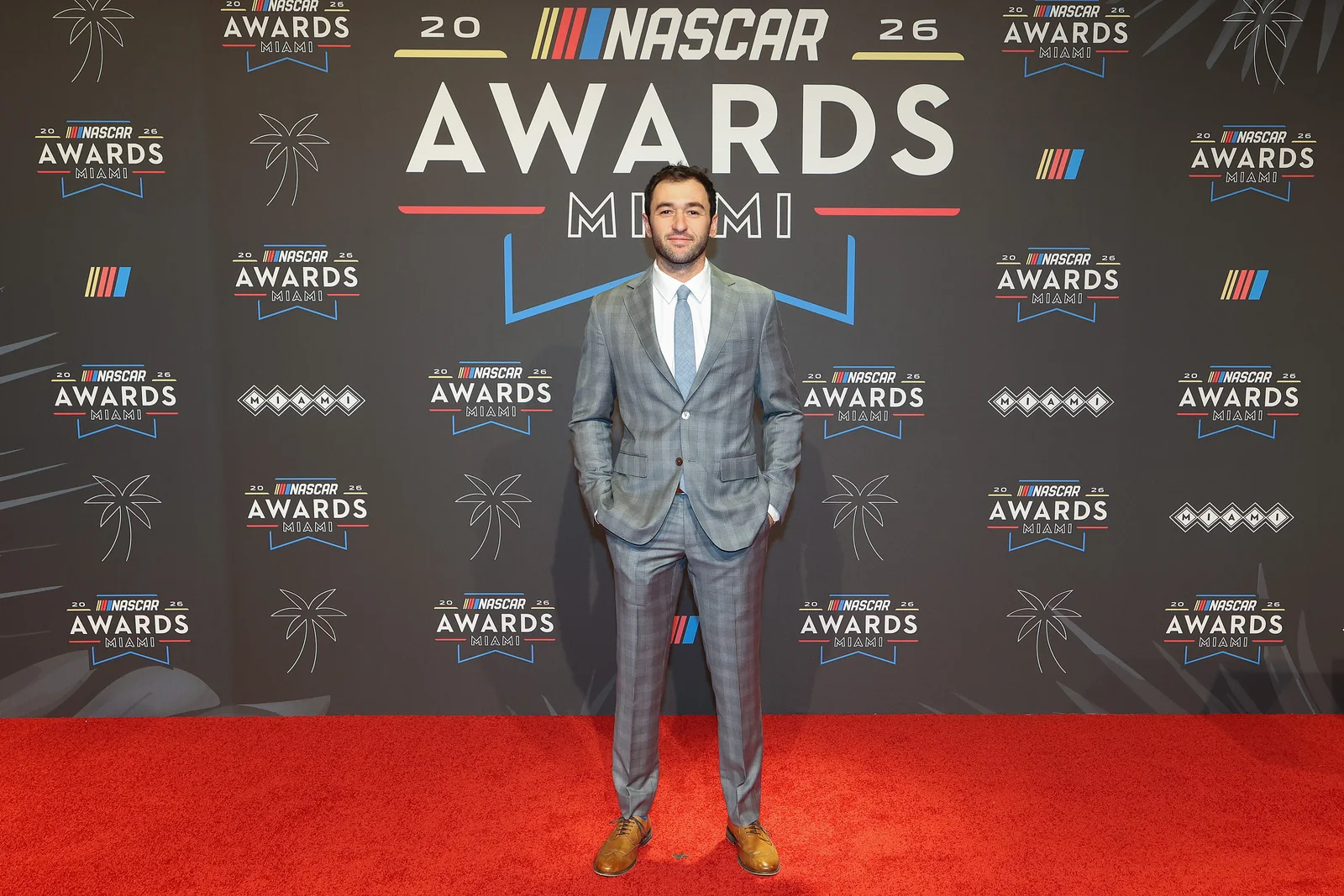
Is Chase Elliott leaving Hendrick Motorsports?
As of November 11, 2026, Chase Elliott remains the No. 9 Chevrolet driver for Hendrick Motorsports. His publicly announced five-year contract extension runs through the end of the 2027 racing season. NASCAR's current driver profile identifies the same team, and the current 2027 team chart lists him in the No. 9. There is no confirmed departure announcement in the public information supporting this guide. What happens beyond that announced term is a separate question.
The clearest answer to a “leaving Hendrick” headline is therefore to separate three timelines: Elliott's present Cup role, the season covered by his existing announced agreement, and any future agreement for later years. A claim about 2028 cannot be established merely by pointing out that a contract has a 2027 end date. Nor does another driver's new deal automatically change Elliott's seat.
Start with the identities involved. The driver is Chase Elliott; the organization is Hendrick Motorsports; the Cup entry is the No. 9 Chevrolet. NASCAR lists Alan Gustafson as his crew chief. Those labels describe different parts of a race team, and news about one of them can circulate under a broad headline about “the No. 9.” Reading the actual announcement prevents a sponsor update, a staffing discussion or an opinion about performance from becoming a supposed driver departure.
Our Cup drivers and teams guide provides the wider roster context. For future seats, use the 2027 Silly Season tracker alongside dated team announcements. The useful question is which named driver, car and season a report actually confirms.
What does Elliott's announced contract through 2027 mean?
Hendrick Motorsports announced Elliott's five-year extension on February 20, 2022. Its original release explicitly placed him with the No. 9 team through the end of the 2027 racing season. That includes the 2027 season; it does not describe an agreement ending when the 2026 season finishes.
Two dates are doing different jobs in that announcement. February 2022 tells you when the agreement became public. The end of the 2027 season tells you its announced horizon. If an old story resurfaces in a news feed today, neither date should be silently replaced with the current year. The same caution applies to the age, career-win total and teammate contract details that appeared in the original coverage: those described the situation at publication.
A public end date is different from a new extension
There has also been public discussion about Elliott's longer-term relationship with Hendrick. An August 22, 2026 report of Jeff Gordon's SiriusXM NASCAR Radio interview described conversations about Elliott's future and Gordon's confidence in keeping him. Gordon's stated preference for a lasting relationship is relevant context, but a conversation and an announced completed extension are different stages.
That leaves a straightforward way to read a future update. A new extension should identify Elliott, the organization and the newly agreed term, or clearly state that the term has not been disclosed. A departure announcement should say that he is leaving and when. A report that discussions are taking place belongs between those outcomes. It can be newsworthy without resolving either one.
Public releases also do not necessarily disclose every contractual detail. The stated end year gives fans useful planning context; it does not reveal private options, financial terms or any conditions governing an early change. There is no reason to manufacture those provisions to make a rumor sound more specific. For following the racing, the actionable facts remain the current seat and the seasons a team has publicly announced.
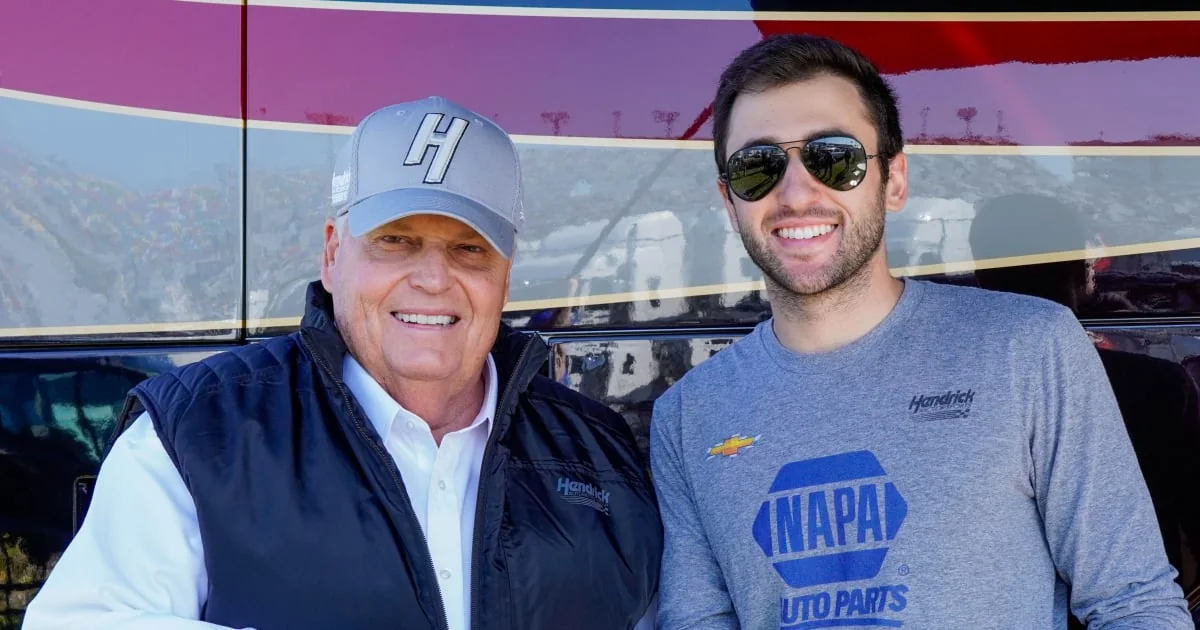
Why sponsor announcements do not all mean a driver extension
A No. 9 sponsorship announcement can be important business news without changing who drives the car. The agreement may concern a company's branding, selected race weekends, workwear or another partnership with Hendrick. Reading the parties and the scope of the deal is more useful than treating every occurrence of “extension” as an extension of Elliott's driving contract.
Primary sponsorship, associate backing and the driver seat
Hendrick's January 2025 Prime Video announcement provides a concrete example. It described a partnership through 2027, with three primary races annually and full-season associate sponsorship. The three-race number described primary sponsorship appearances, not a three-race limit on Elliott's season. Associate backing meant the relationship continued beyond the weekends when that brand was the main identity on the car.
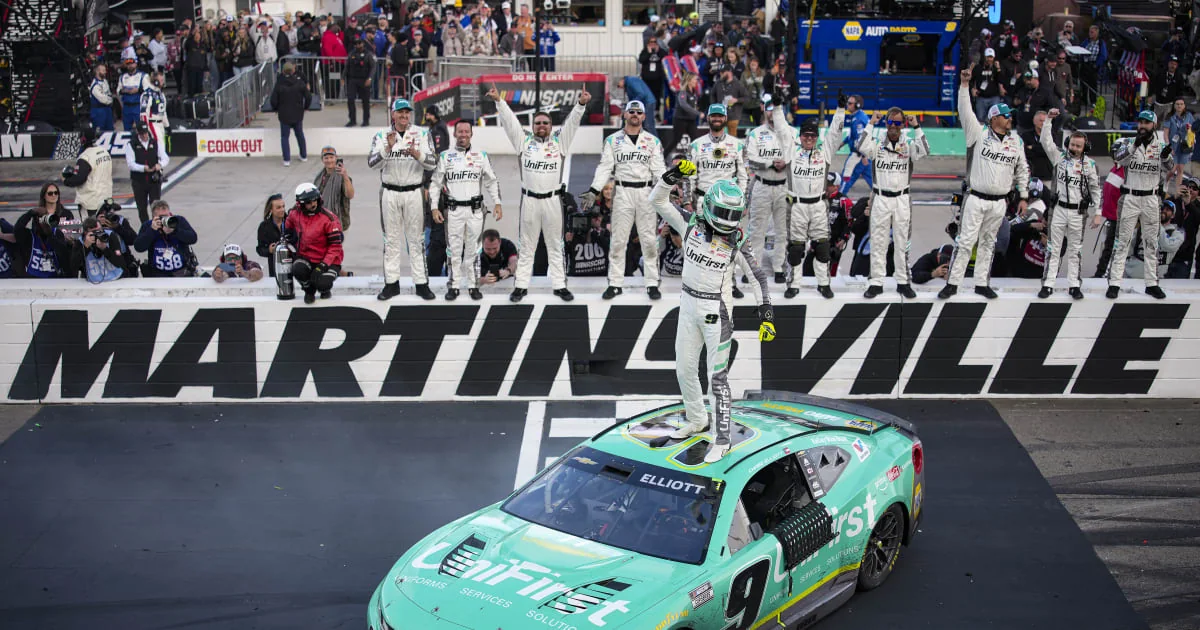
UniFirst illustrates why end years also need careful labels. Its announced Hendrick partnership ran through 2028, while Elliott's separately announced driver term ran through 2027. UniFirst's own 2026 schedule identified five primary sponsorship races for the No. 9. Those are useful facts about the partner's program; the 2028 sponsor date does not itself announce a new Elliott driving agreement.
Look at the shape of that published 2026 UniFirst program: it named Darlington, both Martinsville visits, Richmond and the Charlotte ROVAL. The sponsor's five appearances were spread across four venues, including two races at the same track. This is why a sponsor calendar can look much shorter than a driver's calendar. To follow Elliott week after week, use the full Cup schedule; to identify the green UniFirst car in a photograph, match the relevant sponsored weekend. Both calendars are useful, but each describes a different part of the same season.
Why a new paint scheme can appear without a team change
The No. 9 can look very different from one weekend to another while Elliott continues with Hendrick. For the July 2026 EchoPark event, the team's Desi9n to Drive announcement explained a special NAPA design connected with Children's Healthcare of Atlanta. It was a collaboration involving Elliott's foundation, sponsor and team. Its visual changes served that program rather than announcing an organizational move.
When a car photograph triggers a contract question, identify the race and sponsor first, then find the accompanying release. A familiar driver wearing different colors may simply be carrying that weekend's primary partner. Conversely, a long-standing color scheme is not a guarantee about future employment. The paint tells a specific branding story; the driver announcement tells the seat story. Keeping those two records together lets fans appreciate a new design without inventing a transfer.
How other Hendrick seat announcements affect the No. 9 question
Hendrick's contracts have different public timelines, so a new announcement about a teammate can make Elliott's older agreement look unusually prominent in a comparison. That is a reason to label the dates accurately, rather than turn the shortest visible term into a forecast of which driver will leave.
Three announcements illustrate the difference. In February 2026, NASCAR reported Larson's extension in the No. 5 through 2031, together with a matching HendrickCars.com agreement. Hendrick's May 2025 announcement placed William Byron in the No. 24 through 2029. Each release identified its driver and car; neither rewrote Elliott's contract simply by naming a later end year.
Corey Day's September 2026 announcement concerned another type of program. It confirmed a long-term Hendrick agreement, a full-time return to the No. 17 in the O'Reilly Auto Parts Series for 2027, and plans for part-time Cup competition. “Long-term” did not disclose an exact ending year, and the announcement did not name Day as Elliott's replacement. A development program and a particular full-time Cup seat are distinct commitments.
For fans, the best comparison starts with the series and car, then the season and role. A full-time O'Reilly program, selected Cup appearances and a full-time Cup contract answer different questions about a driver's schedule. Treating them all as equivalent “Hendrick seats” loses the detail that makes the news useful.
The same distinction applies to the organization behind an entry. Our team owners and charters guide explains that broader structure. A driver's relationship with an organization can support development and cooperation across programs, while the actual entry for a particular race still needs to be identified. Read the named assignment instead of filling an apparent vacancy with the most discussed prospect.
Can performance or a crew-chief debate tell you Elliott is leaving?
Elliott's 2026 Cup season included wins at Martinsville and Texas, while NASCAR's completed-season profile lists him 12th in the championship. Both parts belong in an assessment of the year. Selecting only a victory celebration or only a difficult Chase result produces an incomplete competitive picture, and neither selection supplies the contents of his next contract.
Martinsville offers a concrete example of the work inside the No. 9 team. Hendrick's account of the March 29 win described Gustafson choosing an alternate pit strategy to improve Elliott's track position. That race gives fans a specific decision to evaluate: the team sought another route forward when passing was difficult. It is a more informative discussion than turning an impression about chemistry into a supposed employment announcement.
When reviewing a disappointing finish, ask the corresponding racing questions. Did the car lack speed on a long run, lose position in a pit cycle, suffer damage or get caught by a caution? The classified results establish the finishing order, while the race account explains the sequence. The standings show its points consequences. Those records help describe performance on its own terms.
A crew change and a driver move are separate decisions
NASCAR currently identifies Gustafson as Elliott's crew chief. A discussion about whether a pairing should change is an opinion until the team announces a staffing decision. Even a confirmed crew-chief reassignment would need to be read for its own scope: changing the leader on the pit box and changing the driver are different actions.
Radio clips need the same context. NASCAR has published Elliott's reaction to damage during a pit-road stackup, but a frustrated race-day exchange is a response to a competitive problem. It is not a substitute for a statement about his future organization. Fans can reasonably debate adjustments, pit execution and communication while leaving the contract conclusion open until the people involved actually announce it.
Why the No. 9 matters in Elliott's Hendrick history
Elliott's connection with Hendrick began well before his full-time Cup career. The organization signed him to a developmental agreement in 2011. He won the 2014 NASCAR Nationwide Series championship with JR Motorsports, moved into Cup full time in 2016 and won the 2020 Cup championship. That progression connects development, a different national-series program and the established Cup role fans know today.
The car number has its own history. Elliott initially drove Hendrick's No. 24 in Cup before moving to the No. 9 for 2018. The 2017 announcement of the change also placed William Byron in the No. 24. Hendrick explained that Elliott's existing personnel would remain with the team as the number changed. This was a clear example of a new number within the same organization.
The No. 9 carried a family connection through Bill Elliott and had also been Chase's number during his 2014 title season. That helps explain why the number became an important part of his Cup identity. It does not turn the number into a separate employer or establish what any future contract must say.
For someone catching up through old photographs, these distinctions make the archive easier to follow. A No. 24 Elliott image can be genuine Hendrick history. A No. 9 image from a lower-series championship belongs to another program and year. Identify the series, season and organization before using either picture to explain current news. Doing so preserves the significance of the number without turning a historical change into a new report about today's seat.
How to check the next Chase Elliott contract headline
Begin with the full announcement behind the headline. Hendrick's news site, the driver's own linked statement and NASCAR's reporting provide a way to identify who is speaking and what has actually been agreed. If a social post offers only a dramatic summary, follow its source link before treating it as a change to the lineup.
- Match the name and role. Check that the agreement concerns Chase Elliott as a driver, rather than a sponsor, crew member or another Hendrick driver.
- Read the publication date and the effective season. A story published during 2026 can describe a change beginning later. A 2022 announcement appearing in today's search results is still a 2022 announcement.
- Identify the stage of the decision. A signed extension, talks about an extension, a team executive's preference and an analyst's prediction should carry different labels.
- Look for the actual assignment. Confirm the organization, series and car when they are stated. If a detail remains undisclosed, keep it undisclosed rather than infer it from an available seat.
For a proposed move to another team, check whether the receiving organization has made an announcement too. Reporting can break before a team release, but the report should still explain its sourcing and distinguish a proposal from an agreed outcome. Repeated copies of the same unsupported claim do not become separate confirmations merely because several accounts share them.
Once the lineup is established, shift to the practical race-weekend information: the event, entry list and viewing schedule. The NASCAR schedule helps locate the next weekend to follow. A future entry answers who is listed for that event; a contract announcement answers the longer-term commitment. Using each for the question it actually resolves lets fans follow Elliott's racing without turning every change around the No. 9 into a supposed team departure.
About the author
NASCAR Schedule Editorial Team
The NASCAR Schedule editorial team turns verified schedules, timing and scoring, official announcements and race-weekend context into direct answers for fans.
View all articles by this author →Join the discussion
Comments
Sign in with Google to comment. Keep it race-focused; new comments are reviewed before publication.
Loading comments…