2026 NASCAR Cup Series Drivers and Teams: Car Numbers, Manufacturers and Crew Chiefs
A current, manufacturer-grouped guide to the 2026 NASCAR Cup garage, including Richard Childress Racing's in-season No. 33 driver assignment and part-time entries.
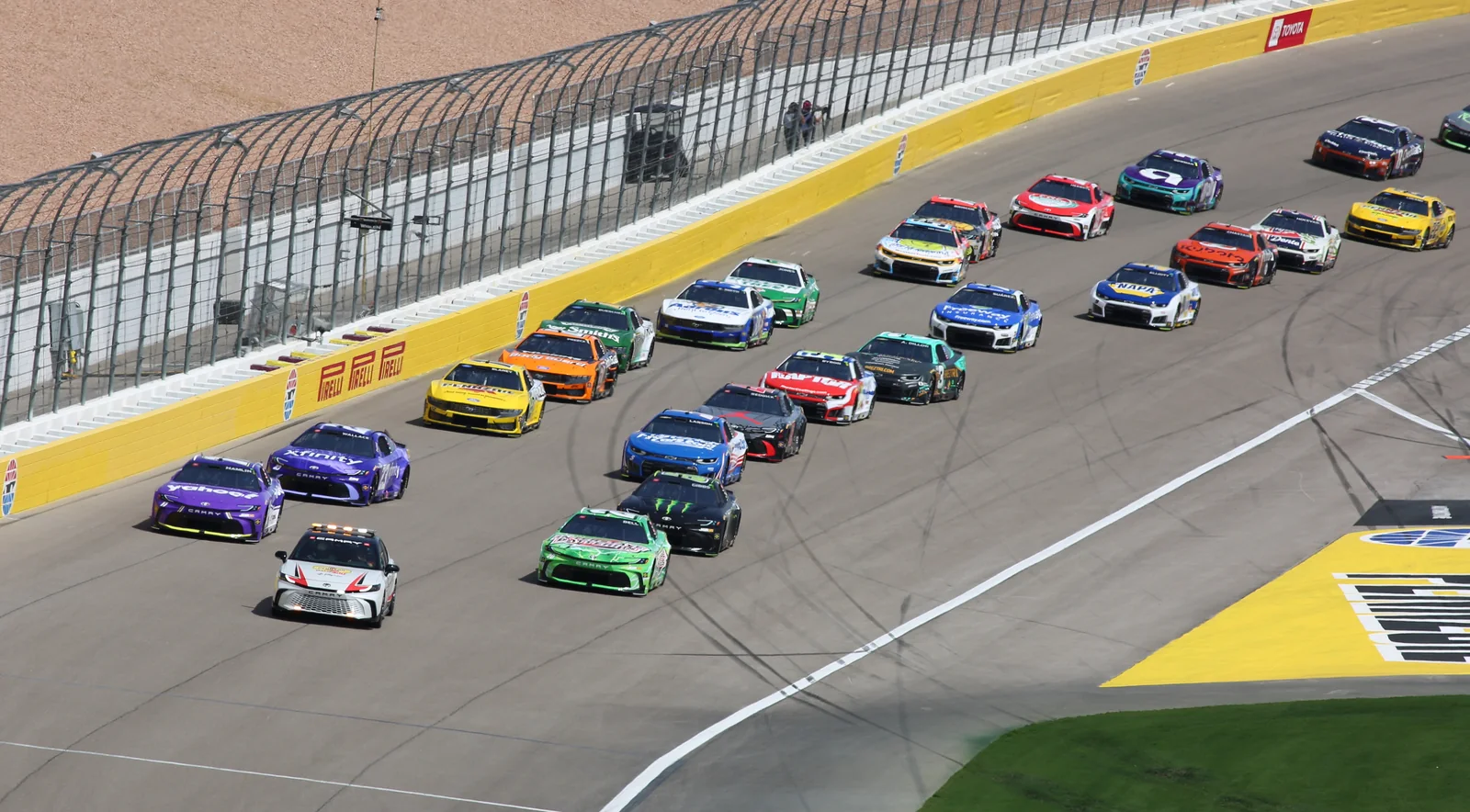
Updated August 13, 2026: the NASCAR Cup Series has 15 full-time organizations and 36 season-regular car programs across Chevrolet, Ford and Toyota. This guide maps the current driver, car number, organization, manufacturer and crew chief for every regular entry. Austin Hill is included as Richard Childress Racing's rest-of-2026 No. 33 driver, even though his (i) marker shows he remains ineligible for Cup driver championship points.
The pairings were checked against NASCAR's July 20 Indianapolis entry list and newer official team or NASCAR updates where a season change required them. That makes the tables a dated garage map, not a claim that every weekend will look identical. Selected-race Open cars, acting crew chiefs and late substitutions can still alter an event list, so the final section explains how to confirm the exact race-week pairing.
How to read the 2026 NASCAR Cup roster
The cleanest count is 15 organizations and 36 season-regular car programs. Those numbers measure different things. NASCAR's official directory counts an organization such as Hendrick Motorsports once, even though Hendrick operates four separate Cup cars. Each car has its own number, driver and crew chief, so this guide treats each one as a distinct entry when mapping the garage.
2026 roster snapshot, updated August 13: 15 full-time organizations, 36 regular car numbers, three manufacturers and a named current driver assignment for every regular entry.
The 36-car baseline also aligns with the Cup Charter field. A Charter guarantees a car a place in points races, while a non-Charter car is commonly called an Open entry. That is why an official list can be longer than the weekly core. Indianapolis had 39 cars on its July 20 entry list: the 36 regular numbers in this article plus the Nos. 62, 67 and 78. An extra car on one list should not automatically be added to a season-long driver chart.
What the status labels mean
- Stable pairing: the same driver and car program are presented as the season's regular combination.
- Replacement assignment: a new driver takes over an existing car program during the season. Austin Hill is assigned to RCR's No. 33 for the rest of 2026, but he remains declared for O'Reilly Series driver points.
- Part-time or Open: an additional program that enters selected races rather than every weekend.
- (i): NASCAR's entry-list mark for a driver who is ineligible for Cup driver championship points, usually because that driver declared for another national series. It does not mean the car is disqualified or unable to race.
Chevrolet, Ford and Toyota are the three Cup manufacturers. An organization normally stays with one manufacturer, although organizations under the same badge can use different engine suppliers or technical alliances. For a competition snapshot after the roster, use the current Cup driver standings; standings show performance, while this page shows who belongs to which car and pit box.
2026 Chevrolet drivers, teams and crew chiefs
Chevrolet has 17 season-regular Cup entries in this August 13 snapshot, the largest group of the three manufacturers. The table uses the current car numbers rather than the preseason list: Richard Childress Racing's second entry is No. 33, with Austin Hill assigned to drive it for the rest of 2026. Hill's (i) label reflects his O'Reilly Auto Parts Series points declaration, not part-time status for the car.
| Car | Driver / status | Organization | Crew chief |
|---|---|---|---|
| No. 1 | Ross Chastain | Trackhouse Racing | Brandon McSwain |
| No. 3 | Austin Dillon | Richard Childress Racing | Richard Boswell II |
| No. 5 | Kyle Larson | Hendrick Motorsports | Cliff Daniels |
| No. 7 | Daniel Suárez | Spire Motorsports | Ryan Sparks |
| No. 9 | Chase Elliott | Hendrick Motorsports | Alan Gustafson |
| No. 10 | Ty Dillon | Kaulig Racing | Andrew Dickeson |
| No. 16 | AJ Allmendinger | Kaulig Racing | Trent Owens |
| No. 24 | William Byron | Hendrick Motorsports | Rudy Fugle |
| No. 33 | Austin Hill (i), rest-of-2026 assignment | Richard Childress Racing | Andy Street |
| No. 41 | Cole Custer | Haas Factory Team | Aaron Kramer |
| No. 47 | Ricky Stenhouse Jr. | HYAK Motorsports | Mike Kelley |
| No. 48 | Alex Bowman | Hendrick Motorsports | Blake Harris |
| No. 51 | Cody Ware | Rick Ware Racing | Billy Plourde |
| No. 71 | Michael McDowell | Spire Motorsports | Travis Peterson |
| No. 77 | Carson Hocevar | Spire Motorsports | Luke Lambert |
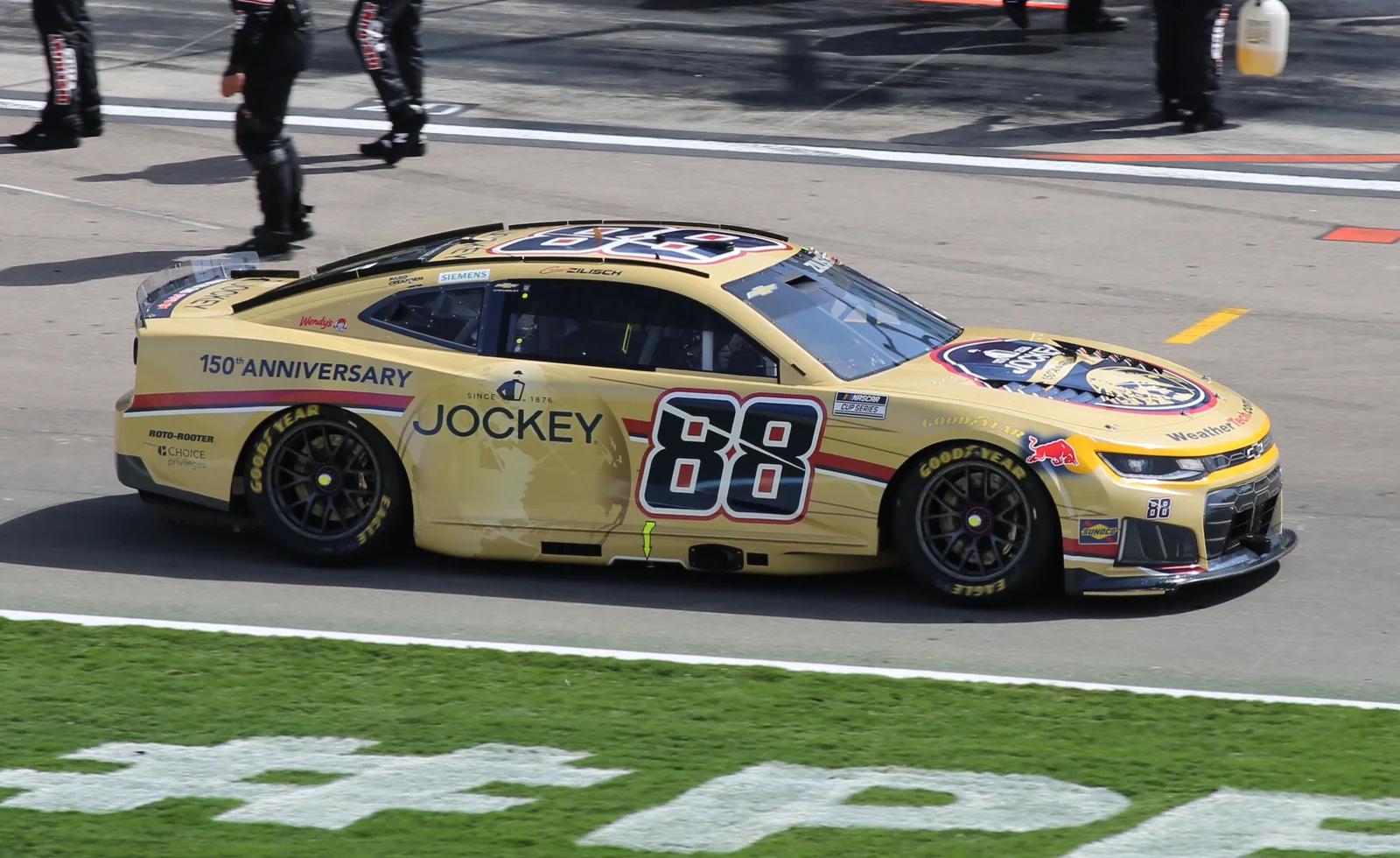
| No. 88 | Connor Zilisch | Trackhouse Racing | Randall Burnett |
| No. 97 | Shane van Gisbergen | Trackhouse Racing | Stephen Doran |
Those 17 cars are not one technical bloc simply because they carry the bowtie. Hendrick fields four cars and builds its own engines; Trackhouse, RCR, Spire, Kaulig and the smaller one-car operations have their own personnel and alliance structures. The manufacturer badge matters for bodywork, engine family and shared data, but week-to-week speed still comes from each organization's simulation, setup direction and execution.
Stable powerhouse, major new pairings
Hendrick is the continuity anchor. Larson and Cliff Daniels, Elliott and Alan Gustafson, Byron and Rudy Fugle, and Bowman and Blake Harris entered 2026 without a driver/crew-chief reshuffle. That familiarity shortens the feedback loop during practice: the driver can describe a balance change in language the crew chief and engineers already understand, leaving more time to work on lap time rather than rebuild communication.
Trackhouse is the more visible reset. Chastain now works with McSwain, while rookie Zilisch took the No. 88 with veteran crew chief Burnett. Van Gisbergen and Doran remain the stable third pairing. Spire also put Suárez with Sparks in the No. 7 alongside McDowell/Peterson and Hocevar/Lambert. These are more than name changes. The crew chief chooses the setup path before the race and makes the pit-window, tire and track-position decisions once the green flag falls.
Two manufacturer moves change older charts
Haas Factory Team's No. 41 and Rick Ware Racing's No. 51 are Chevrolets in 2026. Both were associated with Ford in the recent past, so older graphics and memory can be misleading. Haas paired its Chevrolet move with Hendrick support, while RWR aligned with RCR and ECR Engines. The partnerships provide a technical starting point; they do not make Custer's No. 41 or Ware's No. 51 extensions of the larger organizations.
For what those pairings produced in the most recent race, move from roster identity to the latest NASCAR results. The table here answers who prepares and calls each Chevrolet; the results page answers where the cars actually finished.
2026 Ford drivers, teams and crew chiefs
Ford's 10 regular Cup entries are split among Team Penske, RFK Racing, Front Row Motorsports and Wood Brothers Racing. Penske, RFK and Front Row each field three Mustangs; the Wood Brothers add the No. 21. That creates a compact manufacturer group, but the crew chief named in each row still owns the setup direction and race calls for that specific car.
| Car | Driver | Organization | Crew chief |
|---|---|---|---|
| No. 2 | Austin Cindric | Team Penske | Brian Wilson |
| No. 4 | Noah Gragson | Front Row Motorsports | Grant Hutchens |
| No. 6 | Brad Keselowski | RFK Racing | Jeremy Bullins |
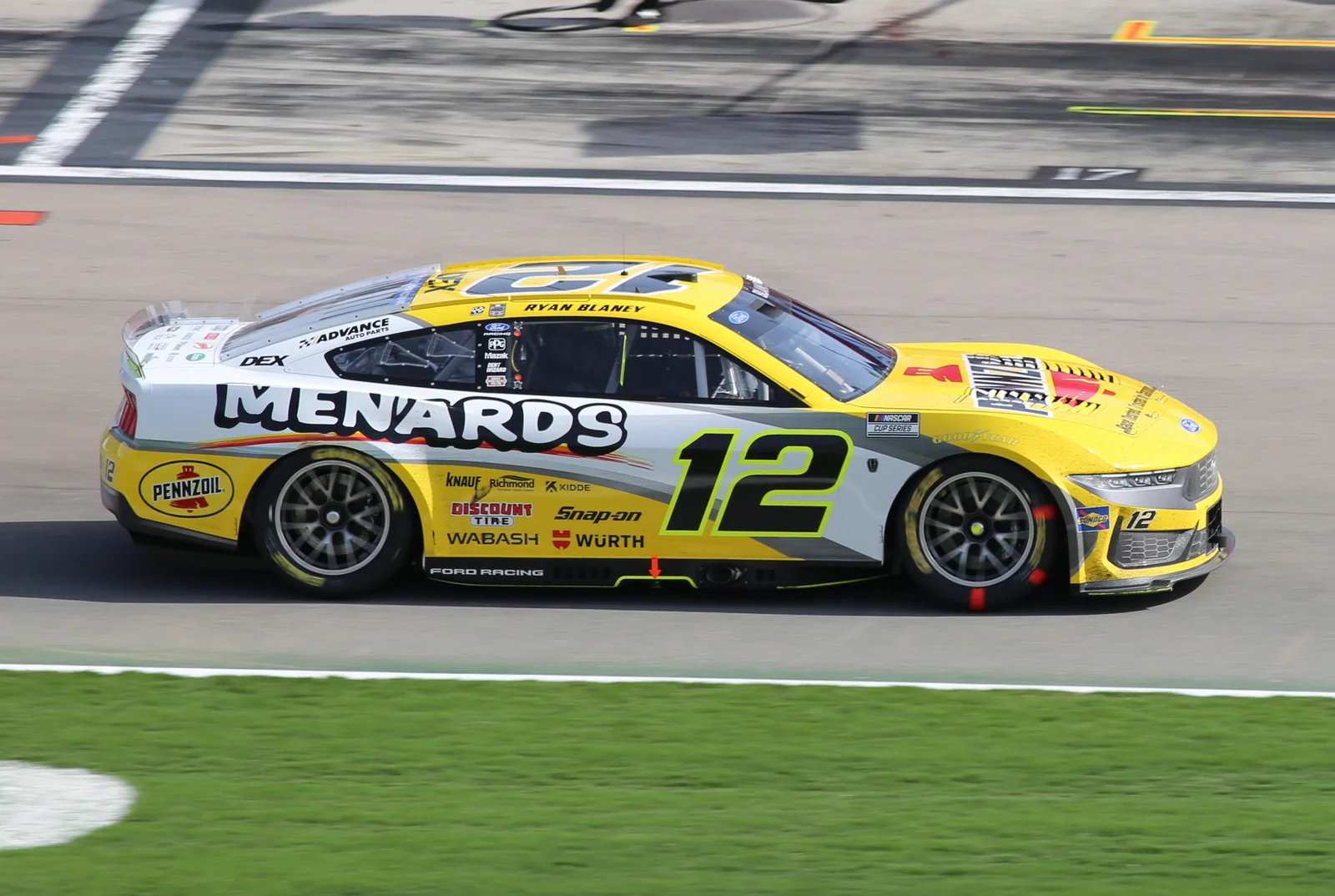
| No. 12 | Ryan Blaney | Team Penske | Jonathan Hassler |
| No. 17 | Chris Buescher | RFK Racing | Scott Graves |
| No. 21 | Josh Berry | Wood Brothers Racing | Samuel Stanley |
| No. 22 | Joey Logano | Team Penske | Paul Wolfe |
| No. 34 | Todd Gilliland | Front Row Motorsports | Chris Lawson |
| No. 38 | Zane Smith | Front Row Motorsports | Ryan Bergenty |
| No. 60 | Ryan Preece | RFK Racing | Derrick Finley |
Where Ford continuity matters
Team Penske brought back all three driver/crew-chief combinations: Cindric with Wilson, Blaney with Hassler and Logano with Wolfe. A stable pit-box relationship is especially useful when three teammates arrive with a common manufacturer baseline but prefer different balance and steering characteristics. The organization can compare data without asking a new crew chief to learn a driver's vocabulary at the same time.
RFK also has three distinct working groups. Keselowski/Bullins and Preece/Finley entered their second seasons together at RFK, while Buescher and Graves were the continuing pairing from the prior year. The important point for fans is that “RFK speed” can show up differently across the Nos. 6, 17 and 60: one team may protect track position with a short pit while another stretches a green-flag run because its tire falloff or fuel number is different.
Front Row and the Wood Brothers complete the Ford pool
Front Row's Gragson/Hutchens, Gilliland/Lawson and Smith/Bergenty teams make up the other three-car block. Wood Brothers is a separate, one-car organization, even though NASCAR identifies its technical alliance with Penske as an example of cooperation between teams using the same manufacturer. Berry's No. 21 therefore shares a broader Ford/Penske technical ecosystem, but Samuel Stanley remains the crew chief responsible for its own weekend.
That distinction becomes easy to see on a busy race weekend: teammates and manufacturer partners may exchange information before the green flag, yet every car qualifies, pits and earns points separately. Check the full NASCAR Cup schedule for the next track, because a superspeedway, road course and short track can reorder which Ford pairing looks strongest.
2026 Toyota drivers, teams and crew chiefs
Toyota has nine season-regular Cup entries: four from Joe Gibbs Racing, three from 23XI Racing and two from Legacy Motor Club. All use Toyota Racing Development power, but the organizations retain separate competition staffs and each car has its own crew chief. The table excludes 23XI's No. 67 because that is an additional selected-race entry, not a fourth weekly Toyota.
| Car | Driver | Organization | Crew chief |
|---|---|---|---|
| No. 11 | Denny Hamlin | Joe Gibbs Racing | Chris Gayle |
| No. 19 | Chase Briscoe | Joe Gibbs Racing | James Small |
| No. 20 | Christopher Bell | Joe Gibbs Racing | Adam Stevens |
| No. 23 | Bubba Wallace | 23XI Racing | Charles Denike |
| No. 35 | Riley Herbst | 23XI Racing | Davin Restivo |
| No. 42 | John Hunter Nemechek | Legacy Motor Club | Travis Mack |
| No. 43 | Erik Jones | Legacy Motor Club | Justin Alexander |
| No. 45 | Tyler Reddick | 23XI Racing | Billy Scott |
| No. 54 | Ty Gibbs | Joe Gibbs Racing | Tyler Allen |
JGR and 23XI return established groups
Joe Gibbs Racing kept all four pairings together for 2026. Hamlin/Gayle, Briscoe/Small, Bell/Stevens and Gibbs/Allen therefore began the year with an established division of engineering responsibility across four cars. That continuity matters when the organization compares long-run balance and tire wear: each crew chief can build on a known driver baseline rather than decide whether a comment reflects the car or a new communication style.
23XI's regular group is Wallace/Denike, Herbst/Restivo and Reddick/Scott. The No. 67 can make the organization look like a four-car team on selected entry lists, but Indianapolis was only Corey Heim's eighth appearance in that car during 2026. It belongs in the part-time discussion, even when it is fast enough to affect qualifying, strategy and the finish.
Legacy's No. 43 has the notable pit-box change
Legacy retained Nemechek with Mack on the No. 42 and put Justin Alexander with Jones on the No. 43. A new crew chief can change more than pit calls: the role coordinates the engineering direction, decides which balance compromises to accept and translates the driver's feedback into adjustments. For Jones, that made Alexander one of the meaningful personnel changes behind an otherwise familiar Toyota driver lineup.
Toyota's smaller entry count can make its cars easier to identify in the field, but it does not guarantee identical race plans. Fuel mileage, tire condition and track position can send two TRD cars down opposite pit strategies under the same caution. Use the NASCAR TV schedule to find the next broadcast and watch how the nine regular teams split those decisions.
The driver and crew-chief changes that reshaped 2026
Trackhouse and Spire produced the largest planned driver shuffle. Connor Zilisch graduated to the Cup Series in Trackhouse's No. 88, with experienced crew chief Randall Burnett guiding his rookie season. Daniel Suárez moved from Trackhouse's former No. 99 to Spire's No. 7 and paired with Ryan Sparks. Shane van Gisbergen took No. 97 while retaining Stephen Doran, so an older chart that shows Suárez in No. 99 or van Gisbergen in No. 88 is no longer a 2026 guide.
Trackhouse also changed the top of Ross Chastain's No. 1 pit box. Brandon McSwain arrived from a Hendrick engineering role, while Phil Surgen moved to another position inside Trackhouse. That makes all three Trackhouse rows worth checking carefully: one new Cup driver/crew-chief pair, one new number for an established pair and one established driver with a new crew chief.
Manufacturer and pit-box moves
Two smaller organizations changed columns entirely: Haas Factory Team and Rick Ware Racing moved from Ford to Chevrolet. On the personnel side, Justin Alexander took over Erik Jones' No. 43 Toyota, and Grant Hutchens became Noah Gragson's No. 4 Ford crew chief. Those changes matter because the crew chief is the final competition voice connecting pre-race setup, driver feedback and in-race decisions. A new pairing must develop shorthand for balance complaints while also making calls about tires, fuel and track position under time pressure.
Why the current RCR row is No. 33, not No. 8
Richard Childress Racing's second entry changed during the season after Kyle Busch died on May 21 following a severe illness. RCR suspended use of the No. 8 and continued with the No. 33. Austin Hill initially stepped in for the next races, and on June 6 Richard Childress indicated Hill would stay in the car for the rest of 2026 rather than a rotating group. Andy Street is the current crew chief.
The distinction is important and should be handled precisely: Hill is the rest-of-season Cup driver for the No. 33, but he remains declared for O'Reilly Auto Parts Series driver points. That is why official Cup entry lists place (i) beside his name. RCR has not established a 2027 driver plan in the sources used here, so this article does not extend the assignment beyond 2026.
Part-time, Open and replacement entries are not the same thing
A race-week entry list is a snapshot, not an automatic update to the full-time roster. Indianapolis listed 39 cars on July 20, three more than the 36 regular programs. Those extra entries were legitimate Cup teams for that event, but none belonged in the manufacturer tables as another weekly car.
| Indianapolis car | Driver | Organization | Crew chief | 2026 status |
|---|---|---|---|---|
| No. 62 | Casey Mears | Beard Motorsports | Darren Shaw | Selected-race entry |
| No. 67 | Corey Heim (i) | 23XI Racing | Bootie Barker | Part-time entry |
| No. 78 | Daniel Dye (i) | Live Fast Motorsports | George Ingram | Selected-race entry |
Open describes the car; (i) describes the driver
A Charter guarantees one of the 36 regular car programs a place in points races. A non-Charter program is generally called an Open entry and may need to qualify when more cars enter than the race can start. Daytona made that difference especially visible: the 36 Chartered cars were guaranteed berths, while Open cars raced for the remaining positions under the event's special time-trial and Duel format.
The (i) mark answers a different question. It means the driver cannot earn Cup driver championship points because that driver declared for another series. Heim and Dye carried it at Indianapolis, but so did Austin Hill in the season-continuing No. 33. Therefore `(i)` cannot tell a reader whether the car itself is weekly, part-time or Open.
A fast part-time car is still part-time
Heim's No. 67 illustrates the distinction. Indianapolis was his eighth start of 2026 in that entry, and NASCAR described his season as a part-time Cup campaign. A selected schedule can still influence qualifying, stage points, strategy and the race winner; frequency, not competitiveness, is what keeps the car outside the weekly table. His announced full-time move to the No. 35 in 2027 does not retroactively change the No. 67's 2026 status.
For future weekends, treat the No. 62, No. 67 and No. 78 rows as examples, not permanent promises. Drivers, crew chiefs and even participating organizations can change. The official entry list for the specific event always outranks a season chart for who is actually attempting that race.
How to verify a Cup pairing on race week
Use three official checkpoints: entry list, starting lineup and final results. A season roster supplies the baseline, but the event documents answer who actually arrived, qualified and raced. Indianapolis demonstrates the sequence: its Monday-dated list showed 39 intended entries, Saturday qualifying produced the starting order, and Sunday's results recorded the completed race.
- Start with the Cup entry list. Confirm the series label, car number, driver, organization and crew chief. This is where selected-race cars and `(i)` markers normally become visible. Use this weekend's NASCAR schedule to identify the correct event before opening a list.
- Check qualifying and the starting lineup. The lineup confirms which cars made the field and where they are scheduled to start. It also prevents confusion between a qualifying order—which only says when a car takes time—and the actual grid produced by the session.
- Close the loop with results and standings. The NASCAR results show who competed and finished; the Cup standings show the championship effect. Neither should be replaced by a preseason roster graphic.
Which source wins when two lists disagree?
Use the newest official document that answers the exact question. For the planned roster, a team announcement is stronger than a rumor chart. For one race, the event entry list supersedes the season guide. After qualifying, the starting lineup supersedes an initial list for field status. After the checkered flag, official results control who started and finished.
Late substitutions, withdrawals, acting crew chiefs and inspection changes are reasons to repeat the check rather than treat one page as permanently live. This article remains the August 13, 2026 organization map; race-week documents remain the authority for a particular event.
About the author
NASCAR Schedule Editorial Team
The NASCAR Schedule editorial team turns verified schedules, timing and scoring, official announcements and race-weekend context into direct answers for fans.
View all articles by this author →Join the discussion
Comments
Sign in with Google to comment. Keep it race-focused; new comments are reviewed before publication.
Loading comments…