Greatest NASCAR Teams: History, Wins and Championships
Compare the greatest NASCAR Cup organizations through championship records, dated wins, driver partnerships and their influence across racing eras.
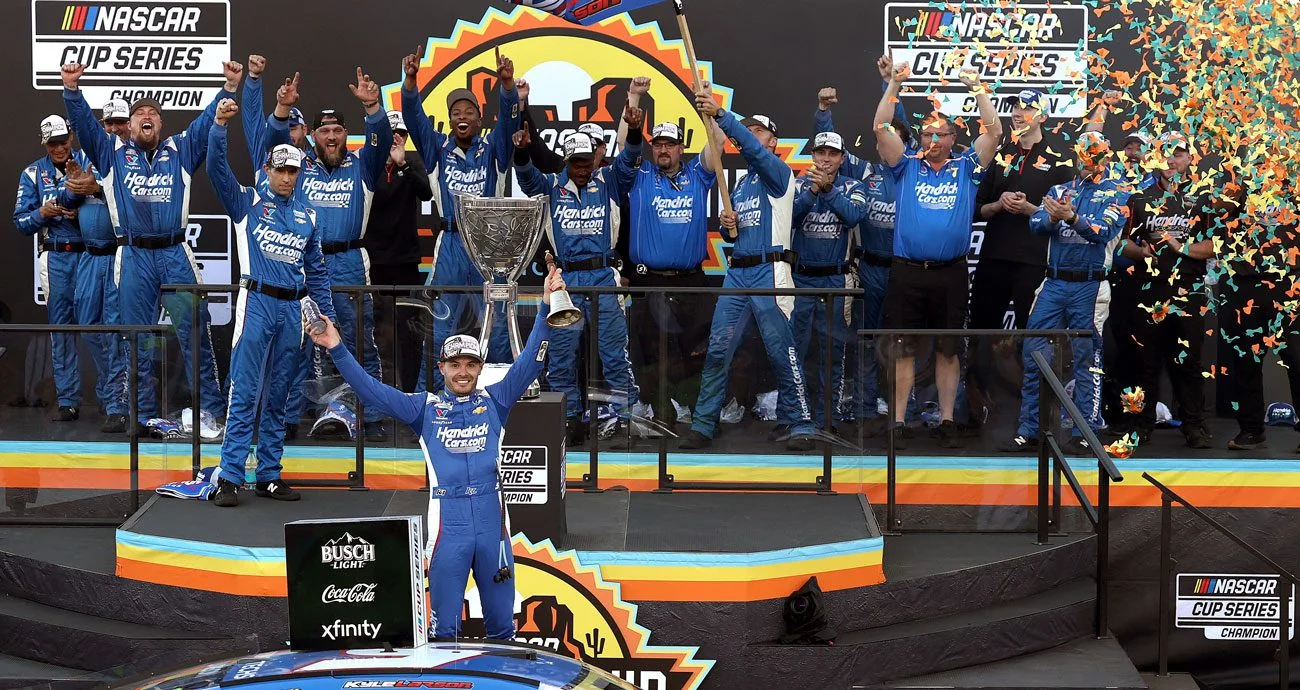
Hendrick Motorsports has the strongest overall claim as NASCAR's greatest Cup organization: a record 15 drivers' championships through the completed 2025 season, a Cup race-win record and championship success across several generations of drivers. Petty Enterprises, Junior Johnson and Associates, Richard Childress Racing, Joe Gibbs Racing and Team Penske make different historical arguments, while organizations such as Wood Brothers show why championships alone cannot capture every kind of greatness.
This is an editorial comparison of Cup history, updated October 19, 2026. Championship totals stop at the last completed season, 2025. Race-win numbers below are explicitly dated milestones or final records of historical teams, rather than a live 2026 leaderboard.
How should the greatest NASCAR teams be judged?
The starting evidence is Cup race victories and Cup drivers' championships. They measure different achievements: wins show repeated ability to finish first, while a title shows the organization completing a successful championship campaign under that season's rules. Neither should be mixed with O'Reilly, Truck or other motorsport results to make a Cup total look larger.
| Measure | What it helps explain | What it does not settle alone |
|---|---|---|
| Cup entry victories | Repeated race-winning performance | Whether a team mastered a full championship |
| Cup drivers' titles | Successful season campaigns | Every race-winning or engineering contribution |
| Success across drivers and eras | Depth, renewal and organizational durability | A mathematically fair ranking across unlike schedules |
The next questions are contextual. How many cars did the team enter? How often did it race? Did success continue when a star driver departed? Was the calendar dense with short events, or concentrated into a modern national schedule? An organization running several cars has more opportunities to win in one weekend than a single-entry team. That does not invalidate its victories, but it explains why totals need interpretation.
This comparison therefore gives the greatest weight to sustained Cup results, then considers depth across drivers, longevity and influence on how teams operate. It does not pretend that an invented decimal score can eliminate every judgment about unlike eras. Hendrick leads the overall case; the following organizations remain important because they demonstrate different paths to success.
One further distinction prevents misleading comparisons: an owners' championship is its own honor, and an engine supplied to another entrant does not turn that entrant's victory into the engine builder's team-entry win. Manufacturer titles are different again. Every statistic should retain the label identifying what was actually won.
For the cars and drivers racing now, use the current Cup teams and drivers guide. Historical greatness and current form are connected, but a famous name alone does not tell you which team has the best car for the next track.
Why Hendrick Motorsports has the strongest overall case
Hendrick Motorsports has the most convincing claim to first place because it combines NASCAR Cup Series championship leadership with the largest race-winning record. Neither achievement depends on a single driver or a brief period when the organization happened to have the fastest car. Its strongest argument is repeated success as the people, equipment and championship rules changed.
The team's first Cup victory came with Geoff Bodine at Martinsville on April 29, 1984. William Byron delivered its 300th at Texas on September 24, 2023. That second number is a dated milestone, rather than a claim about the team's current total. Reaching it required nearly four decades of winning, and the organization had already won with 20 different drivers. That breadth helps explain why its history cannot be reduced to two famous names.
| Hendrick champion | Cup titles won with Hendrick through 2025 | Championship seasons |
|---|---|---|
| Jeff Gordon | 4 | 1995, 1997, 1998, 2001 |
| Terry Labonte | 1 | 1996 |
| Jimmie Johnson | 7 | 2006-2010, 2013, 2016 |
| Chase Elliott | 1 | 2020 |
| Kyle Larson | 2 | 2021, 2025 |
Those contributions add up to 15 Cup drivers' championships through the completed 2025 season. Terry Labonte's entry is deliberately one: his other career title came elsewhere. Larson's second championship in 2025 extended Hendrick's organizational record and also showed that its title-winning story continued beyond the Gordon and Johnson era.
Gordon and Johnson still provide an extraordinary foundation. Gordon won 93 Cup races, all with Hendrick; Johnson won 83, also all with the team. Johnson's five consecutive championships from 2006 through 2010 demonstrated sustained command of the Chase era. Gordon's titles stretched from 1995 to 2001, before that postseason system existed. A comparison that values championships across different formats therefore gives Hendrick evidence on both sides of a major rules divide.
The wider organization matters as much as the stars. Multiple cars create more opportunities to win, but they also require the team to recruit crew chiefs, coordinate technical work and keep different driver groups competitive. Hendrick's scale is a real advantage and should be acknowledged. Its record shows how effectively it converted that advantage into results, then renewed the driver lineup without losing the ability to win championships.
The organizations that set the early championship standard
Before today's multi-car organizations became the norm, smaller operations established benchmarks that remained formidable for decades. Their results reflect a different competitive landscape, but their ability to build winning cars and sustain demanding driver partnerships remains central to any serious comparison.
Petty Enterprises: a family operation with a lasting benchmark
Petty Enterprises finished its history with 268 Cup victories and 10 Cup drivers' championships. Lee Petty supplied three titles; Richard Petty supplied seven. Those numbers describe the historical organization. They should not be combined automatically with the results of every later business that carried the Petty name, and Richard's 200 career victories are a separate driver statistic.
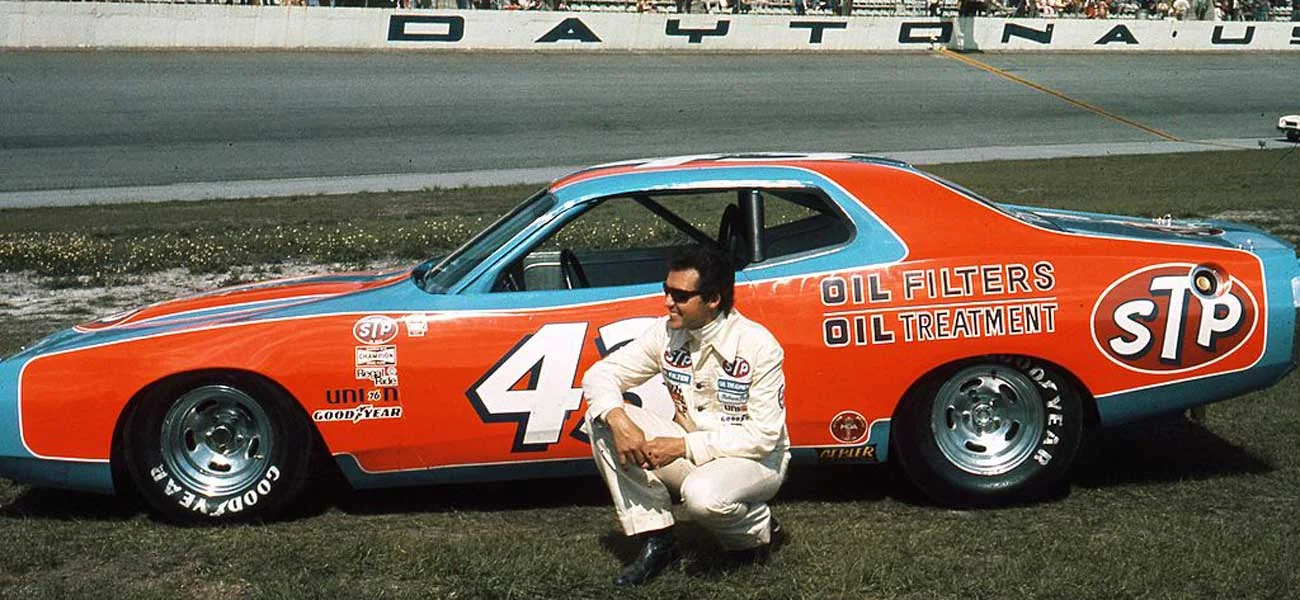
The case for Petty Enterprises rests on more than one extraordinary driver's career. A family operation developed knowledge and working relationships that carried success from Lee's generation into Richard's. Its ten championships make it the clearest historical counterweight to Hendrick's later dominance. Earlier seasons offered different numbers of races and different demands on equipment, so the raw win total needs context. Its combination of victories, titles and generational continuity nevertheless makes it an essential part of the highest tier.
Junior Johnson and Associates: two championship partnerships
Junior Johnson's team offers a particularly useful test of organizational quality. Cale Yarborough won three consecutive championships with it from 1976 through 1978. Darrell Waltrip then won three more in 1981, 1982 and 1985. The owner did not simply enjoy one great driver at the right moment; the operation built another championship relationship after its first title-winning partnership ended.
The final owner record was 132 Cup victories. Yarborough contributed 45 wins and Waltrip 43. Their different careers provide evidence that Johnson could assemble competitive equipment and people around more than one driving style. His reputation for ingenuity is part of the story, but those repeat championships are the stronger measurable reason to include the team among NASCAR's greatest.
Johnson's 50 wins as a driver must remain separate from the organizational comparison: 13 of his owner victories were also owner-driver wins. Adding 50 to 132 would count those races twice. The same care applies whenever the all-time driver wins list is used to judge a team's history.
Richard Childress Racing: the Earnhardt dynasty
Richard Childress Racing's strongest claim is the scale of one exceptional partnership. Dale Earnhardt won six Cup championships for RCR: 1986, 1987, 1990, 1991, 1993 and 1994. His first career title, in 1980, belonged to his time with Rod Osterlund. Awarding all seven to Childress would inflate the team's record.
Earnhardt and RCR won 67 Cup races together. The concentration of titles around one driver distinguishes this dynasty from Hendrick's five championship-winning drivers, but it does not diminish the work required to sustain it. The No. 3 organization repeatedly turned Earnhardt's ability into season-long results across changing opposition. RCR also won major races with other drivers, so its history extends beyond the championship partnership that defines it.
Modern powers built different kinds of success
Joe Gibbs Racing, Team Penske and the Roush organization complicate any ranking based on one statistic. Each built a substantial Cup record, but they demonstrate different strengths: winning with successive generations of drivers, mastering decisive championship races and developing a deep roster of competitive cars.
Joe Gibbs Racing: championships across drivers and manufacturers
Joe Gibbs Racing began competing in 1992 and accumulated five Cup drivers' championships through 2025. Bobby Labonte won in 2000; Tony Stewart won in 2002 and 2005; Kyle Busch won in 2015 and 2019. Its January 2026 anniversary announcement reported 227 Cup victories entering that season. That is a completed-season snapshot, not a current October 2026 total.
JGR's championship record spans Pontiac, Chevrolet and Toyota. The organization therefore demonstrated that its success could survive a change of manufacturer as well as a change of star driver. The evidence supports a case built around renewal: competitive knowledge and working relationships remained valuable even when the car badge and driver lineup changed.
Its broader national-series record is impressive, but it belongs in a separate comparison. The same anniversary release listed 448 combined national-series victories, including the 227 Cup wins. Presenting 448 as Cup victories would more than double the relevant figure. Similarly, Martin Truex Jr.'s 2017 Cup championship belongs to Furniture Row Racing, even though he later became a successful Gibbs driver.
Team Penske: converting late-season execution into titles
Team Penske also had five Cup drivers' championships through 2025. Brad Keselowski won in 2012; Joey Logano won in 2018, 2022 and 2024; Ryan Blaney won in 2023. Penske's three consecutive titles from 2022 through 2024 were an organizational streak shared by two drivers, rather than three consecutive Logano championships.
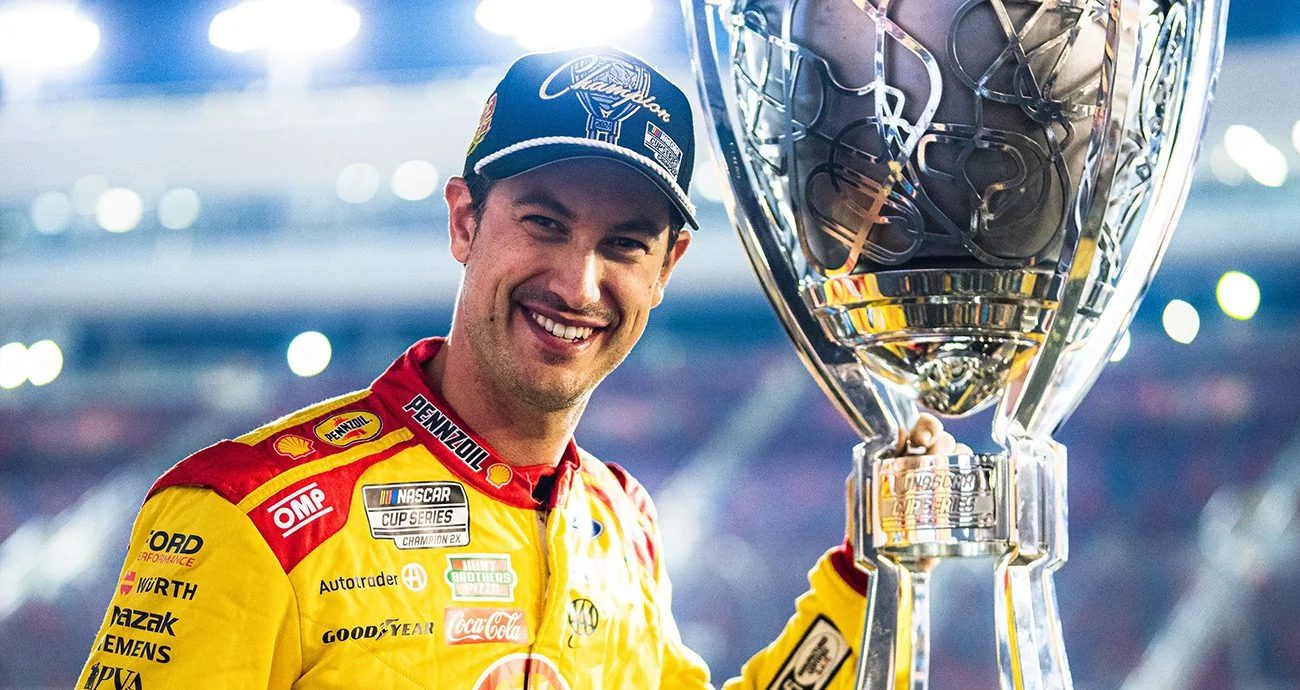
That run provides a clear example of performing under the championship conditions of the time. In 2024, Logano and Blaney finished first and second in the Phoenix finale, with Logano taking the title. Having both contenders competitive in the decisive event says something about the operation behind them, as well as their individual performances. It does not mean the same approach automatically solves a different championship format.
Penske's Indianapolis 500 victories and sports-car championships add to its wider motorsport reputation. They are not extra Cup wins or Cup titles. Keeping those categories separate actually makes the NASCAR achievement easier to appreciate: five championships were earned against the specific demands of this series, across three champion drivers.
Roush and RFK: a broader record than one championship run
The organization now known as RFK Racing traces its Cup history to Jack Roush's 1988 entry with Mark Martin. Martin won 35 Cup races for Roush without delivering a Cup championship. Matt Kenseth supplied the first title in 2003 and Kurt Busch followed in 2004. Those two Cup crowns must be distinguished from the organization's eight championships across NASCAR's three national series.
Roush's five cars qualifying for the 2005 Chase illustrate depth that a championship-only ranking can miss. The achievement required several competitive driver and crew combinations at once. The later Roush Fenway and RFK identities represent changes in ownership and leadership within that organizational history, rather than a reason to discard earlier results. Its case belongs in a discussion of development, breadth and longevity even though its Cup title count is smaller than those of Gibbs and Penske.
Why Wood Brothers belongs in the conversation
Wood Brothers Racing is the clearest reason to avoid defining greatness entirely by Cup drivers' championships. The team had not won that particular championship through 2025, yet its contribution to NASCAR is far larger than a zero in that column suggests. It did win the 1963 premier-series owners' championship, a separate distinction that should be labeled correctly.
For much of its most successful period, the team chose a partial schedule. David Pearson won 43 races with the Woods across eight partial seasons from 1972 through 1979. That partnership was designed to win the races it entered; treating it as an unsuccessful full-season championship campaign would misunderstand its purpose. The famous No. 21 became a benchmark for competitive preparation even without an annual driver title chase.
The Woods also helped develop the coordinated modern pit stop. Their crew's work was influential enough that Ford used it for Jim Clark's winning 1965 Indianapolis 500 effort. That Indianapolis result is evidence of the crew's reputation and technique, rather than another NASCAR Cup victory to add to the team's total.
Longevity adds another dimension. Harrison Burton delivered the organization's 100th Cup victory at Daytona in 2024, and Josh Berry supplied its 101st at Las Vegas on March 16, 2025. Those dated milestones connect a pioneering family team with the modern series. They are not offered as a live October 2026 total. A comparison that values technical influence, memorable victories and survival across generations has strong reasons to include the Woods alongside organizations with more championships.
Shorter peaks can also leave a championship legacy
Other organizations deserve recognition for periods of exceptional performance even when their accumulated records are smaller. Stewart-Haas Racing won Cup drivers' titles with Tony Stewart in 2011 and Kevin Harvick in 2014. Furniture Row Racing reached the summit with Martin Truex Jr. in 2017, when he won eight races and the championship in its No. 78 Toyota.
These examples do not erase the advantage of decades of sustained winning. They explain why a useful history leaves room for more than the leaders of a cumulative table. A concentrated championship peak, a long record of developing winning drivers and a transformative contribution to pit work are different achievements. Readers can reasonably value them differently while agreeing on the underlying results.
What team history can tell you about the next race
History provides useful questions to bring to a current race. Does an organization remain competitive when its leading driver leaves? Do several cars show speed, or does one exceptional combination carry the results? Has it demonstrated the ability to rebuild after a change in rules? The strongest teams discussed here offer different examples of those capabilities.
The championship format also matters. In 2026, Cup returned to a Chase with 16 drivers qualifying through regular-season points and a ten-race postseason without elimination rounds. The 2026 Chase format guide explains that system. Penske's execution in the elimination era and Johnson's consecutive titles under an earlier Chase remain historical achievements; the present championship asks teams to respond to a different structure.
Use current race results to examine the latest weekend and Cup standings to judge the season in progress. An all-time reputation does not determine either result. A strong organization can have an uncompetitive weekend, while a team with fewer historical wins can produce the best car and execution at a particular track. The 2026 championship was still undecided at this article's October 19 update.
Hendrick therefore leads this comparison on the combined evidence of Cup wins, championships and success across champion drivers. Petty Enterprises supplies the defining early championship benchmark; Junior Johnson and RCR show the power of sustained partnerships; Gibbs, Penske and Roush demonstrate different forms of modern organizational strength. Wood Brothers makes the essential case for technical influence and longevity. Those are clear reasons for their places in the discussion, while leaving room for fans to value particular eras and achievements differently.
About the author
NASCAR Schedule Editorial Team
The NASCAR Schedule editorial team turns verified schedules, timing and scoring, official announcements and race-weekend context into direct answers for fans.
View all articles by this author →Join the discussion
Comments
Sign in with Google to comment. Keep it race-focused; new comments are reviewed before publication.
Loading comments…