NASCAR Playoffs 2026: Chase Standings, Schedule and No-Elimination Format
The 2026 NASCAR Cup Series replaces the Round of 16/12/8/4 playoff bracket with a 16-driver, 10-race Chase, one reset and no scheduled eliminations.
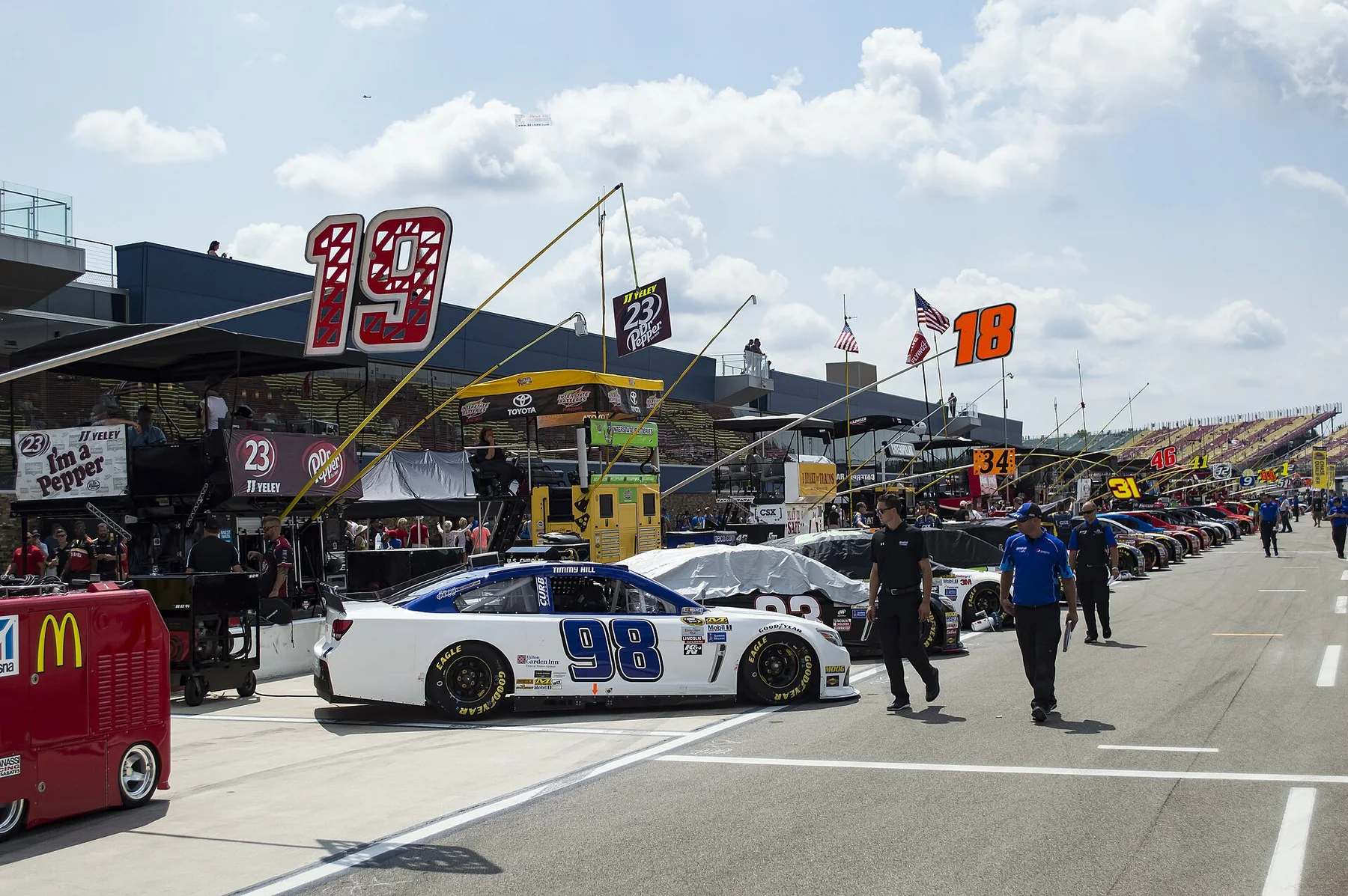
The 2026 NASCAR Cup Series postseason is a 16-driver, 10-race Chase, not the elimination bracket used through 2025. The top 16 after the 26-race regular season are reseeded once, then every qualifier scores points through all ten Chase races. There is no Round of 16, Round of 12, Round of 8 or Championship 4, and a win does not automatically advance a driver. The Chase-eligible driver with the most points after the November 8 finale at Homestead-Miami Speedway is champion. This page explains the rules and schedule; use the linked standings page for current driver positions.
What changed in the 2026 NASCAR Cup Series playoffs?
The biggest change is simple: the NASCAR Cup Series no longer uses a bracket that cuts four drivers every three races. Beginning in 2026, NASCAR calls its postseason The Chase. Sixteen drivers still qualify, but all 16 remain Chase drivers through the final 10 races. Their points are reset once after the 26-race regular season, and the eligible driver with the most points after the Homestead-Miami finale wins the championship.
That replaces the elimination format used from 2014 through 2025. Under that system, drivers moved through the Round of 16, Round of 12 and Round of 8 before four contenders reached a one-race Championship 4. A win could advance a contender, playoff points followed drivers through later resets, and the title went to whichever Championship 4 driver finished best in the finale. None of those mechanisms decides the 2026 Cup championship.
| 2014-25 playoff feature | 2026 Chase rule |
|---|---|
| Three elimination rounds | One continuous 10-race points contest |
| Championship 4 finale | Highest cumulative points total after race 10 |
| Repeated points resets | One reset after the regular season |
| Win-and-in advancement | Qualification and ranking are based on points |
| Banked playoff points | No playoff-point currency |
The practical effect is that every Chase race stays connected to the championship. A crash at Darlington can leave a driver in a deep hole, but it does not trigger a scheduled knockout three weeks later. Conversely, a strong Bristol night does not erase earlier losses through another reset. Teams must balance winning speed with the repair, pit-road and tire decisions needed to protect a points total for 10 straight events. NASCAR has also made a victory more valuable in the normal scoring system, awarding 55 finishing points to the winner, but a trophy no longer provides a separate shortcut into or through the postseason.
How do drivers qualify for the 2026 NASCAR Chase?
The qualification rule is based on one number: a driver’s position in the Cup Series points standings after the 26th points race. The top 16 advance to The Chase; everyone below 16th is outside the championship field. Daytona’s August 29 regular-season finale closes that race for places and also determines the order in which the 16 qualifiers are seeded.
A victory does not automatically put a driver in the 2026 Chase. NASCAR removed “win and you’re in,” so a race winner who remains outside the top 16 must keep scoring until the points gap is closed. The other side of that rule matters just as much: a winless driver can qualify by ranking inside the top 16 after Daytona. Winning remains extremely valuable because first place now pays 55 finishing points, but those are championship points earned on the same ledger as every other result—not a separate postseason pass.
What the cut line means before Daytona
Before the field is locked, the meaningful boundary is between 16th and 17th. A driver listed “plus 20” to the cut line has a 20-point margin over the first driver outside, while a driver at “minus 20” needs to gain 20 points relative to that boundary. The target moves whenever the drivers around it score stage points, finish, receive penalties or encounter trouble, so a cut-line margin should always be read as a dated snapshot.
Drivers near the top also have something to race for after their berth becomes safe. Regular-season position controls the one-time Chase reset: first place receives the largest starting total, second receives the next largest, and so on through 16th. That turns the final weeks into two simultaneous contests—one to get above the qualification line and another to secure the best possible seed.
For the current order, margins and race-by-race movement, use the current NASCAR Cup Series standings. A static article can explain the rule, but it should not substitute an old snapshot for the live qualification picture.
How the one-time points reset seeds all 16 drivers
After Daytona sets the field, NASCAR replaces each qualifier’s regular-season total with a starting Chase total based on finishing position. This happens once. The first seed opens at 2,100 points, the second seed at 2,075 and the third at 2,065. From third through 16th, the gap is five points per position.
| Regular-season seed | Starting Chase points | Gap to top seed |
|---|---|---|
| 1 | 2,100 | 0 |
| 2 | 2,075 | 25 |
| 3 | 2,065 | 35 |
| 4 | 2,060 | 40 |
| 5 | 2,055 | 45 |
| 6 | 2,050 | 50 |
| 7 | 2,045 | 55 |
| 8 | 2,040 | 60 |
| 9 | 2,035 | 65 |
| 10 | 2,030 | 70 |
| 11 | 2,025 | 75 |
| 12 | 2,020 | 80 |
| 13 | 2,015 | 85 |
| 14 | 2,010 | 90 |
| 15 | 2,005 | 95 |
| 16 | 2,000 | 100 |
The shape of the reset is deliberate. The regular-season champion receives a 25-point head start over second, which is larger than the ordinary gaps farther down the order. Second has 10 points on third, and every subsequent place is separated by five. That makes the 26-race championship leader’s body of work visible when the Chase begins instead of compressing all qualifiers into nearly identical totals.
Those gaps are advantages, not guarantees. Five points can change hands in a stage; 25 points can disappear through a speeding penalty, a loose wheel or damage that turns a top-five car into a finish deep in the field. The 16th seed begins 100 points behind the leader, so a lower seed needs both excellent execution and opportunities created by rivals’ weak days. But with 10 full races available, the deficit is a competitive starting burden rather than an immediate elimination.

After the Southern 500 starts the Chase, normal race and stage points are added to these totals. There is no fresh reset after Bristol, the Charlotte Roval or Martinsville, and there are no playoff points waiting to be carried forward. A team that loses 30 points at Darlington must earn those points back on track over the remaining schedule.
Why there is no Round of 16, Round of 12, Round of 8 or Round of 4 bracket
Searches for a 2026 NASCAR playoff bracket often use the labels from the previous system, but those labels no longer describe the Cup championship. There is no Round of 16 that ends after three races, no Round of 12 or Round of 8, and no four-driver final. “Sixteen” describes the size of the Chase field, not the first rung of a knockout bracket.
| Legacy search term | Correct meaning in 2026 |
|---|---|
| NASCAR playoff Round of 16 | All 16 qualifiers begin one 10-race Chase |
| Round of 12 | No scheduled cut to 12 drivers |
| Round of 8 | No scheduled cut to eight drivers |
| Round of 4 or Championship 4 | No four-driver, best-finisher-wins finale |
| Playoff bracket | A standings table replaces the knockout tree |
The distinction changes how a race should be watched. Bristol is race three of the Chase, but it is not a Round of 16 cutoff. The Charlotte Roval is race six, but it does not automatically reduce the field to eight. Martinsville is the ninth race, yet it does not decide which four cars are allowed to compete for the title at Homestead-Miami. Points gained or lost at those tracks remain in the same cumulative total.
Scheduled elimination versus mathematical elimination
NASCAR’s statement that there are “no eliminations” refers to the absence of mandatory cuts on predetermined dates. A driver can still become mathematically eliminated. That happens when the points deficit is too large to overcome with the races and scoring opportunities that remain, even under the most favorable possible results. It is arithmetic, not a bracket decision.
For example, a Chase driver may continue starting every race and remain listed among the 16 qualifiers even after losing any mathematical route to first place. Another driver can be far behind but still technically alive because enough points remain available. Official standings and clinching scenarios should settle that status; a simple “bottom four after race three” rule cannot.
This also means the Homestead finale may begin with more than four title-capable drivers, fewer than four, or even a leader who can clinch before the final event if the gap becomes insurmountable. The format does not promise a manufactured tie at the last race. It rewards the total performance produced across all ten Chase weekends.
Complete 2026 NASCAR Cup Series Chase schedule
The Cup Chase begins with the Southern 500 at Darlington Raceway on September 6 and ends at Homestead-Miami Speedway on November 8. All ten events award points into the same championship total; the positions below are race numbers in the Chase, not elimination rounds. Times are Eastern and reflect NASCAR’s official schedule available on August 13, 2026.
| Chase race | Date | Track | Start / TV |
|---|---|---|---|
| 1 | Sun., Sept. 6 | Darlington Raceway | 5 p.m. / USA |
| 2 | Sun., Sept. 13 | World Wide Technology Raceway at Gateway | 3 p.m. / USA |
| 3 | Sat., Sept. 19 | Bristol Motor Speedway | 7:30 p.m. / USA |
| 4 | Sun., Sept. 27 | Kansas Speedway | 3 p.m. / USA |
| 5 | Sun., Oct. 4 | Las Vegas Motor Speedway | 5:30 p.m. / USA |
| 6 | Sun., Oct. 11 | Charlotte Motor Speedway Roval | 3 p.m. / USA |
| 7 | Sun., Oct. 18 | Phoenix Raceway | 3 p.m. / USA |
| 8 | Sun., Oct. 25 | Talladega Superspeedway | 2 p.m. / NBC |
| 9 | Sun., Nov. 1 | Martinsville Speedway | 2 p.m. / NBC |
| 10 | Sun., Nov. 8 | Homestead-Miami Speedway | 3 p.m. / NBC |
The opening stretch can punish a team before it finds a rhythm. Darlington’s abrasive surface creates major tire falloff and rewards drivers who manage a long green-flag run without surrendering too much early pace. Gateway and Bristol then shift the demands toward braking, traffic and short-track track position. Because there is no reset after Bristol, any points lost in those first three races remain part of the title deficit.
Kansas and Las Vegas put intermediate-track speed under the microscope before the Charlotte Roval introduces a road-course test. Phoenix and Martinsville emphasize braking and restart execution, while Talladega creates a drafting race in which a contender can make sound decisions and still be collected in a multi-car crash. That range is why a ten-race champion needs more than one dominant setup package.
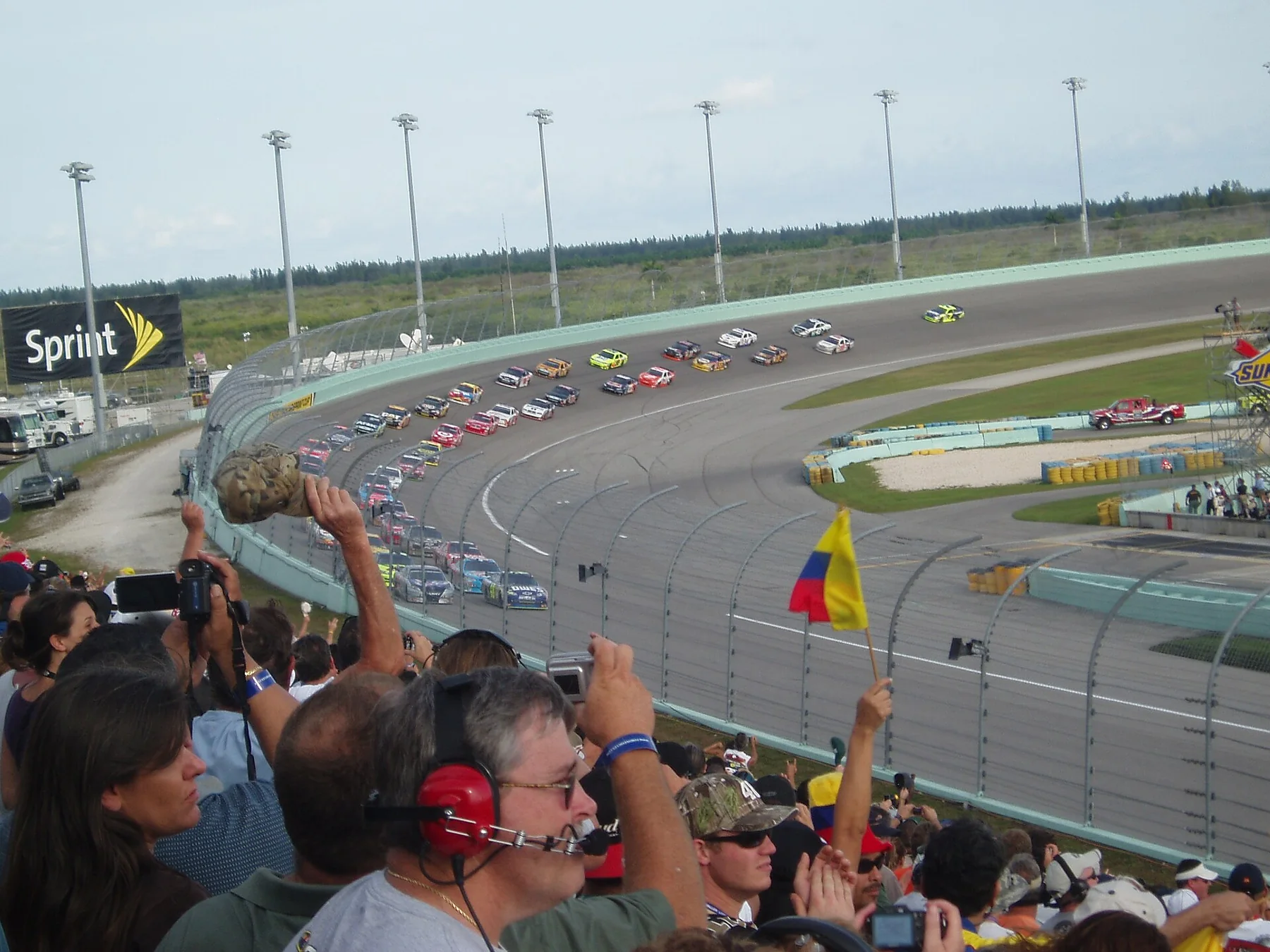
Homestead-Miami is the finale, not a standalone Championship 4 shootout. Its multiple grooves and tire wear can produce large swings during a run, yet the points margin entering the race remains intact. A driver who arrives with a cushion can manage the championship equation; a trailing driver may need stage points, a win and help from the leader’s result.
Race times and networks can change. Use the complete 2026 NASCAR schedule for the current calendar and the NASCAR TV schedule before each weekend for updated viewing details.
How race points and stage strategy shape the 10-race title fight
The one-time reset establishes the starting order, but normal race scoring decides everything afterward. A 2026 Cup winner receives 55 finishing points, while second receives 35, third 34 and fourth 33, with the familiar one-point decline continuing down the order. The 20-point difference between first and second makes a win a powerful way to erase a Chase deficit even though it no longer delivers automatic advancement.
- Race win: 55 finishing points
- Second place: 35 finishing points
- Stage win: 10 points
- Second through tenth in a stage: nine points down to one
- Playoff points: none to bank or carry into another reset
Stage points therefore remain part of the championship calculation, not a side contest. A crew chief deciding whether to stay out at a stage end or pit early for track position must weigh real points against the advantage of starting the next run on fresher tires or near the front. On a road course, pitting before a stage break may improve the cycle for the finish but surrender a chance to score in the top ten at the stage. On an oval with heavy tire wear, staying out for stage points may leave a car vulnerable immediately after the restart. There is no universal correct choice; the driver’s points gap, car speed and caution risk shape it.
Why consistency still matters when wins pay more
The larger winner award prevents a string of safe runner-up finishes from carrying the same value as victories. It does not make top tens irrelevant. Across ten races, stage finishes and solid race results accumulate, while a crash, engine failure or penalty can wipe out several weeks of small gains. Since there are no later resets, a DNF at Darlington is still in the total when the field reaches Martinsville.
That makes risk management situational. A driver 40 points behind may accept a more aggressive fuel call or late restart lane to chase the 20-point first-versus-second swing. A points leader may still race for the win, but the team also has to recognize when a damaged car should be brought home 18th rather than turned into a 35th-place finish. “Consistency” in this format does not mean cruising; it means extracting points on weekends when winning speed is absent and converting genuine winning cars when it is present.
The latest NASCAR results provide the necessary post-race evidence: finishing position, stage outcomes and the points day those results produced. Watching all three together explains a standings swing better than the final finishing order alone.
How to read Chase standings and mathematical elimination
The meaning of the standings changes once during the season. Before the Daytona regular-season finale, read the table as a qualification and seeding race. After the reset, read it as one continuous championship ranking. Keeping those two phases separate prevents the most common 2026 mistake: treating every third Chase race as though another cut line is approaching.
Before the Chase: follow 16th place and the top seed
- Compare 16th with 17th to measure the qualification bubble.
- Check each bubble driver’s points gained or lost in stages as well as the finish.
- At the top, compare contenders for first because the regular-season champion receives the 2,100-point seed.
- Treat clinched berths and published penalties as official only after NASCAR updates them.
A margin to the cut line answers “would this driver qualify if the regular season ended now?” It does not predict where that driver will start the Chase, and it can change rapidly. A 25-point day by the driver in 17th is not automatically a 25-point gain on 16th; the driver currently holding 16th also scores. Relative movement is what matters.
During the Chase: follow the leader, not a fictional next round
- Start with the reseeded total after Daytona.
- Add each race’s finish points and stage points.
- Track the gap to the leader and, for position battles, the gap to the next driver.
- Count how many races remain and watch NASCAR’s official clinching or elimination notes.
If a driver is 30 points behind after Kansas, that is a 30-point championship deficit carried into Las Vegas. It is not “30 below the Round of 8 cut line,” because no such cut exists. The useful questions are how quickly the team has been gaining, which track types remain, and whether the mathematical ceiling of the remaining schedule still allows the deficit to be overcome.
Mathematical elimination occurs only when there is no possible remaining points path to the championship. The calculation is more careful than multiplying one headline maximum by the races left: stage structure, results already earned, ties, penalties and driver eligibility can affect the official scenario. Probability is different. A driver can have a very small realistic chance while remaining mathematically alive, just as a heavy favorite can be safe in simulations without having clinched.
Use the current NASCAR Cup Series standings for the latest gaps and status. Then check the latest NASCAR results to see whether the movement came from stages, the finish or both. Together, those views explain what changed without relying on an obsolete bracket graphic.
2026 NASCAR Chase FAQ
Is it still called the NASCAR playoffs in 2026?
NASCAR’s official name for the 2026 postseason format is The Chase. Fans and search results may still use “playoffs” as a familiar generic term, but the old NASCAR Playoffs structure ended after 2025. Using “Chase” helps signal that cumulative points, rather than elimination rounds, decide the title.
Is there a NASCAR playoff bracket in 2026?
No. Sixteen Cup drivers enter one standings table for ten races. There are no head-to-head pairings, scheduled reductions to 12, eight or four drivers, or bracket advancement paths. Do not confuse The Chase with NASCAR’s separate summer In-Season Challenge, which is a bracket competition.
Can a Chase driver still be eliminated?
There is no scheduled elimination after any specific race. A driver can become mathematically unable to win the championship when the deficit exceeds every remaining path to the lead. The driver may still compete in the remaining events and remains part of the original 16-driver Chase field.
Does winning a Chase race advance a driver?
No, because there is no next round to enter. A win earns 55 finishing points and can create a major standings gain, but it does not erase earlier results or guarantee title eligibility at a later date. The points remain part of the same ten-race total.
How is the 2026 NASCAR Cup champion decided?
After the Homestead-Miami season finale, the Chase-eligible driver with the highest points total is champion. The finale does not reset four drivers to equal points, and the champion does not have to be the highest finisher from a preselected group of four.
Do the O’Reilly Auto Parts Series and Craftsman Truck Series use the same Chase?
They use the same basic principles—points qualification, one reseed, no formal eliminations and a cumulative-points champion—but not the same field size or length. The O’Reilly Auto Parts Series sends 12 drivers into a nine-race Chase. The Craftsman Truck Series sends 10 drivers into a seven-race Chase. Cup’s numbers are 16 drivers and ten races.
About the author
NASCAR Schedule Editorial Team
The NASCAR Schedule editorial team turns verified schedules, timing and scoring, official announcements and race-weekend context into direct answers for fans.
View all articles by this author →Join the discussion
Comments
Sign in with Google to comment. Keep it race-focused; new comments are reviewed before publication.
Loading comments…