NASCAR Cup Series All-Time Race Winners: 2026 Top 30 and What the Records Mean
Richard Petty leads NASCAR Cup history with 200 race victories. This dated top-30 leaderboard explains the official 2026 snapshot, Bobby Allison's corrected total, active drivers and how race wins differ from titles.
Richard Petty is NASCAR's all-time Cup race-win leader with 200 victories. David Pearson ranks second with 105 and Jeff Gordon third with 93. This guide uses NASCAR's official leaderboard after Race 29 of the 2026 season at Bristol Motor Speedway, so every total has a clear cutoff. It lists the top 30 drivers, explains why Bobby Allison's record now reads 85 rather than 84, and shows where current competitors such as Denny Hamlin and Joey Logano stand. It also explains why Cup race wins, season championships and victories in NASCAR's other national series must be counted separately. For a single recent race, the final official result is the right source; this dated table answers the career-record question.
Who has the most NASCAR Cup Series race wins?
Richard Petty owns the NASCAR Cup Series career record: 200 race victories. NASCAR's official all-time winners list puts David Pearson next at 105 and Jeff Gordon third at 93. Even Pearson, the only other driver above 100, trails Petty by 95 wins. Those are Cup race totals across entire careers, so the numbers answer a different question from “who won this weekend?”
“Winningest” here means the driver with the most official Cup race wins. It does not count titles, pole positions, stage wins or victories in NASCAR's other national series. Petty's seven Cup championships are another remarkable record, but adding them to 200 would mix unlike measures. NASCAR's 200-win archive shows that the figure comes from individual events, starting with a February 1960 race at Southern States Fairgrounds. The archive is especially useful if you want to see what kinds of tracks filled out the total rather than treating 200 as an isolated statistic.
The ranking on this page uses NASCAR's publication after 2026 Race 29 at Bristol Motor Speedway. That cutoff is part of the answer. A driver active in 2026 may gain a win after Bristol, but an in-progress or later race is not silently included in the table below. Check the Cup race schedule for the next event, and compare any new official result with the date on the career list. Petty's 200 remains the historical benchmark in the verified snapshot, while the following rows show how NASCAR ranks everyone behind him.
What does the all-time Cup winners list show through race 29 of 2026?
Below are the first 30 drivers in NASCAR's career Cup-win table after the September 2026 Bristol event. The figures combine each driver's Cup victories across seasons, including the series' earlier names. They are not the 2026 season-win column. “Active” follows NASCAR's labeling on that particular published list; it identifies a driver still competing at the snapshot, not an event entry or a prediction of a future start.
| Official rank | Driver | Cup race wins |
|---|---|---|
| 1 | Richard Petty | 200 |
| 2 | David Pearson | 105 |
| 3 | Jeff Gordon | 93 |
| 4 | Bobby Allison | 85 |
| 5 | Darrell Waltrip | 84 |
| T-6 | Jimmie Johnson | 83 |
| T-6 | Cale Yarborough | 83 |
| 8 | Dale Earnhardt | 76 |
| 9 | Denny Hamlin (active) | 64 |
| 10 | Kyle Busch | 63 |
| 11 | Kevin Harvick | 60 |
| 12 | Rusty Wallace | 55 |
| 13 | Lee Petty | 54 |
| T-14 | Ned Jarrett | 50 |
| T-14 | Junior Johnson | 50 |
| 16 | Tony Stewart | 49 |
| 17 | Herb Thomas | 48 |
| 18 | Buck Baker | 46 |
| 19 | Bill Elliott | 44 |
| T-20 | Joey Logano (active) | 40 |
| T-20 | Mark Martin | 40 |
| T-22 | Tim Flock | 39 |
| T-22 | Matt Kenseth | 39 |
| 24 | Bobby Isaac | 37 |
| 25 | Brad Keselowski (active) | 36 |
| T-26 | Kurt Busch | 34 |
| T-26 | Martin Truex Jr. | 34 |
| T-28 | Kyle Larson (active) | 33 |
| T-28 | Fireball Roberts | 33 |
| 30 | Dale Jarrett | 32 |
A T rank is shared. Jimmie Johnson and Cale Yarborough are both sixth with 83, so Dale Earnhardt follows in eighth, not seventh. The same rule puts Logano and Mark Martin together at T-20 and Tim Flock and Matt Kenseth together at T-22. The skipped numbers reflect ties, not missing drivers. The ranking also explains why 30 rows end at rank 30 even though several place labels repeat.
Read the date as carefully as the total. Logano's 40 includes his confirmed Bristol win; a subsequent race is outside this table until the source updates. If your question is about a newer event, open the Cup results and confirm its final winner. If you want to know which race comes next, use the Cup schedule. Neither should be silently substituted for NASCAR's explicitly dated career ranking.
Why are Petty, Pearson and Gordon so far ahead?
The first three names on the Cup wins list were successful in different ways. Petty built a 200-win career across an expansive schedule, Pearson won at an extraordinary rate despite entering fewer races, and Gordon sustained success in the later modern era. Putting their starts and peak seasons beside their totals helps a fan understand the record. It does not turn different generations of cars, tracks and fields into a single controlled contest.
Petty's 200 and the calendar he mastered
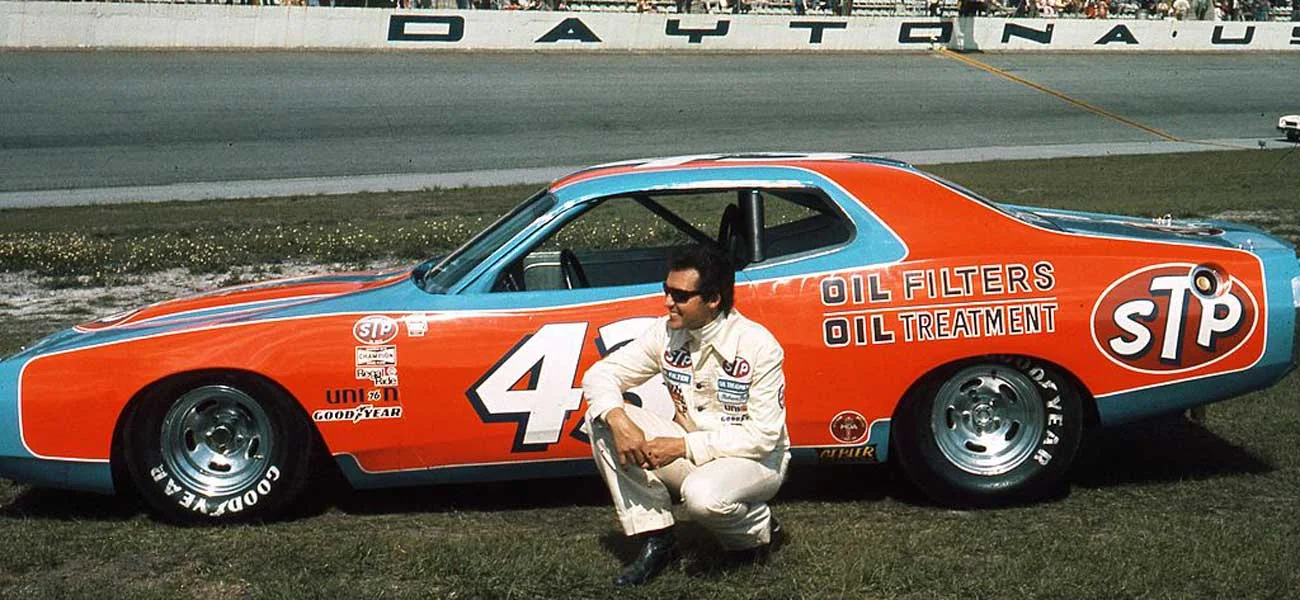
Petty's most striking season came in 1967: 27 wins in 48 starts, according to NASCAR's history of the No. 43. A larger race calendar than today's gave him more chances to win, including short tracks that no longer host Cup events. Yet 27 victories from 48 appearances is more than a calendar effect. Petty beat the field in over half of the races he entered that year. The long schedule makes the scale of his career total understandable; his conversion of opportunities makes it exceptional.
NASCAR's win-by-win archive illustrates what the 200 actually contains. It begins with a 1960 win on a Charlotte dirt track and passes through small paved ovals and marquee speedway events. Those races were Cup's premier-division events in their day, even when the series had a different name and today's familiar venues were absent. Petty's record is therefore a history of where NASCAR raced as well as of one driver's success.
Pearson's 105 and Gordon's 93 followed different paths
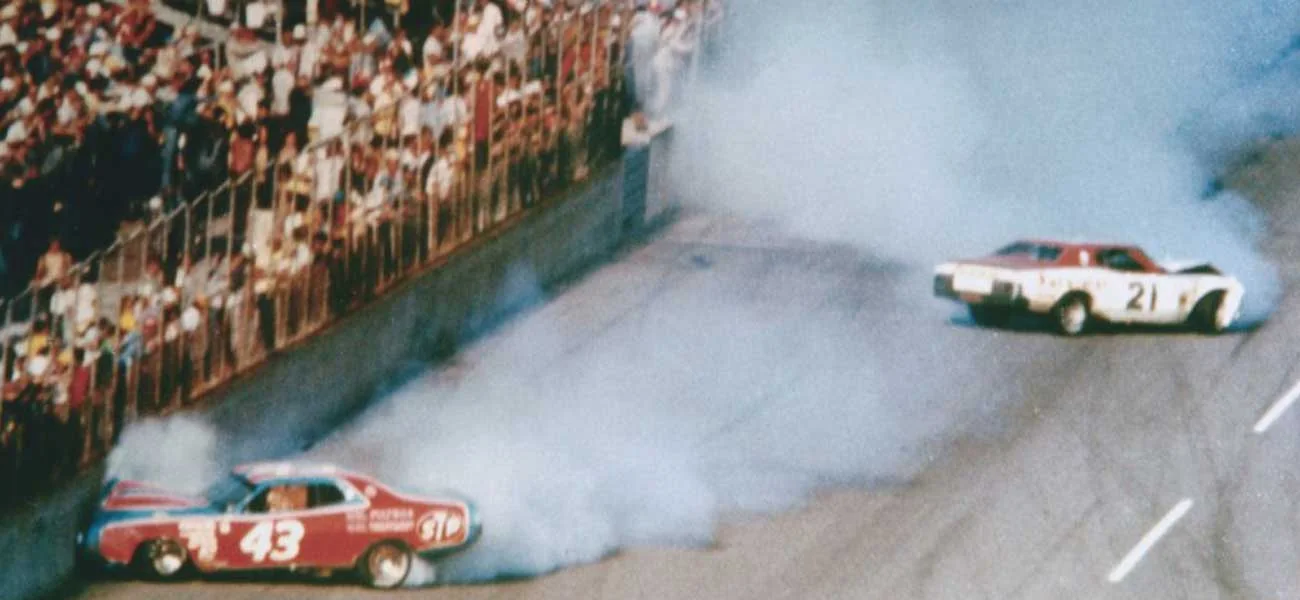
Pearson sits second with 105, but his NASCAR Hall of Fame profile records only 574 Cup starts—an 18.29% career win rate. It also says he never competed in every race in a season. He nevertheless won three season championships, demonstrating that a selective schedule did not prevent a championship-level career. His 1976 Daytona 500 finish against Petty, in which both cars spun late and Pearson recovered to win, gives their rivalry a famous single-race illustration, but the 105 came from decades of results.
Gordon's 93 came in 805 starts from 1992 through 2016, NASCAR's Hall of Fame profile says. He won four Cup titles and collected 13 race victories in 1998, showing a peak as well as longevity. Pearson leads Gordon by 12 in the all-time count, but the gap alone cannot adjust for different schedules or decide a debate about talent. The same caution applies to Petty versus either man. The list precisely counts official wins; starts, calendar size and race conditions supply the interpretation.
Why did Bobby Allison move to 85 wins?
Bobby Allison is fourth on today's official Cup race-wins list with 85 victories. If another page says 84, it may have been published before NASCAR resolved a disputed result in October 2024. NASCAR did not discover a new race from that year. It formally credited Allison with a 1971 victory that he had physically won but that the series had left without an official Cup winner in its record book.
The correction broke Allison's former tie with Darrell Waltrip. The current NASCAR leaderboard shows Allison at 85 and Waltrip at 84. It also keeps Richard Petty at 200. Petty was second in the disputed race; he had not been given the win while the winner line stood empty. This narrow, specific change is why a modern table should use 85 without revising the totals of drivers who finished behind Allison.
The 1971 Bowman Gray combination race
Allison won the Myers Brothers Memorial 250 at Bowman Gray Stadium on August 6, 1971. The 250-lap event included both NASCAR Grand National cars, from the series that became Cup, and Grand American cars. Allison's Mustang was from the latter division. He crossed the finish line ahead of Petty, took the trophy and received the first-place money. The problem was how to classify that result in Grand National records when the winning car came from the other division.
At the time, officials chose to leave the event without a credited winner in the premier-series book. Allison argued for decades that the victory belonged in his Cup total. NASCAR's 2024 review finally agreed and awarded him No. 85, which moved him into sole possession of fourth place. The oddity is not a minor formatting issue: one event can change a historical rank even though everyone knows who took the checkered flag. It also explains why two legitimate-looking sources may differ. The sensible check is the date of each list and whether it incorporates the October 2024 Bowman Gray ruling.
The ruling should not be confused with a normal post-race inspection, where officials decide the result soon after an event. Here the race occurred more than 50 years earlier; the issue was a longstanding classification of a combined-series event. That distinction matters when you compare Allison's record with the final winner of a recent Cup race.
Which 2026 drivers are closest to changing the ranking?
Career totals change only when a driver earns another official Cup race victory. On NASCAR's after-Bristol 2026 list, the active names in the top 30 are Denny Hamlin, Joey Logano, Brad Keselowski and Kyle Larson. Their positions show two different stories: Hamlin leads current competitors by a wide margin, while drivers lower down sit beside or just below historical names. A later result may move a name, but the comparisons below are arithmetic based on the dated official table, not predictions.
Denny Hamlin's 64 and the gap to eighth
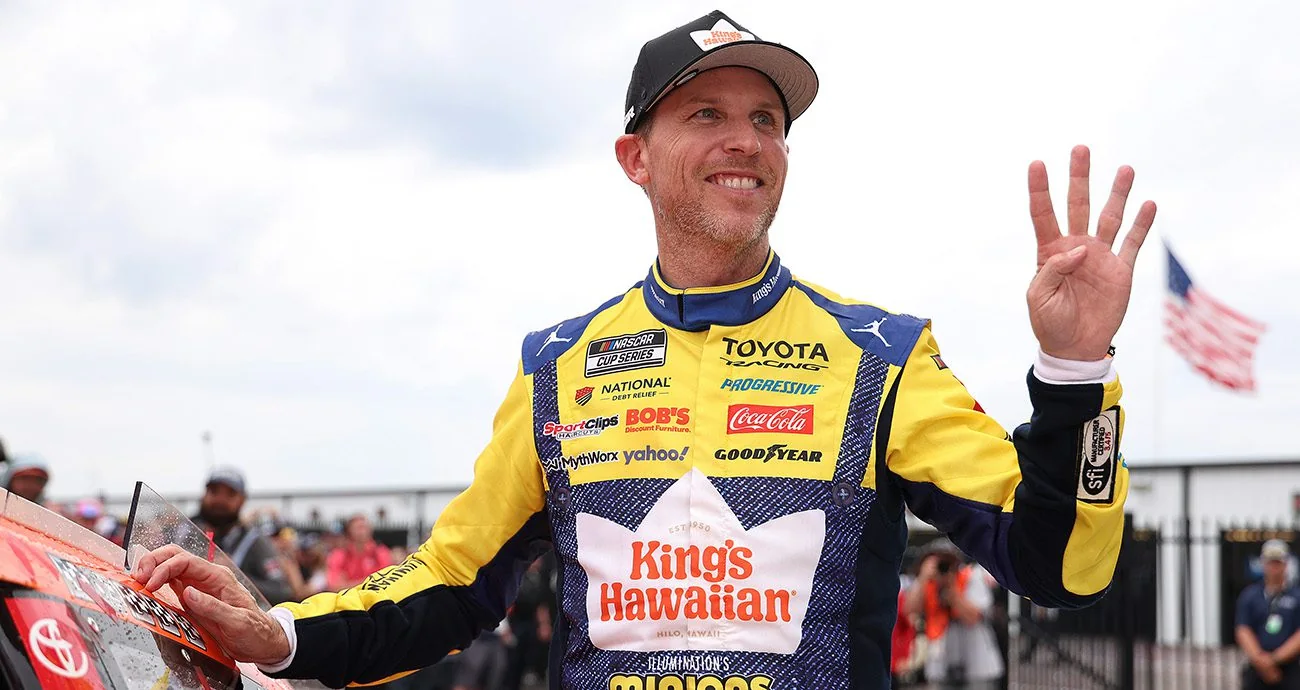
Hamlin has 64 Cup wins, ninth in NASCAR's snapshot and the highest total among drivers it marks active. NASCAR reported the number again when he made his 750th Cup start at Bristol. Eighth-place Dale Earnhardt is at 76. Hamlin would need 12 more wins to tie that number and 13 to exceed it, assuming the historical table otherwise holds. That is a considerable distance, so Hamlin can add to his career tally without gaining an all-time position immediately.
Kyle Busch is tenth with 63, one behind Hamlin. Busch died in May 2026, and NASCAR's report on his life and career confirms that Cup total. His place on the list remains part of NASCAR history, but it is not an active racing comparison going forward. A search result written before May 2026 might describe Busch as an active wins leader; use a current dated source before repeating that label.
Logano, Larson and other active climbers
Logano has an immediate tie to break: 40 Cup wins, level with Mark Martin at T-20. His Bristol Night Race victory was No. 40, and NASCAR's race recap says the result passed post-race inspection. One additional confirmed Cup win would put Logano alone ahead of Martin on victories. It would not, by itself, reach Bill Elliott's 44 in 19th.
Keselowski has 36 and is one short of Bobby Isaac's 37, so one win would make a tie and two would clear it. Larson has 33, tied with Fireball Roberts. One more would bring him level with the 34-win pair of Kurt Busch and Martin Truex Jr.; another after that would put him past those totals. These are conditional examples of how the all-time list could move, not claims that any of those wins has occurred. Check a final Cup result before changing the published numbers.
What counts as a Cup race win, and how can you check a specific winner?
“NASCAR winner” can mean the winner of one race, the champion of a season, or a driver's combined achievements across several national series. The table in this article uses only official career Cup race victories. Before copying a number from a search result, identify which of those questions the source actually answers. A result without a series or update date is especially easy to misread during a race weekend.
A Cup race win is not a championship or a Truck/O'Reilly victory
A driver wins a Cup race by being credited with first place in an official Cup event. A driver wins a Cup championship by meeting that season's title rules. NASCAR's 2026 Chase rules make the season title a points contest over the final ten Cup races. They also removed the earlier automatic “win and you're in” berth. One event victory can be important to both a career total and the points battle, but it is not identical to the championship. Use Cup standings to follow the title fight.
The division matters as much as the accomplishment. NASCAR's Kyle Busch career account separates his 63 Cup wins from 102 wins in what is now the O'Reilly Auto Parts Series and 69 in the Craftsman Truck Series. The broader total across these series cannot be used as his Cup number. The same rule applies when a Cup regular wins a Truck or O'Reilly race: it is a valuable victory, but it does not change that driver's place on the Cup-only list beside Petty or Hamlin.
Use the final race result, not a live leaderboard
To identify one race's winner, first pin down the year, track and series. The schedule helps with date and track; the all-series results help distinguish Cup from the other national divisions. Then open the Cup results or NASCAR's event page and wait for the final result. A live running order says who leads at a moment in time, and an immediate finish-line report can still precede inspection.
Consider the 2022 Cup race at Pocono. Denny Hamlin finished first on the track, but NASCAR disqualified his car after the race. Chase Elliott, initially third, became the official winner. A viewer who stopped at the checkered flag would give the win to the wrong driver. For the 2026 Bristol race, by contrast, NASCAR's Logano recap explicitly said post-race inspection concluded without an issue. That confirmation supports adding Logano's 40th victory to the all-time table.
Finally, compare the verified event result with a career list carrying an update point. The table here stops after 2026 Race 29 at Bristol, because that is the boundary NASCAR supplied. It is useful for historical ranking at that moment; the latest completed race result answers a newer, event-specific question. Keeping those two views separate is the simplest way to avoid a false “today” winner or an outdated career total.
About the author
NASCAR Schedule Editorial Team
The NASCAR Schedule editorial team turns verified schedules, timing and scoring, official announcements and race-weekend context into direct answers for fans.
View all articles by this author →Join the discussion
Comments
Sign in with Google to comment. Keep it race-focused; new comments are reviewed before publication.
Loading comments…