Why Kyle Larson Stayed Out at Darlington: 2026 Southern 500 Strategy Explained
A decision-by-decision analysis of Larson’s late Southern 500 gamble, the tire and track-position tradeoff, and the championship value of finishing fifth.
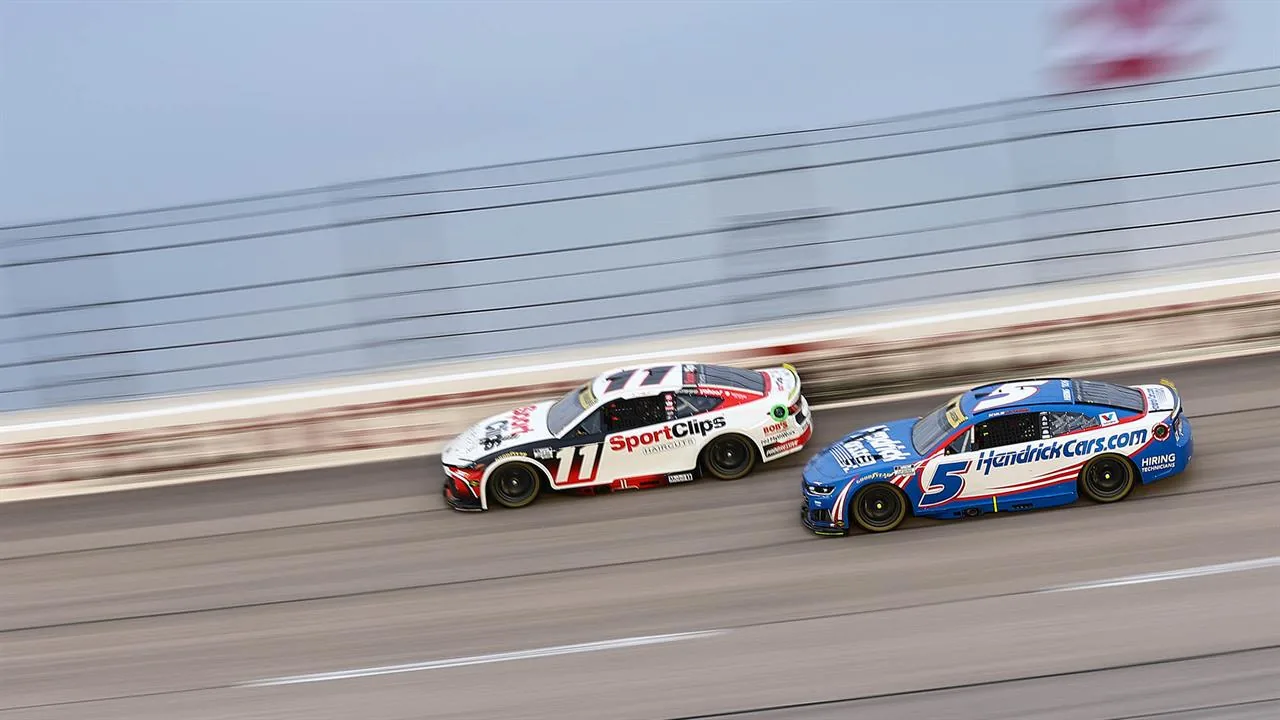
Kyle Larson and crew chief Cliff Daniels stayed out on older tires late in the 2026 Southern 500 because pitting likely meant restarting fourth or fifth behind the fastest Toyotas. Taking the lead gave Larson a real—though narrow—chance to defend clean air and win. Christopher Bell's fresh tires eventually prevailed with 12 laps left, and Larson finished fifth.
That outcome made the call unsuccessful, but not automatically wrong. The fair test is what each option offered when the caution occurred, how restart traffic changed the odds, and whether fifth represented an avoidable collapse or the expected downside of a measured gamble.
The Decision: Why Larson Stayed Out Instead of Pitting
Kyle Larson stayed on track because crew chief Cliff Daniels believed the No. 5's only realistic route to victory was to inherit the lead and defend it. Pitting with Christopher Bell and the quickest Toyotas probably meant restarting fourth or fifth on equal tires. Staying out traded grip for the front row, clean air and control of the restart.
The choice arrived after a brief rain stoppage late in the 367-lap Southern 500. Larson had led a race-high 99 laps and had enough speed to contend, but he was not clearly faster than Bell, Ty Gibbs, Tyler Reddick and Chase Briscoe on comparable tires. Four cars remained on track while much of the lead-lap group stopped. Bell emerged first among those who took fresh tires and restarted fifth, immediately behind the stay-out group.
That creates the correct decision tree. Branch one was pit: give up the lead, join the strongest cars on fresh tires and try to pass several of them at a track where position is difficult to regain quickly. Branch two was stay out: begin ahead of those cars, use Larson's restart skill and hope traffic or defensive lines consumed enough laps for the older tires to survive. Neither branch guaranteed a win.
The result—Bell passing Larson with 12 laps remaining and Larson fading to fifth—does not change what was knowable when the call was made. Daniels could estimate tire falloff and likely pit-road order, but he could not know how many rivals would stay out, how quickly Bell would clear them or exactly how long Larson could protect the lead. Strategy is a choice under uncertainty, not a retrospective selection of the finishing order a team prefers.
Daniels later described the options as roughly a “net wash”: pit and likely emerge fourth or fifth, or stay out and at least place the No. 5 at the head of the field. Larson agreed with the gamble. Their defense is not that old tires were secretly faster. It is that accepting a likely top-five ceiling on the conventional strategy offered less winning upside than taking the lead.
The official NASCAR results show the downside stopped at fifth. The call failed to produce the trophy, but it did not turn a certain win into a bad finish. It exchanged a probable strong finish for a short-lived chance to win the Southern 500.
What Larson and Daniels Knew at the Final Caution
The No. 5 team made its choice with three useful pieces of information and one major unknown. It knew Larson had led 99 laps, knew the leading Toyotas had shown strong pace, and knew pitting from near the front would surrender track position. It did not know how many cars would join the stay-out lane and form a buffer between Larson and Bell.
The tire difference was real but not enormous in simple lap count; Larson was not trying to finish an entire fuel run on a destroyed set. The more important issue was the performance curve. Darlington tires lose grip quickly enough that a few laps can create a meaningful launch and corner-exit advantage. Once the field went green, every lap Larson spent defending rather than running his preferred line accelerated the competitive difference.
Larson expected more cars to stay out
Larson's post-race explanation centered on traffic. He expected another two to four cars to remain on track, which would have placed more older-tire machines between him and the first fresh-tire challenger. Those cars did not need to remain competitive for long. They only needed to make Bell spend a few corners completing passes while Larson built a lead and protected his tires.
Instead, Bell lined up fifth and moved to second almost immediately. Larson therefore had to defend much earlier than planned. He could not freely choose a tire-saving line because the No. 20 was already close enough to threaten. That does not mean Larson misunderstood Darlington's tire falloff; it means one assumption about restart traffic broke against him.
Daniels believed pitting capped the No. 5’s upside
Daniels viewed the conventional branch as a probable fourth- or fifth-place proposition. Bell's pit crew put the No. 20 first among the cars that stopped, and the other front-running Toyotas had comparable fresh rubber. Had Larson joined them, he still would have needed to pass cars that had demonstrated speed all night. Equal tires remove the glaring disadvantage, but they do not create a passing lane or guarantee superior pace.
That assessment explains why the crew chief valued the lead even with older tires. The No. 5 had already recovered from a 25th-place start and established race-winning track speed. Daniels was deciding how to convert that speed, not trying to rescue an uncompetitive car. Beginning first let Larson control the initial acceleration and choose the preferred lane; pitting meant reacting from behind.
Neither interview supplies the team's precise simulation or a published percentage for winning from each branch. The honest conclusion is narrower: both driver and crew chief understood the tire penalty, agreed that the likely pit order limited their upside, and accepted a risk whose success depended partly on how the other teams divided their strategies.
Why Track Position Was Worth Gambling For at Darlington
Track position had value because Darlington's narrow, distinctively shaped corners limit where a trailing driver can place the car. The leader reaches undisturbed air, selects the entry and can force a challenger to use a less comfortable groove. On a short restart, those advantages sometimes protect older tires long enough to reach the finish.
Larson also had control of the initial launch. A clean restart could make the fresh-tire group race one another before it reached him, while every side-by-side battle would spend another fraction of the remaining distance. The gamble was therefore about time as much as speed: could Larson make the race run out before Bell's grip advantage became usable?
Clean air created the only realistic winning lane
Clean air did not make Larson faster than Bell on fresh tires. It gave him tools for resistance. He could accelerate first, protect the lower lane when necessary and use the outside groove's momentum when Bell approached. At Darlington, a following car must still complete a pass while managing the wall, dirty air and its own tire temperature. Raw lap-time advantage is important, but it is not the same thing as an automatic overtake.
That is why Daniels preferred first on older tires to fourth or fifth on equal tires. From fifth, Larson would need several successful passes and would consume his own tires in traffic. From first, he only needed to keep every rival behind. The second task was unlikely, but it was simpler and carried a direct route to the trophy.
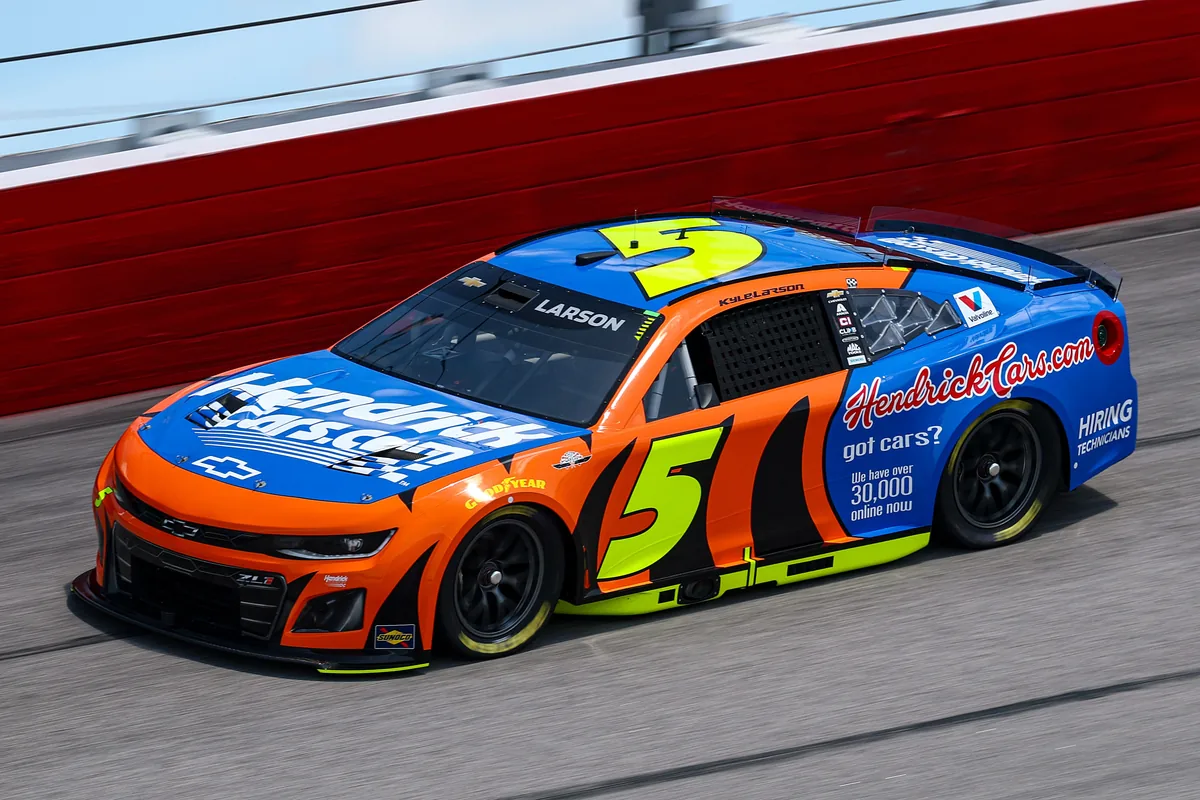
The strategy also leaned on Larson's strengths. His ability to run close to Darlington's wall and change line under pressure made him a credible driver to attempt the defense. A stay-out call for an uncompetitive car would merely delay the inevitable. The No. 5 had led more laps than anyone, so the team had evidence that Larson could execute if the track-position advantage lasted.
There were limits. Defending prevents a driver from following the ideal tire-conservation arc. Turning down to cover the bottom can increase steering demand; accelerating hard enough to clear a challenger consumes rear grip. Larson said Bell reached second so quickly that he went almost immediately into defense instead of managing the tires. The very actions required to exploit clean air shortened the period in which it remained effective.
Four cars staying out was not enough to give Larson the buffer he expected. Bell cleared the others rapidly and transformed the situation from “manage a lead” to “block a faster car.” Track position bought approximately a dozen laps of resistance. In a slightly shorter run or with more traffic, that might have been enough. In the race that actually unfolded, it only delayed the decisive pass.
Why Bell’s Fresh Tires Eventually Won the Argument
Bell won because his crew combined fresh tires with excellent pit-road position. The No. 20 emerged first among the cars that stopped and restarted fifth, directly behind the four stay-outs. If Bell had returned in the middle of a larger fresh-tire group, the same rubber advantage might have been wasted in traffic. Instead, he had a short route to Larson.
Fresh tires improved more than one headline lap time. They gave Bell stronger acceleration, more security entering the corner and greater freedom to change lines when a lane closed. Larson's older set required precision and conservation. Bell could ask more of his car on consecutive laps, which made each defensive move increasingly difficult to repeat.
The pass with 12 laps left
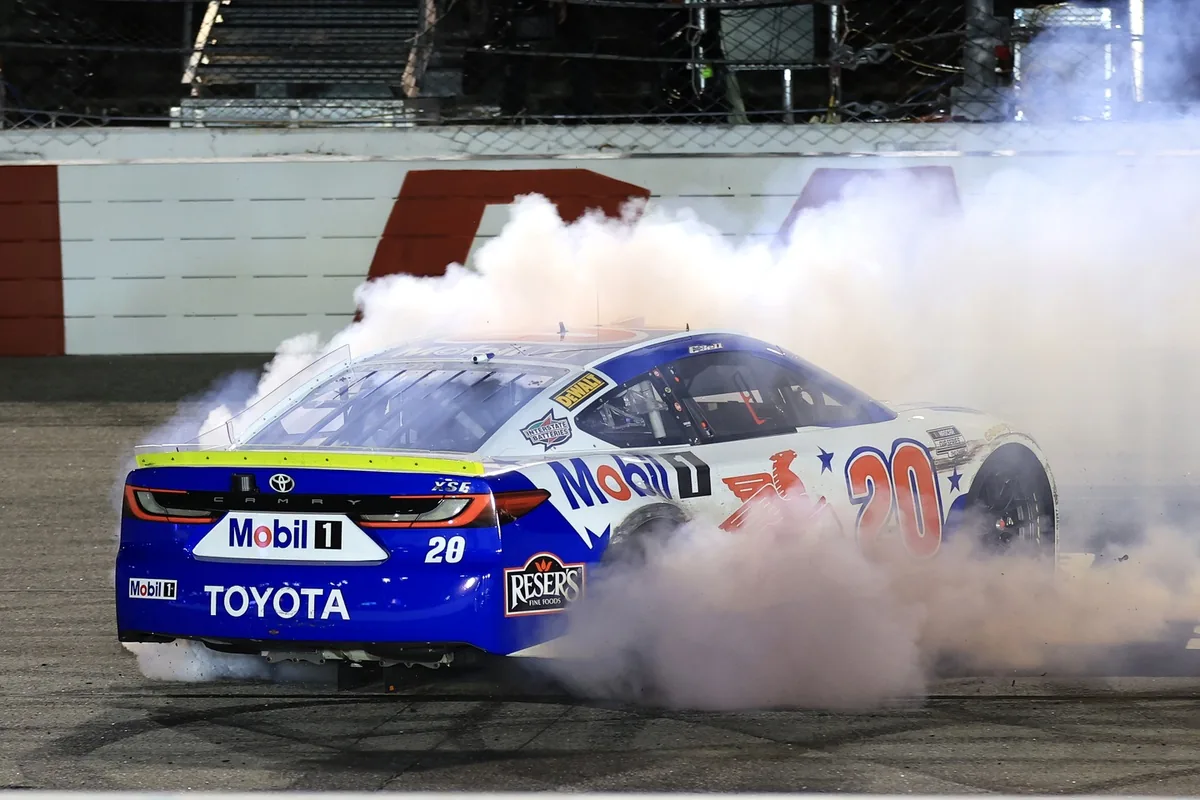
Bell reached Larson's bumper within two laps of the restart sequence and then spent the next portion of the run searching for a clean opening. Larson held him off for roughly a dozen laps—long enough to show that the lead mattered, but not long enough to reach the checkered flag. When Larson bobbled with 12 remaining, Bell cut underneath and completed the winning move.
The timing matters to the verdict. Bell did not drive past on the first corner as though Larson were stationary. The No. 5 successfully converted its track position into a meaningful defense. But Bell still had enough laps after the pass to establish a 1.038-second margin over teammate Ty Gibbs. That combination shows both sides of the trade: clean air delayed the faster car, while tire grip ultimately supplied repeatable speed.
Once Larson lost the lead, the same old tires that he had used to defend made it difficult to hold every fresh-tire rival behind. Gibbs, Tyler Reddick and Ryan Blaney also finished ahead, leaving Larson fifth. The fade was orderly rather than catastrophic; he did not spin, hit the wall or lose a large block of positions. He simply reached the lower boundary Daniels had expected from the pit branch.
Bell's execution was also part of the answer. Reducing the finish to “new tires beat old tires” ignores the crew's role in winning the race off pit road among those who stopped and Bell's ability to clear the other stay-outs. A slower stop or one extra lap behind traffic could have changed the closing distance. Strategy supplied the opportunity, but the No. 20 team converted every part of it.
The result tightened the championship immediately. Bell collected 73 points, while Larson earned 41 and remained seventh in the Chase. For the complete standings impact beyond this one decision, see the post-Darlington winners and losers.
Was Staying Out the Wrong Call or a Rational Risk?
Staying out was a rational risk that failed, not an indefensible mistake. The team correctly identified that old tires would be slower and accepted that disadvantage because the conventional stop appeared unlikely to produce a win. A strategy can be reasonable without succeeding, just as a conservative call can produce a good finish without being the best attempt at victory.
The strongest criticism is that Darlington's tire falloff was too powerful and Bell's speed too obvious. Larson's buffer was small, and only a few cars chose the same branch. Once Bell restarted as the first fresh-tire car in fifth, the No. 5's probability fell sharply. Critics can fairly argue Daniels should have updated toward protecting a top-three result.
Judge the call against the pit-road alternative
The missing piece in many fan complaints is a guaranteed counterfactual. Pitting does not place Larson beside Bell with an empty track; it returns him behind some combination of Bell, Briscoe, Gibbs and Reddick, depending on pit execution. He then has to pass cars on similar tires. Daniels estimated the resulting position as fourth or fifth, and nothing in the final pace proves Larson would certainly have moved forward from there.
That makes the proper comparison “chance to defend the lead versus chance to pass from roughly fifth,” not “fifth versus guaranteed second.” Larson had already spent much of the race climbing from 25th. The Toyotas occupied four of the first six finishing positions and demonstrated competitive long-run speed. Giving them track position would have been a real concession.
The stay-out branch also had plausible ways to work. More cars could have remained out, a brief caution could have frozen the order, or Larson could have delayed Bell a few additional laps. None occurred, but they were possible at the decision point. Daniels did not need old tires to be faster; he needed the remaining green-flag window to be slightly less favorable to Bell.
Fifth place was the downside, not a collapse
Larson's execution limited the damage. He held the lead for about half of the final run and finished fifth, 3.932 seconds behind Bell. The No. 5 completed every lap and collected 41 points. If the intended risk profile was “take a real shot at the win while retaining a top-five floor,” the actual result landed on that floor.
That does not make fifth equivalent to winning. Under the 2026 system, Bell's victory paid a larger finishing reward, and his stage work helped create a 32-point race-day advantage over Larson. But championship pressure can justify calculated upside. The NASCAR points system deliberately pays 55 finishing points for a win, making first worth 20 more than second. Teams have a reason to accept measured risk rather than always bank the nearest safe position.
The balanced verdict is therefore conditional. If Daniels believed several more cars would stay out, the call's winning case was stronger than the restart order ultimately provided. Once pit road closed, however, there was no reversal available. Larson did his job, Bell executed better with the advantageous tires, and the fifth-place outcome does not prove that pitting would have beaten the No. 20.
What the Gamble Means for Larson’s 2026 Chase
Larson left Darlington seventh in the Chase with 2,086 points, 49 behind Hamlin. He did not gain a standings position, but his fifth place reduced the gap to the leader by six points. That is modest progress from a race in which the winning strategy broke the other way.
The result is more valuable under the restored cumulative Chase than it would look through an elimination-only lens. There is no automatic advancement for Bell and no first-round cutoff for Larson to protect. All ten races remain in one total. Darlington's 41 points stay banked, and every point Larson gains or loses at Gateway, Bristol and beyond adds directly to the same championship equation.
That format makes the team's risk profile defensible but not repeatable without limits. Larson cannot routinely surrender 32 race-day points to a direct rival, especially when the leaders begin only dozens of points apart. Yet he also needs wins or near-maximal days to erase a 49-point deficit. Always selecting the branch with the safest projected fifth place would make that recovery harder.
The strategic lesson is not “always pit” or “always protect clean air.” It is to identify how much traffic will separate the first old-tire car from the first fresh-tire threat. At Darlington, Larson needed more stay-outs than he received. At another track, lower tire falloff, a shorter run or a larger buffer could make the same call a winner. Crew chiefs evaluate the remaining laps, pit-loss order, lane choice and likely behavior of rivals each time.
Larson's 99 laps led also matter as evidence of performance, even though laps led no longer award points by themselves. The No. 5 showed enough speed to lead and enough recovery to climb from 25th. The missing piece was converting late control into the maximum finish. That is a more encouraging problem than a car unable to reach the front.
Fans can follow the updated gap through the NASCAR standings and review how the ten-race structure works in the 2026 Chase format guide. The next race on the weekend schedule offers Larson another opportunity to turn speed into points, without any round reset waiting to erase either the gain or the loss.
Darlington therefore produced a useful championship result but an expensive comparison. Larson limited the downside and moved six points closer to first; Bell executed the higher-value branch and moved much more. Over nine remaining races, the No. 5 team will need the same willingness to pursue upside—and a few more final cautions that divide in its favor.
About the author
NASCAR Schedule Editorial Team
The NASCAR Schedule editorial team turns verified schedules, timing and scoring, official announcements and race-weekend context into direct answers for fans.
View all articles by this author →Join the discussion
Comments
Sign in with Google to comment. Keep it race-focused; new comments are reviewed before publication.
Loading comments…