2026 NASCAR Chase Standings After Darlington: Biggest Winners and Losers
A verified explanation of the NASCAR Cup Chase standings after Darlington, including the complete top 16 and the results behind the largest moves.
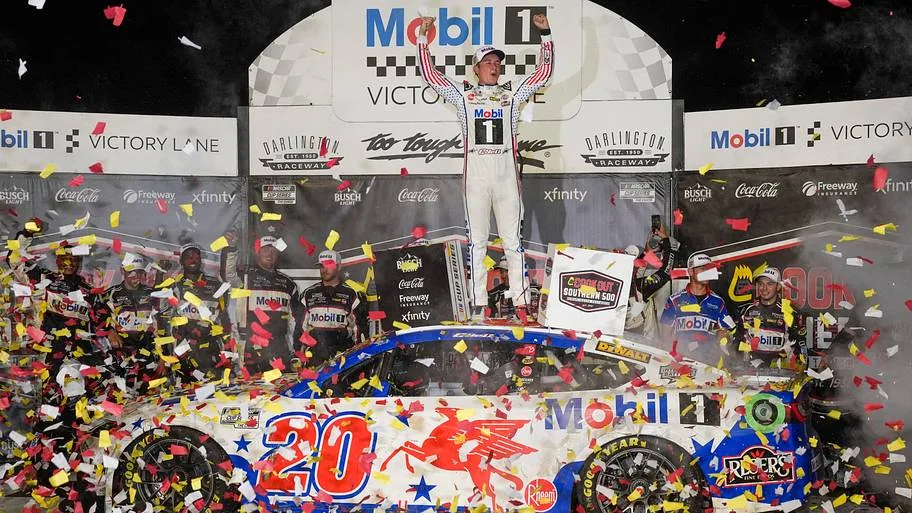
The first race of NASCAR's restored Chase immediately proved why a cumulative championship can still swing hard. Christopher Bell left the 2026 Southern 500 only 12 points behind Denny Hamlin, while William Byron fell to the last Chase position after an engine-related retirement. Between those extremes, several contenders gained ground without winning and others lost positions despite respectable finishes.
This breakdown uses NASCAR's official post-Darlington standings and the published race order. It separates verified results from strategic interpretation, explains every major move in the top 16 and looks ahead to Gateway without treating it as an elimination cutoff.
NASCAR Chase Standings After the 2026 Southern 500
Denny Hamlin left Darlington Raceway with the NASCAR Cup Series championship lead, but his advantage fell to 12 points over Southern 500 winner Christopher Bell. Bell’s four-position jump from sixth to second was the largest move near the top, matched by Bubba Wallace’s climb from 14th to 10th. William Byron moved the other direction: an engine failure and 37th-place finish dropped him three positions to 16th.
The table below is the official post-Darlington snapshot for September 6, 2026—Race 27 of 36 and the first of ten Chase events. It should not be read as a live table after Gateway or any later race.
| Pos. | Driver | Points | Change | Behind leader |
|---|---|---|---|---|
| 1 | Denny Hamlin | 2,135 | — | — |
| 2 | Christopher Bell | 2,123 | +4 | 12 |
| 3 | Ryan Blaney | 2,119 | -1 | 16 |
| 4 | Tyler Reddick | 2,111 | -1 | 24 |
| 5 | Chase Briscoe | 2,098 | — | 37 |
| 6 | Ty Gibbs | 2,096 | -2 | 39 |
| 7 | Kyle Larson | 2,086 | — | 49 |
| 8 | Joey Logano | 2,063 | +1 | 72 |
| 9 | Chase Elliott | 2,063 | -1 | 72 |
| 10 | Bubba Wallace | 2,054 | +4 | 81 |
| 11 | Chris Buescher | 2,047 | -1 | 88 |
| 12 | Carson Hocevar | 2,046 | — | 89 |
| 13 | Daniel Suárez | 2,041 | -2 | 94 |
| 14 | Austin Cindric | 2,033 | +1 | 102 |
| 15 | Ryan Preece | 2,031 | +1 | 104 |
| 16 | William Byron | 2,021 | -3 | 114 |
Unlike the elimination system used through 2025, there is no cutoff after three races and no automatic advancement for winning. All 16 Chase drivers continue adding normal race, stage and eligible fastest-lap points for the remaining nine events. Bell’s win matters because first place pays 55 finishing points—20 more than second—not because it locks him into a later round.
The gaps reveal two different fights. Hamlin, Bell, Blaney and Reddick left the opener within 24 points of one another, a range that one strong stage-and-finish day can overturn. At the back, Cindric, Preece and Byron are already more than 100 behind Hamlin. They are not eliminated, but a second weak event would increase the amount of help they need from the leaders.
Use the live NASCAR standings for the newest order and the results hub to verify each race score. The purpose here is to explain how Darlington created this particular table.
Christopher Bell Was Darlington’s Biggest Championship Winner
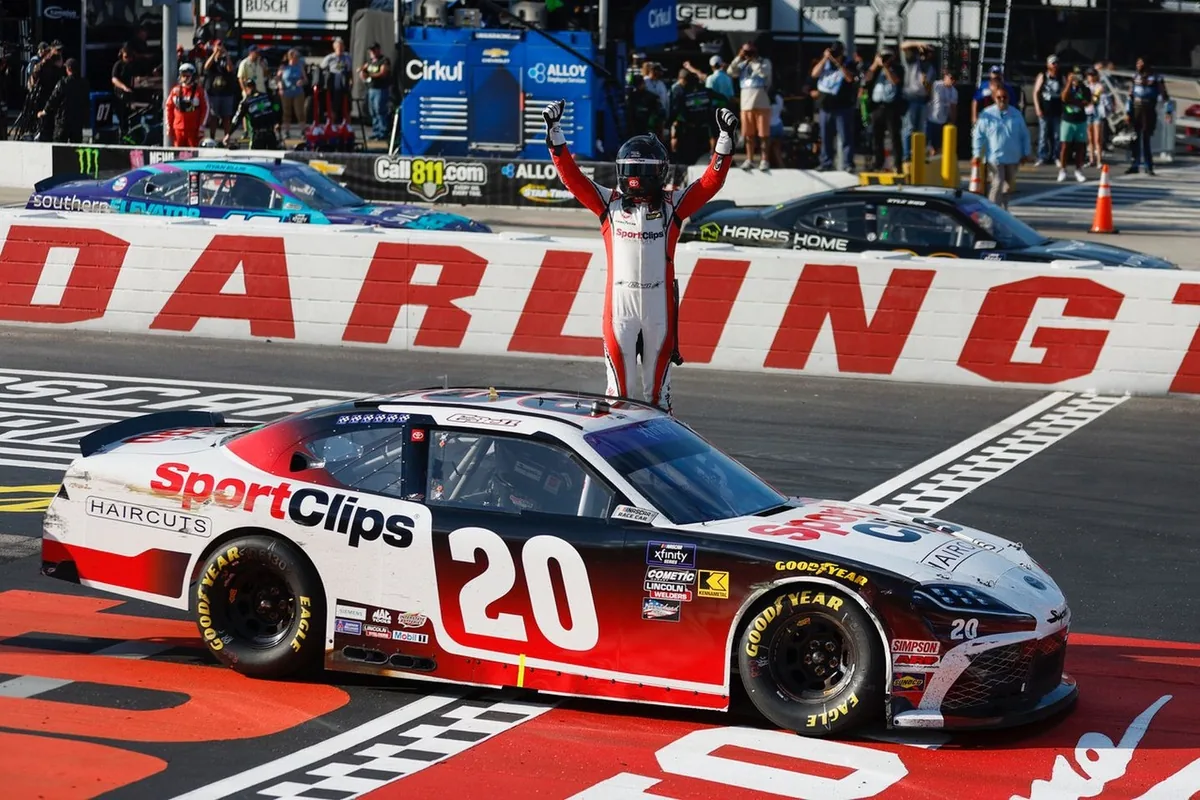
Christopher Bell did more than gain four positions. He took 38 points out of Hamlin’s advantage in a single night, moving from 50 behind the top seed at the opening reset to 12 behind after Darlington. That number is a change in the gap—not a special bonus. Bell created it by scoring 73 race points while Hamlin’s damaged-car recovery produced a much smaller total.
The victory also ended a 33-race winless stretch that had included seven runner-up finishes in 2026. Those seconds established that the No. 20 had race-winning pace, but they could not deliver the 20-point finishing premium between first and second. Converting at Darlington therefore changed both the emotional tone around the team and the championship math.
How Bell turned race recovery into 73 points
Bell started 11th and moved forward methodically through a race shaped by tire falloff and long green-flag pit cycles. He finished fourth in Stage 1 and won Stage 2, building a substantial points base before the final run. The night was not clean: a bobble during the right-front tire exchange at the Stage 2 break sent him back out in 12th. At Darlington, that lost track position can trap a fast car behind traffic and accelerate tire wear as the driver searches for passing lanes.
Bell and crew chief Adam Stevens did not abandon the plan. The No. 20 worked back toward the leaders, then took fresh tires during the decisive late sequence. Kyle Larson stayed out to preserve the lead, creating a classic Darlington trade: Larson owned clean air and track position, while Bell had the grip advantage. Bell passed Larson with 12 laps remaining and won by 1.038 seconds over Ty Gibbs.
His official line—46 laps led and 73 points—shows why every phase mattered. The Stage 2 win prevented the slow stop from wasting an otherwise productive first two-thirds. The recovery put him close enough for the late tire call to matter. The final pass then turned a strong points evening into the maximum-value result available from the finish.
Under the new scoring, winning is disproportionately valuable but not an automatic ticket anywhere. Bell received the 55-point first-place award, added his stage points and emerged second in the championship. For readers checking the calculation, the 2026 points guide separates finishing, stage and fastest-lap awards. Darlington was the clearest example yet of the format’s intended combination: accumulate throughout the race, then still take the risk required to win.
Denny Hamlin Kept the Lead but Lost Most of His Cushion
Hamlin’s Darlington result was poor relative to his opening position, yet the regular-season reward worked exactly as designed. He entered The Chase at 2,100 points, 25 ahead of the second seed and 50 ahead of Bell in sixth. That head start allowed him to remain first after finishing 18th while Bell won and collected stage points.
The No. 11 was not an 18th-place car for most of the evening. Hamlin moved from fourth to the lead by Lap 3 and led 68 laps, third-most behind Larson and Reddick. His race changed when contact and a hard brush with the Turn 4 wall early in the final stage damaged the car. Darlington’s narrow, abrasive line punishes even small losses of rear grip and aerodynamic balance; once the right side is compromised, maintaining the same corner speed becomes difficult.
Finishing the race still mattered. The team could not restore a winning car, but bringing it home on the lead lap limited the loss compared with a garage trip or engine failure. Hamlin left with 2,135 points instead of surrendering the lead altogether. Calling that a successful night would ignore the vanished cushion, but calling it a championship disaster would ignore the position he preserved.
The more important question is whether Darlington remains an isolated low score. There are no later resets to rebuild Hamlin’s advantage and no elimination win that lets him relax. Bell is 12 back, Blaney 16 back and Reddick 24 back. Another wall contact, pit-road penalty or mechanical failure at Gateway could move several rivals ahead at once.
Hamlin’s outcome demonstrates the purpose and limit of seeding. The 2026 Chase format rewarded his 26-race regular season with insurance. Darlington used much of that insurance immediately. He remains the driver everyone is chasing, but the standings now demand execution rather than protection.
Bubba Wallace and Toyota Strengthened Their Chase Position
Bubba Wallace matched Bell’s four-position standings gain, moving from 14th to 10th after an eighth-place finish worth 44 points. His day was stronger than the finishing position alone suggests. Wallace led three times for 38 laps, scored in both stages and briefly gained the lead during a green-flag pit cycle when his stop was quicker than teammate Tyler Reddick’s.
Darlington’s result also exposed Toyota’s depth. Bell and Ty Gibbs finished first and second, Reddick third, Chase Briscoe sixth and Wallace eighth. In the championship table, Hamlin, Bell, Reddick, Briscoe and Gibbs occupied five of the first six positions, with Ryan Blaney’s Ford the lone interruption. Joe Gibbs Racing and 23XI Racing produced that concentration together rather than one organization carrying the manufacturer alone.
The strategic pattern mattered. Toyota cars collectively led 256 of 367 laps: Reddick 74, Hamlin 68, Bell 46, Wallace 38 and Briscoe 30. Their speed appeared across changing track conditions and multiple pit cycles. That does not mean each car handled identically, but it indicates a broad platform strength on an abrasive intermediate where long-run balance and tire management expose weak setups.
Why one strong race did not erase Wallace’s deficit
Wallace still left 81 points behind Hamlin because he began The Chase near the bottom of the reseeded group. Moving four positions is encouraging, but the actual gap shows the scale of the task. He needs repeated high-stage scores and top finishes, plus at least some low-output races from the leaders. One eighth-place finish cannot undo an opening seed deficit of that size.
The revised format gives him time. There is no Round of 16 cutoff waiting after Bristol, so he will not be eliminated if he remains 10th three races into the Chase. All nine remaining results count toward the same total. That makes a steady sequence of 40-point days more useful than a single spike followed by two finishes in the 20s.
Toyota’s collective strength is an advantage and a complication. Data and setup direction across aligned organizations can help Wallace arrive with speed. On race day, however, those same Toyota contenders take stage points and finishing positions from one another. Bell’s 73-point night advanced him much more than Wallace’s 44, while Hamlin retained the lead despite trouble. Wallace improved his position, but he must eventually beat the other fast Toyotas rather than merely join them near the front.
The right conclusion is that the No. 23 re-entered the conversation, not that its deficit disappeared. Darlington supplied evidence of race-leading pace and strong pit execution. The live standings will show whether that was the first step of a sustained climb or the high point of an uneven Chase.
William Byron Used Up His Early Margin With an Engine DNF
William Byron produced the most damaging Chase result at Darlington because a competitive top-10 run became a six-point finish. The No. 24 was running ninth when it spun on Lap 316, slid toward pit entry and briefly restarted. Smoke appeared as the field prepared to resume, and a reported mechanical failure sent Byron to the garage. He completed 319 of 367 laps and was classified 37th.
The sequence should not be diagnosed beyond the available evidence. Byron initially thought he felt a tire going down and something dragging, but said afterward that the team was still trying to determine what broke. The spin and the engine problem occurred close together; that timing does not prove which component failed first or whether one caused the other. The official result records an engine-related retirement, while the precise root cause remained unconfirmed.
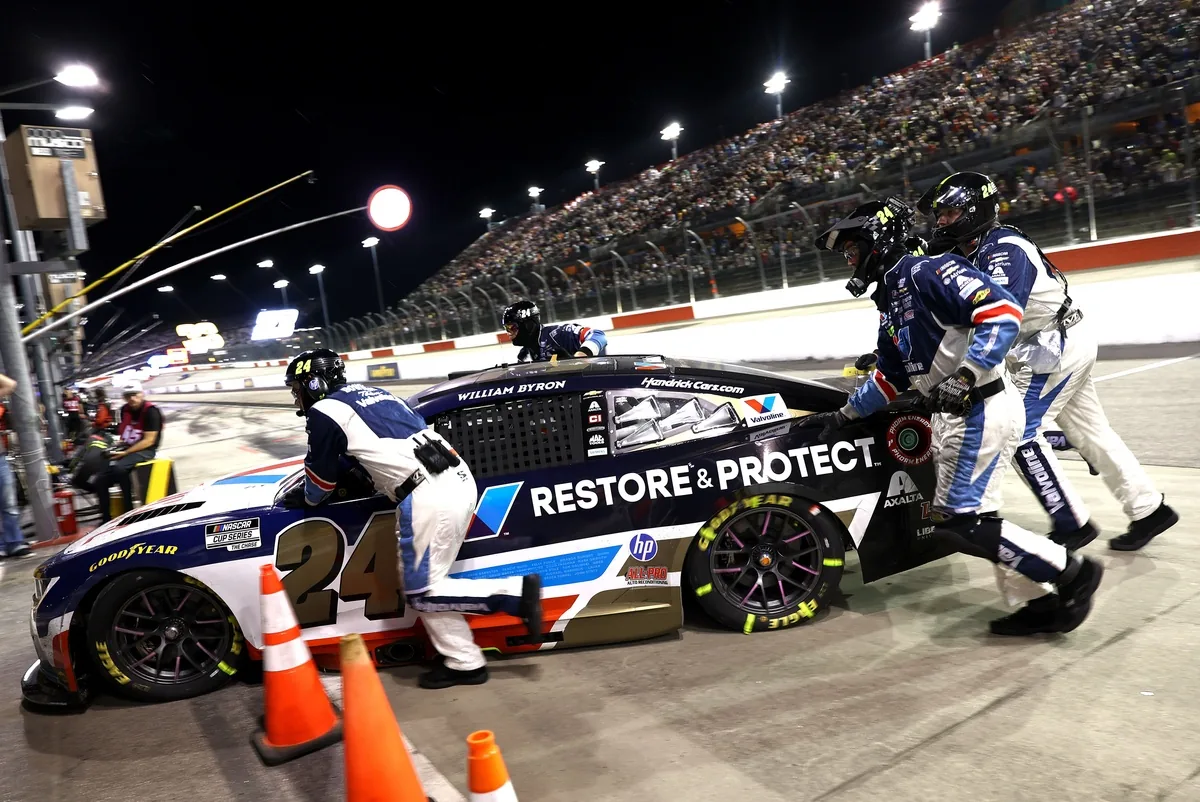
Byron salvaged five stage points before the failure, but earned only six for the entire event. That dropped him from the 13th seed to 16th at 2,021 points, 114 behind Hamlin. More importantly, it erased the modest separation he held over the final Chase seeds. Preece is now ten points ahead, Cindric 12 ahead and Suárez 20 ahead.
The old elimination format would have framed the next two races as an urgent fight to survive a first-round cutoff. The 2026 Chase creates a different problem. Byron is guaranteed to remain among the championship group, but all nine remaining events must repair a cumulative deficit. A win would be worth a 20-point premium over second, yet it would not erase Darlington or trigger a reset.
That makes stage scoring unusually important during the recovery. Byron cannot afford to sacrifice every early checkpoint for speculative track position, nor can the team chase stages without considering the 55-point win. The correct strategy will change by track: a short pit may be worthwhile at an intermediate, while clean air or fuel position can matter more elsewhere. What cannot happen repeatedly is another one-digit points day.
The No. 24 showed enough pace to run ninth before the problem, so Darlington did not prove that Hendrick Motorsports lacks speed. It proved that mechanical reliability is part of championship performance. Fans can verify the final order through the NASCAR results hub; any later technical finding should come from the team or NASCAR rather than social-media diagnosis.
Larson, Blaney and the Midfield Movers Who Limited the Damage
Kyle Larson and Ryan Blaney left Darlington with top-five finishes, but their standings lines tell two different stories. Larson started 25th, found enough speed to lead a race-high 99 laps and finished fifth. He stayed seventh in the Chase at 2,086 points, yet gained six points on leader Denny Hamlin. For a driver who entered the night needing to turn speed into consistent scoring, that was useful progress even without a position gain.
The lasting image was Larson leading on old tires after the final rain interruption. Crew chief Cliff Daniels left the No. 5 on track while Bell, Ty Gibbs, Tyler Reddick and other contenders stopped. The choice was not simply “old tires versus new tires.” Daniels judged that pitting from fourth would probably leave Larson restarting fourth or fifth behind the fastest Toyotas. Staying out created clean air, a front-row restart and at least one plausible path to the win.
That path lasted longer than the final result suggests. Larson kept Bell behind him for about 12 laps before the No. 20 completed the pass with 12 remaining. Once Bell broke through, the tire disadvantage pulled Larson back to fifth, but not into the middle of the field. A failed win attempt still returned a strong points day. Larson and Daniels both supported the decision afterward, and its logic is clearer when judged against the likely pit-road alternative rather than an imaginary guaranteed second place.
Blaney's fourth place was quieter and arguably even cleaner damage limitation. He climbed from 24th on the grid, finished one position ahead of Larson and left only 16 points behind Hamlin. Blaney nevertheless slipped from second to third in the table because Bell scored 73 points and jumped four positions. Losing a rank in that circumstance is not evidence of a bad race; it is evidence that another contender produced an exceptional one.
Those two results matter in a ten-race cumulative Chase. Neither driver received an automatic advancement reward, and neither faces an elimination line. Larson reduced his gap without winning, while Blaney kept the leader within one strong stage-and-finish swing. The objective is to stack nine more weekends like that and wait for the leaders to leave points available.
Why tied points do not mean tied standings positions
Joey Logano and Chase Elliott offer a smaller but useful lesson in reading the table. Both are shown with 2,063 points after Darlington, yet NASCAR lists Logano eighth and Elliott ninth. They do not share eighth place simply because the displayed totals match.
NASCAR's official ordering governs the standings whenever totals are tied. The public standings page does not spell out the complete calculation beside this particular Logano-Elliott tie, so it would be misleading to guess which individual finish settled it. The practical rule for fans is straightforward: use the published position column first and the points total second. That distinction can affect how many places a driver appears to gain or lose from one week to the next, even when two rows display the same number.
What the Darlington Swing Means Before Gateway
Darlington changed the shape of the title race, but it did not decide it. Bell is now 12 points behind Hamlin, Blaney is 16 back, Reddick 24 back and Briscoe 37 back. Those gaps can move in one afternoon because a Cup win pays 55 finishing points, 15 more than second, before stage points are included. Byron's 114-point deficit is far more serious, but even that is a recovery problem rather than an elimination verdict.
The distinction matters because Gateway is the second of ten Chase races, not a first-round cutoff. NASCAR does not eliminate four drivers after a three-race block in 2026, and it does not reset the contenders between rounds. Every stage and finish from Darlington through Homestead-Miami stays in the championship total. A driver cannot erase a poor opener with an automatic advancement win, but a leader also cannot protect a margin by merely surviving to the next reset.
That should alter how fans interpret strategy on Sept. 13. Bell and Blaney do not need to chase a desperate gamble just because Hamlin remains first. They need another complete afternoon: score at the Lap 45 and Lap 140 stage breaks, preserve track position and maximize the finish over 240 laps. Hamlin's job is similar. His 12-point lead is valuable, yet an early problem followed by missed stage points could remove it before the checkered flag.
For Wallace, Preece and the drivers around the lower half of the Chase table, Darlington showed how quickly several ordinary places can matter. Wallace climbed four positions with an eighth-place finish and useful stage work. Preece recovered to tenth after falling deep in the field. Neither won, but both reduced the number of cars between themselves and the leaders. That is how a cumulative format rewards recovery as well as outright speed.
The Enjoy Illinois 300 at World Wide Technology Raceway is scheduled for Sunday, Sept. 13 at 3 p.m. ET on USA Network, with MRN and SiriusXM NASCAR Radio providing audio coverage. Late changes to sessions or distribution are best checked on the NASCAR weekend schedule. Fans following the championship should also compare the live standings after each stage rather than waiting for a fictional cutoff line.
The larger lesson from Darlington is simple: one exceptional score can reorder the front, while one mechanical failure can consume an entire starting cushion. Nine races remain, so nobody needs a mathematical miracle at Gateway. Every contender does need to stop giving away the points that will still be on the ledger in November.
About the author
NASCAR Schedule Editorial Team
The NASCAR Schedule editorial team turns verified schedules, timing and scoring, official announcements and race-weekend context into direct answers for fans.
View all articles by this author →Join the discussion
Comments
Sign in with Google to comment. Keep it race-focused; new comments are reviewed before publication.
Loading comments…