NASCAR Cup Series Champions by Year: Titles and Championship Eras
A season-by-season Cup champions reference with title records, historical context and a clear distinction between race victories and season championships.
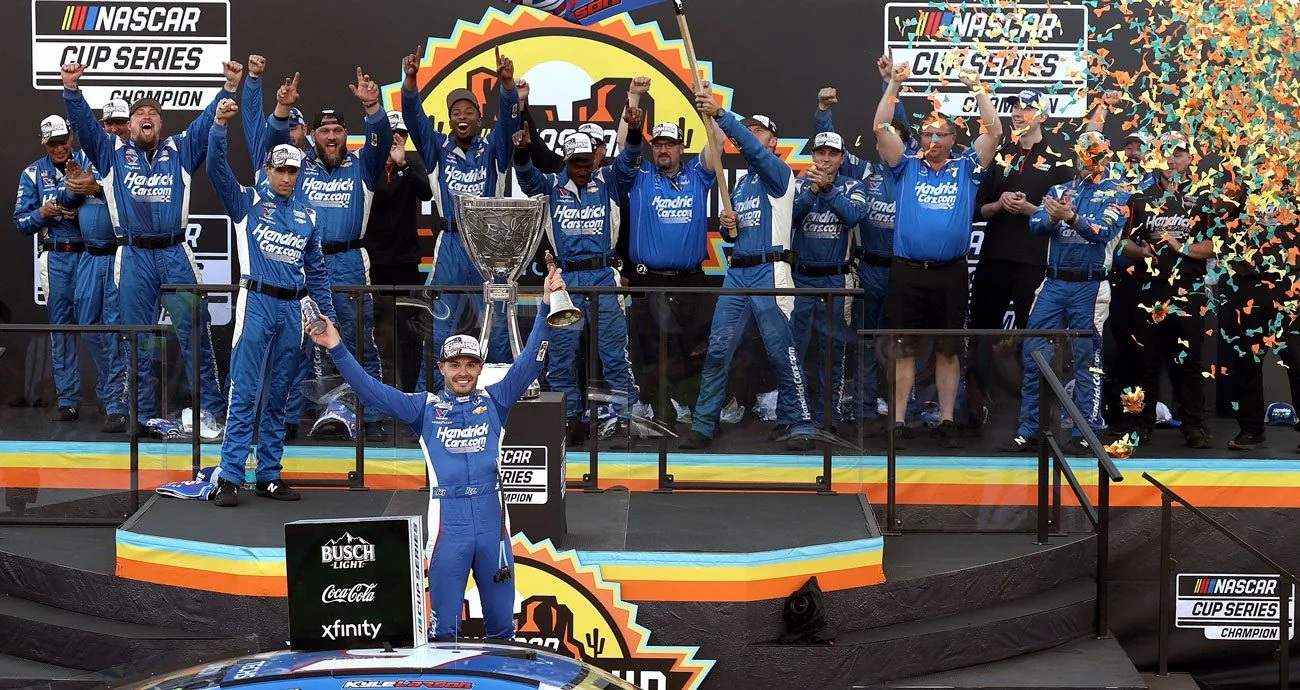
Richard Petty, Dale Earnhardt and Jimmie Johnson share the NASCAR Cup Series championship record with seven titles each. Kyle Larson is the most recent completed-season champion, winning his second title in 2025. The list below covers every Cup champion from 1949 through 2025, followed by the records and championship eras that make those names meaningful.
Updated October 19,2026: the 2026 season is still underway, so its eventual champion is not included. Read the year as the season won, not the calendar year in which an award ceremony or historical article appeared.
What counts as a NASCAR Cup Series championship?
A Cup championship is the season's overall drivers' title in NASCAR's highest national series. The historical line begins with the 1949 Strictly Stock season and continues through the Grand National and various sponsored Cup names. A change of title sponsor did not create a new championship history. Richard Petty's Grand National titles and Jimmie Johnson's Cup titles belong in the same record book.
The organization itself was founded in 1948, but that does not make the first Cup champion a 1948 champion. NASCAR sanctioned different forms of stock-car competition, and Red Byron won the inaugural Strictly Stock championship in 1949. For the earlier organizational story, the NASCAR name and origins guide explains why several founding dates appear in historical accounts.
Three other labels need separating. A race winner wins an individual event. A regular-season champion leads the applicable standings before the postseason reset. The overall champion wins the title under that season's complete championship rules. These can describe the same driver, but none automatically means the other two. A driver can also win the final race without winning the championship, because championship eligibility and the race classification are separate questions.
This article counts drivers' championships only. It does not add O'Reilly, Truck, Modified or regional titles to a driver's Cup total, and it does not substitute owners' or manufacturers' championships. Those honors reward different competitors or organizations. Likewise, the all-time Cup race wins list measures individual victories rather than seasons won. Both records matter, but they reveal different kinds of success.
NASCAR Cup Series champions by year, 1949–2025
These are the drivers who won the overall championship in each completed season. The list runs backward from 2025 so recent champions are easiest to find. Early seasons retain their place in the Cup lineage even though the cars, schedules, race distances and points formulas were very different from today's competition.
| Season | Champion |
|---|---|
| 2025 | Kyle Larson |
| 2024 | Joey Logano |
| 2023 | Ryan Blaney |
| 2022 | Joey Logano |
| 2021 | Kyle Larson |
| 2020 | Chase Elliott |
| 2019 | Kyle Busch |
| 2018 | Joey Logano |
| 2017 | Martin Truex Jr. |
| 2016 | Jimmie Johnson |
| 2015 | Kyle Busch |
| 2014 | Kevin Harvick |
| 2013 | Jimmie Johnson |
| 2012 | Brad Keselowski |
| 2011 | Tony Stewart |
| 2010 | Jimmie Johnson |
| 2009 | Jimmie Johnson |
| 2008 | Jimmie Johnson |
| 2007 | Jimmie Johnson |
| 2006 | Jimmie Johnson |
| 2005 | Tony Stewart |
| 2004 | Kurt Busch |
| 2003 | Matt Kenseth |
| 2002 | Tony Stewart |
| 2001 | Jeff Gordon |
| 2000 | Bobby Labonte |
| 1999 | Dale Jarrett |
| 1998 | Jeff Gordon |
| 1997 | Jeff Gordon |
| 1996 | Terry Labonte |
| 1995 | Jeff Gordon |
| 1994 | Dale Earnhardt |
| 1993 | Dale Earnhardt |
| 1992 | Alan Kulwicki |
| 1991 | Dale Earnhardt |
| 1990 | Dale Earnhardt |
| 1989 | Rusty Wallace |
| 1988 | Bill Elliott |
| 1987 | Dale Earnhardt |
| 1986 | Dale Earnhardt |
| 1985 | Darrell Waltrip |
| 1984 | Terry Labonte |
| 1983 | Bobby Allison |
| 1982 | Darrell Waltrip |
| 1981 | Darrell Waltrip |
| 1980 | Dale Earnhardt |
| 1979 | Richard Petty |
| 1978 | Cale Yarborough |
| 1977 | Cale Yarborough |
| 1976 | Cale Yarborough |
| 1975 | Richard Petty |
| 1974 | Richard Petty |
| 1973 | Benny Parsons |
| 1972 | Richard Petty |
| 1971 | Richard Petty |
| 1970 | Bobby Isaac |
| 1969 | David Pearson |
| 1968 | David Pearson |
| 1967 | Richard Petty |
| 1966 | David Pearson |
| 1965 | Ned Jarrett |
| 1964 | Richard Petty |
| 1963 | Joe Weatherly |
| 1962 | Joe Weatherly |
| 1961 | Ned Jarrett |
| 1960 | Rex White |
| 1959 | Lee Petty |
| 1958 | Lee Petty |
| 1957 | Buck Baker |
| 1956 | Buck Baker |
| 1955 | Tim Flock |
| 1954 | Lee Petty |
| 1953 | Herb Thomas |
| 1952 | Tim Flock |
| 1951 | Herb Thomas |
| 1950 | Bill Rexford |
| 1949 | Red Byron |
Several patterns become clearer when the years sit together. Petty's name bridges the 1960s and 1970s. Earnhardt's championships stretch from 1980 to 1994. Johnson then occupies five consecutive rows from 2006 through 2010, before returning in 2013 and 2016. A run of consecutive titles and a long gap between titles describe different achievements: one emphasizes uninterrupted control, while the other suggests the ability to rebuild a championship challenge.
The table deliberately avoids assigning a single manufacturer or owner to every early season. Some drivers raced for several entrants or used different makes during a championship campaign. A simplified owner column can make those seasons look tidier than they were. For a specific historical car, check that race's entry and result rather than assuming the championship winner always drove the same combination.
There are 77 completed seasons in this 1949–2025 range and 36 different champions. Repeated names are not duplicate entries: each represents another season won. Conversely, the absence of a famous race winner does not mean the record is incomplete. A career can contain remarkable victories without an overall Cup championship. That is why championship tables and individual race records should be read alongside each other rather than merged into one ranking.
Who has the most NASCAR Cup championships?
Richard Petty, Dale Earnhardt and Jimmie Johnson are tied on seven Cup drivers' championships. There is no eighth title hidden under an older series name, and wins in another division do not break the tie. The useful comparison is how each assembled seven championship seasons against the competition and rules of his own time.
Richard Petty: the first seven-time champion
Petty won in 1964, 1967, 1971, 1972, 1974, 1975 and 1979. He established seven as the benchmark with his final championship in 1979. His record spans the transition from the sprawling Grand National calendar to the shorter modern-era schedule, making his title career broader than a single familiar car or paint scheme.
For a fan comparing seasons, that span matters. Winning repeatedly required more than arriving with a fast car at one favorite track. Petty Enterprises had to sustain preparation, mechanical reliability and race execution across changing calendars and equipment. That is an interpretation of the repeated championships, rather than a claim that every one of his seasons followed the same tactical pattern.
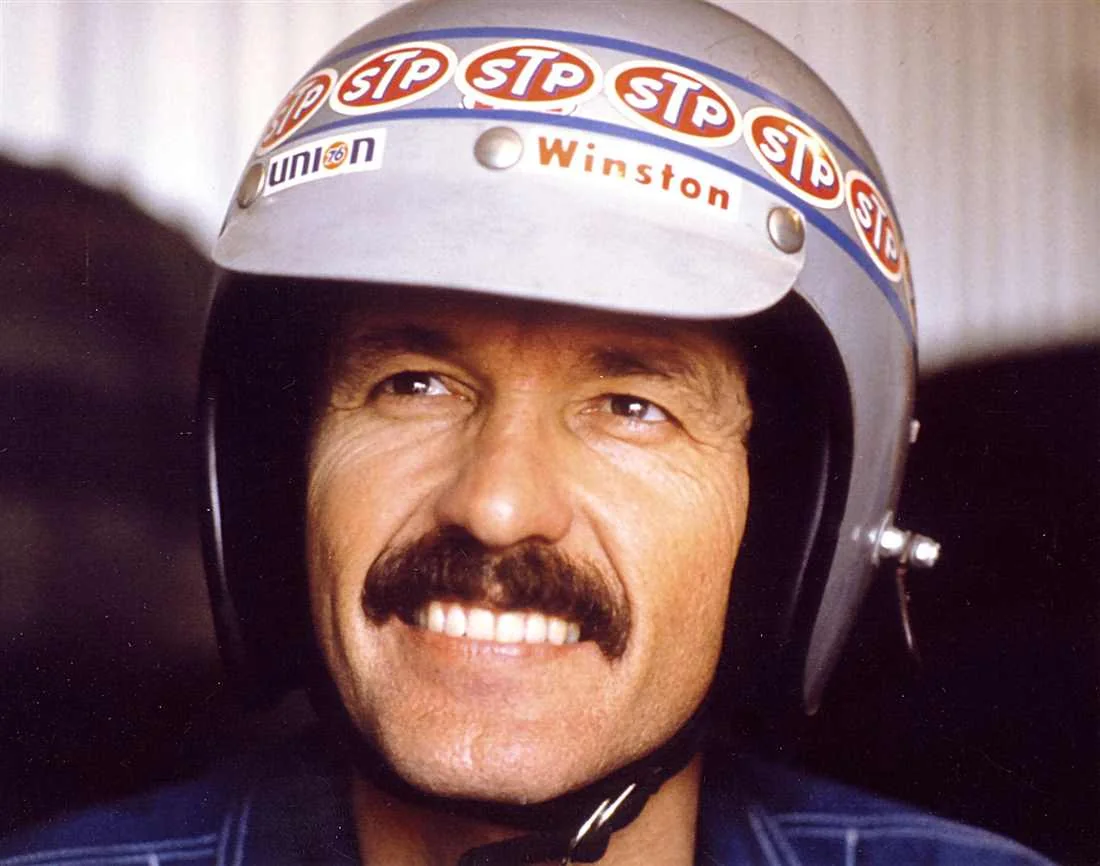
Dale Earnhardt: seven titles across two teams
Earnhardt won in 1980, 1986, 1987, 1990, 1991, 1993 and 1994. His first title came with Rod Osterlund's organization. The next six came with Richard Childress Racing. It is a meaningful correction to the common shortcut that credits all seven to the black No. 3: the driver's championship total and one team's championship total are not identical.
His record also contains a substantial gap between the first and second titles. A first championship did not make the next one automatic. The later Childress partnership produced consecutive championships on three occasions, but the complete seven-title story includes a driver establishing himself, moving through different circumstances and then building a sustained championship combination.
Jimmie Johnson: five straight and seven overall
Johnson won in 2006, 2007, 2008, 2009, 2010, 2013 and 2016, all with Hendrick Motorsports. Five consecutive championships remain the Cup record. Cale Yarborough's three straight from 1976 through 1978 are the previous landmark that helps explain how unusual Johnson's run was: nobody else has filled five successive championship rows.
Johnson's first six titles came during the Chase era, while his seventh came under the elimination playoff system. That does not make those championships interchangeable with Petty's or Earnhardt's, but it demonstrates that his winning partnership adapted to more than one postseason test. A ten-race points campaign and a playoff ending in a single deciding race place different pressures on preparation and execution.
The tie therefore leaves room for a useful discussion rather than a mathematical tiebreaker invented after the fact. Petty reached seven first, Earnhardt matched him in a different competitive period, and Johnson combined the longest consecutive run with success under another format. Their race-win totals and signature victories add context; they do not change the official seven-seven-seven championship record.
Repeat champions and the seasons that break easy assumptions
Jeff Gordon sits immediately behind the three seven-time champions with four titles: 1995, 1997, 1998 and 2001. He is the only driver with exactly four Cup championships through 2025. His record includes both consecutive titles and a later championship with another crew chief, a reminder that a successful organization can change its working partnership without losing its ability to contend.
The three-title group consists of Lee Petty, David Pearson, Cale Yarborough, Darrell Waltrip, Tony Stewart and Joey Logano. Those six names cover very different periods of the sport. Yarborough's championships were consecutive; Logano's came in 2018, 2022 and 2024. Stewart's 2002 and 2005 titles came with Joe Gibbs Racing, while his 2011 championship came with Stewart-Haas Racing. Crediting his whole title career to his later team would erase a substantial part of the story.
The two-title champions through 2025 are Herb Thomas, Tim Flock, Buck Baker, Joe Weatherly, Ned Jarrett, Terry Labonte, Kyle Busch and Kyle Larson. Larson's addition to that group in 2025 did not add a new name to the list of champions, because he was already there from 2021. It changed his career category. In total, 18 drivers have multiple championships, while another 18 have one.
A one-title career can still be a landmark
Alan Kulwicki's 1992 title is an example of why raw totals need context. He won as an independent owner-driver against larger organizations. Bill Elliott won the Atlanta finale, but Kulwicki secured the championship by ten points. Managing the laps-led bonus was central to the contest, showing that a race strategy can be designed around the championship calculation without producing the race victory.
Benny Parsons in 1973 and Matt Kenseth in 2003 each won the championship with one race victory in that season. The useful question is how the applicable points system rewarded their complete campaigns. A high win count is one way to accumulate a title-winning record, but it was never a universal replacement for finishing position, reliability and the season's actual scoring rules.
Tony Stewart's 2011 championship supplies the opposite lesson. He and Carl Edwards finished level on points, and Stewart won the tiebreaker through his five victories to Edwards' one. Here wins became decisive because the rules explicitly made them decisive after the points tie. Comparing that season with a one-win championship is informative only when the scoring framework stays attached to each result.
How the championship test changed across eras
A championship is an official result under the rules of its season. To understand the record fairly, separate the points awarded for an individual race from the larger structure used to decide the season. A scoring formula can change without creating playoffs, while a postseason reset can change the championship even if much of the race-by-race scoring stays familiar.
Season-long points before the Chase
Before 2004, Cup championships were determined through the season's cumulative points system without a Chase reset. That broad description includes several different historical formulas. It does not mean that the same number of points was available for a first-place finish in every decade, or that every old schedule offered the same number of starts.
For a team, the central implication was that a points advantage built early remained part of the championship calculation. A driver could clinch before the final race if the lead became mathematically secure. That rewarded sustained results, while also permitting a runaway season to end the title contest before the racing calendar finished. Matt Kenseth's 2003 championship was the last before the original Chase.
The Chase and the elimination years
The Chase began in 2004, separating qualification for the title contest from a final ten-race championship run. Its field size and seeding rules changed over time, so an early Chase season should not be described using every detail of a later one. The common idea was a postseason points reset followed by a concentrated closing contest.
In 2014, NASCAR introduced the elimination structure: a 16-driver field narrowed through rounds until four eligible drivers reached the finale. The highest finisher among those finalists won the championship. This was the championship framework through 2025. It made the last race a different kind of test from a full-season points finale, because four drivers arrived with an immediate head-to-head title opportunity.
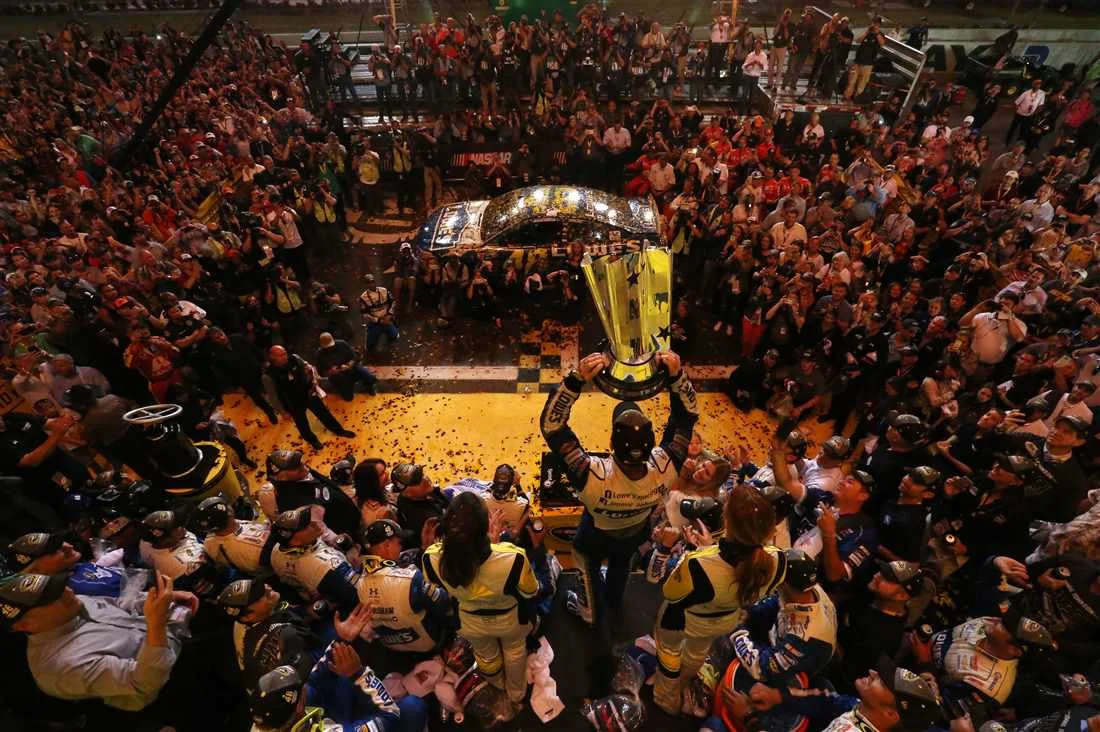
These structures also change how a spectator reads strategy. In an elimination race, an eligible driver facing a must-win situation may accept risks that would make little sense when protecting a season-long points lead. A title table records the eventual winner; understanding the format explains why teams made particular choices on the way there.
The 2026 return to a ten-race Chase
For 2026, Cup returned to a modified Chase with 16 qualifiers selected through regular-season points and a final ten-race contest. The round-by-round eliminations and automatic win-based qualification were removed. Drivers can still become mathematically unable to catch the leader, but that is different from a scheduled round cutting the field.
A race victory now earns 55 finishing-position points, while the postseason reset rewards regular-season rank. The format still values winning, but a win does not itself guarantee a Chase berth. The 2026 Chase format guide explains the seeding and points in detail. This rules change belongs in the historical context now; the name of its first champion must wait until the actual title is settled.
How to use the champions list during the current season
Use this historical list for completed titles and the current Cup standings for the championship still being contested. A driver at the top of an October points table is the leader at that moment. That description should not silently become “the 2026 champion” in a historical table before the championship is decided.
When following a contender, ask three separate questions: what has the driver won before, what position does the driver hold now, and what does the current format require next? A defending champion brings experience, but starts a new championship campaign under that season's rules. A driver seeking a first title may already have extensive race-winning experience. Neither label tells you by itself which team currently has the best long-run speed or strongest pit execution.
The Cup schedule gives the remaining sequence of tracks. That matters when judging a points gap: a short track, superspeedway and worn intermediate oval do not create the same racing problems. Compare a contender's opportunity with the actual next events rather than assuming that an old Championship 4 route still applies. Under the 2026 Chase, points accumulated across the closing races remain central to the outcome.
For a historical argument, begin with the official champion and then add the evidence that answers your question. The best single season, longest period of excellence, greatest race winner and most championship titles are different discussions. A useful comparison states its criteria and acknowledges changes in schedule, equipment and scoring. Recalculating an old season under modern rules can be an interesting exercise, but it does not replace the official title or tell us how competitors would have raced with different incentives.
Once the 2026 title has actually been settled, its champion can join this chronology as another completed season. Until then, the most recent championship entry remains Larson in 2025, and the record for career Cup championships remains shared by Petty, Earnhardt and Johnson.
About the author
NASCAR Schedule Editorial Team
The NASCAR Schedule editorial team turns verified schedules, timing and scoring, official announcements and race-weekend context into direct answers for fans.
View all articles by this author →Join the discussion
Comments
Sign in with Google to comment. Keep it race-focused; new comments are reviewed before publication.
Loading comments…