What Does NASCAR Mean? Name, History and Moonshine Origins
A definition-first history of NASCAR's name, Bill France Sr.'s founding project, the Streamline Hotel meetings, the first sanctioned and Strictly Stock races, and the real limits of the moonshine origin story.
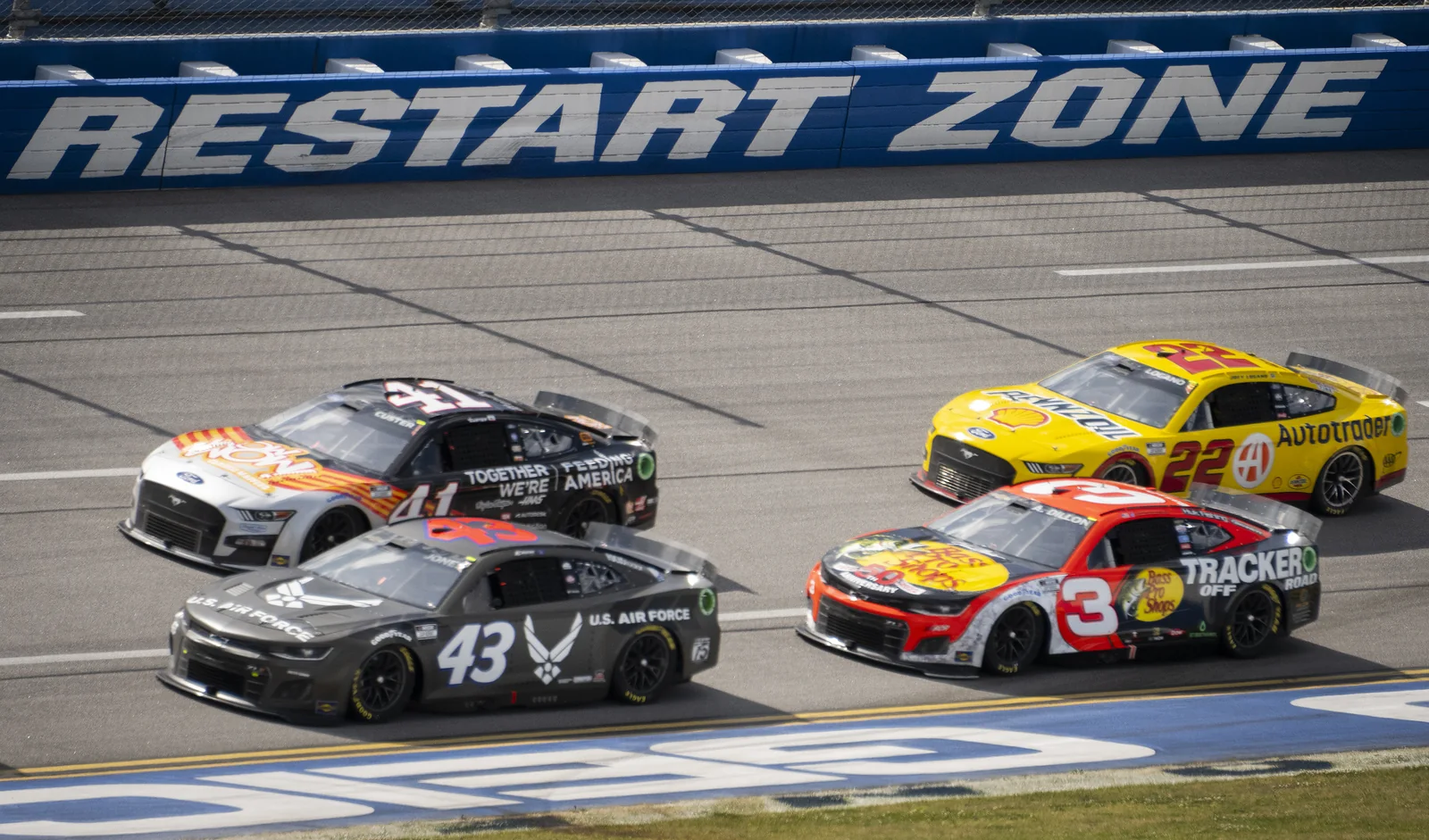
NASCAR means the National Association for Stock Car Auto Racing. It is the sanctioning organization that writes rules and oversees multiple series, not one race or another name for the NASCAR Cup Series. Bill France Sr. and other racing figures shaped the organization through Daytona Beach meetings beginning in December 1947, with NASCAR formally founded in February 1948.
Moonshine belongs in the story, but with a qualifier. Bootleg drivers and their modified road cars helped create the Southern stock-car culture from which notable racers emerged. NASCAR itself was the later organizing project that brought promoters, drivers, owners and mechanics under common standards. Understanding that distinction makes the famous origin story both more accurate and more interesting.
What does NASCAR stand for?
NASCAR stands for National Association for Stock Car Auto Racing. The full name describes an organization built to sanction a category of motorsport. It does not expand to “National American Stock Car Auto Racing,” and the final two words are “Auto Racing,” not simply “Racing.” NASCAR's own history uses the full expansion when describing the organization's conception in 1947.
National
The founders wanted a common structure broad enough to produce recognized competition beyond one local promoter or track.
Association
The name identifies an organizing body that connects competitors, promoters, officials and events under shared standards.
Stock Car
This identifies the racing tradition. Early Strictly Stock cars were closely related to road cars; modern race cars are purpose-built but retain that lineage.
Auto Racing
These words name the activity NASCAR sanctions: organized automobile competition across tracks, divisions and championship schedules.
That word-by-word reading is useful, but it should not be mistaken for a surviving transcript of why the founders chose every term. The documented point is the complete name. The functional meaning comes from what a sanctioning body does: it defines eligible cars, licenses competitors, approves procedures, recognizes results and administers championships.
NASCAR is the organization, not a single race
The Daytona 500 is a NASCAR race. The NASCAR Cup Series is NASCAR's premier national series. Neither one is the whole organization. NASCAR also sanctions other national, regional and local competition, which is why one race weekend can include Cup, O'Reilly Auto Parts and Craftsman Truck Series events with different cars, fields and championship standings.
This distinction matters when checking the full NASCAR schedule. A date labeled “NASCAR” may still need a series label before you know which rules package, entry list or points race applies. Saying “a NASCAR race” is natural shorthand; saying every stock car is “a NASCAR” is less precise because NASCAR is the body, not the manufacturer of the car.
How to say and write NASCAR
NASCAR is normally pronounced as a two-syllable word—“NASS-car”—rather than read as six separate letters. In edited copy it is written in all capitals because it is an acronym formed from the initial letters of the full name. The possessive is “NASCAR's,” while a plural such as “NASCARs” is usually unnecessary. Use the actual noun instead: NASCAR cars, NASCAR races, NASCAR series or NASCAR teams.
Why Bill France Sr. believed stock-car racing needed NASCAR
NASCAR was created because fast cars and willing drivers were not enough to make a durable sport. Before a national sanctioning body, stock-car events could operate under different eligibility rules, use inconsistent officiating and depend heavily on the credibility of an individual promoter. A driver needed to know not only that a car was legal, but that the purse would be paid and the result would mean something beyond that afternoon.
Daytona Beach before the organization
Bill France Sr. understood both sides of that problem. After moving from Washington, D.C., to Daytona Beach, he helped lay out the beach/road course, raced on it and finished fifth in its first event. He then moved into promotion in 1938. NASCAR's historical account says that his experience as a competitor exposed him to drivers not always receiving the money they were due, while his work as a promoter showed him the value of keeping competitors loyal to an event.
Daytona already had a “Birthplace of Speed” identity. The beach supported speed trials, while stock-car races combined a run along the sand with a paved public-road section. That setting produced spectacle, but a famous venue still could not solve the wider sport's fragmentation. A good crowd in Florida did not automatically create common rules for a dirt track in North Carolina or a promoter in the Northeast.
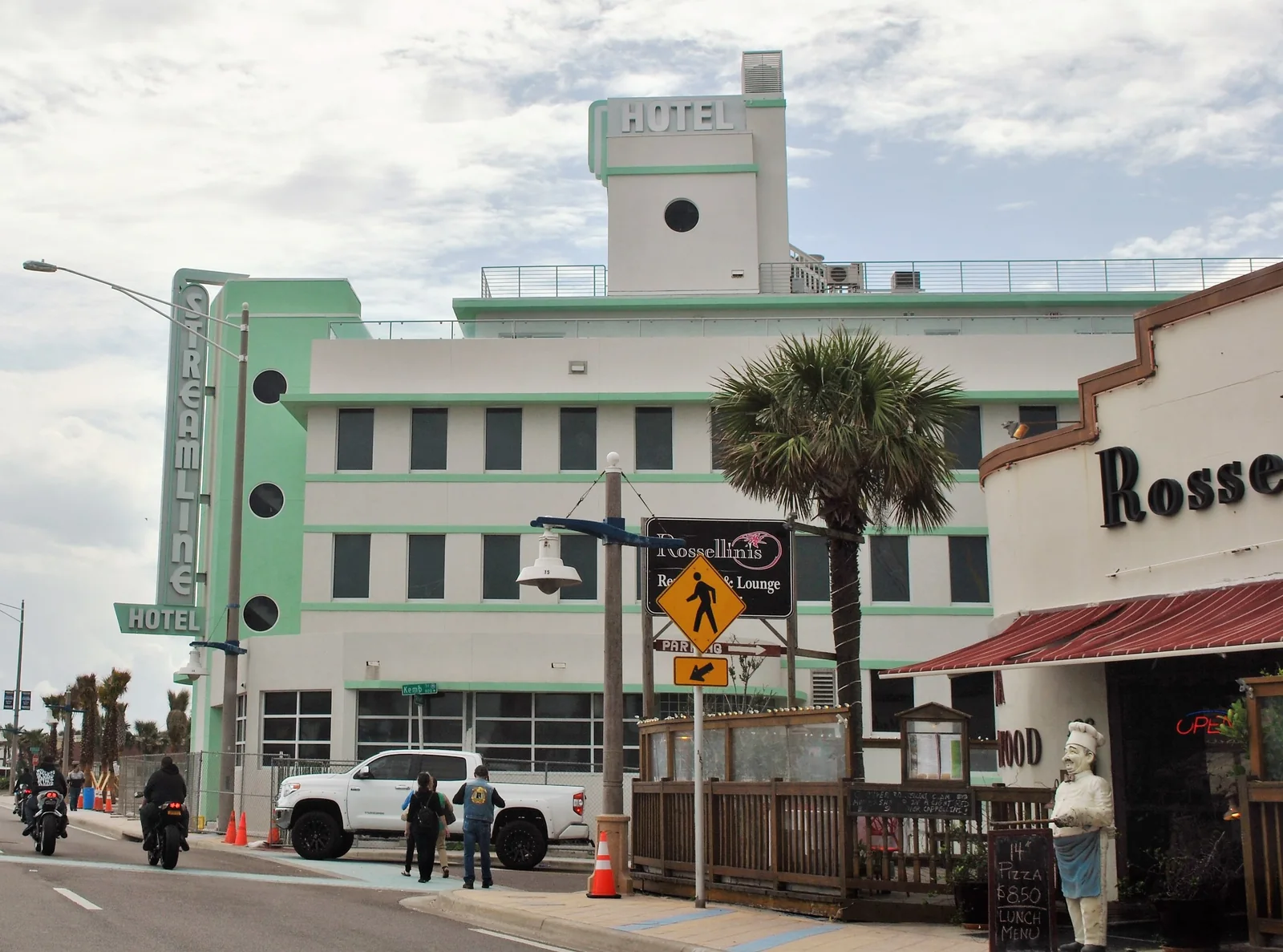
The Streamline Hotel meetings turned problems into a structure
France invited 35 other racing figures to the Streamline Hotel in December 1947. The group was broader than the simplified phrase “France founded NASCAR” suggests. It included people with experience in car ownership, engine building, officiating, journalism, track promotion and several forms of racing. Three days of talks considered rules, promotion standards, divisions and leadership. France supplied the drive and became president; the organization needed the knowledge and participation around the table.
A sanctioning body makes competition portable. It can define what qualifies as a stock car, establish inspection and race procedures, license participants, record official finishes and connect separate events through points. That framework gives a win value beyond one promoter's gate: it can count toward a recognized championship.
This is why NASCAR's name begins with an organization rather than a car model or track. The founding project was not simply to stage another race on Daytona's sand. It was to make rules and results repeatable enough that drivers, teams, promoters and fans could invest in the next event. Modern inspection lines, rule books, points tables and official classifications are far more elaborate, but they answer the same basic need: everyone should know which competition they entered and how its outcome becomes official.
The NASCAR founding timeline: 1947, 1948 and 1949
NASCAR did not spring into existence with one race and one signature on the same afternoon. Its origin is better understood as a short sequence: organizers defined the idea, the new sanctioning body staged competition, and then it created the division that became today's Cup Series. That distinction explains why reliable histories can point to different “firsts” without contradicting one another.
- December 14, 1947 — the organizing talks begin. Bill France Sr. brought racing figures together at Daytona Beach's Streamline Hotel to discuss the future of stock-car racing. NASCAR's own history describes this as the day the National Association for Stock Car Auto Racing was conceived. The meeting opened a process for agreeing on rules, classes and a workable national organization.
- February 15, 1948 — NASCAR holds its first points-paying race. Red Byron won a Modified Division event on the Daytona beach-road course in a 1939 Ford Coupe owned by Raymond Parks. Byron went on to take the 1948 Modified championship, making him NASCAR's first champion. This event belongs to NASCAR history, but it was not yet a race in the Strictly Stock division that led to the modern Cup Series.
- February 21, 1948 — the founding process reaches its formal endpoint. NASCAR's account of the Streamline Hotel talks says the discussions that began in December ended on this date with the founding of NASCAR. It is therefore more precise to call December 1947 the conception and organizing phase and February 1948 the founding, rather than forcing both events into a single date.
- June 19, 1949 — Strictly Stock begins. The first race in NASCAR's premier-series lineage took place on the 0.75-mile dirt Charlotte Speedway. Jim Roper won, Bob Flock earned the pole, and Sara Christian became the first woman credited with starting a race in the division. Seven of the eight venues used during the short 1949 season were dirt, a reminder that early premier-level NASCAR did not look like a modern superspeedway calendar.
- October 16, 1949 — the first Strictly Stock champion is recognized. Red Byron added the inaugural Strictly Stock championship to his 1948 Modified title. His achievements connect NASCAR's first sanctioned season to the beginning of the championship line that fans now associate with Cup.
Why do several dates get called NASCAR's beginning?
Each date answers a different question. December 14, 1947 answers when the organized concept took shape. February 15, 1948 answers when NASCAR first awarded points at a race. February 21 answers when NASCAR says the founding talks concluded. June 19, 1949 answers when the premier division's race history began. Label the milestone before citing the date and the apparent conflict disappears.
Strictly Stock is the bridge to today's Cup Series
The phrase “first NASCAR race” should not automatically be read as “first Cup race.” Modified racing came first under the NASCAR banner. Strictly Stock arrived in 1949 and evolved into the current Cup Series, so modern Cup Series results trace their lineage to Charlotte rather than to Byron's 1948 Daytona victory. Fans exploring broader NASCAR results can still treat that 1948 Modified event as the sanctioning body's first points-paying competition. Both milestones are foundational; they simply belong to different record-book categories.
NASCAR's moonshine origins: what is fact and what is myth?
The moonshine connection is real, but the familiar one-line version—bootleggers raced one another and NASCAR appeared—is too tidy. Illegal-liquor culture helped develop part of the talent, machinery and audience around Southern stock-car racing. NASCAR itself was still the product of deliberate organization: Bill France Sr., racers, mechanics, owners, track operators, promoters and other participants created a sanctioning body with common rules and recognized championships.
The documented connection
Transporting untaxed liquor rewarded a particular combination of skills. A driver needed speed, car control, local-road knowledge and enough mechanical judgment to keep a heavily loaded vehicle moving. Cars could retain an ordinary exterior while receiving stronger or faster components underneath. Those experiences did not constitute a racing series, but they overlapped naturally with a form of competition built around recognizable passenger-car shapes and mechanical ingenuity.
The geography mattered too. Wilkes County, North Carolina, was closely associated with moonshine, and nearby North Wilkesboro Speedway became one of NASCAR's early venues. The track held a NASCAR Modified Division event in 1948, the organization's first season, and added Strictly Stock races after that division launched in 1949. The NASCAR Hall of Fame preserves the connection with a liquor still hand-built by Junior Johnson, so moonshine is not merely a colorful tale added decades later; it is part of the sport's documented institutional history.
Junior Johnson is the clearest case study
Johnson's life provides evidence without requiring a sweeping claim about every pioneer. Raised in North Carolina, he worked in his family's farming and untaxed-whiskey operations and hauled liquor in modified cars. NASCAR's account says those runs sharpened the fearless driving style he later brought to competition. He developed into far more than a romanticized “revenuer runner”: Johnson won 50 races in NASCAR's premier division, became a successful mechanic and team owner, and entered the inaugural NASCAR Hall of Fame class in 2010.
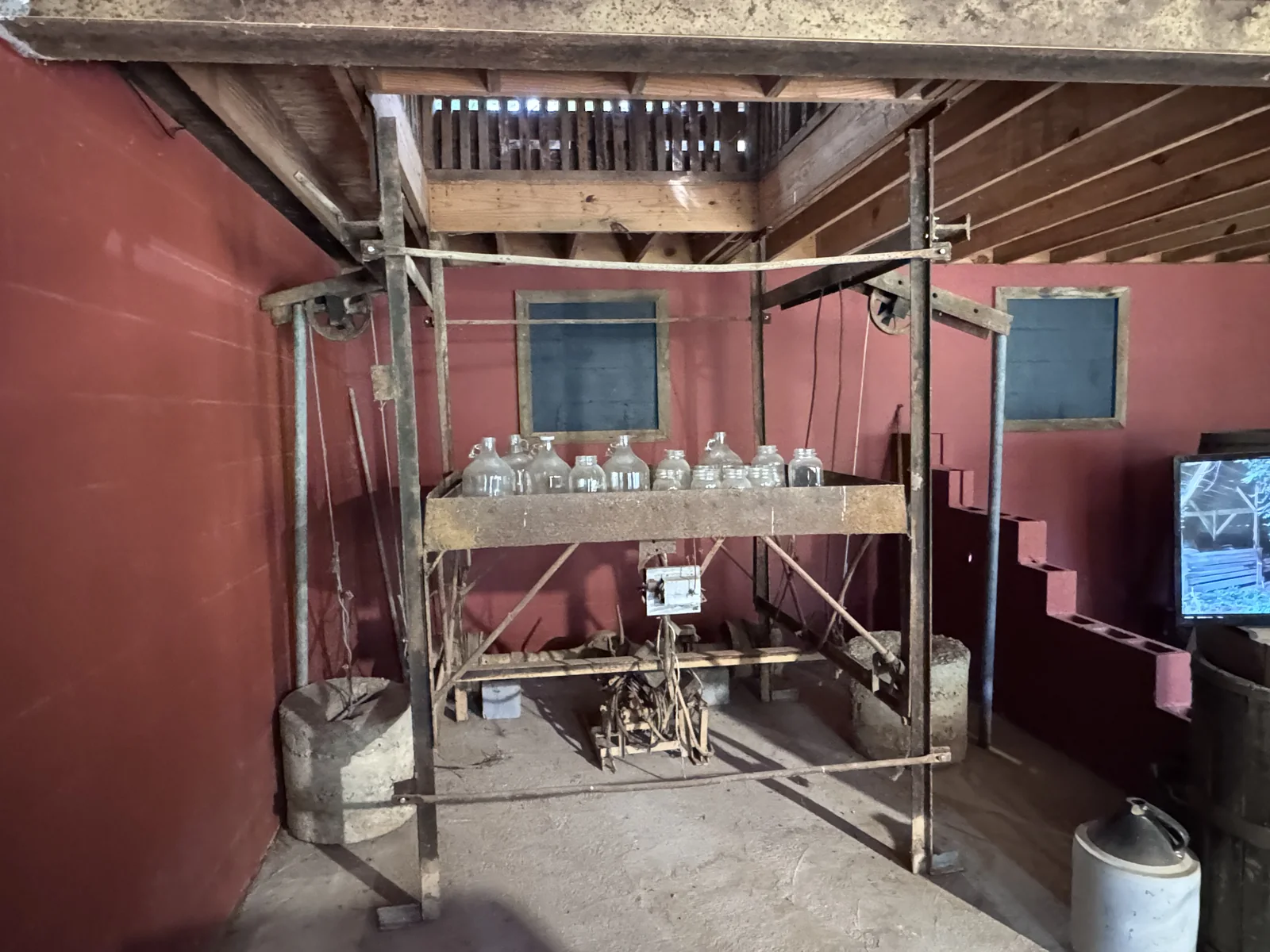
Fact versus shortcut
- Fact: some important early racers and mechanics had direct experience making or transporting illegal liquor.
- Fact: ordinary-looking but mechanically altered cars suited both liquor transport and early stock-car competition.
- Fact: racing venues and talent developed in regions where moonshine was economically and culturally significant.
- Shortcut: every early NASCAR driver was a bootlegger. The opened historical sources do not support that universal claim.
- Shortcut: liquor runners alone founded NASCAR. The formal organization came from the Daytona meetings and a wider coalition led by France.
The most accurate conclusion is that moonshine helped shape the environment from which NASCAR grew; it did not substitute for NASCAR's creation. The ingenuity behind a discreet, strengthened road car also helps explain why fans still ask what a stock car is. Yet the leap from fast local cars to a lasting national sport required rules, officials, schedules and trusted results. Moonshine supplied genuine characters and capabilities. NASCAR turned a scattered racing culture into an institution.
How NASCAR changed while the name endured
“NASCAR” has remained the organization's durable identity while almost everything it regulates has evolved. Cars became purpose-built racing machines, safety and inspection systems grew more sophisticated, track types diversified, television transformed the audience, and championship formats changed. The full name still describes the same basic role: a national association that sanctions and organizes stock-car competition.
The organization and the series name are different layers
The premier division began as Strictly Stock in 1949 and later appeared under names including Grand National, Winston Cup, Nextel Cup, Sprint Cup and Monster Energy NASCAR Cup Series. Those labels reflect competitive eras and, often, commercial title partnerships. They do not mean a new sanctioning body was created each time. Historical records can therefore connect a Strictly Stock victory with today's Cup lineage even though the name printed on the trophy or entry form changed.
The same rule helps with the second-tier national series. “Xfinity Series” appears throughout recent archives, but that circuit became the NASCAR O'Reilly Auto Parts Series for 2026. As of August 19, 2026, NASCAR's three national series are the NASCAR Cup Series, NASCAR O'Reilly Auto Parts Series and NASCAR Craftsman Truck Series. A sponsor-era label should be read in its time context, not silently substituted for the entire organization.
What changed, and what stayed?
- Changed: race cars.
- Early Strictly Stock entries were close to vehicles driven on public roads. Decades of safety, engineering and competition development led to highly specialized machines, including the Next Gen Cup car that debuted in 2022.
- Changed: schedules and venues.
- NASCAR grew far beyond early beach courses, dirt tracks and Southeastern short tracks. Modern calendars have included superspeedways, road courses, a temporary stadium track and a downtown street course. Fans can use the current NASCAR calendar rather than assuming an old event list still applies.
- Changed: championship rules.
- Points systems and postseason structures have been revised repeatedly. In 2026 NASCAR returned all three national series to a non-elimination Chase format, another example of the sanctioning body changing a competition product while retaining its identity.
- Stayed: the need for sanctioning.
- Someone still has to define eligible cars, inspect them, administer races, record finishes and turn results into championships. The current NASCAR standings are a modern expression of the same organizational purpose France and his collaborators pursued.
This is why expanding the acronym remains useful even for a longtime fan. National Association for Stock Car Auto Racing is not a technical snapshot of one generation of car, one sponsor or one points format. It is the umbrella identity. The sport can replace components underneath that umbrella while preserving a continuous institutional and record-book history.
What NASCAR means for a fan today
For a modern fan, NASCAR is best understood as the sanctioning organization and the wider racing world organized under its name—not one car model or one championship. That practical definition makes schedules, broadcasts and results easier to read. A NASCAR weekend may contain several series and several types of on-track session, each with its own entrants and official outcome.
Check these five labels before planning a race
- Series: Is the listing for Cup, O'Reilly Auto Parts, Craftsman Truck, ARCA or a regional division? “NASCAR” alone is the umbrella label.
- Season: Rules, sponsors and dates change. An archived page can be accurate for its year and still be wrong for the current calendar.
- Track and event: Several series can visit the same venue on one weekend. The track name does not identify the race by itself.
- Session: Practice, qualifying and the race are separate events. Weather may cancel or delay one without eliminating the entire weekend.
- Time and broadcaster: Start times and channels can differ across sessions. Check the current NASCAR TV schedule rather than assuming the main race's network carries every session.
That checklist is the everyday version of NASCAR's founding purpose. Common classification and official record keeping let a fan tell what happened, which rules applied and what the result counted toward. On an official result sheet, finishing position is not the same as starting position, laps led or points earned. Driver, owner and manufacturer standings are also separate tables. A well-labeled record preserves those differences.
Quick answers to common NASCAR-name questions
- Is NASCAR a company or a sport?
- Strictly speaking, NASCAR is the sanctioning organization. In everyday speech, people also use “NASCAR” for the competitions, industry and fan culture around it, much as a league name can become shorthand for its sport.
- Is the Cup Series the same as NASCAR?
- No. Cup is NASCAR's premier national series, but NASCAR sanctions additional national, regional and local competition.
- Are all stock-car races NASCAR races?
- No. Stock-car racing is a category of motorsport. A race is a NASCAR race when NASCAR sanctions it; other organizations can sanction stock-car events too.
- Does “stock” mean a current Cup car comes straight from a dealership?
- No. The name carries the category's production-car heritage, while modern Cup cars are specialized racing machines built to NASCAR specifications.
If the immediate question is what is happening now, start with today's NASCAR schedule, then confirm the series and session. After the checkered flag, use the NASCAR results hub to find the official outcome. The acronym's full expansion supplies the history; those labels show its continuing function in practice.
About the author
NASCAR Schedule Editorial Team
The NASCAR Schedule editorial team turns verified schedules, timing and scoring, official announcements and race-weekend context into direct answers for fans.
View all articles by this author →Join the discussion
Comments
Sign in with Google to comment. Keep it race-focused; new comments are reviewed before publication.
Loading comments…