Why NASCAR Did Not Penalize Blaney and Hocevar After Bristol—and Why Ty Gibbs Was Called In
NASCAR's September 2026 Bristol altercation ended without penalties, while Ty Gibbs was summoned for a safety conversation. The full sequence and the limits of that ruling matter more than a viral clip.
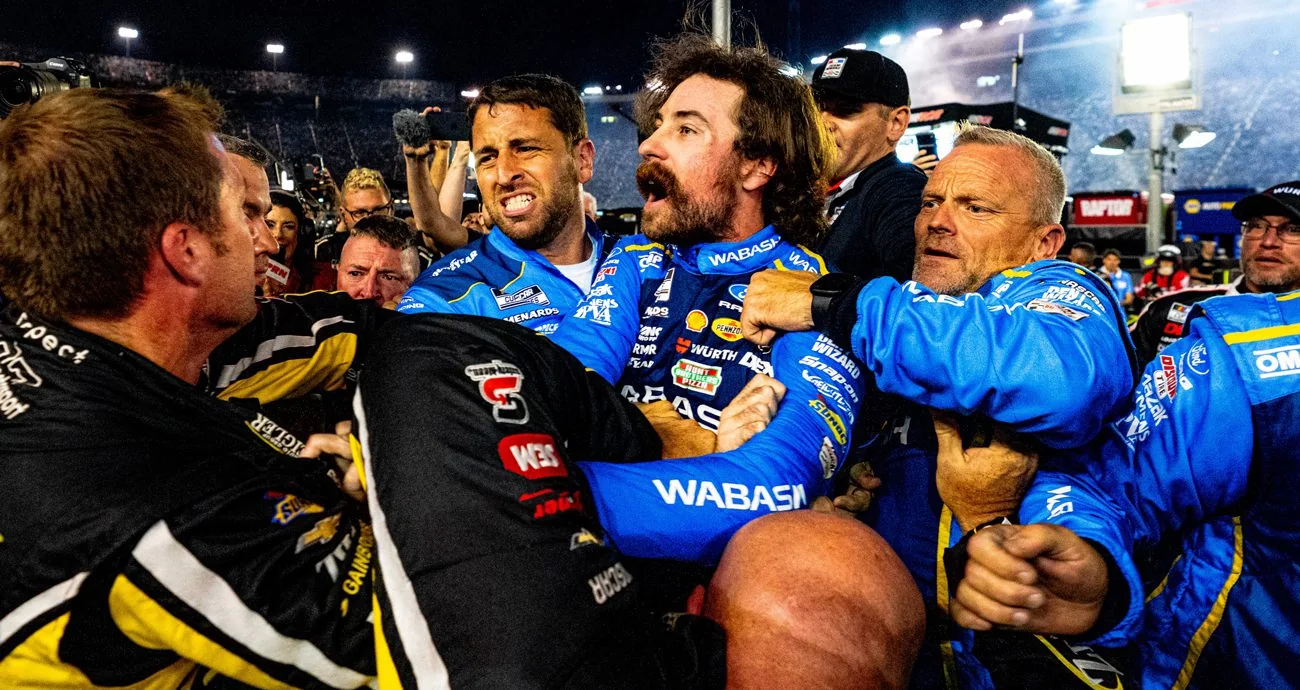
NASCAR issued no penalties to Ryan Blaney, Carson Hocevar or crew members after their September 19, 2026 pit-road fight at Bristol Motor Speedway. Officials reviewed the drivers? confrontation and concluded that nearby crew members were breaking it up. Ty Gibbs was called to the NASCAR hauler because a water bottle he tossed struck a media member and knocked away a phone; the September 26 Kansas conversation also produced no penalty. Those outcomes were decisions about this incident, not a standing permission to fight. The distinction starts with the racing contact that ended Blaney?s night and continues through each part of NASCAR?s review.
What actually happened at Bristol?
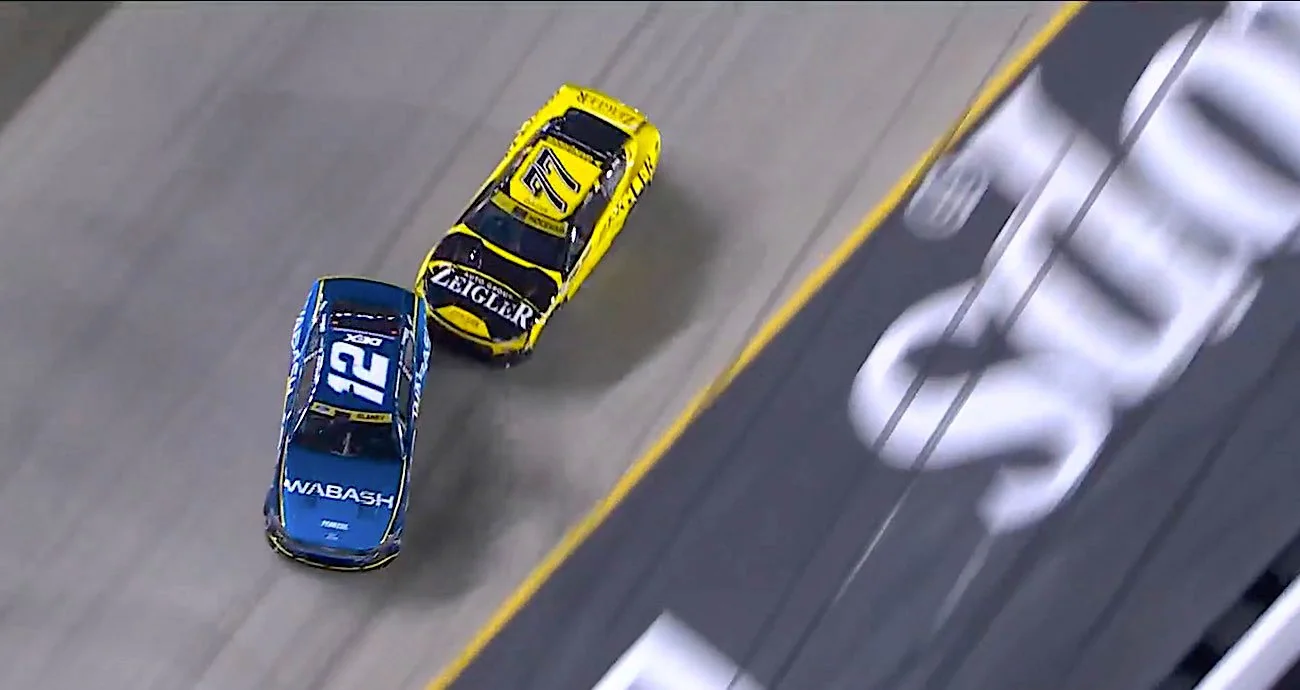
The fight did not start as a random pit-road encounter. It followed a late battle for second in the September 19, 2026 Bass Pro Shops Night Race at Bristol Motor Speedway. Carson Hocevar tried to turn underneath Ryan Blaney, Blaney moved to protect the lane, and contact sent Blaney's No. 12 Team Penske Ford into the Turn 1 wall. With only 43 laps left, the damage ended Blaney's race. He was classified 33rd; Hocevar eventually finished third. That sporting cost helps explain why the postrace scene carried more than ordinary short-track irritation.
The race contact that ended Blaney's night
NASCAR described Hocevar darting left for a crossover while the two cars contested second. A crossover is an attempt to leave one lane and capitalize on the other driver's momentum or defensive line. Blaney's move to block met that change of direction. At Bristol, where the straightaways disappear quickly and a car has little room to catch a slide, contact at speed can turn a position fight into an immediate wall hit. The sequence is clear; a definitive assignment of blame is less so. Neither the television clip nor NASCAR's short account proves what each driver saw at the exact instant the lanes converged.
The contact also mattered in the Chase context. A finishing position lost to crash damage cannot be recovered by a later conversation on pit road. Blaney was already managing a difficult postseason, and the Bristol DNF was his second in succession. The consequence was real even though the public argument focused mostly on the punches. Readers who want the classification rather than a still image of the fight can check the site's Cup Series results.
The confrontation after the checkered flag
Blaney went through the infield care center and was released. After the race, he walked toward Hocevar's parked No. 77 Spire Motorsports Chevrolet. According to NASCAR's account, Blaney reached for Hocevar, Hocevar swung, and the two traded blows before people separated them. FOX reporter Bob Pockrass reported that Blaney put his hands on Hocevar's uniform as he approached. The distinction matters: this was a physical confrontation after the Cup cars had stopped competing, rather than an attempt to settle the dispute by using a race car.
It is tempting to judge the entire event from a few seconds of viral video, but those seconds omit the medical check, the delay until the finish, and the contested move that removed Blaney from the race. They also omit what NASCAR reviewed afterward. The sanctioning body assessed the drivers' conduct and then separately considered whether crew members had escalated the altercation. Those reviews produced the decision that made this incident a rules story as well as a racing story.
Why were Blaney and Hocevar not penalized?
NASCAR did not fine either driver, deduct points, or issue another postrace sanction for this altercation. CEO Steve O'Donnell announced the driver decision on September 21, two days after Bristol. NASCAR then finished reviewing the people who entered the fracas and said on September 22 that no crew-member penalties would follow either. Those are two related decisions reached in sequence, not an instant declaration that everyone on pit road had been cleared the moment the drivers stopped swinging.
NASCAR's view of drivers handling a dispute
O'Donnell's explanation was narrower than the shorthand claim that NASCAR welcomes fights. He said officials do not encourage fighting, but they also recognize driver passion and have said that drivers should handle disputes outside their cars. The contrast is important. A deliberate hit with a race car can endanger drivers, officials and spectators at speed; an off-track confrontation presents different risks and is evaluated on its own facts. O'Donnell said there would be no postrace penalties for Blaney or Hocevar in this case and that NASCAR would watch how matters developed afterward.
That does not turn a punch into a recommended method of conflict resolution. NASCAR's published explanation ties its discretion to how this particular confrontation unfolded. Blaney initiated the approach, Hocevar responded physically, and the scene was quickly broken up. Officials did not say that any future driver may start a pit-road fight without consequence. NASCAR also did not issue a formal ruling that one driver was solely responsible for the racing contact. A race-control penalty, a postrace disciplinary review, and a driver's own view of blame are three separate questions.
Why the crew-member review also ended without sanctions
On Monday, NASCAR Communications specifically left the crew-member question open. That was sensible because video of a crowd entering a fight does not, by itself, show whether each person is separating drivers or escalating contact. In a September 22 explanation, NASCAR racing communications executive Mike Forde said the review treated crew members as trying to break up the incident. He also made the boundary clear: if crew members put hands on a driver in a violent manner, NASCAR expects to intervene.
That distinction is particularly relevant on pit road. Team members are close to their cars at the finish and naturally move toward a driver when tempers flare. The same movement can look protective or threatening depending on what happens next. Here, the review ended without punishment. Fans may still dislike the spectacle or disagree with the judgment, but the official outcome should be reported precisely: drivers and crew were not penalized for the Bristol fight. For the broader framework of flags, pit-road calls and sanctions, see the site's NASCAR rules guide.
Why did NASCAR call Ty Gibbs to the hauler?
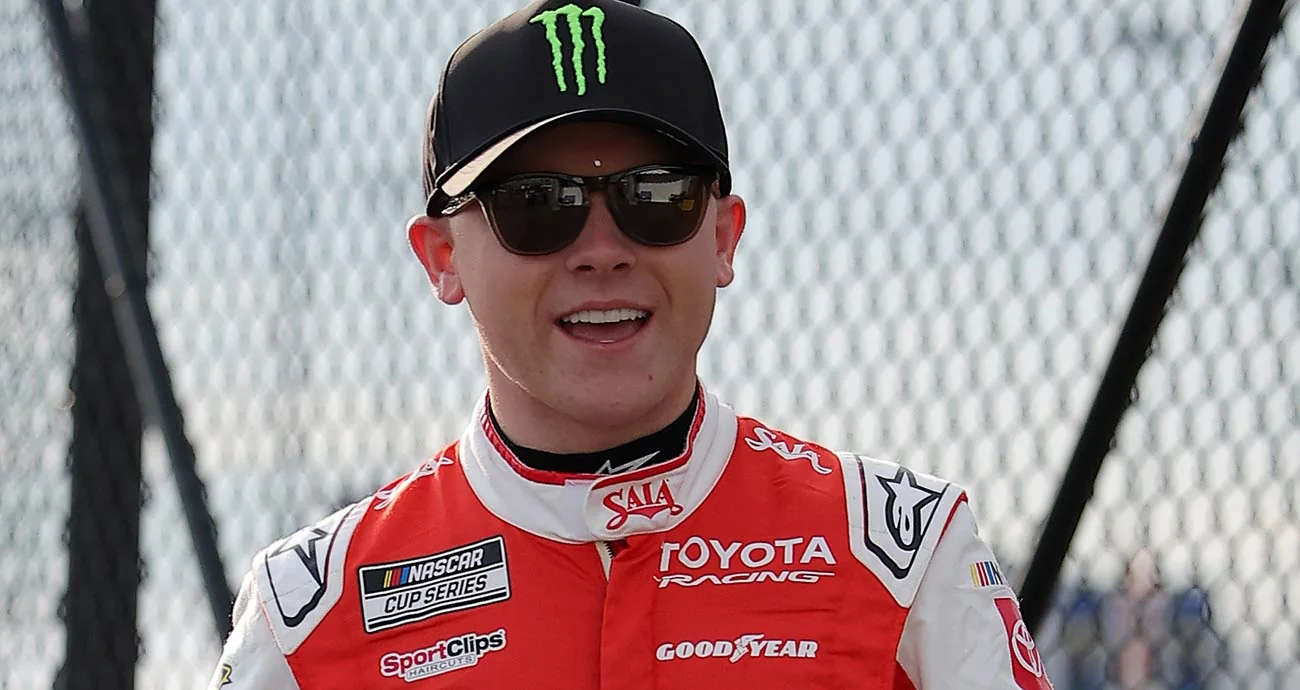
Ty Gibbs was not one of the two drivers fighting, but he did become part of NASCAR's safety review. During the pit-road melee he tossed a near-full water bottle toward the crowd. NASCAR reported that it struck a media member and knocked a phone from that person's grip. Officials said Gibbs would be called to the hauler at Kansas Speedway for a conversation. A later NASCAR report confirmed that the conversation happened on Saturday, September 26. No penalty accompanied it.
The water-bottle concern
From a distance, a water bottle may appear trivial beside two Cup drivers throwing punches. Its risk changes when it is thrown into a dense, moving group of people carrying cameras and trying to separate a fight. Mike Forde, NASCAR's vice president of racing communications, identified the possibility that the cap could strike someone's eye. That is the safety rationale NASCAR gave; it does not depend on whether Gibbs aimed at a specific person or meant to hurt anyone. A media member was hit in the incident, and the phone was knocked away.
Some secondary reporting specifies that a phone camera took the impact, while NASCAR's own follow-up describes the bottle striking the media member and dislodging the phone. The safest summary is the one supported by both: the throw reached the media area and caused an actual contact, while the more serious eye injury Forde described was a potential hazard, not an injury that occurred. This matters because otherwise the story quickly turns into either exaggeration—claiming a severe injury—or dismissal—pretending the object never reached anyone.
A meeting was not a penalty
The chronology is easy to miss if a fan reads only the first report. On September 22, NASCAR said it would meet with Gibbs. On September 26, Gibbs said he had gone to the officials' hauler that morning and characterized it as a chat. He acknowledged that he should not have thrown the bottle. The later account closes the loop: it was not an unfulfilled summons, and it was not a secret fine or points deduction. NASCAR used a direct conversation to address conduct it considered unsafe.
That does not mean the safety concern was performative. Officials can warn a driver about a specific behavior without adding a sanction to the published penalty sheet. Equally, the absence of a penalty does not erase the media member's experience. The useful distinction for fans is between the decision—no penalty—and the reason for the meeting—a projectile introduced into a crowded scene. Treating those as separate answers makes NASCAR's response more understandable even for readers who would have preferred a different outcome.
What does the no-penalty decision actually establish?
The Bristol ruling establishes a limited fact: NASCAR reviewed this particular pit-road altercation and imposed no penalties on the two drivers or the crew members involved. It does not establish that every postrace punch is allowed, that a crew member may strike a driver, or that contact on the track is automatically forgiven because a driver later walks away from the car. Those conclusions would go beyond what officials said.
| Question | What the September review established | What it did not establish |
|---|---|---|
| Blaney and Hocevar | No postrace sanctions for their Bristol fight. | A permanent exemption for any future driver confrontation. |
| Crew members | No sanction after NASCAR judged them to be separating people. | Permission for violent crew-to-driver contact. |
| Ty Gibbs | A Kansas hauler conversation over a bottle throw; no penalty. | That thrown objects around a crowd are risk-free. |
| Race contact | Blaney's car was damaged and his race ended. | A formal finding that either driver deliberately wrecked the other. |
This distinction matters because NASCAR judges different kinds of conduct with different evidence. The on-track contact was a racing incident viewed through cars, lanes and speed. The postrace altercation was reviewed as a driver dispute on pit road. The crew question required looking at whether people entered to separate or to attack. The bottle question involved the safety of nearby media and others. A single viral video combines all four, but race control did not treat them as one indistinguishable act.
There is a broader consistency question, and fans are entitled to ask it. NASCAR's own May 2026 explanation of a separate Texas dispute illustrates why a surface comparison can mislead: officials used radio, video and vehicle data to penalize Ryan Preece for intentional on-track wrecking while declining to penalize Kyle Busch for contact they said was inconclusive. That was not a pit-road fight precedent. It shows that NASCAR can reach opposite answers when the available evidence and the conduct are different. For Bristol, O'Donnell and Forde described discretion, a preference for drivers to settle matters outside cars, and a line against violent crew intervention. They did not publish a fixed threshold such as “one punch is fine, two are not.”
Our editorial reading is that the decision leaves NASCAR flexibility, which can make outcomes feel inconsistent to spectators who see only the visible result. The most useful way to evaluate a future case is to ask exactly what action was reviewed, what evidence officials cited, whether anyone outside the two drivers was put at risk, and whether a formal penalty actually appeared. Guessing a fine from the intensity of a clip would be less informative than those questions.
What did the drivers say before Kansas?
The clearest update came six days after Bristol, when Blaney and Hocevar spoke separately with reporters at Kansas Speedway. Neither presented the fight as an active campaign for retaliation. Their comments do not undo the wall contact or the punches, but they show that the drivers' own interpretation had become more measured than it was immediately after the race. That is important because viral clips and angry first reactions can outlive the later explanation.
Blaney's view of the confrontation
On Denny Hamlin's Actions Detrimental podcast, Blaney revisited the lane battle and said responsibility for the contact was roughly shared. He had wanted the bottom, Hocevar had made a crossover toward it, and neither gave way. That was a notable adjustment from his more heated first assessment after the wreck. Blaney did not suddenly say the crash was inconsequential: he had led a race-high 202 laps and his night ended with a 33rd-place result. What changed was his willingness to distinguish an aggressive racing move from an intentional attempt to destroy his car.
Blaney also described the pit-road approach as regrettable. He said he had intended a stern exchange and acknowledged that grabbing Hocevar made a defensive physical response understandable. Before Kansas, he said NASCAR had made the correct choice not to penalize them, and he did not expect to race Hocevar harder than he raced other drivers. These are Blaney's reported views, not a guarantee about future green-flag battles. He still had to find speed, survive the remaining races and score points after the Bristol setback.
Hocevar's view and the racing relationship
Hocevar's first postrace remarks already acknowledged why Blaney was angry: a late crash could be very costly in a championship chase. He did not offer a simple confession that the racing contact was entirely his fault. At Kansas he expressed respect for Blaney, said the two had generally raced each other well, and treated the confrontation as a heat-of-the-moment escalation. He also acknowledged that Chase pressure can raise the stakes of a move that might feel less combustible in an ordinary race.
Hocevar's third-place Bristol finish and Blaney's early exit illustrate why the same move could look very different from the two cockpits. The driver who kept racing banked a strong finish; the other watched a promising night disappear. The format of the 2026 NASCAR Chase keeps those points consequential over a ten-race run, though the exact standings should be checked on the site's current standings page rather than copied from a September 25 interview. As of the Kansas conversations, the drivers publicly indicated they were ready to focus on the racing again.
What should fans watch next?
The Bristol story has a definite disciplinary endpoint: NASCAR announced no penalties for the drivers or crew and held its Kansas conversation with Gibbs. The competitive story is less final because Chase races keep putting the same drivers on track together. The sensible way to follow it is to watch decisions in context, not assume that every close pass between the Nos. 12 and 77 is a new installment of a feud.
Separate on-track retaliation from a postrace dispute
Hard racing for a lane is ordinary NASCAR, even when drivers disagree about the amount of room left. Deliberately using a car to settle a score is a different matter, and O'Donnell specifically emphasized that officials do not want drivers using cars as weapons. If a future incident occurs, the key questions would be where the cars were, what each driver could reasonably see, whether a block or crossover was attempted, what the radio and data show, and whether NASCAR issued a ruling. The September Bristol no-penalty decision does not pre-judge those questions.
The same caution applies off track. NASCAR found that crew members broke up the Bristol fight; it did not declare that every future crew intervention is acceptable. Forde said violent contact with a driver would be treated differently. Likewise, Gibbs' hauler meeting addressed a thrown object in a crowded area, regardless of whether fans regard the bottle as a joke. Fans can criticize the balance NASCAR struck while still describing each part of that balance accurately.
Follow dated results instead of assuming a feud continues
Blaney and Hocevar's Kansas remarks were made on September 25, before that weekend's Cup race. They are useful evidence of their public posture at that time, but their pre-Kansas point deficits are already stale after the September 27 race. For current positions, use the site's Cup standings; for race-by-race classification, use Cup results. The full NASCAR schedule shows where the championship runs next. Those pages answer changing numerical questions better than a static disciplinary analysis can.
The larger lesson from Bristol is not that emotions are absent from championship racing. It is that the sporting loss, the postrace confrontation, crew conduct and spectator or media safety are separate things to evaluate. Blaney lost a strong run and reacted publicly; Hocevar defended himself and later expressed respect; Gibbs acknowledged the bottle toss was a mistake; NASCAR chose conversations and no penalties. Whether a fan agrees with that judgment is a legitimate debate. What happens on the racetrack next should be evaluated from fresh evidence, not treated as a predetermined sequel.
About the author
NASCAR Schedule Editorial Team
The NASCAR Schedule editorial team turns verified schedules, timing and scoring, official announcements and race-weekend context into direct answers for fans.
View all articles by this author →Join the discussion
Comments
Sign in with Google to comment. Keep it race-focused; new comments are reviewed before publication.
Loading comments…