Why NASCAR Fans Were Frustrated With the 2026 Southern 500 Broadcast
NASCAR fans criticized USA Network's 2026 Southern 500 telecast for disruptive ad timing, narrow camera choices and limited running-order context. Here is what the measured commercial breakdown confirms, what remains subjective and why Darlington made those choices matter.
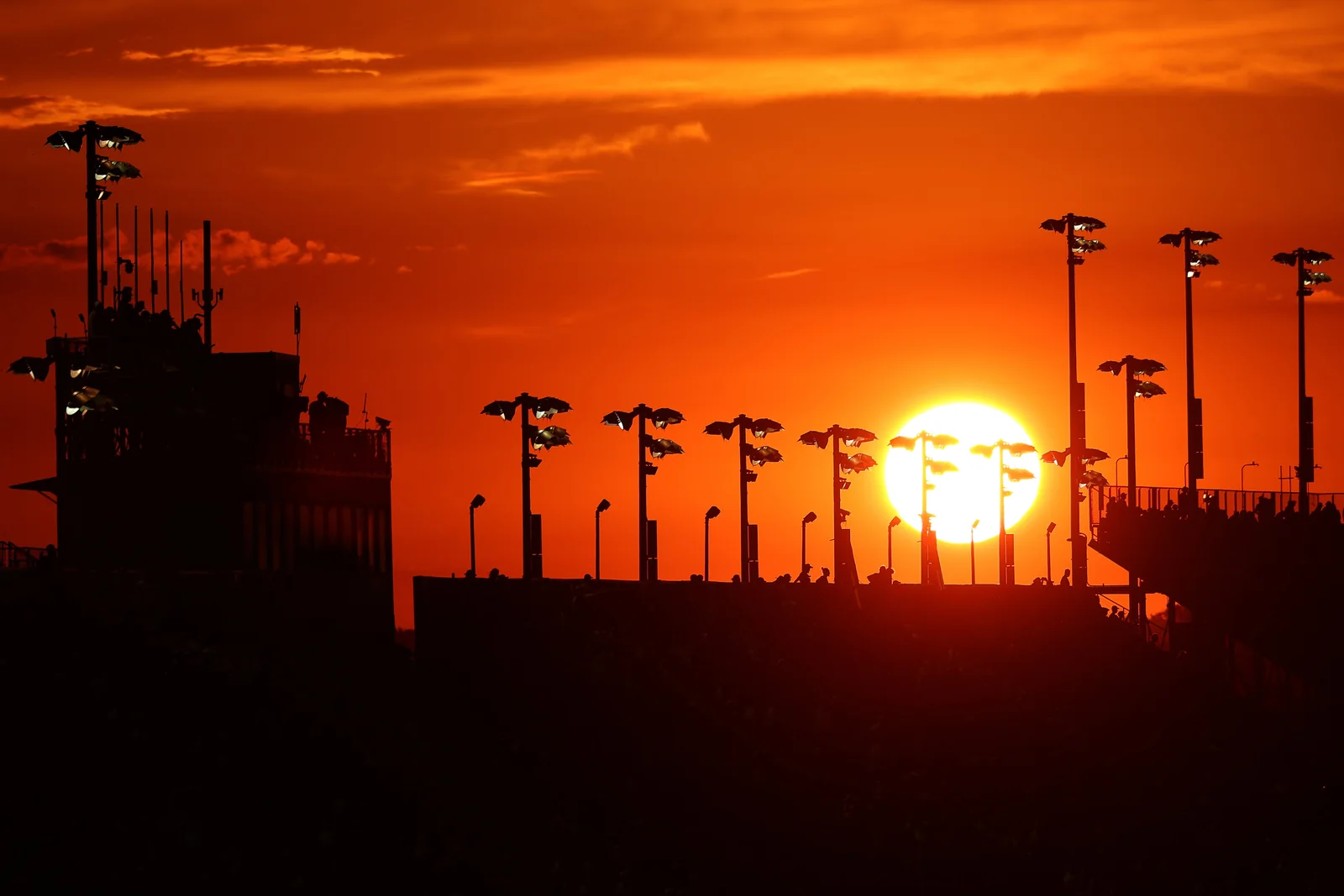
USA Network's 2026 Cook Out Southern 500 coverage frustrated many NASCAR viewers because several problems landed at once: frequent shifts into advertising, camera choices that reduced the view of developing battles, limited running-order context and the access question surrounding a crown-jewel race on cable. A post-race commercial audit confirms 27 minutes of full-screen ads plus 39 minutes of side-by-side ads during the 271-minute monitored telecast. Fan reaction was not unanimous, but the repeated complaints reveal where the presentation lost the flow of a compelling Darlington race.
What NASCAR fans complained about during the Southern 500
The reaction to USA Network's Cook Out Southern 500 telecast was not one simple verdict that the race had “too many commercials.” Four complaints kept overlapping: breaks arrived at awkward moments, tight or in-car camera shots hid developing battles, the running order did not give enough context beyond the leaders, and some viewers disliked the booth or could not easily find the race on cable. Those are different problems, controlled by different parts of a broadcast, and separating them is the only fair way to assess what happened.
Four complaint clusters from the September 6 telecast
- Commercial rhythm: viewers objected to when breaks started and how often the telecast shifted away from full-screen racing.
- Camera direction: fans said leader shots and onboard views sometimes replaced wider pictures of side-by-side action.
- Field information: viewers tracking a favorite driver or the Chase wanted more intervals, position changes and pit-cycle context.
- Presentation and access: commentary criticism mixed with a broader argument over placing a crown-jewel race on USA Network.
The timing mattered because this was not a processional race with one obvious story. Christopher Bell won by 1.038 seconds after passing Kyle Larson with 12 laps remaining, but four drivers each led at least 46 laps. Larson led 99, Tyler Reddick 74, Denny Hamlin 68 and Bell 46. A late rain stoppage split the contenders between track position and fresh tires, turning the closing run into exactly the kind of sequence that needs a wide view, tire-age information and a quick explanation of who is coming forward.
Live fan discussion also contained evidence that the night was not universally condemned. Some viewers praised USA for holding a commercial until a pass was completed, while others liked individual analysts, the pre-race coverage or the picture quality. That counterpoint matters. A race thread is a collection of immediate reactions, not a representative poll, so the responsible conclusion is narrower: enough viewers independently identified the same production problems for them to deserve analysis, but the comments do not prove that every NASCAR fan rejected the telecast.
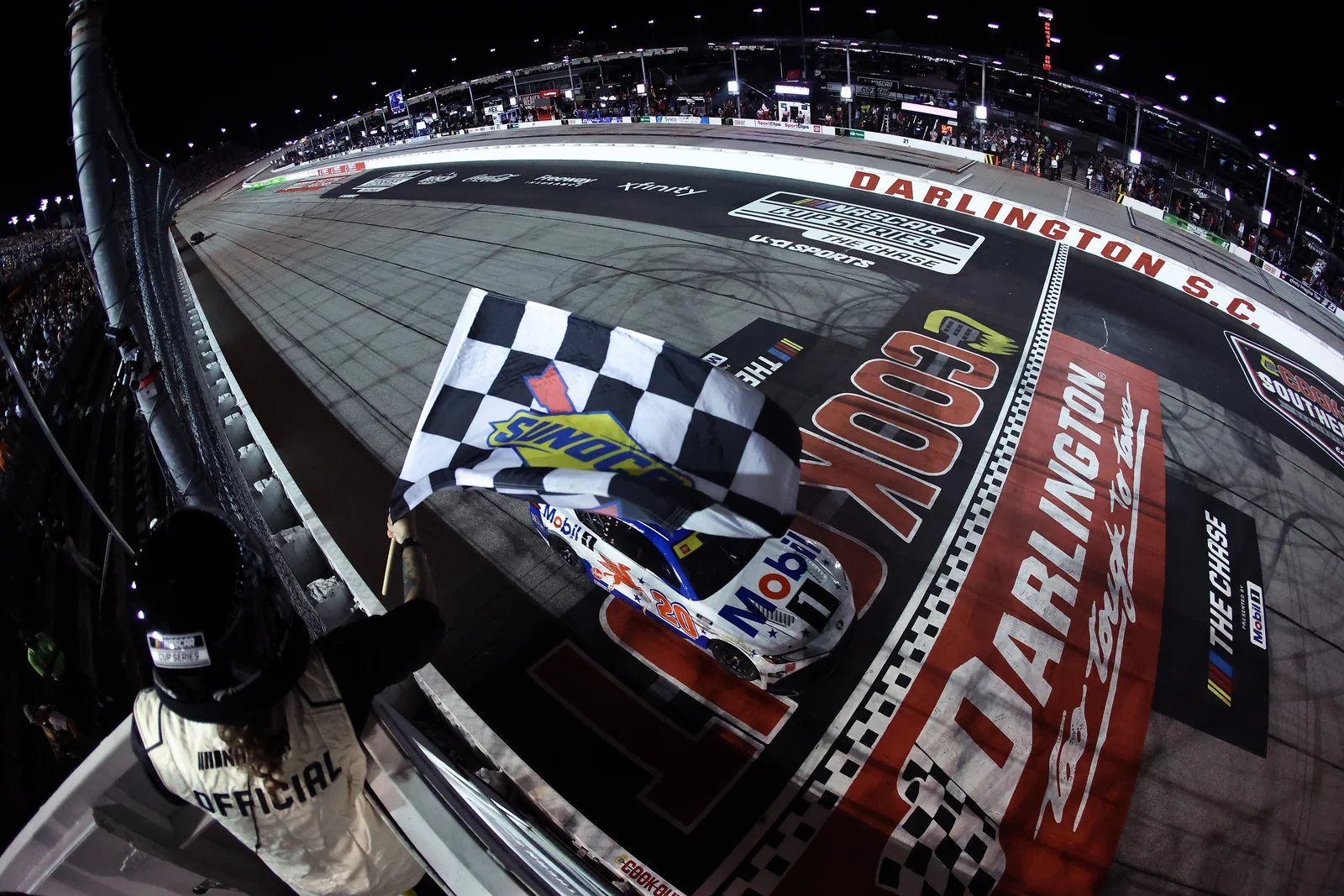
The best way to read the backlash, then, is as a conflict between a strong on-track product and an uneven way of showing it. The Southern 500 asked viewers to follow tire falloff, traffic, Chase points, green-flag pit cycles and a late strategy gamble at once. When a commercial or camera cut removed one piece of that picture, the audience did not merely miss a car going in circles; it lost the cause-and-effect chain that made the next pass important. Fans who want the finishing order can compare the discussion with the full Cup Series results.
How many commercials were in the 2026 Southern 500 broadcast?
A published CawsNJaws commercial audit, carried by Jayski the morning after the race, recorded 271 minutes from 4:42 p.m. through 9:13 p.m. The monitor counted 27 minutes of traditional full-screen commercials and 39 minutes of side-by-side advertising. It also counted 53 traditional spots, 105 side-by-side spots and 15 separate side-by-side breaks. Those figures support the feeling that advertising appeared often, but they need to be read correctly.
| Measured item | 2026 Southern 500 total | What the viewer saw |
|---|---|---|
| Recorded telecast window | 271 minutes | Pre-race/race broadcast measured from 4:42-9:13 p.m. |
| Race broadcast | 244 minutes | Race pictures were present, including reduced side-by-side windows |
| Traditional commercials | 27 minutes / 53 spots | Full-screen advertising with no live race picture |
| Side-by-side commercials | 39 minutes / 105 spots | Advertising beside a smaller live race window |
| Side-by-side breaks | 15 | Fifteen separate transitions into the split presentation |
The key distinction is that the 39 side-by-side minutes were not 39 additional minutes in which the race disappeared. They retained a live picture and overlap the broader measure of race coverage. Adding 27 and 39 produces 66 minutes in which advertising occupied all or part of the screen, but it would be misleading to call all 66 minutes a blackout. The verified full-screen interruption was 27 minutes.
That clarification does not invalidate the complaint. Side-by-side preserves continuity, yet it shrinks the racing, usually gives the commercial the audio, and can make a scoring ticker or an interval battle harder to read. Fifteen separate entries into that format also mean fifteen changes in visual scale. A fan watching tire gaps close over a 20-lap green-flag run can lose the rhythm even if the cars technically remain visible throughout the ad.
Placement is therefore as important as volume. A full-screen break during a routine caution costs less useful information than a side-by-side break while Reddick closes on Hamlin or Bell approaches Larson on fresher tires. Conversely, the live race thread praised at least one moment when the telecast waited for an on-track pass before leaving. That is a useful reminder that “commercials were bad” is too blunt: viewers notice whether a producer protects the completion of a developing story.
There is one more limitation. The published audit measures the telecast it monitored; cable systems and streaming platforms can insert local inventory differently. A viewer who received a full-screen local break may have seen less racing than someone watching the national side-by-side feed. Without a platform-by-platform recording, the precise experience cannot be generalized to every household. The defensible conclusion is that the national presentation leaned heavily on split-screen coverage, while frequent transitions and some full-screen interruptions still generated a real flow problem.
Why camera choices and limited running-order context hurt at Darlington
Darlington Raceway punishes television coverage that follows only the first car in line. Its abrasive surface changes lap time as tires age, its narrow preferred groove makes traffic decisive, and green-flag stops can temporarily scatter the real contenders across the scoring pylon. A close onboard may look dramatic, but it cannot show whether the car behind is gaining, which lane the attacker is building toward, or whether both drivers are about to encounter slower traffic.
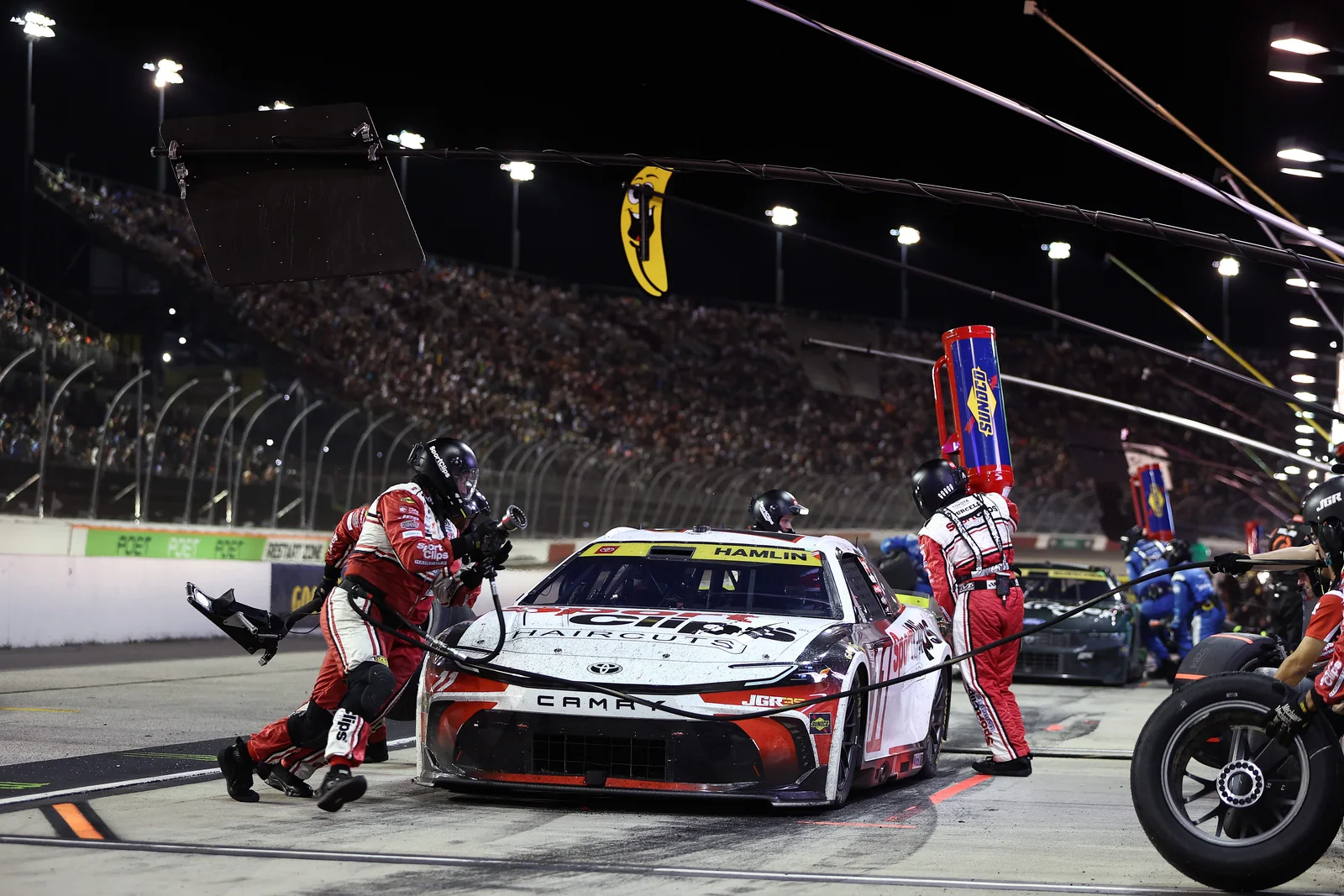
The 2026 Southern 500 produced 29 lead changes among 12 drivers despite only six cautions for 44 laps. That combination tells the production story: there were long enough green-flag periods for tire and pit strategy to develop, but leadership was not static. Reddick even lost track position when his crew had to reset the left-front tire during a green-flag stop. Showing only the current leader after that stop would not explain whether he was genuinely slower, on a different tire cycle, or simply paying the time cost of the pit problem.
Darlington creates stories throughout the field
A useful Darlington picture must answer three questions at once: who has track position now, who has the faster tires, and where those strategies will merge. The running order alone answers only the first. An interval graphic reveals who is closing; a tire-age marker explains why; a wider camera shows whether traffic will help or block the pass. When any one of those pieces disappears during an onboard or reduced side-by-side window, the viewer has to reconstruct the race from fragments.
The late showdown made that information problem obvious. After a brief rain stoppage with 29 scheduled laps remaining, Larson and three other drivers protected track position while Bell and several fast Toyotas pitted for tires. Bell restarted fifth, reached Larson rapidly and made the winning pass with 12 laps left. The intrigue was not merely “first versus second.” It was old tires versus new tires, defensive lane choice versus raw grip, and the question of how long Larson could delay the inevitable without falling too far. Bell won, Ty Gibbs finished second, Reddick third, Ryan Blaney fourth and Larson fifth.
That same need for context extended far below the lead. This was the opening race of the Chase, so a driver salvaging 18th after wall contact could matter as much to the title as a non-Chase driver fighting for seventh. Hamlin led 68 laps before damage disrupted his night, yet his recovery kept him atop the standings. William Byron's late spin and mechanical failure dropped him to 37th. If the ticker stays shallow or the telecast returns from a break without resetting those developments, fans following the championship cannot tell whether a position change came from speed, damage, a penalty or the pit cycle.
This is analysis rather than proof that every camera cut was wrong. A director must choose among dozens of feeds in real time, and onboard shots can reveal steering corrections that a high camera hides. The criticism becomes persuasive when the close view replaces, rather than supplements, the wider competitive picture. Darlington rewards a sequence: establish the gap, show the tire difference, follow the traffic, then use the onboard to illustrate how hard the driver is working. Readers can cross-check the finishing order in the Cup Series results and follow the championship effect in the current Cup Series standings.
Was the USA Sports booth really the problem?
Leigh Diffey handled play-by-play for the Southern 500 with Jeff Burton and Steve Letarte as analysts. Some viewers criticized verbal stumbles, excessive excitement or storylines that continued while a battle developed. Others praised Diffey's urgency, Letarte's strategy explanations and the pre- and post-race presentation. That split existed before Darlington and appeared again during the race, which makes “the booth was terrible” an opinion rather than an established fact.
Production direction and announcer performance are different questions
The booth does not independently decide every camera cut, scoring graphic or commercial break. A producer and director choose which feed reaches the screen; graphics staff decide which data is available; sales and network operations shape the advertising windows. Announcers can help recover context when the picture changes, but it is inaccurate to assign an inconvenient onboard shot or a full-screen local commercial to the person calling the pass.
USA Sports said before its 14-race run that the Chase format would let its analysts use more judgment about momentum and championship pressure instead of following a formal elimination line. Darlington gave Burton and Letarte plenty to interpret: tire age, pit timing, Hamlin's attempt to salvage points, and Larson's decision to defend the lead without stopping. The telecast was at its most useful when the voices connected those choices to the next on-track move. It was less effective when narration and pictures appeared to tell different stories.
Criticism based on Diffey's Australian accent should be separated from criticism of timing, accuracy or clarity. An accent is not a measure of motorsports knowledge. A useful critique would identify that a pass was not called, an interval was misread, or an explanation arrived too late; attacking how a broadcaster naturally sounds adds nothing to an evaluation of the race.
The fairest verdict is that commentary preference amplified the backlash but did not create its strongest evidence. The measurable commercial pattern and the repeated demand for wider race context stand even if a viewer likes all three announcers. Conversely, replacing the booth would not solve a small split-screen window, a missing interval or a cable-access problem. Fans can dislike the voices, but the parts of the Southern 500 presentation most open to concrete improvement sit across the entire production.
Why showing a crown-jewel race on USA Network became part of the backlash
The channel question carried extra emotional weight because the Southern 500 is one of NASCAR's crown jewels and opened the 2026 Chase. Some fans believe an event with that history should be available on the widest possible broadcast platform, especially during a crowded early-September sports weekend. Putting the race on USA Network made access itself part of the post-race review before anyone judged the camera work.
Cable placement and production quality are separate debates
USA Sports controls the final 14 Cup Series telecasts of 2026 under the announced plan. Four of those events—Daytona, Talladega, Martinsville and Homestead-Miami—were assigned to NBC, while the full package uses USA Sports branding. Darlington was scheduled for USA Network at 5 p.m. ET. That was not a last-minute demotion caused by the race; it was part of the published media plan.
Official NASCAR preview material also listed HBO Max alongside USA Network for the Southern 500, but the streaming detail is less simple than “every USA race is fully simulcast on Max.” Max's own help page says full-race coverage is available for select NASCAR events and separately promotes season-long in-car camera and audio feeds. In other words, fans needed to check the specific event tile and available feed rather than assume that a Max subscription always replaced a pay-TV package.
That complexity helps explain the frustration. A cable channel, a network channel, a full-race streaming feed and a driver-camera product are not interchangeable. One household may receive USA through cable or a live-TV bundle; another may have Max but find only alternate feeds for a given event. When a fan has to solve that distinction minutes before the green flag, the distribution plan becomes part of the race-day experience.
Still, access and execution should not be collapsed into one score. Moving the Southern 500 to NBC could increase over-the-air availability, but it would not automatically improve commercial timing, camera selection or the running-order graphic. Network television can also carry substantial advertising. Conversely, a well-directed USA telecast can satisfy existing subscribers even if the event reaches fewer casual viewers. The right criticism is that a crown jewel deserves both easy discovery and a presentation that preserves its competitive story.
No verified 2026 Southern 500 audience figure was available at this article's September 8 research cutoff, so comparisons with the prior week's NBC race would be premature. Date, competition and channel all affect ratings. Fans planning the next race should use the current NASCAR TV schedule and the site's 2026 NASCAR viewing guide instead of assuming the rest of the Chase follows the Darlington setup.
What would make the next NASCAR broadcast easier to follow?
The most realistic improvements do not require eliminating every commercial or abandoning onboard cameras. They require protecting the sequence of a race. A viewer should know who is closing, why the gap is changing and what happened during any interruption. The following ideas are editorial recommendations based on the Southern 500 complaints, not announced USA Sports policy.
- Finish the live story before shrinking the screen. If two cars are completing a pass, delay the break when inventory and safety allow. The positive reaction when USA did this at Darlington shows that viewers notice disciplined timing.
- Keep useful data in the side-by-side layout. A reduced race window needs a readable lap count, leader, interval and caution status. The live picture has limited value if a fan cannot identify the cars or tell whether the gap is closing.
- Reset the field after every break. A 20-second summary can explain the lead, net pit-cycle position, tire-age split, free-pass battle and major Chase changes before returning to commentary.
- Establish the battle with a wide shot. Show both cars, the traffic ahead and the preferred groove before moving to an onboard. The close camera can then explain steering effort without hiding the pass.
- Treat green-flag pit cycles as a scored competition. Display stop time, entry/exit gaps and projected net position. At Darlington, a slow tire change can transform the order even when nothing dramatic happens on the racing surface.
- Preserve post-race explanation. Interviews and a final standings reset show why a fifth-place strategy gamble or an 18th-place recovery mattered after the winner celebrates.
Fans also have legitimate companion tools, although they should not need a second screen to repair every broadcast gap. NASCAR's official Live Leaderboard and Race Timeline can track positions and lap-by-lap changes. Scanner access is available on the web with a verified NASCAR account, while mobile audio and premium features depend on the app tier and event. The site's NASCAR app guide explains those differences without treating every feature as free.
MRN or SiriusXM NASCAR Radio can provide an alternative call when listed for an event, and driver-camera feeds can help a fan follow one car. Neither is a perfect substitute for the main telecast. Radio and streaming feeds may carry different delays, while a single-car camera removes the wider field context that caused complaints in the first place.
The larger lesson from Darlington is that racing coverage is an information system, not only a collection of exciting images. A four-hour event needs continuity. Commercials are part of the business, onboard cameras can be excellent, and booth personalities will always divide opinion. The telecast earns trust when all three serve the competitive story instead of forcing the viewer to reconstruct it. Before the next green flag, verify the channel and start time on the NASCAR TV schedule.
Frequently asked questions
How many minutes of full-screen commercials aired during the 2026 Southern 500?
The published commercial audit counted 27 minutes of traditional full-screen ads. It separately counted 39 minutes of side-by-side ads across 15 breaks. During those 39 minutes, a smaller live race picture remained visible, so they should not be described as another 39 minutes with no racing shown.
Was the 2026 Southern 500 available on HBO Max?
NASCAR's official pre-race material listed HBO Max alongside USA Network, MRN and SiriusXM NASCAR Radio. Max states that only select NASCAR events receive full-race coverage and that in-car camera/audio availability is broader. Because feeds and plan eligibility can differ, subscribers needed to check the Southern 500 event tile rather than assume every USA telecast was a full Max simulcast.
Who called the 2026 Southern 500 for USA Sports?
Leigh Diffey called the race with analysts Jeff Burton and Steve Letarte. Viewer reaction to the trio was mixed. The booth can explain strategy and respond to the pictures, but camera direction, graphics, commercial scheduling and distribution are separate production responsibilities.
About the author
NASCAR Schedule Editorial Team
The NASCAR Schedule editorial team turns verified schedules, timing and scoring, official announcements and race-weekend context into direct answers for fans.
View all articles by this author →Join the discussion
Comments
Sign in with Google to comment. Keep it race-focused; new comments are reviewed before publication.
Loading comments…