2026 NASCAR Gateway Chase Preview: Schedule, Favorites and What to Watch
Verified race logistics and a strategy-led preview of the second 2026 Cup Chase event at World Wide Technology Raceway.
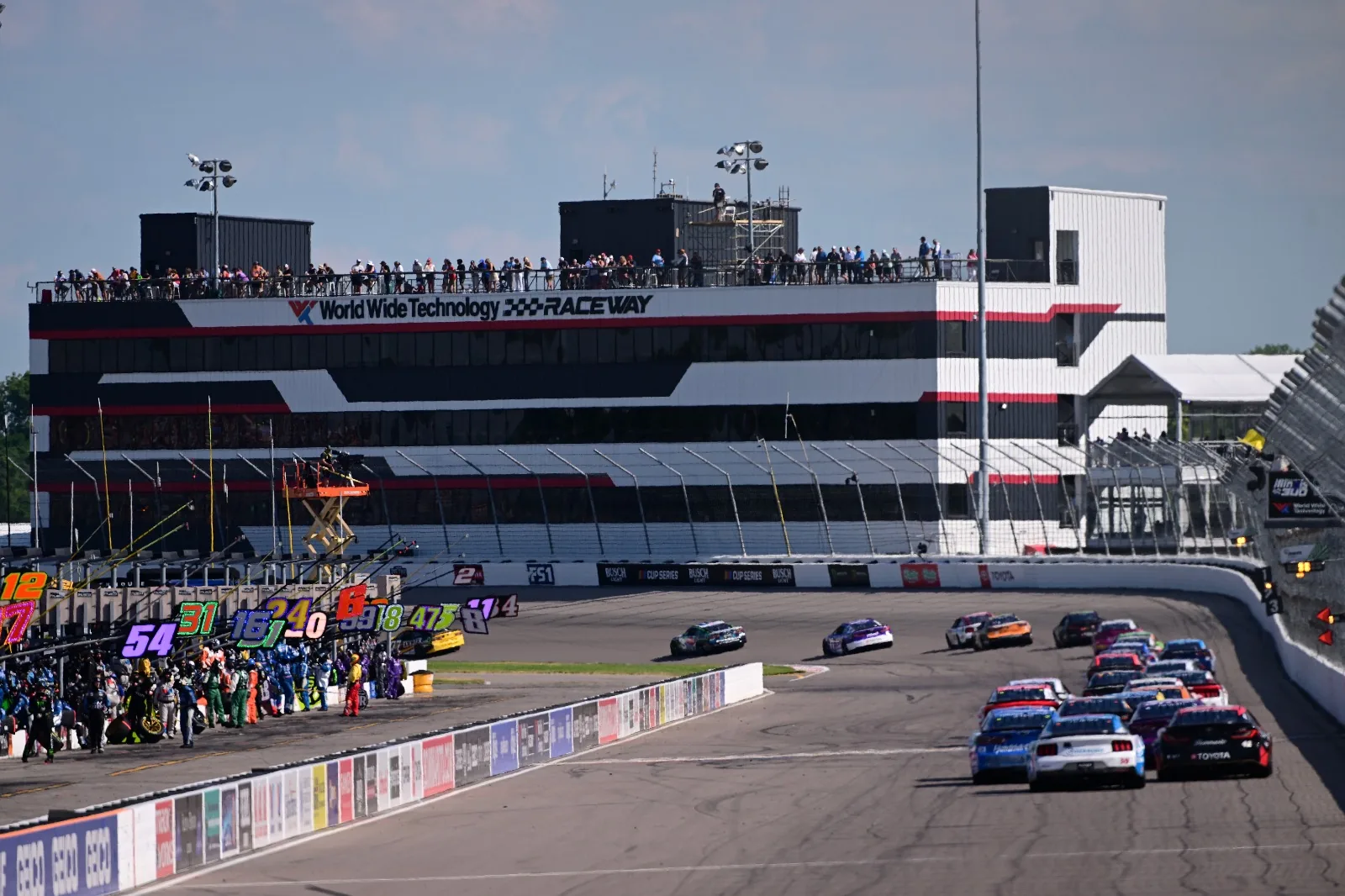
The 2026 NASCAR Cup Series Chase moves to World Wide Technology Raceway on Sunday, September 13 for the Enjoy Illinois 300. The 240-lap race starts at 3 p.m. ET on USA Network, one week after Christopher Bell cut Denny Hamlin's championship lead to 12 points at Darlington.
Gateway is not an elimination race under the restored Chase. It is the second event in a ten-race cumulative title fight, which makes stage points, pit-road execution and avoiding a low score more important than old “advance or go home” language. Here is the verified schedule and the track-specific evidence to watch.
2026 Enjoy Illinois 300 Schedule and How to Watch
The 2026 Enjoy Illinois 300 is scheduled for Sunday, September 13 at 3 p.m. ET (2 p.m. local Central time) at World Wide Technology Raceway. USA Network carries the Cup race, with the network's prerace show listed for 2:30 p.m. ET. MRN and SiriusXM NASCAR Radio are the official audio options listed with NASCAR's race coverage.
Gateway's Cup race covers 300 miles and 240 laps around the 1.25-mile oval. The scheduled stage breaks come after Lap 45 and Lap 140, leaving a 100-lap final stage. Those unequal segments matter: teams have a short first-stage opportunity to score, a much longer second segment and enough distance in Stage 3 for cautions or green-flag pit cycles to reshape the order.
Race: Enjoy Illinois 300
Date: Sunday, Sept. 13, 2026
Start: 3 p.m. ET / 2 p.m. CT
TV: USA Network
Distance: 240 laps / 300 miles
Stages: 45 / 140 / 240
The Cup event anchors a weekend that also includes the O'Reilly Auto Parts Series race on Saturday evening. That creates useful track time for the venue but not a direct setup copy: the cars, tire allocations and race lengths differ. Cup fans should treat Saturday's racing as evidence of track evolution and passing lanes, not as a guaranteed script for Sunday.
Weather, session timing and distribution details can change after a preview is published. Check the NASCAR weekend schedule before leaving for the track or choosing a streaming service. The broader 2026 viewing guide explains provider and app options without presenting an unofficial stream as free or guaranteed.
This is the second race of the Cup Chase, one week after Darlington. It should not be described as a cutoff or must-win advancement event. The practical reason to watch every stage is cumulative points: contenders can gain or lose championship ground from the first checkpoint onward.
Why Gateway Races Differently From a Typical Intermediate
Gateway is a 1.25-mile flat oval that asks Cup teams for braking stability and mechanical grip rather than the sustained high-speed balance of a conventional 1.5-mile intermediate. NASCAR's own Chase analysis groups it with the flat short-track tests. Drivers must slow, rotate and launch repeatedly, so a car that protects the rear tires under acceleration can be more useful than one that merely posts a fast single lap.
Turns 1-2 and Turns 3-4 demand different compromises
The two ends are not identical. Turns 1 and 2 are tighter, while Turns 3 and 4 open into a broader radius. A setup that helps the car point through the tight end can make it nervous or inefficient elsewhere; a stable wide-corner car can refuse to rotate where the driver needs it most. Teams therefore chase a compromise rather than one perfect balance.
That difference shows up in traffic. A driver may be able to pressure entry at one end but need to protect exit at the other. Passing often requires building the move across several corners—closing under braking, staying alongside and finishing the job on acceleration—rather than relying on one sweeping outside run.
Braking and track position increase restart pressure
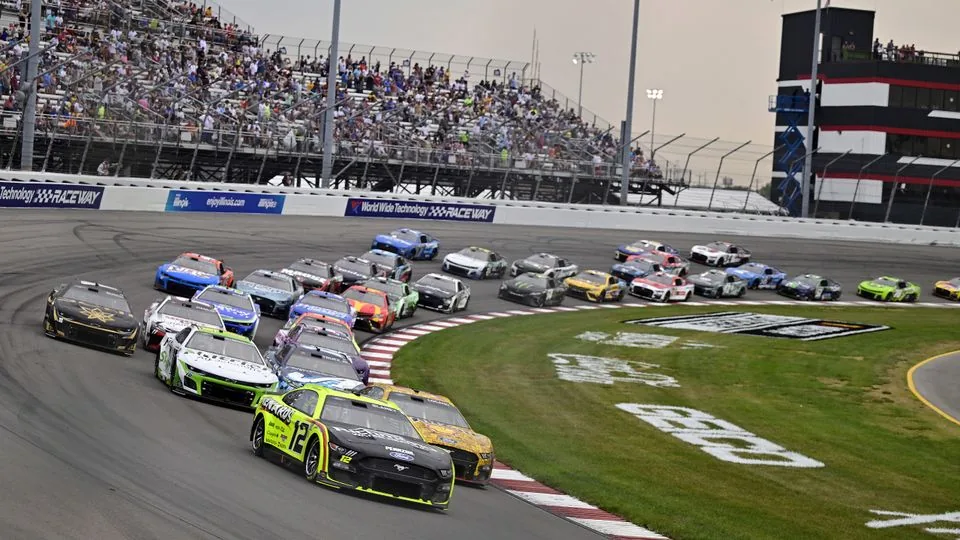
Heavy braking creates opportunities and risk. A driver on the inside can attack the braking zone, but locking a tire or overshooting the corner ruins exit and can stack the lane behind. The outside car carries a longer path yet may preserve momentum if it can remain beside the rival. Restarts compress those conflicting approaches into the same patch of asphalt.
Track position becomes valuable because equal cars are hard to separate once the field stretches. Pit crews can gain several places without an on-track pass, and a well-timed caution can elevate a team that short-pitted or stayed out. That makes qualifying and pit selection meaningful, although neither guarantees Sunday performance.
The flat layout also exposes a car that cannot put power down. Wheelspin off the corner costs speed along the straight and makes the next defensive braking zone harder. Watch which contenders can follow another car closely without burning the rear tires; that trait will matter more over a green-flag run than a flashy opening lap.
Gateway rewards completeness. The likely winner needs a car that rotates in two different corner shapes, a driver who can manage brake and rear-tire temperatures, and a crew that preserves position. Missing any one component can turn top-five pace into an afternoon trapped around 12th.
The Chase Standings Stakes After Darlington
Denny Hamlin arrives at Gateway with 2,135 points, but Christopher Bell is only 12 behind after winning the Southern 500. Ryan Blaney sits 16 back, Tyler Reddick 24 back and Chase Briscoe 37 back. The lead group is close enough that stage points can change the order before the final pit stop.
The lower half faces a different calculation. William Byron is 16th and 114 points behind Hamlin after his Darlington engine failure. Ryan Preece, Austin Cindric and Daniel Suárez also need to prevent the front group from stacking another large score. One Gateway win would help enormously, but no result automatically deletes the opening deficit.
Gateway is Race 2, not an elimination cutoff
The restored 2026 Chase has no three-race rounds and no eliminations. All 16 contenders accumulate points through the final ten races, and the highest total after Homestead-Miami wins the title. Gateway therefore creates pressure without an artificial advancement line.
That distinction changes strategy language. Bell does not enter “locked into the next round” because there is no next-round reset. Byron does not face a mathematical must-win to survive the weekend. Both carry every Gateway point into Bristol and the eight races that follow.
A Cup win now pays 55 finishing points, 15 more than the previous 40-point award and 20 more than second. NASCAR designed that premium to keep teams attacking victories in a cumulative contest. Stage points remain important, so a contender can combine a stage win, another top-10 stage and a strong finish into a major swing even without taking the trophy.
Hamlin's Darlington recovery also offers the relevant model. He finished 18th after contact and damage but salvaged enough points to retain first. At Gateway, preserving an imperfect day can matter nearly as much as turning the fastest car into a win. There is no reset to forgive a DNF and no elimination race to rescue it instantly.
See the complete post-Darlington standings breakdown for every move, then use the live standings tool during Gateway. The useful comparison is the changing gap to first, not a fictional cut line.
The Drivers Best Positioned to Attack Gateway
Gateway favorites should be selected from evidence, not reputation alone. Flat-track performance, braking stability, recent execution and prior results all matter. Three storylines stand out before practice: Hamlin's combination of championship lead and track success, Penske's strength on this type of oval, and Toyota's momentum after sweeping the Darlington podium.
Denny Hamlin brings the lead and a Gateway win
Hamlin won the 2025 Gateway Cup race and arrives first in the 2026 Chase. His Darlington 18th was messy, but the No. 11 recovered from damage rather than compounding it with a DNF. Gateway offers a track type that rewards the braking precision and long-run management associated with Hamlin's strongest performances.
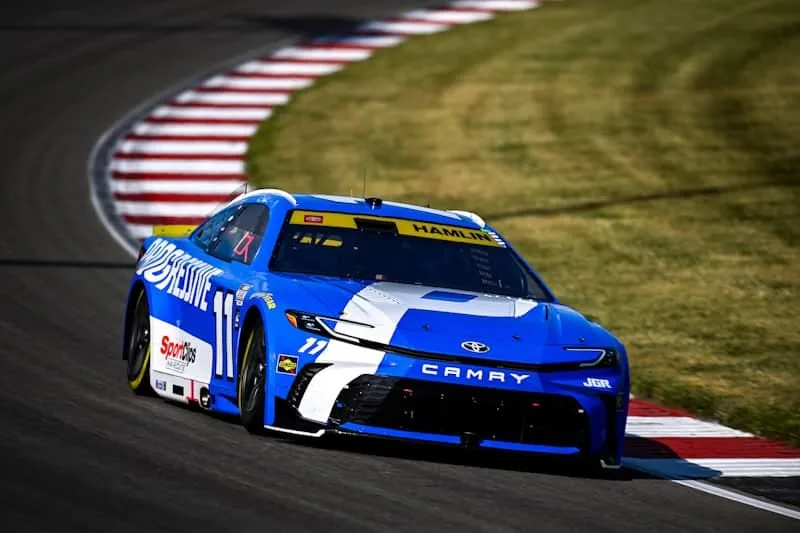
The concern is execution, not whether he belongs on the shortlist. Bell took 38 points out of Hamlin's reset advantage at Darlington. Another slow stop, contact or missed stage would erase the remaining 12-point lead. Hamlin does not need to race defensively; he needs to convert a favorable venue into a complete score.
Ryan Blaney and Austin Cindric fit the flat-track test
NASCAR's Chase analysis identifies Blaney as especially strong on short, flat tracks, and he begins Gateway only 16 points from first. His fourth at Darlington after starting 24th showed recovery and race execution. If the No. 12 qualifies near the front, it may avoid spending the opening stage fighting traffic.
Cindric is a proven Gateway winner and a more credible sleeper here than his 14th-place points rank suggests. The No. 2 begins 102 points behind Hamlin, so a safe 12th would do little to close the championship gap. Gateway is the kind of track where Penske's braking and short-oval baseline can create a higher-upside afternoon.
Bell and Toyota arrive with momentum
Bell won at Darlington, Ty Gibbs finished second and Reddick third. That Toyota sweep does not automatically transfer to a flatter, slower layout, but it confirms that the manufacturer enters the Chase with speed and pit execution. Bell's crew won the decisive late pit sequence among fresh-tire takers, an advantage that travels to any track.
Reddick and Gibbs also sit fourth and sixth in points. A Toyota contender who rotates the center without overheating the rear tires could control a long run, while Bell needs only a small points gain to take the championship lead. Practice trends will show whether Darlington momentum has become a Gateway setup advantage.
Other contenders should not be dismissed. Joey Logano owns extensive flat-track skill, Larson led 99 laps at Darlington, and Briscoe remains fifth in points. The shortlist is a framework for what to inspect, not a prediction disguised as a fact.
Pit Strategy, Stage Points and the Decisions That Could Swing the Race
Gateway strategy begins with an unusual stage map: 45 laps, then 95 laps, then 100. Teams cannot treat those segments as interchangeable fuel runs. The opening stage rewards immediate position, while the two longer phases create more room for short-pitting, tire conservation and caution-driven splits.
The 45-lap first stage changes the opening calculation
A contender starting near the front has a strong reason to protect Stage 1 points. A driver buried in traffic may choose a different objective: pit before the stage-ending caution, sacrifice the first checkpoint and inherit track position for Stage 2. The correct choice depends on expected points, pit-loss time and how difficult passing looks in practice.
That trade matters more in the cumulative Chase. Ten stage points for first are useful, but staying out to claim them can leave a car behind rivals who prepared for the next restart. Crew chiefs must value the immediate score against the probability of a larger finish. There is no automatic elimination safety to make one answer universal.
Cautions can split fuel and tire priorities
A caution near the edge of a fuel window may divide the field. Some teams will stop to secure range or fresh tires; others will keep position and hope for another yellow. Gateway's passing difficulty increases the appeal of staying out, yet old tires and weak launch grip can turn the leader into a target.
Green-flag stops create a different risk. Short-pitting can exploit fresh-tire speed, but it exposes the car to losing a lap if a caution appears before rivals stop. Running longer preserves flexibility and can produce fresher tires late in the cycle, though the driver must limit time loss on the older set.
Pit road will be as important as the calculator. A fast four-tire stop can move a car into clean air, while a speeding penalty or loose wheel converts good strategy into recovery. Watch the first two caution sequences for evidence of pit-loss time and tire falloff; those observations will influence the final-stage call more than a generic pre-race rule.
The official 2026 tire bulletin was not used for exact set allocations in this preview, so no fixed degradation rate or fuel window should be treated as confirmed here. Teams will build those numbers during the weekend. Fans can use the results and race center to follow the actual running order rather than assume last year's sequence will repeat.
The winning strategy may look conservative for most of the afternoon and aggressive only once. Gateway often rewards the crew that recognizes when track position has become more valuable than theoretical fresh-tire speed—and the driver who can restart without giving that advantage away.
What Fans Should Watch From Practice Through the Finish
Start with long-run balance, not the single fastest practice lap. The most useful car is the one that continues to rotate in Turns 1-2 without snapping loose off Turns 3-4 after several laps. Compare contenders at similar tire age; a late mock-qualifying run can make an average race setup look artificially strong.
Qualifying reveals who will control the opening stage, but also inspect where Chase drivers are grouped. A favorite starting 18th may need to spend tires and accept traffic risk before scoring. A lower-seeded driver on the front two rows has an opportunity to bank stage points and force championship leaders to respond.
During Stage 1, watch which teams pit before the Lap 45 break. That is the first clear strategy signal. Cars staying out prioritize immediate stage points; early stoppers may be building position for the longer second stage. Neither choice can be graded until the next restart and caution sequence unfold.
Pit-road gains are the next indicator. Gateway's flat corners make passing comparable cars difficult, so two positions gained by a crew can be more durable than they would be at a multi-groove track. Note which contenders repeatedly enter and exit around the same rivals. Consistent losses may force a crew chief into an off-sequence gamble later.
Then follow championship gaps, not just ranks. Bell needs 13 net points to pass Hamlin from the post-Darlington baseline; Blaney needs 17. A stage win can change that math before halfway. Byron needs a much larger recovery, so a top-five stage may be meaningful even if he remains 16th on the displayed table.
In the final 100 laps, ask four questions: how many stops remain, which leaders have newer tires, whether everyone can reach the finish on fuel, and how many cars separate each strategy group. Those variables explain a decision more accurately than simply labeling every stay-out brave or every four-tire stop correct.
Finally, remember that no checkered flag ends anyone's Chase at Gateway. A win pays heavily, a DNF remains on the ledger and every stage point travels to Bristol. Review the 2026 Chase format before applying old elimination language.
The best preview prediction is therefore conditional: the team that balances both ends, protects rear grip and executes on pit road will control its options. Practice tells us who has speed; the race tells us who can preserve it when braking zones, traffic and championship pressure arrive together.
About the author
NASCAR Schedule Editorial Team
The NASCAR Schedule editorial team turns verified schedules, timing and scoring, official announcements and race-weekend context into direct answers for fans.
View all articles by this author →Join the discussion
Comments
Sign in with Google to comment. Keep it race-focused; new comments are reviewed before publication.
Loading comments…