NASCAR San Diego Track Map: Corners, Viewing Areas and Fan Guide
A post-event fan guide to the 3.4-mile, 16-turn Qualcomm Circuit at Naval Base Coronado, including named corners, viewing zones, parking routes and the layout features that shaped the 2026 races.
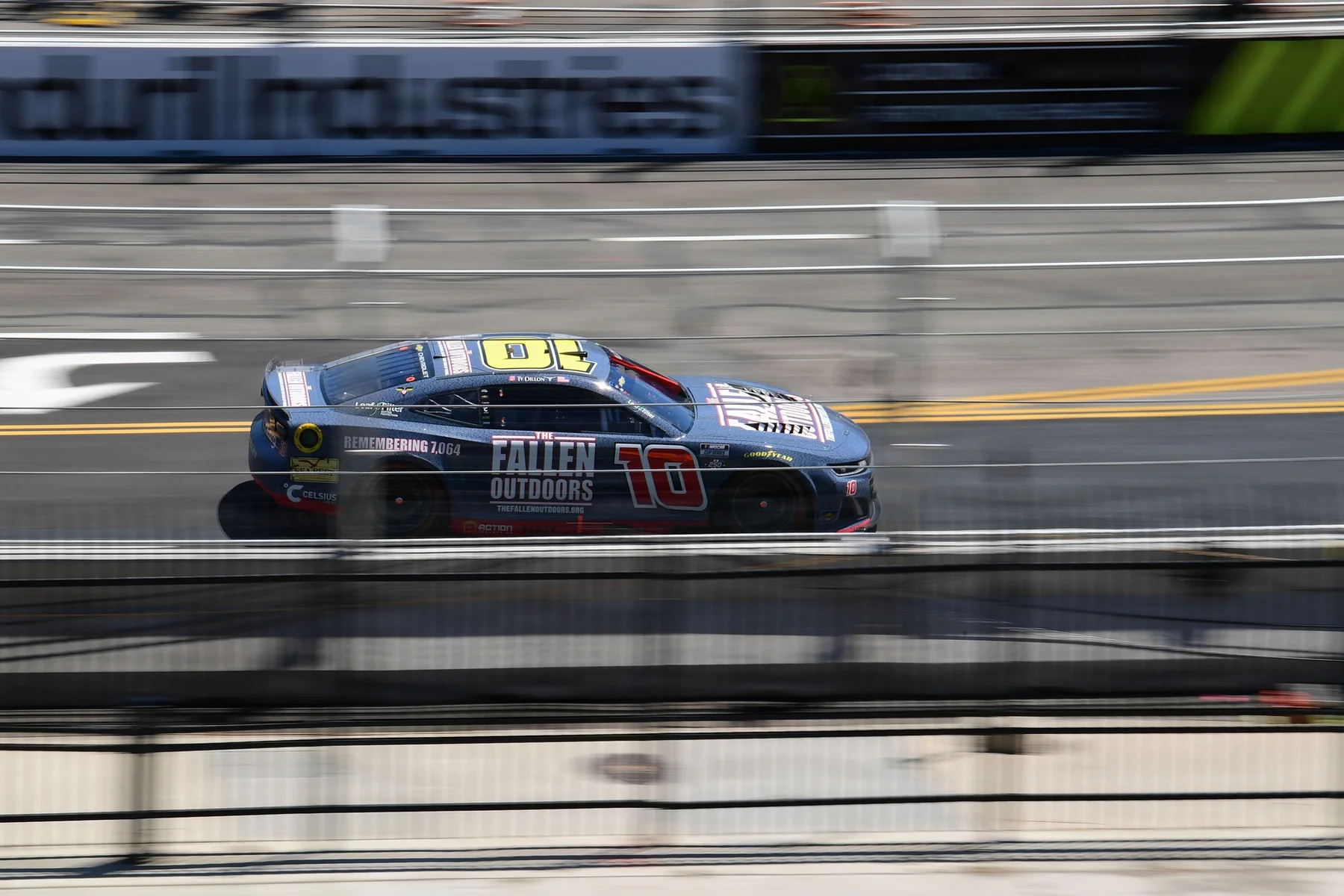
The 2026 NASCAR San Diego track map showed a 3.4-mile, 16-turn temporary street course at Naval Base Coronado. Branded Qualcomm Circuit, the lap linked the Ellyson Start/Finish, Carrier Corner, Coronado Chicane and Runway Road across base streets, concrete and asphalt. NASCAR completed the inaugural three-series weekend June 19–21, with Corey Heim winning the Cup finale after post-race inspection.
For a race fan, the useful map is more than a numbered outline. This guide walks the lap in order, connects decisive 2026 moments to their corners, explains what the historic viewing and parking colors meant, and shows why bumps, mixed surfaces and tire wear changed the strategy. It also separates the completed event from an unconfirmed future return, so an old facility map is never mistaken for current arrival instructions.
What did the 2026 NASCAR San Diego track map show?
The 2026 map showed a temporary 3.4-mile, 16-turn circuit built across roads and operational surfaces at Naval Base Coronado. It was officially branded Qualcomm Circuit and hosted the NASCAR Craftsman Truck Series, NASCAR O'Reilly Auto Parts Series and NASCAR Cup Series from June 19–21. The weekend is complete: Corey Heim won Sunday's 75-lap Anduril 250, so the map now explains a finished event rather than an upcoming ticketed race.
| Map fact | 2026 detail | Why fans should care |
|---|---|---|
| Location | Naval Base Coronado, San Diego | A temporary course inside an active military installation, not a permanent public speedway. |
| Length | 3.4 miles / 5.47 km | A long lap stretches caution periods, pit calculations and the distance between viewing zones. |
| Turns | 16 | The numbered path mixed square corners, chicanes, fast sections and surface changes. |
| Headline race | 75-lap Anduril 250 | The Cup field covered roughly 255 scheduled miles on June 21. |
| Current status | 2026 event complete | The old map is not proof of a 2027 race or identical future layout. |
NASCAR called it the longest course on its 2026 schedule. That distinction changes how a fan should read the drawing. A 16-turn diagram can look compact on a phone, yet the physical footprint spread the racing, grandstands, parking and fan areas across a base large enough to require separate colored zones and internal trams. A viewer at one braking zone could follow the rest of the lap on video boards, but not with an uninterrupted direct sightline.
Do not confuse it with the old Coronado Speed Festival course
North Island had racing history before NASCAR, but the earlier Coronado Speed Festival used a different course of about 1.7 miles. The NASCAR design was roughly twice as long and was developed for modern national-series stock cars, with named landmarks that tied the lap to the base: Ellyson Start/Finish, Carrier Corner, Coronado Chicane and Runway Road. Old photographs or diagrams labeled simply “Coronado circuit” may therefore show the wrong layout.
The cleanest way to place the event in the season is to pair the archived map with the verified NASCAR Cup Series results. The map explains where the cars raced; the results establish what actually happened. Neither source, by itself, confirms that the same temporary venue will return.
How did a lap run from Ellyson Start/Finish to Runway Road?
A lap left the Ellyson Start/Finish Line through a quick right, climbed and turned through an opening sequence of square corners, reached the waterfront at Carrier Corner, then worked through the Coronado Chicane and the base interior before Runway Road led the field toward the finish. The official names are more than decoration: they let fans connect a flat circuit outline to visible naval landmarks.
Turns 1–5: elevation, the ship and Carrier Corner
The first right after start/finish fed into two fast 90-degree left-handers. A printed map suggests a straightforward stop-turn-accelerate sequence, but NASCAR's at-track reporting identified a crest between Turns 1 and 2. Cars could become light over that rise, complicating braking and power application before the next direction change. That is the first lesson in reading this map: distance and elevation were compressed into a clean overhead shape.
Turn 3 brought the USS Carl Vinson backdrop into view. Near the slight Turn 4 bend, teams noticed raised tracks used to guide cranes on the installation. Those rails, variations in track width and changing pavement made this sector less uniform than the digital rendering. Turn 5, officially Carrier Corner, was a sharp left positioned between aircraft-carrier docking locations. The exit mattered because a significant dip followed it; a driver asking for too much acceleration while the chassis unloaded could give away the run into the next section.
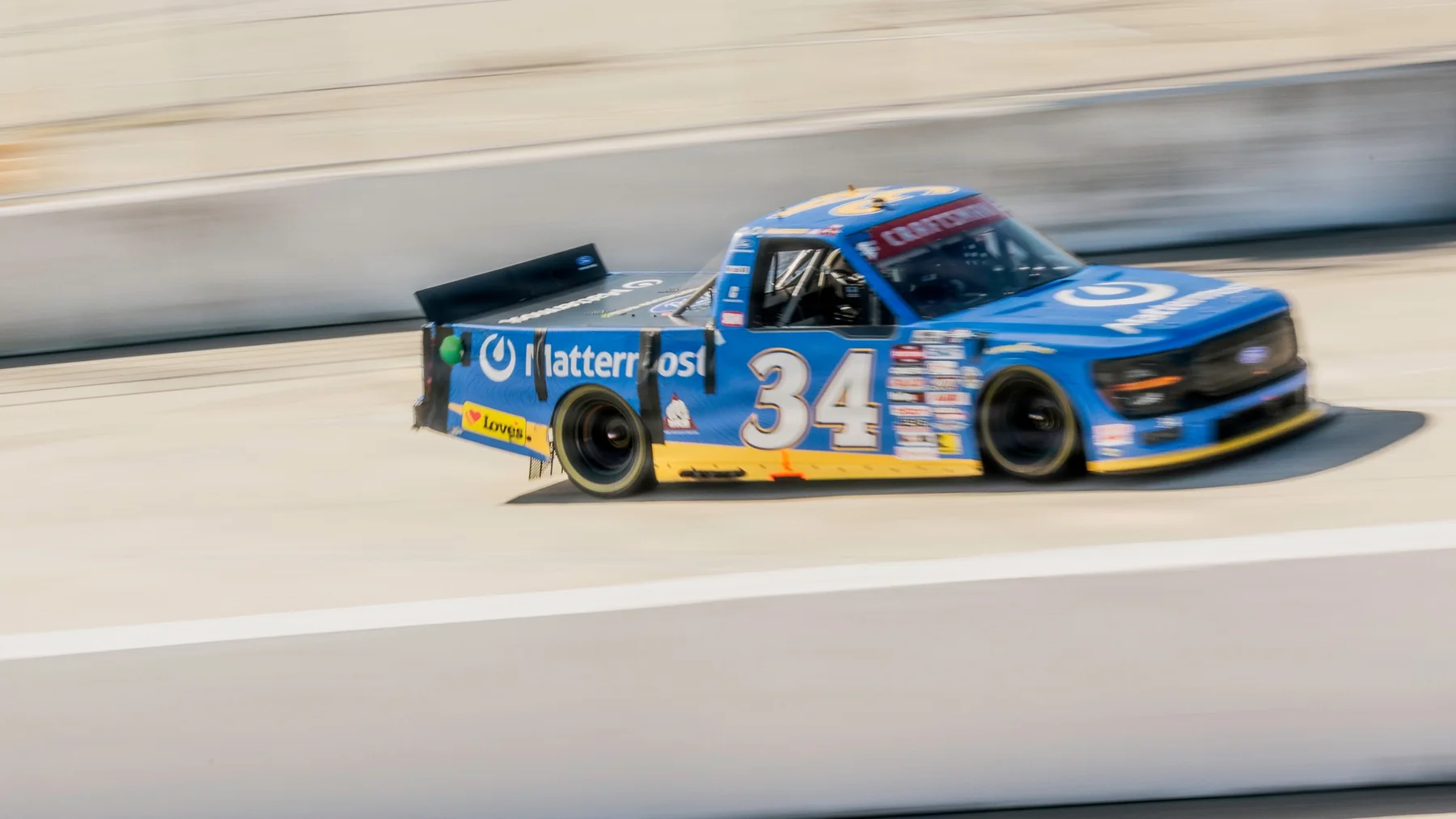
Coronado Chicane, the interior loop and Turn 14 Runway Road
Turn 8 began the Coronado Chicane, the map's most obvious rhythm-changing complex. Rather than treating it as one isolated corner, fans should read it as a sequence: braking position at entry determined whether the car could change direction cleanly and still launch toward the interior of the base. Street-course barriers punish a missed reference point because there is little runoff and the following turn arrives before a driver can fully reset.
The later section carried the lap toward Turn 14, named Runway Road for its position near the north end of Runway 18/36 at Halsey Field. From there, the remaining corners returned the field toward Ellyson Start/Finish. The official flyover is still the best tool for tracing every number; the useful editorial layer is to group the numbers into jobs—opening elevation and braking, waterfront acceleration, chicane rhythm, then the run back from the airfield side.
No map alone can declare a universal passing corner. A useful overtaking attempt also requires braking overlap, tire grip and an exit that does not surrender the next bend. The named landmarks orient the fan, while the physical surface and race situation determine whether the move works.
Which parts of the map mattered once NASCAR raced there?
The completed races showed that the opening crest and braking zone, multi-corner side-by-side sequences, Turn 12B and the final chicane mattered more than any single “best passing turn.” In all three national series, a decisive moment began before the place where the position officially changed. That is why a fan should read the San Diego map as connected corner groups, not 16 isolated boxes.
The Cup-winning move took three corners
Corey Heim's first Cup victory is the clearest example. Tyler Reddick slipped in Turn 2 on Lap 73, creating the opening. Heim did not complete an instant dive-bomb; the 23XI Racing teammates stayed alongside one another through Turns 3 and 4, and Reddick attempted a crossover into Turn 5. Contact pushed Heim toward the wall, Reddick ultimately gave up the position and later suffered a flat left-front tire. Heim led only the final three laps, but the winning sequence stretched across the entire waterfront-side group.
Turn 1 also carried consequence. Contact exiting that corner on a Lap 32 restart triggered a multicar crash that removed or damaged several fast contenders, including pole winner Shane van Gisbergen and Connor Zilisch. The issue was not simply that Turn 1 was “dangerous.” A restart compressed the field, the crest complicated placement, and multiple cars tried to occupy a narrow exit. Race state turned the map feature into an incident.
The support races proved the chicanes demanded discipline
Friday's Truck Series finish centered on the chicane before the last corner. Tyler Reif entered it with Layne Riggs applying pressure, missed the intended path, stopped after short-cutting the course and later received a 30-second penalty. Riggs took the lead and won. The map tells a viewer where the chicane sits; the finish explains its competitive job. It forced a driver to slow and change direction accurately when fuel, tires and pressure were already at their worst.
Saturday's O'Reilly Auto Parts Series race supplied another chain. Taylor Gray got to Carson Kvapil's left after Turn 9 and stayed alongside for three corners before contact at Turn 12B spun Kvapil. Gray then wheel-hopped under braking at scenic Turn 3 on the white-flag lap, allowing Austin Hill to take the lead and win. The eventual pass at Turn 3 was partly created by the earlier fight and the braking behavior Gray said he was struggling to manage.
Why a clean diagram hid the real problem
The course used worn and fresh asphalt plus worn and fresh concrete. Grip changed across the lap, while bumps and surface seams moved the tire load. The final Cup race produced 20 lead changes among 13 drivers and seven cautions for 11 laps, but those totals should not be turned into a claim that every numbered corner offered equal action. Some moments came from restarts, some from tire life and some from driver mistakes.
Use the map to locate a replay, then use the verified NASCAR results to establish who gained, lost or finished. The most useful reading habit is causal: identify the first compromised corner, follow the car through the next braking and acceleration zones, and only then judge the visible pass.
How the 2026 viewing zones changed what fans could see
The course diagram and the spectator map answered different questions. The circuit map showed where the cars turned; the event map helped ticket holders understand where they would enter, stand or sit. For the inaugural June 2026 weekend, organizers divided the huge Naval Base Coronado footprint into Green Ellyson, Yellow Carrier and Red Coronado Chicane zones. Those names corresponded to recognizable portions of the lap, but they were not promises that every person in a zone had the same sightline.
Green, Yellow and Red were useful orientation points
Green Ellyson put the start/finish identity at the center of the fan experience. Yellow Carrier was associated with the Turn 5 area named Carrier Corner, while Red Coronado Chicane identified the later technical section around Turn 8. That made each color a useful replay shorthand: a fan could connect what happened on track to a named section rather than treating the 16-turn layout as one long anonymous ribbon of concrete.
The trade-off was scale. A 3.4-mile temporary street circuit is too long and visually interrupted for a normal fixed grandstand to reveal the entire lap. The sensible way to read the historic map is therefore sequence-first: choose the nearby braking zone or corner complex you care about, then rely on track screens, timing and the public-address call for action elsewhere. That is editorial viewing advice, not an official guarantee about any individual seat.
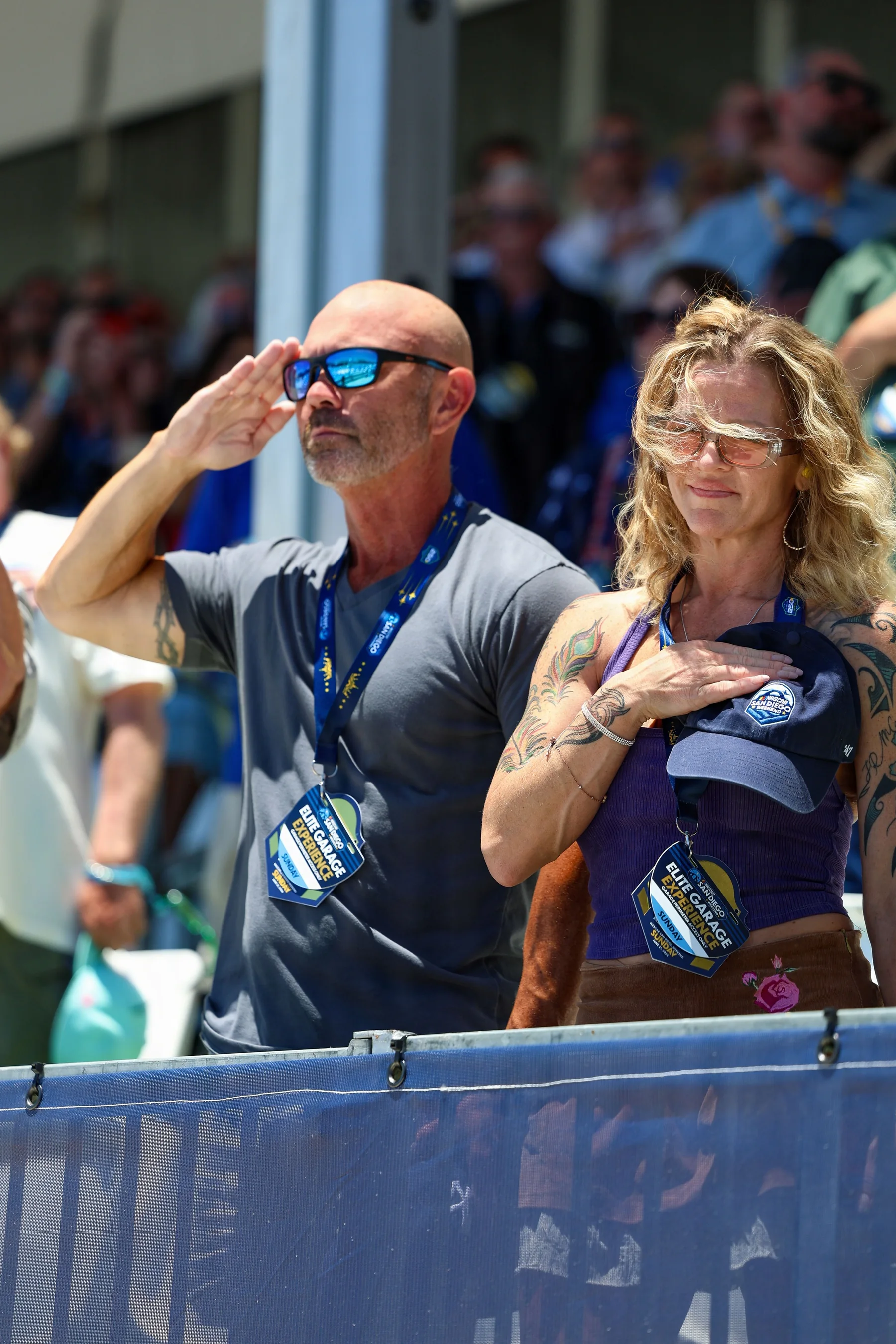
A zone did not automatically mean a reserved seat
Ticket type mattered just as much as map color. The official 2026 FAQ said reserved-grandstand products included an elevated assigned seat, parking and Flight Deck Experience access. The standard Base Pass was standing-room trackside admission with no seating. Base Pass Plus added enhanced general-admission areas, including elevated GA space, drink rails and shade, but it still did not provide a reserved seat. Fans comparing archived ticket screenshots should not treat “elevated” and “reserved” as interchangeable.
Movement also shaped the day. The organizer warned that some walks from parking could take 15–20 minutes or cover about a mile, and an internal tram connected the Green and Red areas. In other words, jumping between distant colors was not like walking two sections at an oval. The zone selected for arrival could determine how much live action a fan sacrificed while relocating.
How the parking and access map worked in 2026
At Naval Base Coronado, the fan map began to matter before anyone saw a race car. The completed 2026 event used a federal military installation, colored parking assignments and multiple gates. A ticket holder therefore had to read three layers in order: the digital parking pass, the assigned entrance route and the walk from that entrance to the viewing area. Looking only at the corner map could send a fan toward the right seats by the wrong gate.
The parking color controlled the first move
| 2026 assignment | Historic access pattern | Why the map mattered |
|---|---|---|
| Green Ellyson | Drivers followed the Stockdale Gate route. | The Green lot also served Turn 1 grandstand holders whose seats were shown in Yellow. |
| Red Coronado Chicane | Drivers also entered through Stockdale Gate. | Fans then had to account for the large footprint and internal movement. |
| Yellow Carrier | Pedestrians and bicycles entered through Yellow Carrier Gate. | It was the key walking access point, not simply the Turn 5 label on the race course. |
That Turn 1 exception is the best illustration of the system: a fan could hold a seat in the Yellow Carrier zone but receive Green parking. The parking pass—not the color closest to the seat on a screenshot—was the controlling document. Saturday O'Reilly and Sunday Cup tickets originally included digital parking, but the organizer warned that a secondary-market transfer might not include the separately distributed pass.
Rideshare and ferry were walking plans, not door-to-seat shortcuts
The 2026 rideshare point was at Colorado Street and Stockdale Boulevard, with arrivals directed toward Yellow Carrier Gate. Ferry users could land at Coronado Ferry Landing, but the event provided no shuttle from the landing; the official guide described a walk of just over one mile to the Yellow entrance. On a race morning, that distance had to be added to screening, interior walking and the time needed to find a section.
Base access added rules uncommon at many permanent tracks. Adults needed acceptable photo identification, and foreign nationals needed a passport. Vehicles and belongings were subject to security screening. RVs and oversized vehicles were not accommodated, tailgating was prohibited, and neither the venue nor its parking operation allowed re-entry after departure. Accessible parking was offered in every zone, with additional entrance and mobility procedures published by the organizer.
The useful lesson for any temporary circuit
Treat the racing layout and the facility plan as two separate tools. The first explains the lap; the second controls arrival, walking and access. The details above expired with the 2026 operation, so check the current NASCAR schedule and any newly issued organizer map before planning a future San Diego trip.
What the layout demanded from cars and strategy
A line drawing makes Qualcomm Circuit look flat and uniform. The Cup garage discovered the opposite. NASCAR reported four combinations beneath the tires—old and new asphalt plus old and new concrete—while the course also climbed over the crest between Turns 1 and 2 and dropped through a pronounced dip after Turn 5. Teams were not tuning for 16 identical corners; they were trying to keep one car predictable as load and grip changed around a very long lap.
Compliance and tire life pulled the setup in different directions
The crest and dip demanded suspension compliance. If the car reached a shock limiter, bottomed heavily or became light over the rise, the driver lost confidence precisely where the next braking or acceleration input arrived. Yet a car softened only to absorb bumps still needed a stable platform for repeated threshold-braking events. The practical setup challenge was a compromise: control vertical movement without giving away the response required to change direction and protect the rear tires.
Tire wear became the weekend's defining uncertainty. After Friday practice, NASCAR gave Cup teams one additional dry-weather set, bringing the race allotment to 10. Pole winner Shane van Gisbergen still regarded the long-run picture as uncertain, while Ryan Blaney emphasized rear-tire management after qualifying. Van Gisbergen's 90.809 mph pole lap proved the No. 97 had one-lap speed; it did not answer how that balance would survive a full fuel-and-tire sequence.
The 3.4-mile lap changed the usual road-course math
On many NASCAR road courses, a team can pit before a stage ends, surrender stage points and gain position when others stop. At Coronado, two extra green-flag laps meant 6.8 additional miles on a tire set. Before the race, crew chiefs debated whether that mileage would make the conventional stage flip too costly and push teams toward splitting a segment near its midpoint. In Stage 1, most of the eventual stage-point scorers did stop around Lap 10, showing how early the tire calculation entered the race.
The finished event also warned against reducing strategy to qualifying position. Corey Heim started 13th, dropped toward 20th and struggled on his early tire sets. A later set restored his pace, and after resetting mentally beyond Stage 2 he advanced to lead only the final three laps. Tyler Reddick, by contrast, said rear-tire life remained a weakness as he lost the lead late. The map explains the workload; the result shows why teams had to keep adapting as rubber accumulated and individual sets behaved differently.
What the map can tell you
Lap length, linked corners, major braking zones and where crests or dips interrupt the rhythm.
What the map cannot tell you
Exact tire falloff, pressures, fuel windows or which setup will work after the surface evolves.
For the final order, use the site's NASCAR results; for the consequence of the race, compare the updated NASCAR standings. The circuit guide is most useful as the bridge between those numbers and what the drivers had to manage.
Will NASCAR use the same San Diego track map again?
Not officially confirmed as of August 8, 2026. Post-race reporting said NASCAR was interested in returning to Naval Base Coronado, and local officials expressed hope for another event. Interest is not a schedule entry. No official NASCAR or NASCAR San Diego announcement located for this update confirms a 2027 race date, a ticket sale or reuse of the exact 3.4-mile, 16-turn Qualcomm Circuit.
What would count as confirmation?
NASCAR has already announced individual 2027 details for other venues, including a September window at Watkins Glen and the Truck Series' return to St. Petersburg. Those dated official releases are the standard to apply here. A credible San Diego confirmation should appear on NASCAR's schedule or news service and on a newly dated local event page. After that, fans would still need a fresh course diagram, ticket map and access plan before assuming the same turns, gates or grandstands return.
The timing of a previous schedule release does not establish a deadline. NASCAR unveiled the complete 2026 national-series slates on August 20, 2025, but that precedent cannot prove when the 2027 schedule will arrive or what it will contain. Until the governing body publishes the relevant entry, reported conversations and fan-posted calendars remain leads to monitor, not trip-planning evidence.
San Diego track map quick answers
- How long was the 2026 circuit?
- 3.4 miles with 16 turns.
- Where was it?
- On Naval Base Coronado, branded as Qualcomm Circuit for the NASCAR weekend.
- Was it an oval?
- No. It was a temporary street course using base roads and operational surfaces.
- Is the old access map current?
- No. It explains the completed 2026 event only.
- Is a 2027 return confirmed?
- Not by an official NASCAR announcement found as of August 8, 2026.
For a future trip, verify four items in order: an official race listing, a current course map, a newly dated ticket map and a current access guide. The site's NASCAR schedule is the practical starting point. This article remains useful for understanding the historic 2026 lap, not for guessing which gate might open next.
About the author
NASCAR Schedule Editorial Team
The NASCAR Schedule editorial team turns verified schedules, timing and scoring, official announcements and race-weekend context into direct answers for fans.
View all articles by this author →Join the discussion
Comments
Sign in with Google to comment. Keep it race-focused; new comments are reviewed before publication.
Loading comments…