NASCAR Tracks Map 2026: Locations, Sizes and Track Types
A verified map-style directory of every 2026 Cup venue and layout, with location, lap length, racing type, exhibition status, size records and non-Cup tracks.
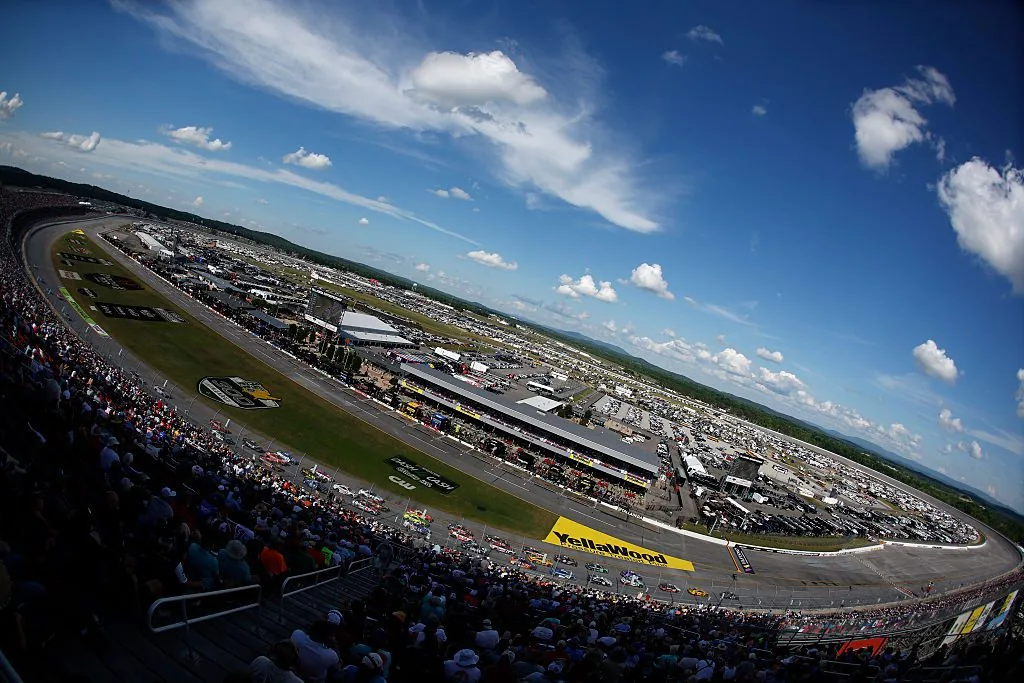
As verified on August 13, 2026, the NASCAR Cup Series map contains 29 distinct track layouts when the Bowman Gray Clash, Dover All-Star Race and both Charlotte configurations are included. The championship season consists of 36 points-paying races across 27 of those layouts; Bowman Gray and Dover are exhibition-only Cup stops. Charlotte's 1.5-mile oval and its Roval share one facility but count as different racing layouts. San Diego's June street race has already been completed. Use the live NASCAR schedule for current dates, while the table below serves as a stable location, size and type reference.
What the 2026 NASCAR tracks map includes
The number depends on what “track” means. NASCAR's directory uses a layout-based count and says the Cup Series races on 29 different tracks, specifically treating Charlotte Motor Speedway and the Charlotte Motor Speedway Roval as separate. They occupy the same Concord, North Carolina property, so the same list represents 28 physical facilities. This guide follows NASCAR's layout method because the oval and Roval ask entirely different questions of a driver and crew chief.
| 2026 Cup measure | Count | What it means |
|---|---|---|
| Points-paying races | 36 | Every championship race from the Daytona 500 through Homestead-Miami |
| Points-paying layouts | 27 | Unique configurations used by those 36 races |
| Exhibition-only layouts | 2 | Bowman Gray for the Clash and Dover for the All-Star Race |
| Total layout entries | 29 | The complete Cup map used in this article |
| Physical facilities | 28 | Charlotte's oval and Roval occupy one property |
Repeat visits do not add dots to the map. Daytona, EchoPark, Darlington, Bristol, Kansas, Las Vegas, Phoenix, Talladega and Martinsville each appear more than once on the points schedule, but each venue or layout is listed once here. Conversely, a single Charlotte address creates two entries because the May race uses the oval and the October race uses the infield-and-oval Roval.
The status column in the master table separates points from exhibition. That distinction matters when checking standings: the Clash and All-Star Race can carry prestige and prize money without adding championship points. For completed classifications, use the site's NASCAR results; the map is intended to answer where and what kind of track, not to imitate a live race center.
Complete 2026 NASCAR Cup track locations and sizes
The table is ordered by each layout's first Cup appearance in 2026, not alphabetically. A second visit later in the season stays on the same row. “Points” means the race contributes to the 36-race championship; the two exhibition labels identify the Clash and All-Star Race. Length is one lap of the configuration NASCAR uses in 2026, not the scheduled race distance.
| # | Track or layout | Location | Length | Track type | 2026 Cup status |
|---|---|---|---|---|---|
| 1 | Bowman Gray Stadium | Winston-Salem, NC | 0.25 mi | Stadium short oval | Exhibition: Clash |
| 2 | Daytona International Speedway | Daytona Beach, FL | 2.50 mi | Superspeedway | Points |
| 3 | EchoPark Speedway | Hampton, GA | 1.54 mi | Drafting oval | Points |
| 4 | Circuit of The Americas | Austin, TX | 2.40 mi | Road course | Points |
| 5 | Phoenix Raceway | Avondale, AZ | 1.00 mi | One-mile oval | Points |
| 6 | Las Vegas Motor Speedway | Las Vegas, NV | 1.50 mi | Intermediate oval | Points |
| 7 | Darlington Raceway | Darlington, SC | 1.366 mi | Egg-shaped intermediate | Points |
| 8 | Martinsville Speedway | Martinsville, VA | 0.526 mi | Short oval | Points |
| 9 | Bristol Motor Speedway | Bristol, TN | 0.533 mi | Concrete short oval | Points |
| 10 | Kansas Speedway | Kansas City, KS | 1.50 mi | Intermediate oval | Points |
| 11 | Talladega Superspeedway | Talladega, AL | 2.66 mi | Superspeedway | Points |
| 12 | Texas Motor Speedway | Fort Worth, TX | 1.50 mi | Intermediate oval | Points |
| 13 | Watkins Glen International | Watkins Glen, NY | 2.45 mi | Road course | Points |
| 14 | Dover Motor Speedway | Dover, DE | 1.00 mi | Concrete one-mile oval | Exhibition: All-Star |
| 15 | Charlotte Motor Speedway oval | Concord, NC | 1.50 mi | Intermediate oval | Points |
| 16 | Nashville Superspeedway | Lebanon, TN | 1.33 mi | Concrete intermediate | Points |
| 17 | Michigan International Speedway | Brooklyn, MI | 2.00 mi | Large intermediate oval | Points |
| 18 | Pocono Raceway | Long Pond, PA | 2.50 mi | Triangular large oval | Points |
| 19 | Qualcomm Circuit at Naval Base Coronado | Coronado, CA | 3.40 mi | Street course | Points |
| 20 | Sonoma Raceway | Sonoma, CA | 1.99 mi | Road course | Points |
| 21 | Chicagoland Speedway | Joliet, IL | 1.50 mi | Intermediate oval | Points |
| 22 | North Wilkesboro Speedway | North Wilkesboro, NC | 0.625 mi | Short oval | Points |
| 23 | Indianapolis Motor Speedway oval | Speedway, IN | 2.50 mi | Rectangular large oval | Points |
| 24 | Iowa Speedway | Newton, IA | 0.875 mi | Short oval | Points |
| 25 | Richmond Raceway | Richmond, VA | 0.75 mi | Short oval | Points |
| 26 | New Hampshire Motor Speedway | Loudon, NH | 1.058 mi | One-mile-style oval | Points |
| 27 | World Wide Technology Raceway | Madison, IL | 1.25 mi | Intermediate oval | Points |
| 28 | Charlotte Motor Speedway Roval | Concord, NC | 2.28 mi | Roval / road course | Points |
| 29 | Homestead-Miami Speedway | Homestead, FL | 1.50 mi | Intermediate oval | Points |
Three length details deserve care. NASCAR's 2026 Cup specification sheet lists the shortened competition layout at Circuit of The Americas as 2.40 miles, rather than the circuit's 3.41-mile full course. San Diego's temporary Qualcomm Circuit measured 3.40 miles. The October Charlotte event uses the 2.28-mile Roval: its official schedule lists 248.52 miles over 109 laps, which resolves to 2.28 miles per lap.
The type column describes how the track races, not only how long it is. EchoPark is physically a 1.54-mile oval but functions as a drafting track. Pocono and Indianapolis are each 2.50 miles, yet neither is grouped with Daytona in this guide because their shapes and racing demands are fundamentally different. Likewise, Dover and Phoenix are exactly one mile, sitting between NASCAR's official under-one-mile short-track definition and its greater-than-one-mile intermediate definition.
Market names can also differ from municipal locations. EchoPark is commonly called Atlanta although it sits in Hampton; World Wide Technology Raceway is promoted as St. Louis although the track is in Madison, Illinois; and the San Diego event ran in Coronado. Use the live 2026 NASCAR schedule to see repeat dates and the exact event order.
NASCAR track types explained: size does not tell the whole story
NASCAR's public definition starts with lap length: a short track is under one mile, while an intermediate is greater than one mile except for Daytona and Talladega, the two ovals traditionally called superspeedways. That framework is useful, but it is only a first layer. Surface, banking, corner radius, straightaway length and the rules package can make two equal-length tracks race nothing alike.
Short tracks and one-mile ovals
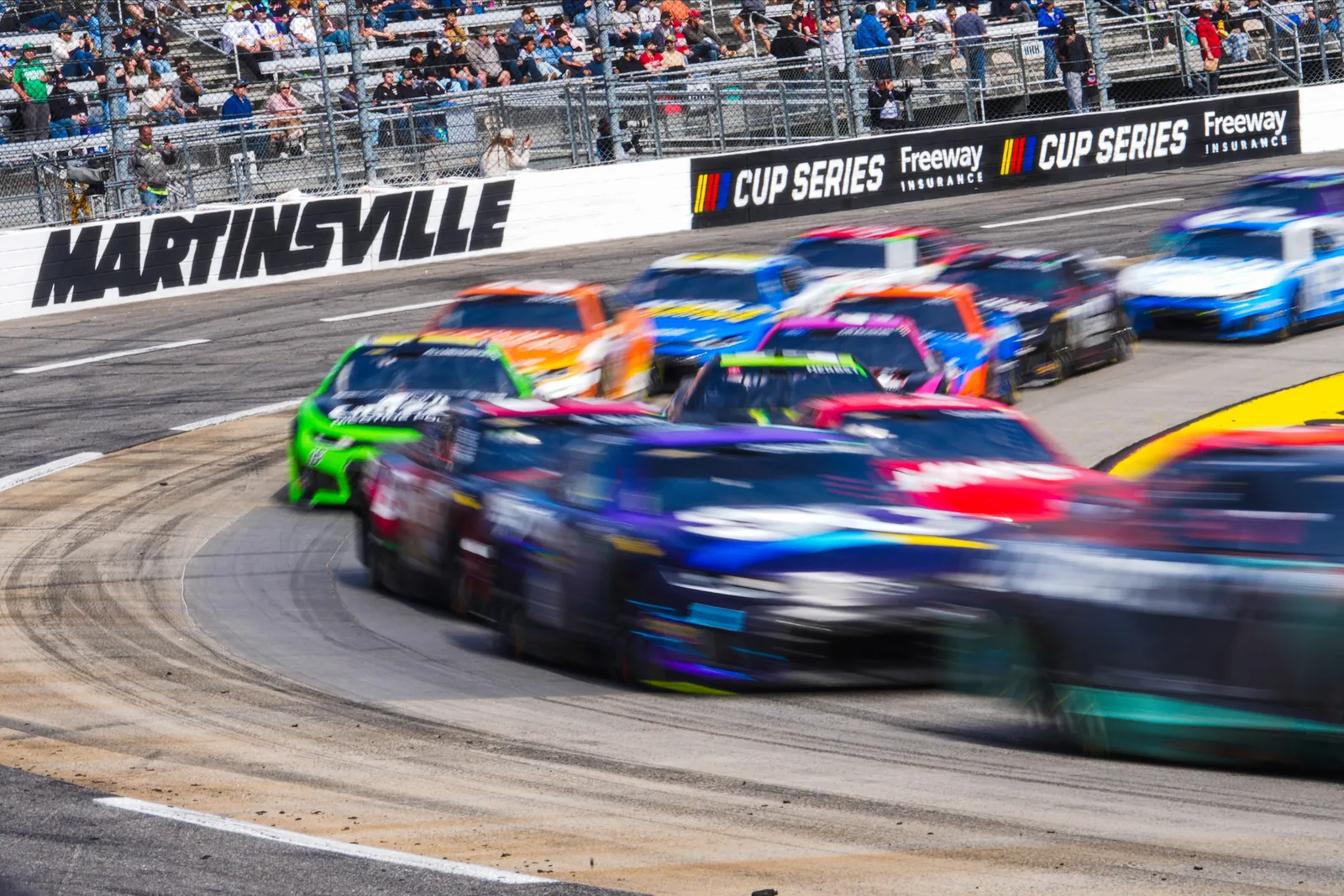
Martinsville, Bristol, Richmond and Iowa fit NASCAR's under-one-mile short-track definition. Their compact laps keep cars in traffic and magnify corner entry, braking, forward drive and pit-road position. At 0.526-mile Martinsville, long straights feed into tight turns; drivers must slow the car, rotate it and protect the rear tires while leaving enough drive off to complete a pass. The 2026 horsepower increase added another throttle-control variable. Contact may move a rival, but fender damage can cost the same short-run speed a driver was trying to gain.
Phoenix and Dover are exactly one mile, while New Hampshire is 1.058 miles. This guide labels them one-mile or one-mile-style ovals because NASCAR's simple public definitions say “less than” and “greater than” one mile. The label is descriptive, not a new official division. Dover's concrete, Phoenix's asymmetric layout and New Hampshire's flatter corners create separate setup problems despite their similar size.
Intermediate ovals, drafting tracks and superspeedways
Most ovals longer than one mile fall into NASCAR's intermediate group, but shape and surface still matter. Darlington's unequal ends and abrasive pavement do not behave like a smoother 1.5-mile oval; Pocono's three distinct corners do not behave like Indianapolis. At these venues, aerodynamic balance, clean air, tire falloff and long-run handling often determine whether a fast qualifying car remains fast through a fuel run.
EchoPark is the clearest warning against sorting only by size. It measures 1.54 miles, yet its steeper 28-degree banking and superspeedway-style rules configuration produce close drafting packs. Daytona and Talladega remain NASCAR's two traditional superspeedways. There, managing aerodynamic runs, manufacturer partners and the risk of a blocked lane can outweigh the isolated lap speed that matters elsewhere.
Road courses, a street course and the Roval
COTA, Watkins Glen and Sonoma are purpose-built road courses; San Diego used temporary streets and base roads; Charlotte's Roval joins an infield road section to portions of the oval. All make drivers turn both directions, attack braking zones and manage acceleration without an oval's repeating rhythm. Their pit cycles can also disguise track position: a team may surrender stage points by stopping early, then inherit the front when rivals pit at the break. Check the NASCAR schedule this weekend before applying a track-type expectation, because the exact layout matters as much as the facility name.
Longest, shortest and most unusual 2026 NASCAR tracks
“Largest NASCAR track” needs a unit and a scope. For this 2026 Cup map, the comparison is lap length of the race configuration—not acreage, grandstand capacity or total race distance. That distinction produces four clear answers.
| 2026 record | Track/layout | Lap length |
|---|---|---|
| Longest Cup layout overall | Qualcomm Circuit at Naval Base Coronado | 3.40 mi |
| Longest Cup oval | Talladega Superspeedway | 2.66 mi |
| Shortest including exhibitions | Bowman Gray Stadium | 0.25 mi |
| Shortest points-paying layout | Martinsville Speedway | 0.526 mi |
San Diego changes an answer that appears on older evergreen track lists. NASCAR's June 2026 tire briefing explicitly called the 3.4-mile, 16-turn Qualcomm Circuit the longest track on that year's schedule. Watkins Glen's 2.45 miles had previously supported the longest-road-course answer, but it was not the longest 2026 lap. Talladega remains the longest oval at 2.66 miles. At the other extreme, quarter-mile Bowman Gray hosted the non-points Clash, so Martinsville is the shortest layout that awards Cup championship points.
Equal length does not mean equal shape
Pocono and Daytona both measure 2.50 miles, yet that number hides their differences. Pocono has three unequal corners: Turn 1 carries 14 degrees of banking, the Tunnel Turn eight and Turn 3 six. Those corners were modeled after Trenton, Indianapolis and Milwaukee. A setup that helps one end may compromise another, while a clean exit onto Pocono's 3,740-foot frontstretch has an unusually large payoff. Daytona instead uses steep banking and pack drafting.
Darlington presents a different geometry problem. Its 1.366-mile egg shape resulted from building one end tighter to avoid a minnow pond. Drivers therefore cannot repeat exactly the same arc at both ends, and the outside wall is close enough that a black “Darlington Stripe” remains part of the track's vocabulary. Charlotte adds configuration rather than asymmetry: its May oval and October Roval share the facility but not the lap.
San Diego was unusual in another way: its 16 turns were laid out temporarily on and around Naval Base Coronado rather than at a permanent speedway. For the corner sequence, sightlines and event-specific access context, use the separate NASCAR San Diego track map guide. Keeping those details there prevents a nationwide comparison from becoming an incomplete copy of the dedicated local guide.
What changed on the NASCAR track map in 2026?
The 2026 map traded two 2025 Cup locations—the Chicago Street Course and Mexico City—for a different Chicago-area oval and a new Southern California street course. It also changed the roles of North Wilkesboro, Dover and Homestead-Miami. By August 13, the first four major venue changes had already produced completed Cup events; only the championship trip to Homestead remained ahead.
San Diego became a completed race, not a proposal
NASCAR held the Anduril 250 at Naval Base Coronado on June 21. The temporary Qualcomm Circuit measured 3.4 miles, contained 16 turns and staged the first major NASCAR event on an active military installation. Corey Heim passed Tyler Reddick during the final three laps and won by 10.365 seconds over Bubba Wallace. Post-race inspection was completed without issue, confirming Heim's first Cup victory in his 13th start.
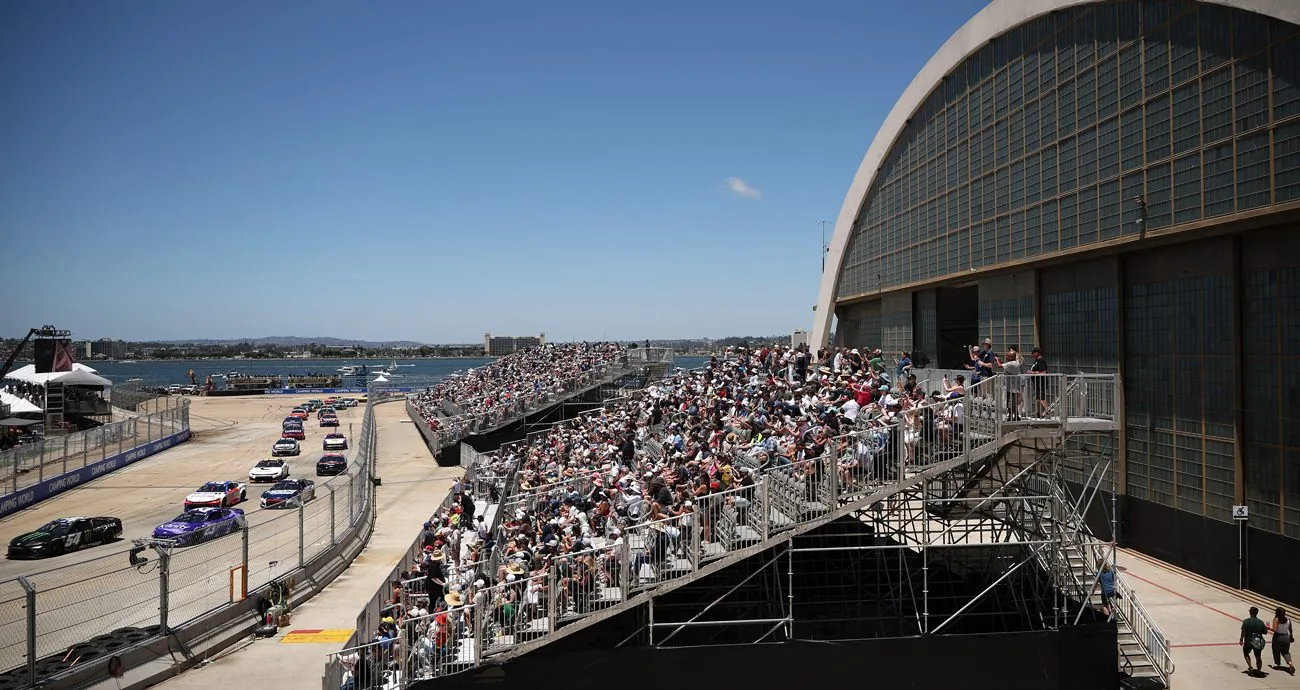
This nationwide guide stops at those map-level facts. The separate San Diego track map guide covers the corner sequence, viewing context and local layout in greater depth.
Traditional ovals returned in different roles
Chicagoland Speedway restored the Chicago market to a 1.5-mile oval in Joliet after the facility had last hosted NASCAR in 2019. The July 5 return ended with Chase Briscoe beating Christopher Bell by 0.276 seconds, and inspection confirmed Briscoe as the winner. That row must not be confused with the 2.2-mile downtown Chicago street circuit used from 2023 through 2025.
North Wilkesboro moved from three seasons of All-Star hosting to its first points-paying Cup race since 1996. On July 19, Joey Logano led 323 of 450 laps at the 0.625-mile oval and retained the advantage over Denny Hamlin through the final green-flag pit cycle. Meanwhile, the All-Star Race shifted to Dover for the first time, making the one-mile concrete track an exhibition-only Cup entry on this year's table.
Homestead closes the season; Mexico City is absent
Homestead-Miami is scheduled to host the November 8 championship race, returning the finale to the 1.5-mile South Florida oval under NASCAR's rotating championship model. The 2026 Cup schedule has no international stop after the series' 2025 Mexico City debut. Those changes matter when comparing maps year to year: a 2025 graphic will show Mexico and downtown Chicago, while the verified 2026 version needs Coronado, Chicagoland, North Wilkesboro and Dover's new exhibition role. Check NASCAR results for official classifications as the remaining season is completed.
Which NASCAR tracks are outside the 2026 Cup map?
The Cup table above is a map of the 2026 Cup season, not every facility where NASCAR-sanctioned racing happens. The O'Reilly Auto Parts Series and Craftsman Truck Series share much of the Cup footprint, but their schedules also create stand-alone weekends and introduce different kinds of circuits. Across those two national series, four distinct 2026 venues sit outside this article's Cup table.
| Series | 2026 venues not in the Cup table | What they add |
|---|---|---|
| O'Reilly Auto Parts Series | Rockingham Speedway | A historic North Carolina oval and a national-series weekend without Cup |
| Craftsman Truck Series | Grand Prix of St. Petersburg; Rockingham Speedway; Lime Rock Park; Lucas Oil Indianapolis Raceway Park | A temporary street circuit, a shared Rockingham stop, a road course and a short oval |
Rockingham is in both rows, so it is counted once in the four-venue combined total. Fans can use the site's O'Reilly Series results and Truck Series results to follow what happened at those stops. One easy source of confusion is Portland: the dated 2026 schedules place Portland International Raceway in ARCA West, not on the O'Reilly national-series calendar.
Regional NASCAR makes the map much larger
NASCAR describes a regional footprint of almost 100 tracks across ARCA, the Whelen Modified Tour and local racing. That world reaches well beyond the Cup map, from Toledo, Berlin and Elko to the dirt miles at the Illinois State Fairgrounds and DuQuoin. Portland also belongs in this broader 2026 regional view. Those venues vary by regional division and should not be added to the 29-layout Cup count. For a current window into that separate level, use the ARCA Menards Series results. In short, “all NASCAR tracks” needs a series qualifier: Cup, national series and regional racing are three different map scopes.
How fans should use the map for race-weekend planning
Use the table as a first filter, then confirm the live event details before booking. Location tells you the travel market, while length and type suggest the style of racing. None of those fields replaces the current date, start time, ticket rules, weather outlook or event-specific access information.
Choose by racing style
Short tracks are the natural choice for fans who value braking battles, traffic and frequent close contact. Daytona, Talladega and drafting-style EchoPark favor large packs and rapid momentum changes. Road and street circuits spread the action across multiple braking zones, so the selected grandstand or viewing area matters more. Do not assume two tracks of similar length will race alike: banking, shape, surface and available racing grooves can change the experience completely.
Verify the exact layout and live event status
Several names need a second look. Charlotte's May oval race and October Roval race use the same property but different configurations. EchoPark Speedway is the current name of the Atlanta-area venue in Hampton, so older directions may still say Atlanta Motor Speedway. “Indianapolis” in the Cup table means the Indianapolis Motor Speedway oval, not Lucas Oil Indianapolis Raceway Park. San Diego's Qualcomm Circuit was a temporary 2026 course, not a permanent public-road facility.
Before leaving home, check these six items:
- Series: Cup, O'Reilly, Truck or regional.
- Exact track and layout.
- Points race or exhibition.
- Event date and start time.
- Latest schedule or completed result.
- Official facility map for gates, parking and amenities.
The site's NASCAR weekend schedule helps confirm the active series and event, while the NASCAR TV schedule provides the latest viewing plan. Finally, remember that a facility map shows how spectators move around the property; this article's layout data describes where the cars race. Check both when attending in person.
About the author
NASCAR Schedule Editorial Team
The NASCAR Schedule editorial team turns verified schedules, timing and scoring, official announcements and race-weekend context into direct answers for fans.
View all articles by this author →Join the discussion
Comments
Sign in with Google to comment. Keep it race-focused; new comments are reviewed before publication.
Loading comments…