NASCAR Cars Through the Years: All Seven Generations Explained
A generation-by-generation history of NASCAR Cup cars, from production-based Gen 1 machines through modified chassis, aero development, the Car of Tomorrow, Gen 6 and today's Next Gen platform.
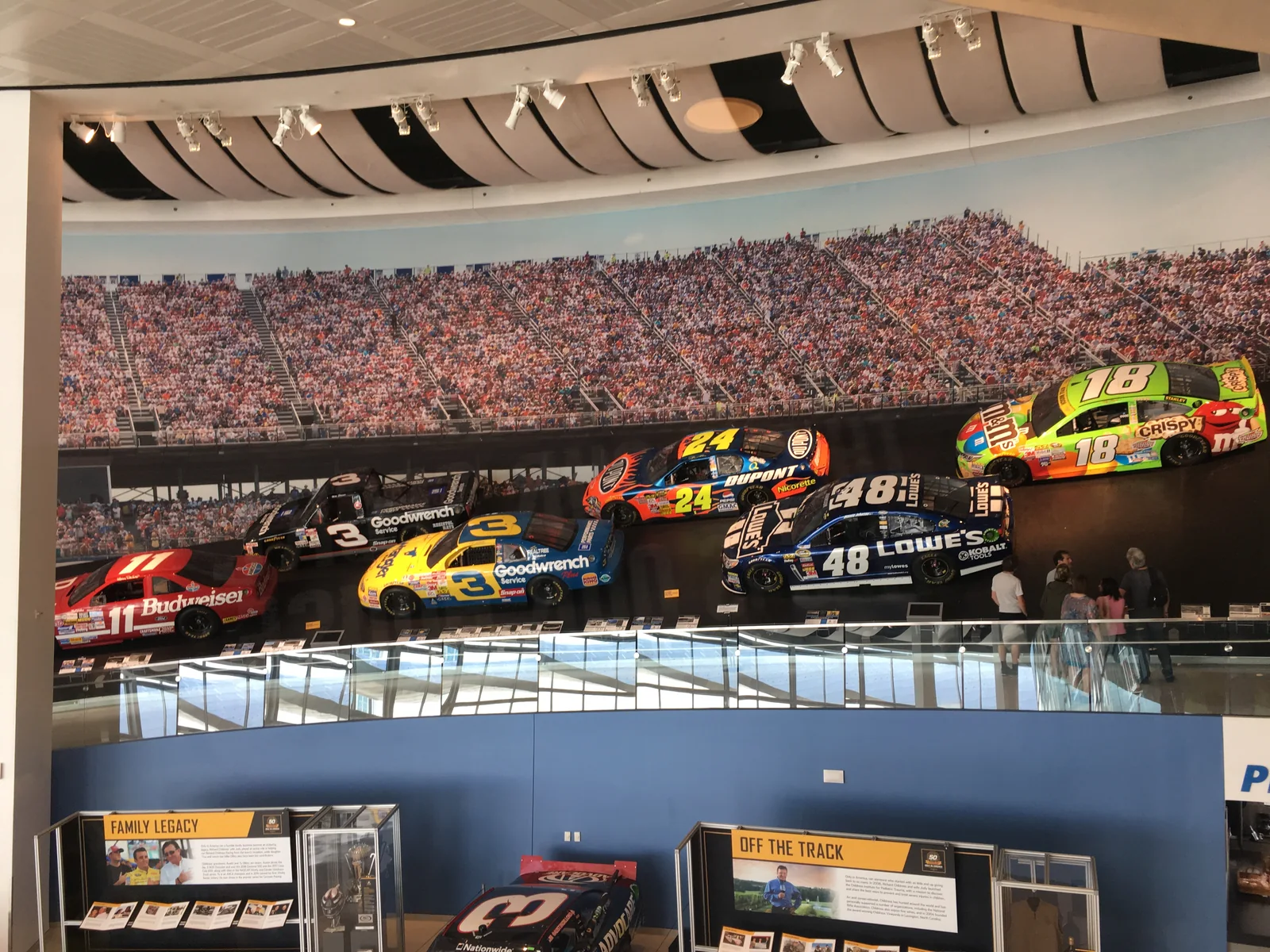
NASCAR's premier-series cars are grouped into seven generations: Gen 1 (1948–1966), Gen 2 (1967–1980), Gen 3 (1981–1991), Gen 4 (1992–2006), Gen 5 (2007–2012), Gen 6 (2013–2021) and Gen 7, the Next Gen car (2022–present). Across that timeline, the machine changed from a production body and frame prepared for competition into a purpose-built race car assembled around standardized, vendor-supplied components.
Those dates are useful guideposts, not a claim that every panel, engine rule or safety feature changed on New Year's Day. NASCAR revised each platform throughout its life, while manufacturers introduced different body models. The generation labels describe major development and design eras in the top Cup lineage; they do not automatically classify every Xfinity, Truck, ARCA or regional car. Here is what made each Cup generation distinct, why the changes happened and which ideas survived into today's car.
NASCAR car generations at a glance
The shortest way to read NASCAR car evolution is to follow what became less “stock” and what became more controlled. Early teams started with production structures. Later teams built dedicated chassis, shaped bodies for airflow and eventually moved to a modular platform with many parts supplied by approved vendors. Safety, manufacturer identity, cost and the quality of racing repeatedly pulled that development in different directions.
| Cup generation | Years | Defining step |
|---|---|---|
| Generation 1 | 1948–1966 | Production body and frame prepared for racing |
| Generation 2 | 1967–1980 | Modified or purpose-built frame beneath a stock body |
| Generation 3 | 1981–1991 | Downsized 110-inch wheelbase and continued factory body panels |
| Generation 4 | 1992–2006 | Highly modified bodies and intensive aerodynamic development |
| Generation 5 | 2007–2012 | Safety-led common platform known as the Car of Tomorrow |
| Generation 6 | 2013–2021 | Distinct manufacturer body styling returns |
| Generation 7 | 2022–present | Modular Next Gen architecture and vendor-supplied components |
What counts as a new generation?
NASCAR's labels describe major development and design breaks, not every rules update. A rear wing changing to a spoiler did not create a new generation. Neither did a manufacturer replacing one nameplate with another. A generation can contain years of inspection changes, safety additions and aerodynamic revisions while retaining its central architecture.
That distinction also explains why “stock car” changes meaning across the table. The earliest cars carried literal production bodies and frames. Today's car remains connected to Chevrolet, Ford and Toyota through manufacturer-specific exterior design and front-engine V8 racing, but it is not converted from a showroom vehicle. The broader meaning of a stock car is now about regulated silhouette, heritage and competition category as much as production hardware.
Finally, the table applies to NASCAR's premier-series lineage. Other NASCAR divisions adopted major technologies on their own schedules and use different cars. Calling an Xfinity or Truck Series machine “Gen 7” just because it races during the Next Gen era can therefore create a false equivalence. For this guide, every generation means the top division now called the NASCAR Cup Series.
Generation 1 (1948–1966): showroom cars become race cars
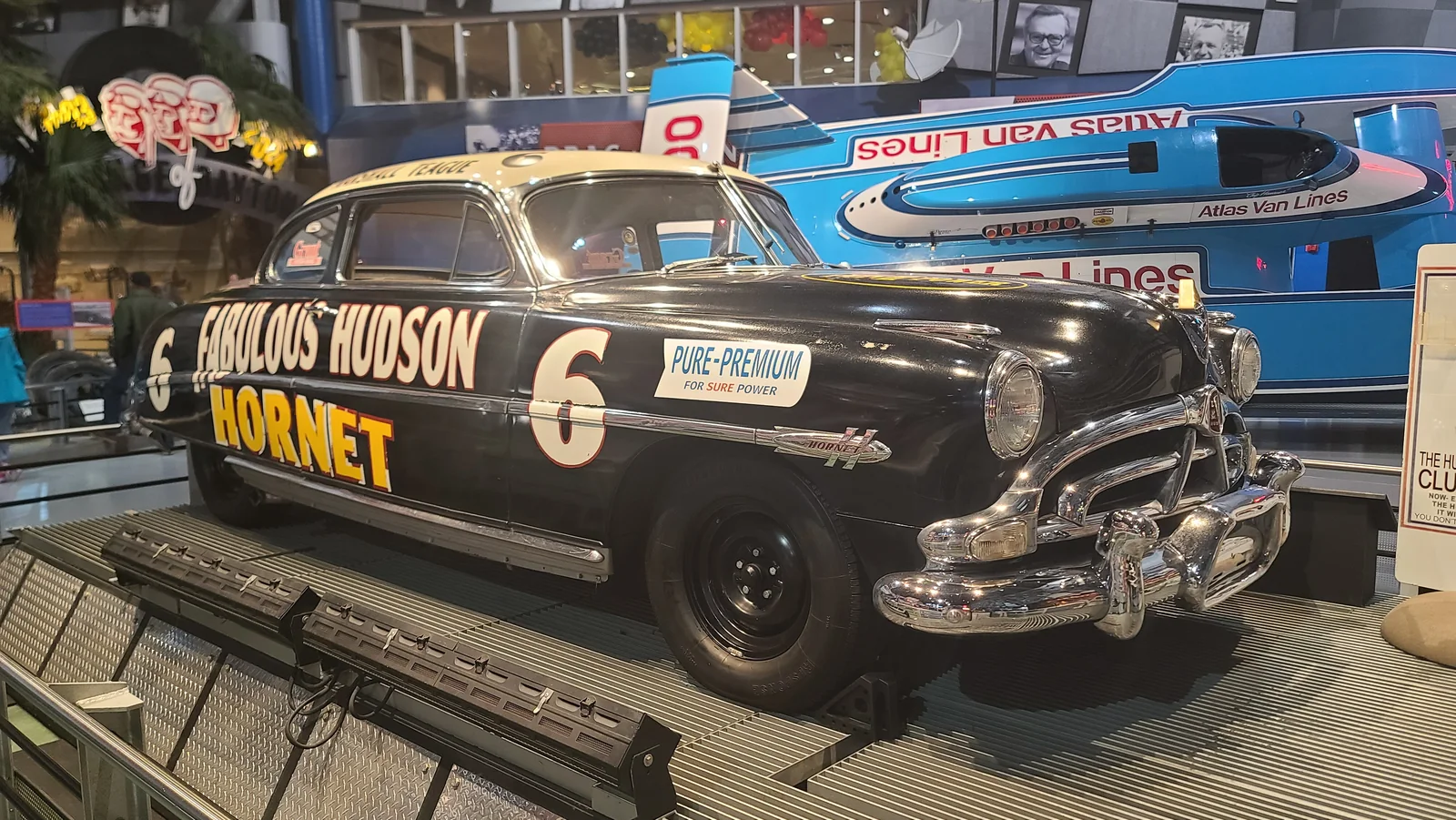
Generation 1 was the era in which “stock” came closest to meaning the car a customer could buy. NASCAR describes these machines as using a strictly stock frame and body. Their proportions, chrome, rooflines and door openings were recognizably those of postwar American sedans and coupes, not a racing silhouette created in a wind tunnel.
Strictly stock did not mean untouched
Preparing a street-based car to survive a race still required rules and reinforcement. NASCAR's generation history lists doors secured shut, seat belts and a heavy-duty rear axle among the period's defining measures. Drivers entered through the window once the door could no longer function normally. Tires, brakes, cooling and suspension also had to endure surfaces and distances that everyday commuting never demanded.
The first Strictly Stock race illustrates both accessibility and enforcement. Jim Roper drove the borrowed 1949 Lincoln he would race to the old Charlotte Speedway, a three-quarter-mile dirt track, for the June 19, 1949 event. Glenn Dunaway crossed the finish line first but failed inspection because of rear springs that did not comply; Roper was declared the winner. The story cuts through the romantic shorthand. These were familiar automobiles, yet NASCAR already needed technical limits to define what preparation remained legal.
Why Hudson became an early symbol
The Hudson Hornet's low-slung production design made it a natural visual emblem of the era, and NASCAR credits Hudson as the first manufacturer to give factory support to its racing teams. That support foreshadowed the lasting “win on Sunday” relationship between manufacturers and the sport. A successful racing model could still look unmistakably like the vehicle advertised to buyers.
Gen 1 also raced in a landscape far less uniform than today's NASCAR calendar. Dirt ovals, paved tracks and road-style venues demanded durability from large production-derived cars. By the mid-1960s, however, changing road-car construction and higher racing speeds made literal stock frames a limiting idea. Ford's 1965 Galaxie is identified by NASCAR as the brand's last stock-chassis entry before unibody production models and safety needs helped open the door to purpose-built race frames.
Generation 2 (1967–1980): modified frames and the superspeedway age
Generation 2 kept a recognizable production body but allowed a modified, increasingly purpose-built frame underneath it. That structural separation was the decisive break from Gen 1. It gave builders more freedom to create a car that could survive competition while the outside still carried the identity of a Fairlane, Charger, Torino or Monte Carlo.
Why the stock frame stopped being enough
Road-car construction was changing. NASCAR's official evolution history uses the Ford Fairlane as the turning-point example: its production unibody did not provide the conventional separate frame teams had previously prepared, so NASCAR permitted purpose-built race chassis for safety. The solution did more than accommodate one Ford. It established the idea that a NASCAR chassis could be a specialized structure rather than a reinforced foundation lifted directly from the dealership product.
Independent expertise followed. Holman-Moody, Banjo Matthews and Hutchenson-Pagan built chassis for teams, and the work became its own competitive craft. NASCAR's Hall of Fame material estimates that Matthews supplied at least half the Cup field during the 1970s. His cars were constructed on a surface plate to make dimensions repeatable, turning knowledge once held inside an individual garage into a powerful specialist business.
The results made the transition visible. Mario Andretti won the 1967 Daytona 500 in a Holman-Moody Ford Fairlane, while Donnie Allison won at Martinsville that year in a car Leonard Wood had modified from a 1966 Galaxie frame. These were not identical kit cars. Teams and builders still interpreted the rules, selected components and found advantages, but the structural baseline was moving decisively away from “drive it in, strip it and race it.”
Aerodynamics becomes a headline
Faster, larger speedways increased the value of reducing drag and controlling lift. Long noses, carefully shaped rooflines and, in famous cases, the towering rear wings of the Dodge Daytona and Plymouth Superbird made aerodynamic development impossible for fans to miss. Pete Hamilton's 1970 Daytona 500 victory in a Superbird remains a vivid example, though winged cars were only one chapter of a 14-season generation.
The broader Gen 2 legacy was balance. Bodies still sold the connection to American road cars, while the hidden structure became safer, more consistent and more specialized. That division—brand identity outside, racing engineering beneath—would shape every later generation. Readers comparing landmark machines can use the site's NASCAR results pages for the outcomes, while remembering that a famous winning model represents one rules moment inside a long, evolving era.
Generation 3 (1981–1991): downsizing to a 110-inch wheelbase
Generation 3 made the Cup car shorter between the axles, adopting the 110-inch wheelbase that followed America's downsized production models. The new dimension arrived for 1981 and gave the era an immediate visual break from the long, broad Gen 2 machines. It did not reverse the move toward purpose-built racing structures; it resized and refined that idea.
A smaller silhouette with factory identity
NASCAR's evolution history says teams still purchased body panels through manufacturers. That preserved a material link to nameplates such as the Buick Regal, Ford Thunderbird, Chevrolet Monte Carlo and Pontiac Grand Prix even though the cars underneath were dedicated racing machines. The 1981 Regal became the first 110-inch-wheelbase model driven to the premier-series championship, offering a neat marker for the new era.
Downsizing was partly an effort to keep the cars visually relevant as Detroit's road vehicles became smaller. Yet resemblance never meant equivalence. The suspension, cage, drivetrain installation, interior and setup existed for competition, and builders continued to exploit the dimensional rulebook. A fan could identify the brand from the roof and body shape while knowing the machine was no longer a modified road car.
Speed makes airflow a bigger problem
Gen 3 body development became increasingly sensitive to airflow. NASCAR's own gallery highlights the Ford Thunderbird's qualifying records and General Motors' extended rear glass and shorter deck treatment on the Pontiac Grand Prix Aero Coupe. Small changes to the greenhouse, rear window and spoiler could influence how cleanly air stayed attached, how much drag the car produced and how stable it felt at speed.
Bill Elliott supplied the era's most famous number: 212.809 mph in Talladega qualifying on April 30, 1987, before restrictor plates were implemented at the largest superspeedways. That is a single qualifying lap, not a normal race average or the speed of every Gen 3 car. Its value here is evidence of how far chassis, engine and aerodynamic development had traveled since the showroom-based 1950s.
By the end of 1991, the category still used manufacturer-linked panels, but competition increasingly rewarded shapes optimized around templates and air rather than literal road-car construction. The next generation would make that priority unmistakable. Championship tables and today's NASCAR standings organize sporting performance; generation history explains the hardware context behind it. Keeping those two records separate prevents a dominant season from being mistaken for proof that every car in an era shared identical performance.
Generation 4 (1992–2006): wind tunnels and highly shaped bodies
Generation 4 turned the Cup car's exterior into an intensely developed aerodynamic tool. NASCAR defines the 1992–2006 era by highly modified bodies, extensive wind-tunnel work and molded fiberglass bumper, nose and tail pieces based on production counterparts. A Chevrolet Monte Carlo or Ford Taurus remained identifiable, but the racing surface was shaped to satisfy templates and make speed.
From factory panel to controlled silhouette
The road-car relationship became more visual than structural. Roofline, window openings, grille graphics and model-specific cues told fans which nameplate they were watching. Under those cues, teams fabricated and massaged sheet metal within NASCAR's inspection limits. The result was not one frozen shape for 15 years: models came and went, rules changed, and organizations continually refined how air crossed the nose, greenhouse, rear quarters and spoiler.
NASCAR's official timeline uses the 1995 Monte Carlo as an era marker and notes Jeff Gordon won four championships in the model. It also identifies the 1998 Taurus as the first four-door stock-car model approved in the modern era, even though the racing body did not acquire functioning rear doors. That example captures Gen 4 perfectly: the badge and broad outline could follow the showroom market while the race car remained a two-side-window, purpose-built machine.
Why fractions of an inch mattered
A small body change could alter front downforce, rear stability, cooling drag or the disturbed air another car encountered. Wind tunnels allowed teams to measure those effects rather than rely only on track feel. Fabricators then tried to reproduce the quickest legal form across a fleet, and NASCAR's templates defined the boundary. The contest extended from the race track into engineering departments and body shops.
That freedom rewarded accumulated knowledge. A leading team could retain years of notes, fixtures, skilled fabricators and tunnel data, then improve a car between its spring and fall appearances at the same track. It also created a familiar officiating tension: manufacturers and teams argued that a rival's approved nose, spoiler or body shape held an advantage, while NASCAR tried to maintain parity without erasing identity.
Dodge's 2001 return with the Intrepid and the Ford Fusion's 2006 arrival show that Gen 4 accommodated major model changes without becoming a new generation each time. Race wins in the NASCAR results can show which badge prevailed, but not prove that body shape alone caused the outcome; engines, chassis setup, tires, pit work and drivers remained inseparable. By 2007, NASCAR chose a more common design direction intended to reduce track-specific fleets and place safety at the center.
Generation 5 (2007–2012): the Car of Tomorrow prioritizes safety
Generation 5 was NASCAR's safety-led Car of Tomorrow, usually shortened to COT. Its 2007 arrival shifted Cup away from the highly individualized Gen 4 body-building contest toward a more common body and chassis concept. The new direction aimed to improve protection, reduce the need for different cars tailored to different tracks and tighten the performance box across manufacturers.
A safety program, not just a new shape
The COT grew out of NASCAR's Research and Development Center and a broader safety effort. NASCAR says it was designed to improve frontal-impact protection, while energy-absorbing foam and track-barrier work advanced alongside the car. Drivers later cited more cockpit room and improved impact protection. That system view matters: no race car is crash-proof, and safety depends on restraints, seats, helmets, chassis structure, barriers, medical response and continued learning together.
The outside made the change obvious. The taller, boxier car used a front splitter held by visible braces and initially carried a rear wing. Its common form reduced manufacturer distinction compared with the outgoing bodies. The design supplied teams with aero adjustment tools, but it also changed how the car responded in traffic and demanded a new setup vocabulary. Teams that had mastered Gen 4 could not simply transfer every body and handling note.
The Car of Tomorrow changed during its own era
“COT” does not mean one untouched specification from 2007 through 2012. NASCAR replaced the rear wing with a traditional spoiler beginning at Martinsville on March 27, 2010. Later nose and splitter treatments also softened the earliest visual signature. Those revisions remained Gen 5 because the central platform and safety philosophy persisted.
Reception was complicated. Drivers and fans criticized the looks and, at times, the racing behavior; NASCAR's own retrospective coverage records those objections. At the same time, the safety advances became part of the foundation carried into Gen 6. It is therefore too simple to call the COT either a failure or an unqualified triumph. Its common body weakened showroom identity, yet its safety work and more controlled architecture changed what the sport expected from every future Cup car.
The final Gen 5 season was 2012. A new car arrived in 2013 with manufacturer-specific styling, but NASCAR did not discard the earlier safety lessons. That pattern repeats throughout this history: a generation can be replaced because one goal needs rebalancing while its strongest ideas remain. Fans using the current NASCAR TV schedule see later hardware, but familiar splitters, inspection controls and safety-first development all carry part of the COT's legacy.
Generation 6 (2013–2021): manufacturer identity returns
Generation 6 restored a clear visual difference among Chevrolet, Ford and Toyota while retaining and extending the preceding car's safety foundation. Introduced in 2013, its bodies brought model-specific lines back to the nose, flanks and rear. A fan could distinguish a Chevrolet SS, Ford Fusion and Toyota Camry by shape rather than relying mainly on grille and headlight graphics.
Distinct bodies inside a parity process
More identity did not mean manufacturers could submit any shape they wanted. NASCAR and the automakers developed the cars together, comparing aerodynamic targets and using common areas to control performance. At launch, manufacturer-produced body panels were individually stamped for verification, with the carbon-fiber rear deck lid as the stated exception. NASCAR then used templates—and later more advanced optical inspection—to police how teams assembled and refined those surfaces.
The approach created a deliberate tension. Chevrolet, Ford and Toyota needed enough styling latitude to make their products recognizable, but no approved nose or greenhouse could be allowed to deliver a permanent competitive gift. Teams still chased tiny assembly and aerodynamic gains. Manufacturer identity had returned; unrestricted body development had not.
Safety carried forward, rules kept changing
Gen 6 did not start from zero. NASCAR said it took safety and competition lessons from the Car of Tomorrow. New forward and center roof bars strengthened the roof structure, and larger roof flaps aimed to reduce the chance of an airborne car. That continuity is why treating Gen 5 as merely a discarded experiment misses an important part of the development chain.
Across nine seasons, Gen 6 changed substantially. Chevrolet moved from SS to Camaro-based bodies, Ford shifted from Fusion to Mustang, and Toyota updated the Camry shape. NASCAR also revised spoilers, splitters, ride height, downforce and engine packages for different tracks and seasons. Those were important performance changes, but they did not replace the core chassis/body generation. Comparing yearly race results or Cup standings therefore requires the specific season's rules context, not just the label “Gen 6.”
The platform was originally due to give way after 2020. COVID-19 disrupted Next Gen development and testing, delaying the new car by one year, so Gen 6 completed a final season in 2021. NASCAR's current historical timeline defines the era as 2013–2021—not “2013–present,” as some older galleries still display. The extra year did not create Gen 6.5; it extended a mature architecture until the much larger technical reset was ready.
Generation 7 (2022–present): Next Gen resets the architecture
The Next Gen car is the deepest Cup Series hardware reset in this seven-generation story. It debuted in competition in 2022 after the pandemic pushed the program back one year. Although fans often call it “Gen 7,” NASCAR's official product name is Next Gen. It remains the current Cup platform as of August 19, 2026.
Modular construction and modernized running gear
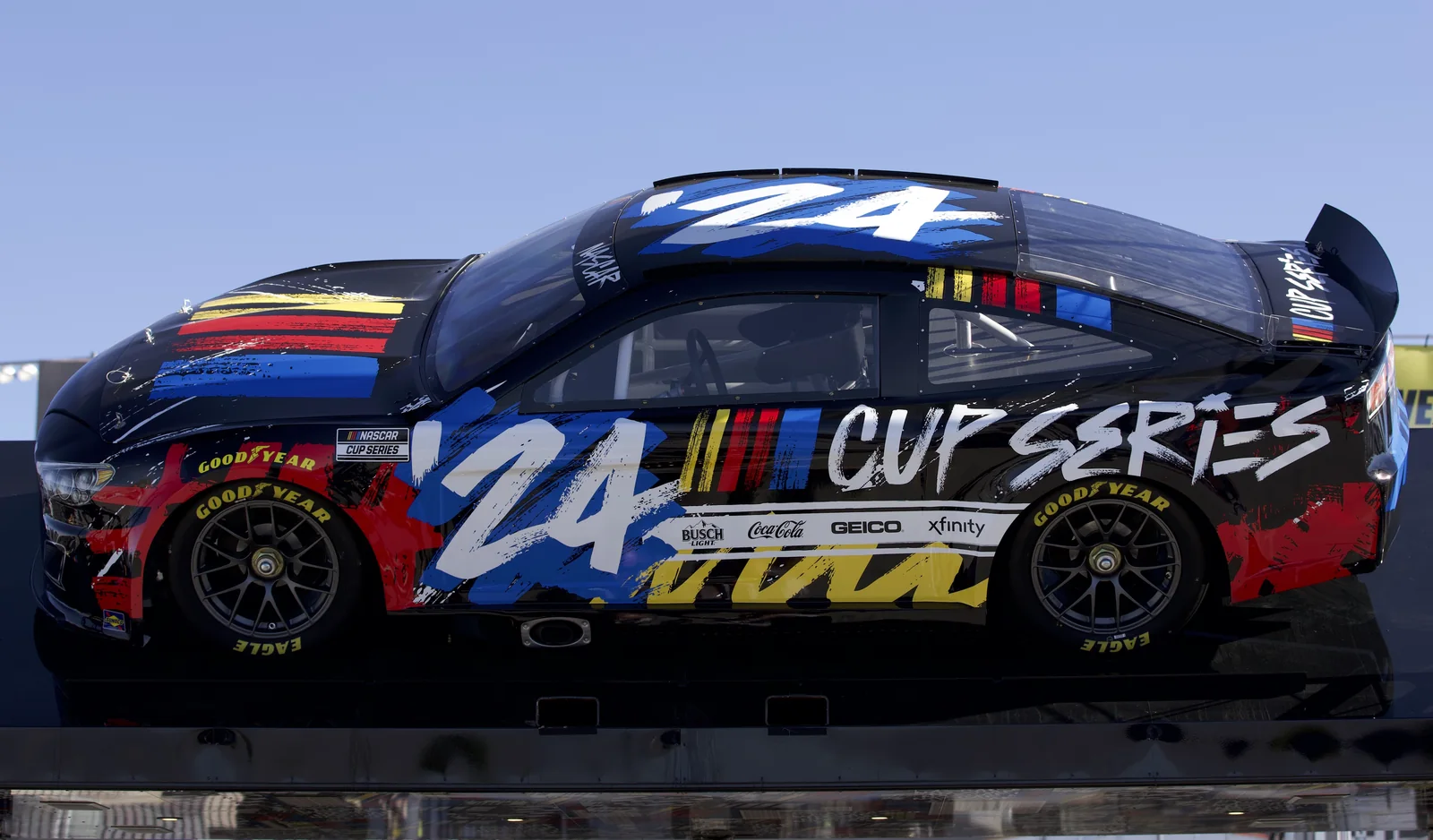
The car still has a steel-tube center structure, but bolt-on front and rear clips make damaged areas more serviceable. Its flange-fit composite body is symmetrical rather than deliberately offset, while Chevrolet, Ford and Toyota retain recognizable model-specific surfaces. A sealed underwing and rear diffuser manage airflow beneath the vehicle. That combination makes the car more standardized in key dimensions without making every manufacturer's body visually identical.
The mechanical changes are even easier to spot. A five-speed sequential transaxle replaced the traditional four-speed H-pattern transmission and separate rear gearing. Independent rear suspension replaced the solid rear axle and removed the old track-bar adjustment. Rack-and-pinion steering, larger brakes, wider tires and 18-by-12-inch forged-aluminum wheels with one center-locking lug moved the package away from the architecture that had defined generations four through six.
What changed—and what remained NASCAR
Under those modern systems, an important thread survives: the Cup car remains front-engined and uses a naturally aspirated, fuel-injected 358-cubic-inch V8. NASCAR's original specification sheet deliberately listed horsepower and spoiler configuration according to track type and size. Consequently, one advertised horsepower figure cannot describe the car at every circuit or in every rules period. The platform may support later technical evolution, but its transaxle's capacity to accommodate future electrification does not mean today's Cup car is a hybrid.
Next Gen was also intended to concentrate development around setup, driver input and manufacturer styling while using more common, supplier-produced components. That goal should not be confused with guaranteed parity or cheap racing. Teams still find performance through engineering, preparation and execution, and the platform has continued to receive safety and competition updates since its launch.
For viewers, 2022 is therefore the clean dividing line. Footage through the 2021 season shows Gen 6; races from the 2022 Clash onward show Next Gen unless a historic car is being demonstrated. The current NASCAR calendar tells you where this generation races, while the NASCAR TV schedule shows where to watch it. Future rule changes may alter parts or packages, but they should not be called an eighth generation unless NASCAR formally establishes a new platform.
About the author
NASCAR Schedule Editorial Team
The NASCAR Schedule editorial team turns verified schedules, timing and scoring, official announcements and race-weekend context into direct answers for fans.
View all articles by this author →Join the discussion
Comments
Sign in with Google to comment. Keep it race-focused; new comments are reviewed before publication.
Loading comments…