NASCAR's 2026 Wet-Weather Tire Rule: When Teams Can Choose Slicks
A fan-first decision guide to NASCAR's September 2026 wet-weather oval rule, the New Hampshire trigger, team tire calls, pit-road ordering, approved tracks and strategic consequences.
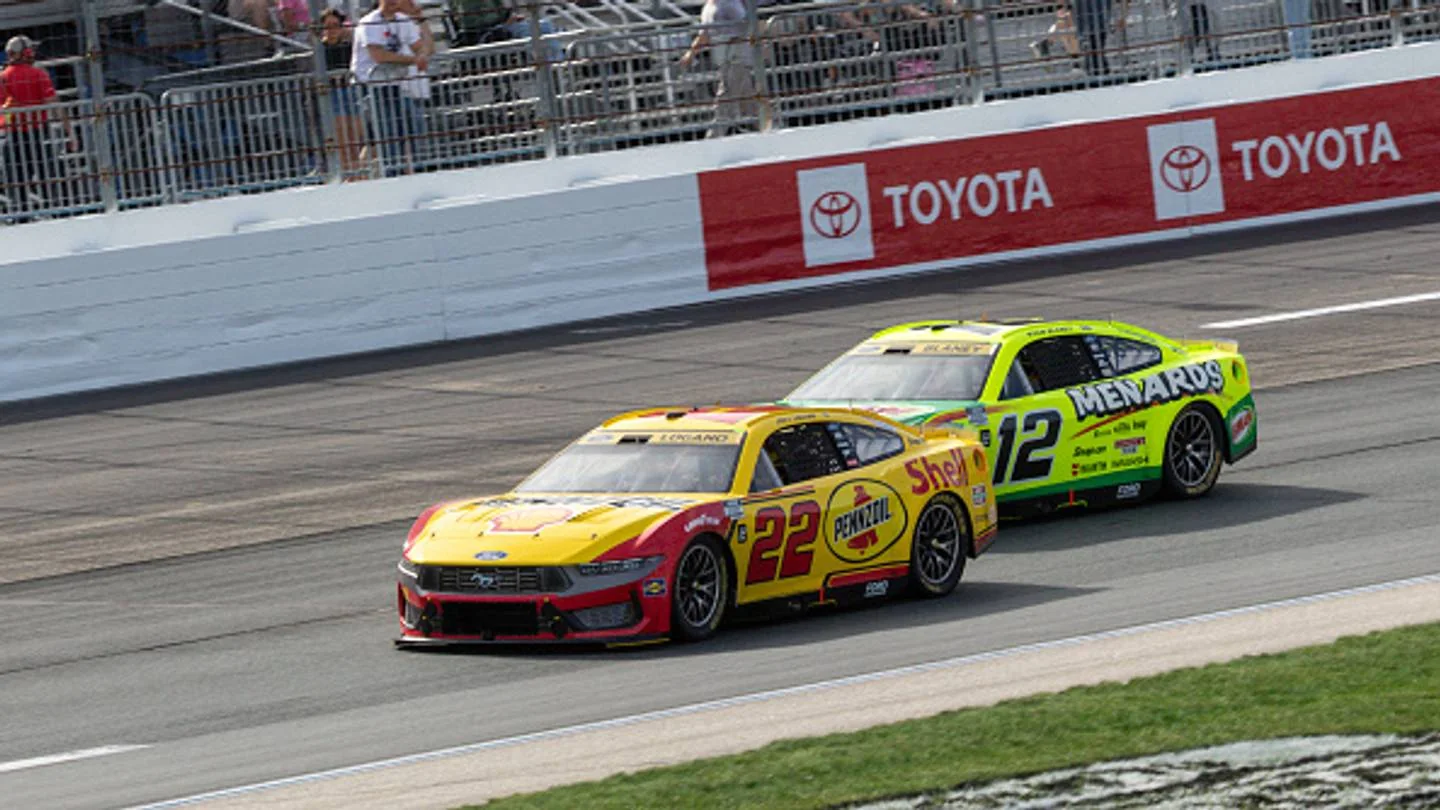
NASCAR changed its wet-weather oval tire procedure on September 16, 2026, allowing teams at approved ovals to decide when to switch between wet-weather tires and slicks after the race begins. The revision followed a New Hampshire race in which officials ordered the field to change compounds together. It gives crew chiefs a new strategic call, but NASCAR still controls the start, the damp-track declaration and safety-related pit-road rules. Here is how those decisions fit together, what a stop costs and how to tell whether the procedure applies to the race you are watching.
What changed in NASCAR's September 2026 wet-tire rule?
On September 16, 2026, NASCAR changed the way teams may move between Goodyear wet-weather tires and dry-weather slicks at approved oval tracks. Once a race has begun under the relevant wet-weather conditions, the team—not NASCAR race control—can decide when to change from the wet tire to a slick as the surface dries. NASCAR still determines whether the race can begin and what tire type every car must wear for that start. The change took effect with the Bristol Motor Speedway weekend and applies across NASCAR's three national series where the wet-weather oval package is authorized.
The simplest way to understand the revision is to separate permission to race from choice of compound. Officials decide whether track conditions allow a race to proceed and whether the oval is in the designated wet state. They remain responsible for cautions and for safety decisions. Once the procedure gives teams a choice, crew chiefs can judge which tire better matches the drying line, their own car's balance and the likely timing of a pit stop. That is the strategic freedom NASCAR added. It does not mean a crew chief can insist on racing through dangerous standing water or ignore race-control instructions.
Previously, the oval rule-book language put the timing of a required change of tire configuration with NASCAR. The sanctioning body could call a competition caution and direct the field to switch together. Under the September approach, that centrally timed switch no longer has to be the normal way a drying oval moves from wet tires to slicks. NASCAR described the revision as bringing approved ovals closer to the crew-chief responsibility already used on road and street courses once a race is under way.
Rule in one line: NASCAR controls whether the race starts on wets or slicks; after the green, teams receive a bounded tire choice when NASCAR declares the surface damp under its wet-weather procedure.
The distinction matters because NASCAR also kept special rules for pit road when it is damp. Fans expecting a completely free-for-all change should read the pit-road section below before judging whether a stop actually gained positions. More general flag, caution and inspection terms are covered in our NASCAR rules guide; this article follows the narrower wet-tire decision from race start to the changing track.
Who chooses the tire when an oval race starts or turns damp?
NASCAR and the teams make different decisions at different points in a wet-weather oval race. Race control determines the opening condition and orders the entire field to start on the same type of tire, either slick or wet-weather. After the green flag, and within the announced wet-weather procedure, the crew chief has the tire choice as the circuit changes. The rule's flexibility begins after a common start; it is not permission for teams to pick competing initial compounds while NASCAR is still deciding whether the oval is fit for racing.
NASCAR still calls the initial conditions
Before a start, officials must judge visibility, water on the surface, pit-road conditions and whether the particular circuit is approved for wet-weather oval racing. NASCAR's September announcement states that it still decides whether a race begins under wet-weather conditions. Jayski's procedural bulletin adds the operational detail that every car or truck must have the tire type NASCAR prescribes for the start. If the race opens on wet tires, a crew chief cannot opt for a dry slick on the grid simply to gain a surprise advantage.
Race control also keeps its normal authority to slow or stop the event. NASCAR may call a caution for rain and deem the racing surface damp after the green. That declaration is the context in which the rule gives teams a choice of wet tires or slicks. The rule is therefore different from a blanket announcement that crews own every weather decision. A stock car's ability to circulate safely on a damp oval depends on more than one team's willingness to take risk, especially when spray can obscure the next car and pit crews must work beside moving traffic.
Teams control the wet-to-slick decision after the green
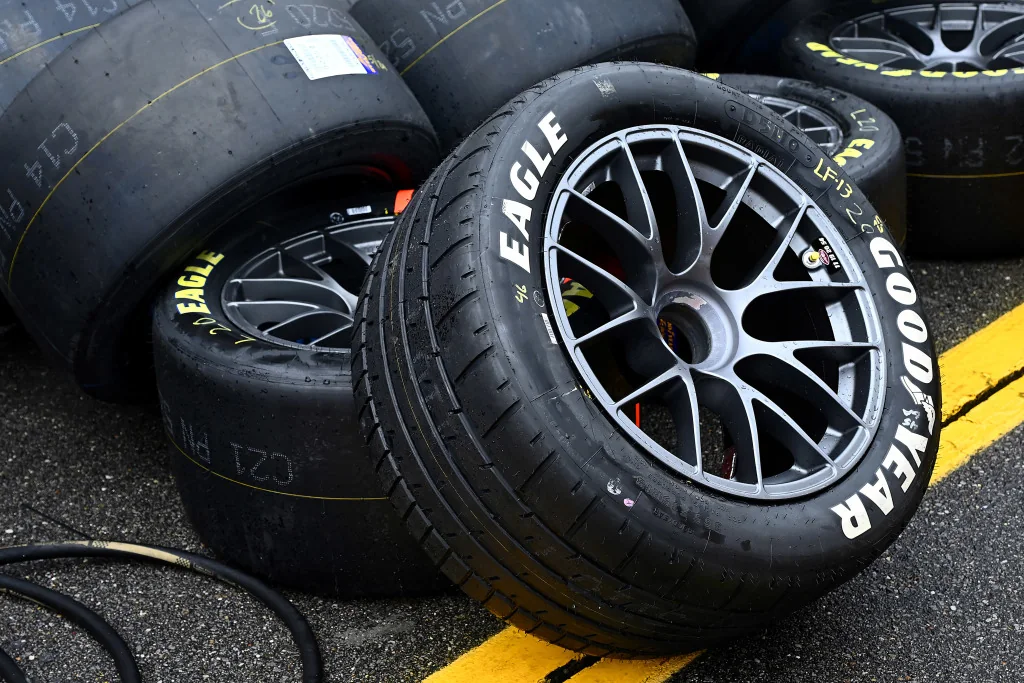
Once the field has started and NASCAR has made the relevant damp-surface call, the team can decide whether to continue on wet-weather tires or try slicks. The wet tire is built to provide grip on a damp racing surface. A slick puts more dry rubber against a drying groove and can be faster when enough of that groove is clean, but it offers less margin on wet patches. A crew chief must judge the driver’s feedback, the pace of cars on each compound and the cost of giving up track position to stop.
The racing groove seldom dries evenly. The main lane can become usable for slicks while the apron, pit-road entry or upper line remains treacherous. That difference is exactly why team discretion changes the contest: two crews can read the same circuit differently, and one can gain by timing the switch better. It also means a late rainfall can reverse the apparent advantage. The regulation creates a choice under NASCAR's safety framework, not a promise that every forecast will yield a mixed-tire race.
| Race moment | Primary decision maker | What is decided |
|---|---|---|
| Before the opening green | NASCAR | Whether to start and the common starting tire |
| After a rain caution and damp declaration | NASCAR, then each team | Race control confirms conditions; teams select wet or slick |
| As the racing line dries | Each crew chief within the procedure | When a stop and compound change are worth the risk |
Fans can use the weekend schedule to see which series is at an approved oval, but only event-specific NASCAR notices can establish whether wet tires are actually available and what race control has declared on that day.
Why are damp-pit stops still noncompetitive?
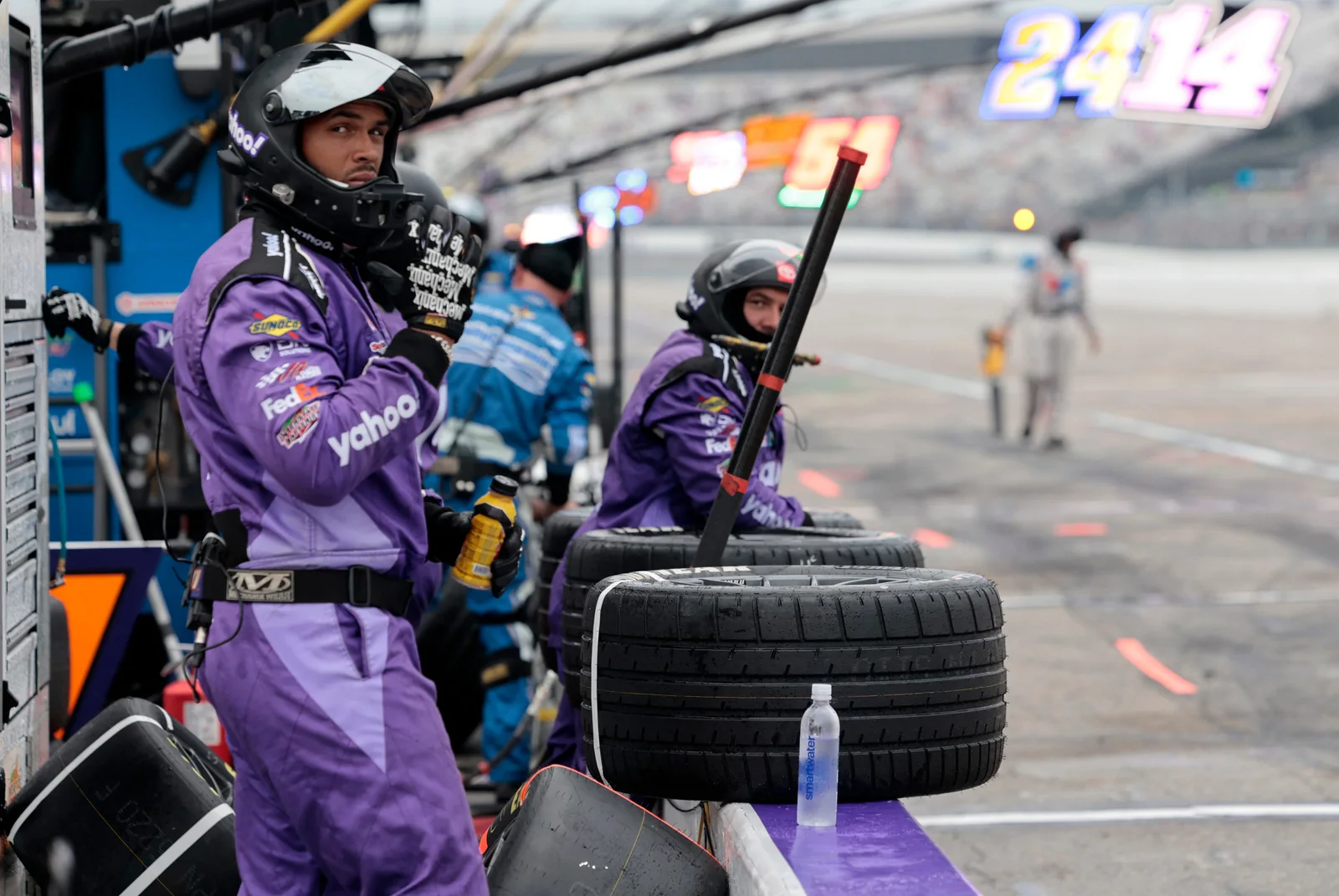
The September tire rule creates a choice for the crew chief, but it does not create a race between pit crews on a slippery lane. If NASCAR calls a caution for rain and determines that pit road is damp, stops made during that caution remain noncompetitive. NASCAR says positions do not change on pit road in that situation. Cars that make a stop are placed behind cars that stayed on the track. That ordering is easy to miss in a headline about the new freedom to choose slicks, yet it shapes whether a tire change is worth making at all.
The rationale is safety in a tightly packed work area. On the track, a driver may seek a drier groove and adjust speed before reaching a wet patch. On pit road, the car must brake and turn into a narrow stall with people standing beside it. RACER's rule account noted the concern about cars sliding toward crew members. The yellow-flag procedure reduces the incentive to attack an already damp pit road for a fraction of a second. It leaves the tire choice intact while keeping the stop itself orderly.
A caution stop cannot win spots on damp pit road
Suppose a shower has passed and officials call the track damp. Two crews judge the groove differently. One stays on wets and remains on track; the other pits for slicks. The pitting car restarts behind the stay-out car under the published ordering rule. A quick jack or a clean wheel change cannot reverse that ordering on damp pit road. The slick-tire car may subsequently pass on a dry groove, but it has to earn those positions after the restart. The scenario is illustrative; the exact decision depends on the actual race-control call and track conditions.
Noncompetitive service does not mean a free stop. The team still has a position cost relative to any car that stays out, and there is no guarantee that the chosen compound will be faster before the next caution. If the crew waits too long, the cars already on slicks may be quicker. If it stops too soon, the driver may have to defend with very little grip. The rule removes a pit-lane speed contest, not the strategic consequences of pitting.
Green-flag stops remain a real strategic gamble
NASCAR explicitly makes a different distinction for service while the race stays green: those stops are competitive. Entry time, service time, the out-lap and the pace of rival cars can all affect where a driver returns. A crew might stop before the rest of the field and gain time over several dry laps, or it might lose a lap if the wet patches are worse than expected. The choice becomes a real undercut calculation when the race remains green long enough to complete a pit cycle.
That exception does not force a green-flag stop in dangerous rain. NASCAR still decides when conditions call for a caution or stoppage. To interpret a televised switch, first establish whether pit road was declared damp under caution or whether the car stopped under green. The same tire choice has different immediate position rules in those two cases. The final results show the outcome, while the caution and pit-stop sequence explains how the team got there.
What went wrong at New Hampshire, and what did NASCAR hear?
New Hampshire Motor Speedway supplied the immediate test of NASCAR's previous approach on August 23, 2026. Showers left the 1.058-mile oval damp, and officials sent the entire 36-car Cup field to the start on Goodyear wet-weather tires. The track dried during the opening run. After 40 laps, NASCAR called a competition caution and directed crews to replace the treaded tires with slicks. The official race recap records that sequence and Ryan Blaney's eventual win.
The issue was not that the wet tires were unusable. They helped the race begin after rain and gave drivers 40 laps on a damp surface. The limitation was a centrally controlled changeover. Every crew had to obey NASCAR's timing even if its driver felt the groove had become dry earlier, or that a patch remained too wet for slicks at the mandated moment. A fixed switch removes the chance for one crew chief to gain by reading the transition better than a rival. It can also spare teams from making their own bad calls, which is why the change creates genuine strategy rather than an automatic improvement in lap time.
NASCAR's September 16 announcement identified the lap-40 transition as its latest example and said the policy had been reviewed after strong opinions from the sport. In an August fan discussion, one commenter asked when crew chiefs would control the wet-to-dry switch, while others praised the racing itself. A later thread welcomed team choice but also raised the damp-pit-road safety question. Those posts document concerns, not a vote of every fan or driver.
The September policy is a response to that decision point, not a retroactive rewrite of New Hampshire. It gives crews more responsibility after the green while NASCAR retains the authority to declare conditions and control a damp pit lane. A similar future drying race could now produce several tire-change laps instead of one prescribed moment. Whether that leads to better racing depends on grip, weather and the calls crews make. Fans can place the example alongside the site's general rules guide, then check the exact event bulletin when a wet oval appears on the schedule.
How could teams use the new choice during a drying race?
Think of the rule as a moving crossover rather than a simple wet-or-dry switch. The tread on a wet-weather Goodyear tire channels water away from its contact patch; the dry racing slick has no such grooves. When moisture remains across the main lane, the wet tire has an obvious job. As sun and traffic dry the groove, a crew chief may judge that a slick can make up the time required for a pit stop. NASCAR does not publish a universal lap number or moisture threshold for that call. The following example shows the decisions a team could face; it is not a report of a specific 2026 race.
Imagine a field that started on wets after morning rain. After several green-flag laps, the lower groove looks drier than the upper lane, but pit entry still glistens. One driver says the car has grip in the middle of the turn and struggles only when it leaves the groove. Another reports standing moisture on the exit. Their teams could reasonably choose different stopping points because they are driving different cars, in different traffic, with different risk tolerance. NASCAR still controls whether the race is safe to continue and whether any later caution changes the pit-road procedure.
Switching early can buy speed and add risk
The aggressive crew pits for slicks as soon as it believes the dry lane is wide enough. If it is correct, the car could run laps faster than rivals still on treaded tires. The gain might offset the stop even if the car initially rejoins behind them. But the driver has to enter a possibly damp pit road and keep the slicks in the dry lane on the out-lap. A small shower, a wet seam or another driver forcing it off that lane can turn an apparent undercut into lost time. If the stop is under green, it remains competitive: there is no protected place in the order for the team that guessed too soon.
An early switch also consumes a stop. If rain returns immediately, the team might have to reverse course and fit wets again, spending more time on pit road than a rival who waited. That possibility is the price of choosing before the field has perfect information. It is also the source of the potential reward; if the choice were obvious to every crew at the same instant, the new rule would add much less strategy.
Staying on wets protects track position only for a while
The conservative crew stays out. It saves a stop and may lead through the next restart if others pit during a damp-pit caution. But position gained by staying out is useful only if the car can defend it. As the racing line dries, slick-shod rivals may carry more speed through the turn and pass. Eventually the crew must judge whether to pit or wait for another caution, and a caution is never guaranteed. NASCAR's earlier wet-oval procedures already allowed a choice between fresh wets and staying on older sets in some natural-caution situations; the September change makes the wet-versus-slick crossover a team call as well.
For viewers, the useful clues are the official damp declaration, the tire visible on each car, pit-stop timing and the next few laps of pace. A single fast lap on slicks is less persuasive than several clean laps through traffic. Likewise, a car leading on wets might be preserving position while losing time. Follow the weekend event page for where the race is taking place, then treat each tire call as a measured gamble under that event's actual conditions.
Which tracks and series can actually use this procedure?
The rule applies at designated ovals approved for wet-weather racing. NASCAR specifically named Bristol Motor Speedway, Iowa Speedway, New Hampshire Motor Speedway, Phoenix Raceway, Martinsville Speedway, North Wilkesboro Speedway and Richmond Raceway as examples in its September announcement. The word “among” matters: that published list is illustrative, not a complete permanent register of every venue that could ever receive approval. A dry oval race does not acquire a tire-choice storyline merely because its track appears on the list. Officials still need suitable conditions and the event must have the wet-weather equipment available.
The procedural change covers NASCAR's three national series: Cup, the O'Reilly Auto Parts Series and the Craftsman Truck Series. Jayski's September 16 bulletin stated that scope when the new approach began at Bristol. It does not follow that every entry in all three series receives wet sets for every round, nor that a driver can demand a wet start. The event's tire allocation, track approval, NASCAR's declaration of conditions and safety judgment all remain relevant. Even at an approved short oval, heavy rain or poor visibility can still force a caution or delay.
That distinction also prevents a misleading comparison with an intermediate oval. A race at a 1.5-mile circuit may face rain and an ordinary delay without using this wet-oval procedure. The seven named facilities are proven examples, but the race-week documents—not a fan's assumption based on track shape—are the place to verify what is permitted for a particular Cup, O'Reilly or Truck event. The revised policy tells a team how to choose once the approved wet-weather framework is in use; it does not itself schedule wet racing across the calendar.
Check the event bulletin before assuming rain tires are available
NASCAR and Goodyear typically publish race-week tire notes. They can say whether wet-weather sets are on hand and how many a team has. For instance, NASCAR's April 2026 Bristol tire preview said Cup teams had four wet sets available if needed; an August Iowa preview also listed four wet sets. Neither allotment proves that wets were actually mounted during a race. The distinction between “available” and “used” is essential when explaining a rule to someone checking a forecast.
A practical viewing sequence is simple. First, find the event and series on the weekend schedule. Next, check NASCAR's current competition or Goodyear tire notice for that event. On race day, listen for NASCAR's declaration of wet or damp conditions and whether pit road is deemed damp. Only then can you interpret a crew chief's choice between the grooved wet tire and a slick, and whether its pit stop is competitive. The Bristol track page is useful for the venue context; the race-day bulletin controls the specific tire procedure.
About the author
NASCAR Schedule Editorial Team
The NASCAR Schedule editorial team turns verified schedules, timing and scoring, official announcements and race-weekend context into direct answers for fans.
View all articles by this author →Join the discussion
Comments
Sign in with Google to comment. Keep it race-focused; new comments are reviewed before publication.
Loading comments…