2026 O’Reilly Series Chase After Darlington: Creed Closes In, Allgaier’s Lead Shrinks
Darlington compressed the nine-race O’Reilly championship immediately: Creed won, Allgaier hit the wall, and Caruth’s fuel issue left no room for another bad race.
O’Reilly Series Chase standings after Darlington
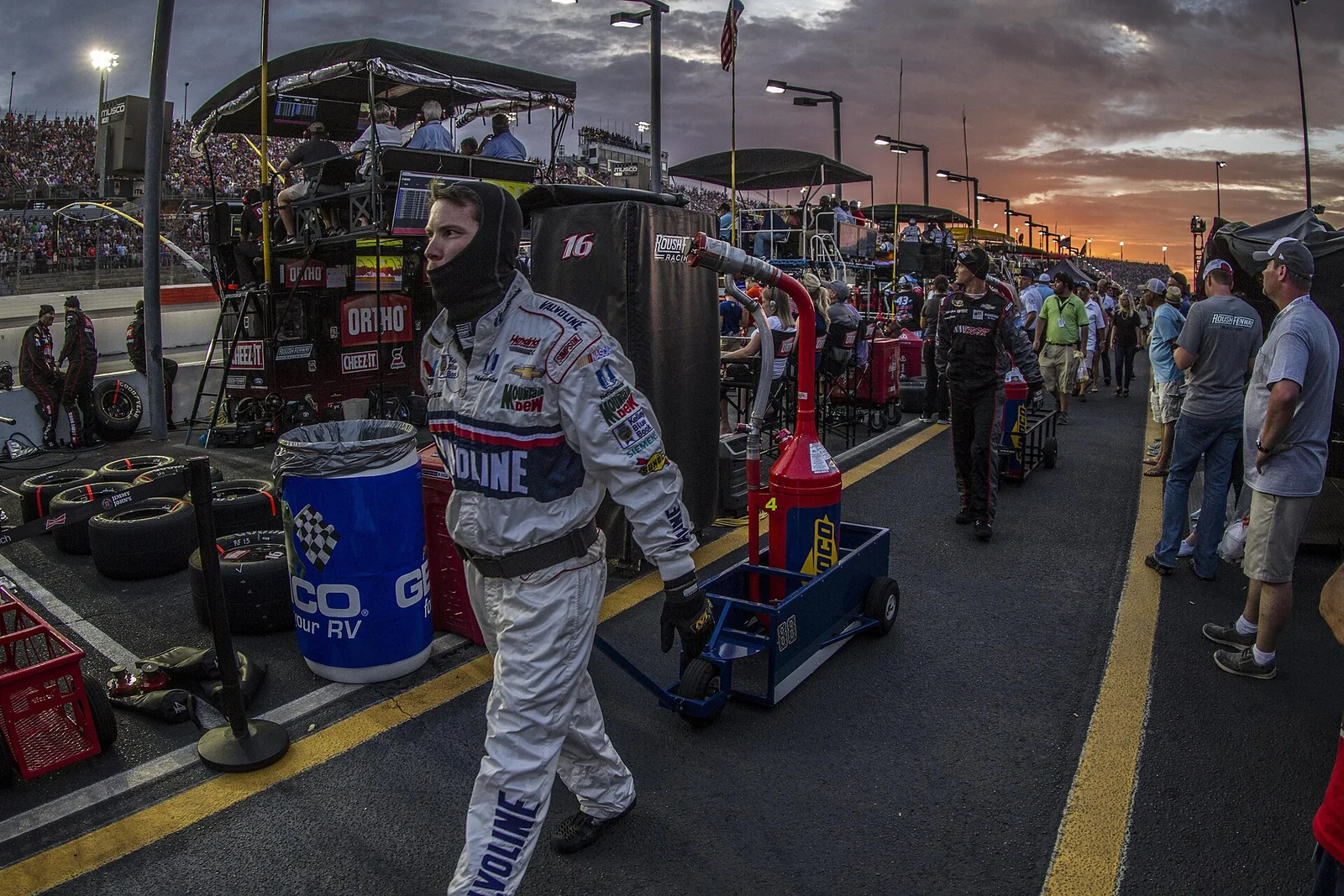
Justin Allgaier still leads the 2026 NASCAR O’Reilly Auto Parts Series Chase, but Sheldon Creed’s Darlington victory reduced the margin to only seven points. The standings below are the official post-Darlington snapshot from September 5, after race 25 of 33 and the first of nine Chase races. They will change at Gateway, so use the current NASCAR standings for the latest live order.
| Pos. | Driver | Points | Behind | Darlington finish |
|---|---|---|---|---|
| 1 | Justin Allgaier | 2,135 | — | 17th |
| 2 | Sheldon Creed | 2,128 | -7 | 1st |
| 3 | Carson Kvapil | 2,116 | -19 | 12th |
| 4 | Austin Hill | 2,099 | -36 | 5th |
| 5 | Corey Day | 2,089 | -46 | 2nd |
| 6 | Jesse Love | 2,087 | -48 | 13th |
| 7 | Sammy Smith | 2,080 | -55 | 4th |
| 8 | Brandon Jones | 2,077 | -58 | 10th |
| 9 | Sam Mayer | 2,069 | -66 | 8th |
| 10 | Parker Retzlaff | 2,057 | -78 | 21st |
| 11 | Taylor Gray | 2,056 | -79 | 7th |
| 12 | Rajah Caruth | 2,031 | -104 | 26th |
The immediate story is compression, not elimination. NASCAR’s 2026 O’Reilly Chase is a cumulative nine-race championship, so one win does not automatically advance a driver and one poor finish does not formally knock anyone out. Every stage point and finishing point continues to accumulate through the finale.
That makes Darlington’s causes important. Creed did not merely inherit a points gain; his team won the decisive pit-road exchange and he led the final 53 laps. Allgaier did not lack speed; he led a race-high 60 laps before wall contact. Caruth’s 104-point deficit did not come from running 26th all night; a repeated fuel-pickup issue destroyed a recovery. The complete Darlington finishing order supplies the raw result. The championship analysis begins with how each driver got there.
How Sheldon Creed turned one pit stop into a title swing
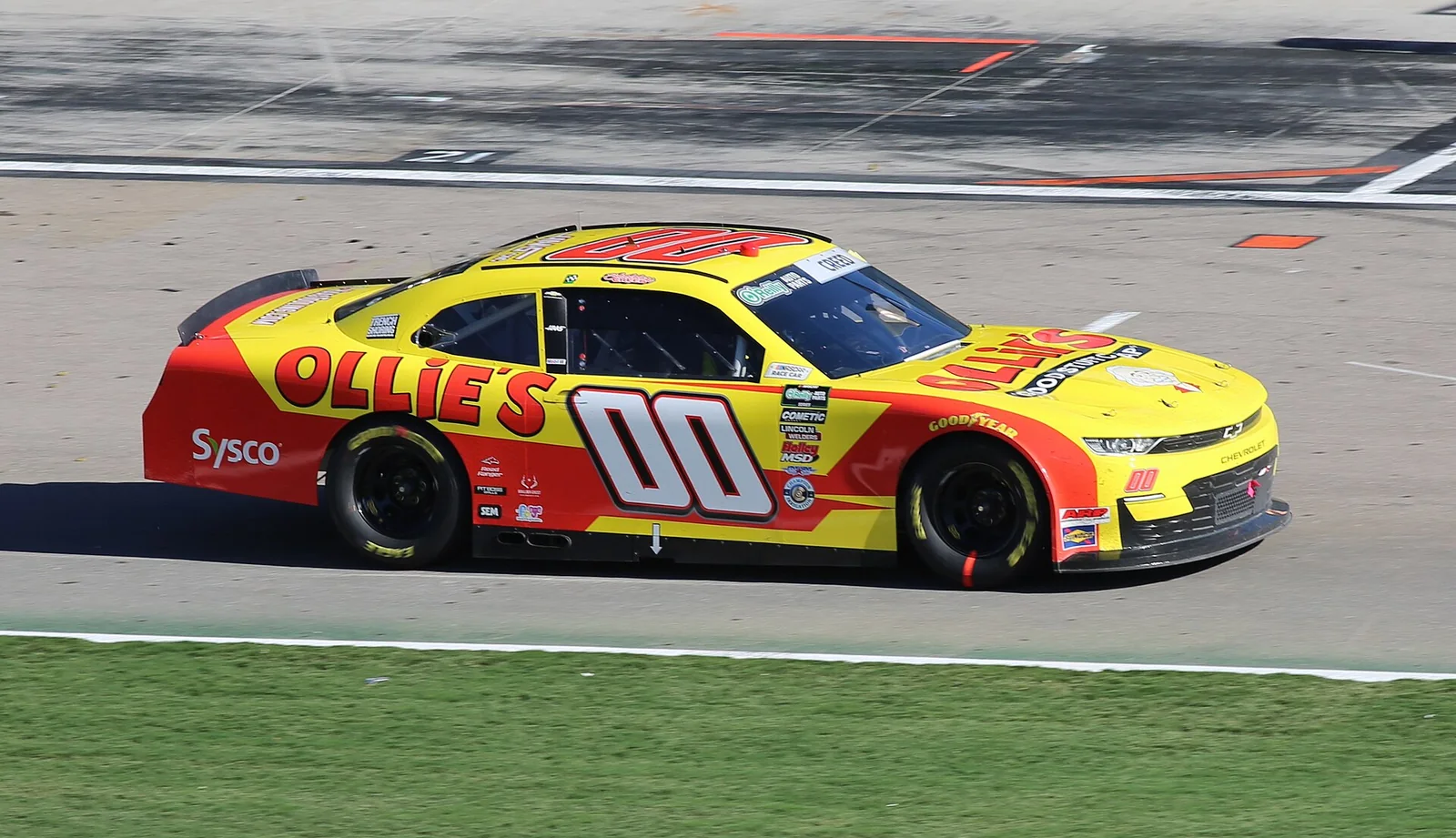
Creed’s championship gain began with speed, but it became decisive through pit-road execution. The No. 00 Haas Factory Team arrived at the final stage from a 13th-place start, put its driver in clean air at the right moment and then protected the lead through Darlington’s narrow, tire-sensitive rhythm.
The No. 00 gained control with 49 laps remaining
A fast pit stop moved Creed to the front for a restart with 49 laps remaining. He led the rest of the way—53 laps in the official box score—and beat Corey Day by 2.961 seconds. That margin matters because it was not a last-lap accident or fuel-mileage steal. Once the No. 00 gained track position, Creed produced enough long-run pace to prevent Day from reaching his bumper.
Darlington amplifies the value of the first pit stall out of a cycle. The preferred line runs close to the wall, and dirty air can make a trailing car use more front tire while trying to turn underneath. Clean air lets the leader place the car more precisely and manage the right side. The crew’s stop therefore converted competitive pace into a controllable final stint.
A 28-point gain changes how Creed can race Gateway
Creed scored 63 points at Darlington and gained 28 on Allgaier. Moving from a 35-point neighborhood behind the leader to seven points changes his decision range. He no longer needs Allgaier to suffer another major problem before ordinary stage performance can put the No. 00 atop the standings. A strong Stage 1, another strong Stage 2 and a finish ahead of the No. 7 could erase the entire gap in one clean race.
That does not mean Creed should become conservative. With eight races remaining, the best defense against future variance is still to collect points while the car is fast. But he can avoid manufacturing desperation at Gateway. A risky three-wide move for one position is different when the deficit is seven rather than 35. The Chase rewards repeated scoring, and Darlington gave the team room to select risks rather than chase a miracle.
The victory was Creed’s second of both the season and his O’Reilly career, confirming that his February breakthrough was not a one-off. For the full season sequence, the O’Reilly Series results hub shows where those wins fit. The title case now rests on whether Haas can reproduce the final-stage execution across tracks that ask different questions.
Why Justin Allgaier’s 229-point season cushion became seven
Allgaier’s night is the clearest demonstration of the 2026 format. He entered the Chase as the top seed after building a 229-point regular-season advantage, but the reset converted that body of work into a 25-point opening lead. One race later, the lead is seven. The regular season earned an advantage; it did not provide insurance against repeated mistakes.
Darlington pace was not the problem
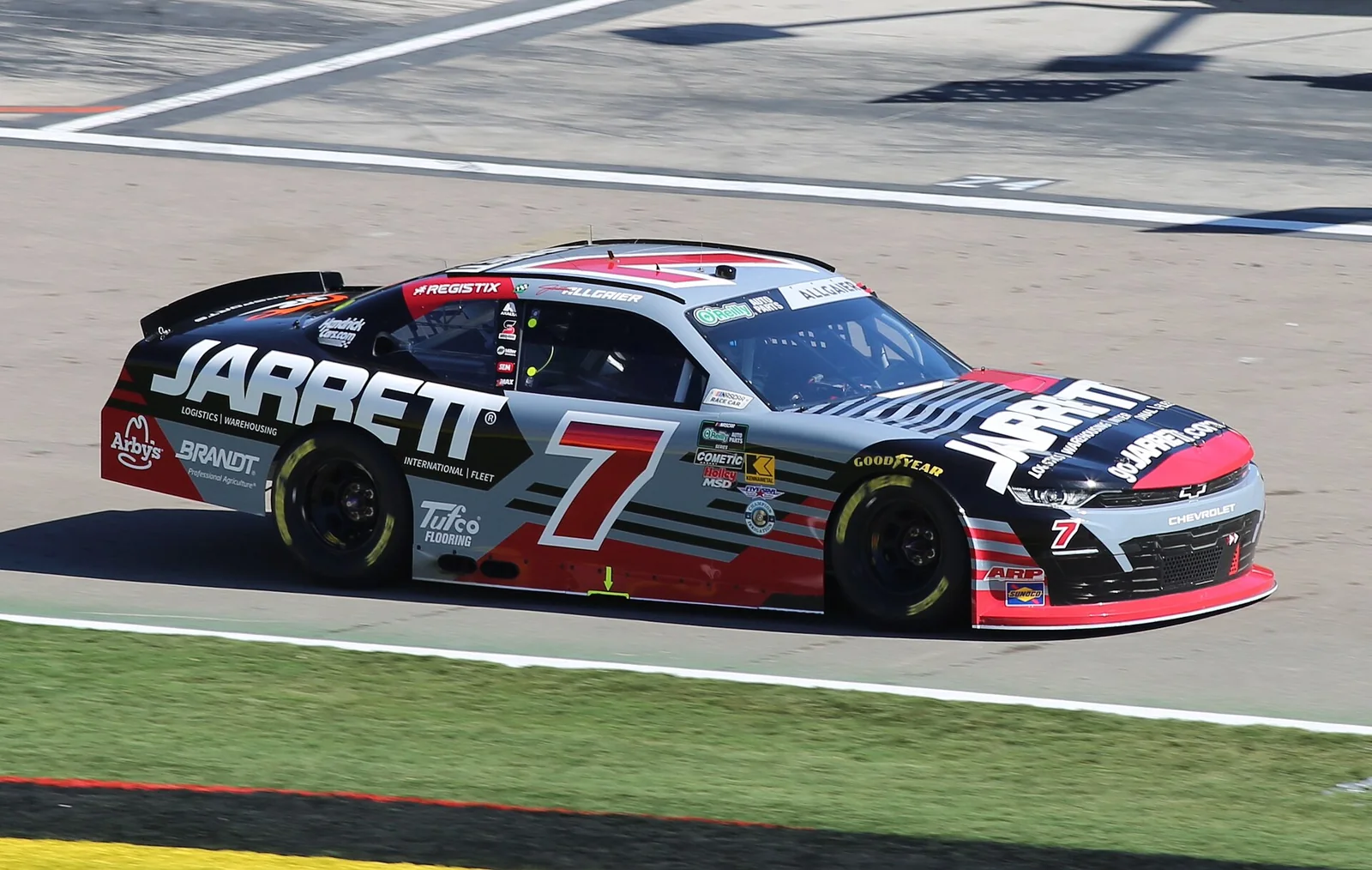
The No. 7 JR Motorsports Chevrolet started second, won Stage 1 and led a race-high 60 of 147 laps. Allgaier said he could save tires while maintaining pace in clean air, exactly the combination that had helped him win four times at Darlington. His car belonged in the front group, and the early points protected part of his championship margin.
The race changed with 23 laps remaining. While trying to recover from fourth, Allgaier hit the wall and had to nurse the damaged car to 17th. That ended a ten-race Darlington top-10 streak. He still completed every lap and scored 35 points because of his stage performance, but the gap between his compromised finish and Creed’s maximum night was large.
The reset makes one late mistake disproportionately expensive
Under a full-season total, Allgaier’s 229-point cushion could absorb Darlington without changing the basic championship picture. Under the nine-race Chase reset, the same mistake consumes most of a 25-point seeded advantage. That is the format working as designed: the leader’s previous performance matters at the start, then the finalists are judged across a concentrated sample.
Fans can reasonably debate whether that weighting is fair. What teams must manage is the actual arithmetic. Stage points are now more valuable to Allgaier because they create a floor when the finish goes wrong. His Stage 1 win prevented Creed from taking the points lead immediately. The NASCAR points-system explainer details how stage and finishing points combine; Darlington shows why both categories matter.
Allgaier remains the leader and still has the strongest season résumé, including a series-best six victories. One wall contact does not erase his pace or experience. The warning is about compounding errors. If the No. 7 follows Darlington with a poor stage day or another damaged finish, the seven-point gap can disappear quickly and the deep field behind Creed can join the fight. His job at Gateway is not to “recover 229 points.” It is to execute a complete race and rebuild separation one scoring segment at a time.
The contenders who quietly kept themselves in range
Behind Allgaier and Creed, the standings are not ordered by Darlington finish alone. Stage points, seeding and prior gaps create different outcomes. Carson Kvapil retained third despite finishing 12th, while Corey Day’s runner-up result moved him into the top five. Austin Hill and Sammy Smith used solid points days to remain relevant without leading the final stint.
Carson Kvapil protected third without a top-10 finish
Kvapil started from his first career pole and led 20 laps, establishing early speed before finishing 12th. That would look like a missed opportunity in isolation, but his 41-point total kept him third and only 19 behind Allgaier. The stage scoring he banked near the front limited the damage when the final result slipped outside the top ten.
His position is strategically useful. Nineteen points is large enough that one ordinary finish ahead of Allgaier may not erase it, yet small enough to close through stages across two races. Kvapil does not need to copy Creed’s high-variance attack immediately. He needs to translate qualifying speed into complete races and avoid the type of late loss Allgaier suffered.
Austin Hill and Corey Day banked top-five value
Hill finished fifth and scored 44 points, holding fourth in the championship at 36 behind. His race lacked the dramatic swing of Creed’s, but a top-five finish is exactly the repeatable output a cumulative Chase rewards. Hill’s experience becomes valuable at Gateway, where restarts and track position can decide whether a fifth-place car finishes third or tenth.
Day delivered the larger finishing surprise. Starting 14th, he advanced to second, led a lap and also scored 44 points. The rookie’s result moved him to fifth, 46 behind the leader. The equal points total with Hill illustrates why stages matter: Day finished three spots higher, but Hill’s scoring earlier in the race balanced the final difference. Day proved he can recover through traffic at a track that punishes impatience; now he needs that level without relying on a late charge every week.
Sammy Smith gained more than fourth place suggests
Smith started 11th and finished fourth, earning 40 points. He remains seventh, 55 behind, so the table does not make him look like an immediate title favorite. But Darlington was a clean gain on several drivers who entered ahead of or near him. He avoided wall damage, finished every lap and left with evidence that the No. 8 can advance during a demanding long run.
The next goal is stage position. A fourth-place finish with modest stage scoring cannot match a contender who runs top three all night. If Smith qualifies closer to the front at Gateway, the same finishing pace could produce ten or more additional points across the event. That is how a 55-point deficit becomes manageable without requiring a win. Compare these drivers after each event through the current standings; their underlying path will depend on where the points were earned, not only the final column.
Rajah Caruth and the drivers who cannot absorb another setback
The bottom of the post-Darlington Chase table contains different problems. Rajah Caruth’s 104-point deficit reflects a mechanical issue that erased a remarkable recovery. Parker Retzlaff lost ground with a 21st-place finish. Taylor Gray and Sam Mayer finished seventh and eighth but remain deep enough in points that decent results alone may not close the gap.
Caruth’s fuel-pickup problem erased a two-lap recovery
Caruth’s No. 88 JR Motorsports Chevrolet developed what he described as a fuel-pickup issue early, putting him two laps down. The team did not abandon the race. Caruth worked through traffic, recovered the laps and had climbed to sixth with about 45 laps remaining. That sequence showed competitive speed and disciplined recovery—the exact traits the final result hides.
The issue returned with seven laps to go and forced another stop. Caruth finished 26th, two laps down, scored only 11 points and left 104 behind Allgaier. Because Caruth was not certain of the exact failure immediately after the race, it would be wrong to name a component beyond the reported fuel-pickup symptom. The team’s diagnosis matters before Gateway.
Mathematically, eight races leave recovery time. Practically, Caruth can no longer afford many low-point days. He does not need to erase 104 in one afternoon, but he needs stage points, top finishes and some trouble for the leaders. A second mechanical result would make the required average gain much steeper.
Retzlaff, Gray and Mayer face different versions of pressure
Retzlaff entered Darlington with promising single- and long-run practice speed, including the best reported ten-lap average, but finished 21st and left 78 points down. That conversion failure is the concern. Speed gives the No. 99 a path back; race execution must keep it from disappearing through wall contact, pit sequence or lost track position.
Gray finished seventh, one spot ahead of Mayer, yet sits 79 behind compared with Mayer’s 66. Their problem is not a disastrous Darlington result. It is the need to outscore several drivers at once. Repeating seventh or eighth while Allgaier, Creed and Kvapil remain near the front would preserve rather than erase the deficit. They need stronger stage presence or a win-level day.
The distinction should shape expectations. Caruth’s team must fix reliability. Retzlaff must convert evident pace. Gray and Mayer need to raise their scoring ceiling. The series results archive will record whether they improve, but the useful comparison is points gained on the leader per race. With eight opportunities, even an average gain of ten points is difficult; with seven, it becomes more severe.
What Gateway can change in Chase race two
The O’Reilly Series moves to World Wide Technology Raceway for the Nu Way 225 on Saturday, September 12. Gateway’s 1.25-mile shape changes the problem from Darlington’s high-line tire management to heavy braking, corner-exit drive and restarts. That makes it a useful test of whether the first standings swing travels with the teams or was track-specific.
Eight races remain, so points matter more than desperation
Creed is seven points behind, Kvapil 19, and Hill 36. None needs a win-or-bust strategy. The fastest way to build a championship is still to run near the front in both stages and finish there. An early gamble that sacrifices stage points must create a credible path to a much better finish, not merely look aggressive.
Drivers beyond 60 points face greater urgency, but even they benefit from dividing the task. Ten points gained at Gateway, ten at the next race and another clean stage day can change the table without an all-or-nothing call. Desperation becomes rational only when the schedule runs out or ordinary performance cannot close the mathematical gap.
Track position and restarts will test the Darlington order
Gateway’s unequal corners require a compromise. Turns 1 and 2 are tighter; Turns 3 and 4 are broader and faster. A car that rotates well under braking can protect the inside, but it must still launch without spinning the rear tires. Passing often depends on completing the corner beside another car rather than relying on Darlington-style tire fade.
That should favor teams that qualify well and execute restarts. Kvapil’s Darlington pole shows single-lap potential; Creed’s final-stage control shows restart-to-long-run balance; Hill’s experience can help him manage lane choice. Allgaier’s objective is to restore a complete day, using stage position to make the No. 00 chase him rather than reacting from traffic.
The pit-stall penalties add a small but real complication
Post-race inspection confirmed Creed’s win, but the Nos. 00, 19 and 21 each had one lug nut not safe and secure. The No. 2 received an at-track inspection penalty. NASCAR said those four teams would lose pit-stall selection for Gateway. That is not a points penalty and does not alter the Darlington standings, but it can produce a less convenient pit location.
At a track where a short stop can swing position, entering or leaving a crowded box adds operational difficulty. Creed and Hill are title contenders directly affected; Jesse Love’s No. 2 also faces the consequence. Their crews can overcome it with clean service, but the detail is worth watching because Darlington’s title swing itself began on pit road.
Coverage is scheduled for 7:30 p.m. ET on The CW, with ESPN Unlimited, MRN and SiriusXM NASCAR Radio also listed. Confirm the day’s timing through the NASCAR weekend schedule, because the entry list and weather were not final when this analysis was prepared.
O’Reilly Chase FAQ after Darlington
Who leads the 2026 O’Reilly Series standings?
Justin Allgaier leads with 2,135 points after the September 5 Darlington race. Sheldon Creed is second with 2,128, seven points behind. Carson Kvapil is third, 19 behind. Those numbers are a dated Darlington snapshot and will change after Gateway.
How many races are in the O’Reilly Chase?
The 2026 O’Reilly Auto Parts Series Chase is a nine-race championship for the top 12 eligible drivers after the regular season. Darlington was race one, leaving eight races. The championship is based on cumulative points across the Chase rather than Cup-style elimination rounds.
Did Creed automatically clinch the championship by winning?
No. Creed’s Darlington win delivered maximum finishing points and a major championship gain, but it did not advance him automatically or guarantee the title. He remains seven points behind Allgaier. Wins matter through the points they produce; consistency across all nine races decides the championship.
When and where is the next race?
Race two is scheduled for Saturday, September 12 at World Wide Technology Raceway, commonly called Gateway. The Nu Way 225 is listed for 7:30 p.m. ET on The CW, with ESPN Unlimited, MRN and SiriusXM NASCAR Radio. Check the schedule near race day for any change.
Darlington’s verdict is therefore narrower than a coronation but larger than one result. Creed proved the No. 00 can win and nearly erased Allgaier’s seeded margin. Allgaier proved the No. 7 still has front-running speed but also how expensive late damage becomes after a reset. The rest of the field now has a measured target. The site’s 2026 O’Reilly Series guide explains the broader season; from Gateway onward, every contender must turn that structure into weekly points.
About the author
NASCAR Schedule Editorial Team
The NASCAR Schedule editorial team turns verified schedules, timing and scoring, official announcements and race-weekend context into direct answers for fans.
View all articles by this author →Join the discussion
Comments
Sign in with Google to comment. Keep it race-focused; new comments are reviewed before publication.
Loading comments…