NASCAR Racing Terms Explained: A Fan’s Glossary
A contextual NASCAR glossary translating handling reports, airflow, pit calls, race-control language and results terminology.
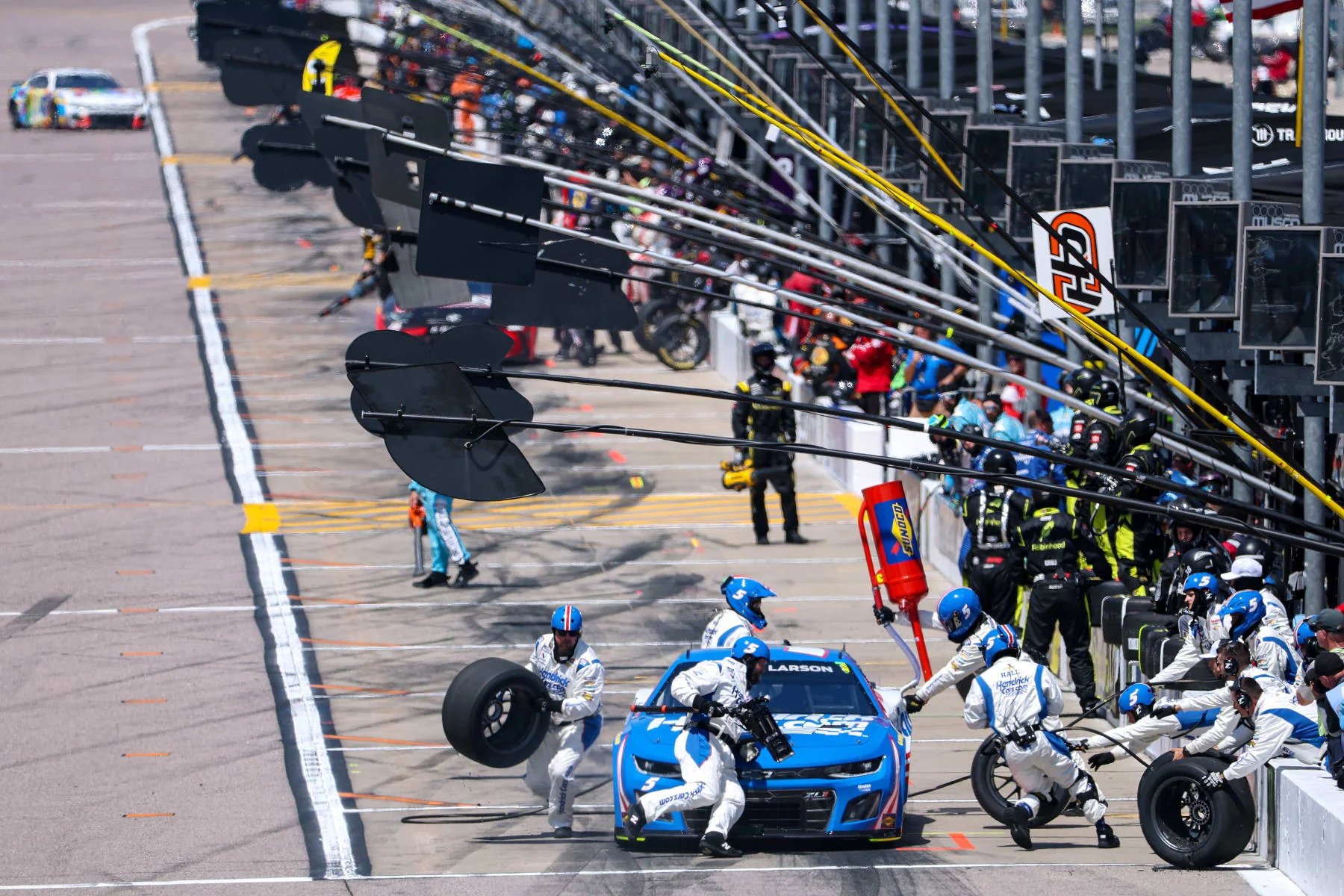
NASCAR racing terms describe what the car is doing, why the driver is reacting and what the crew is about to change. Loose means the rear is losing grip; tight means the front will not turn as requested. A draft can help straight-line speed, while dirty air can hurt cornering. Stickers are new tires, and a free pass recovers one lap for an eligible car.
This glossary groups the words by the situations in which you hear them, with contemporary Cup Series context checked for October 19, 2026. Listen for modifiers: where in the corner, how old the tires are, whether the car is in traffic, and which series or season the speaker means.
Handling terms: what the driver feels in a corner
Handling describes how faithfully the car follows the driver's intended path. A car can be quick on a straight and difficult in a turn, so a radio complaint about handling is not automatically a complaint about engine power. Balance describes the relationship between front and rear grip; grip, bite and traction all concern the tires' ability to transmit force to the track, with the surrounding sentence telling you which job matters.
Loose, tight, free and push
Loose means oversteer: the rear loses grip relative to the front and starts sliding outward. Free often means the same thing. A manageable amount of rotation may help a driver turn, while an abrupt rear slide demands a correction. The word therefore describes a balance condition rather than promising an imminent accident. Watch the steering wheel: a driver catching a sliding rear may briefly steer against the corner.
Tight means understeer: the front cannot hold the requested turning path, so the car runs wider than the driver wants. Push and plowing are common synonyms. Adding steering does not create unlimited front grip. The driver may need to reduce speed before the car turns, which explains how a car can look stable on television yet lose ground every lap. Loose and tight describe different ends of the car reaching their grip limit.
Entry, center and exit describe different problems
Entry is the approach and initial turn-in; center is the middle of the corner; exit, or off, is the transition back toward the straight. Drive off means the ability to put power down and accelerate away. A report combining a reluctant front in the center with poor drive off is not contradictory. The car can resist turning first, then struggle for rear traction when the driver accelerates.
Wheelspin means the driven tires rotate faster than their available traction can support. A wiggle is a small loss of rear stability, often caught before it becomes a spin. Saving it means recovering control. These words become more useful when you listen for when, where and whether the condition happens only in traffic. That extra context separates a setup complaint from a problem caused by following another car.
Think of a handling report as a short sentence with several missing clauses. “Tight” identifies the symptom; “center” locates it; “after ten laps” adds tire history. The crew needs that whole message before choosing an adjustment. A fan should resist turning one isolated word into a universal prescription for springs or tire pressure.
Airflow terms: why nearby cars change the race
Aero is shorthand for aerodynamics. Drag resists a car's motion through the air; downforce is aerodynamic loading that helps the tires grip the track. These forces solve different problems. Less resistance can help on a straight, while losing the grip-producing load can make it harder to turn at speed. That is the background to many apparently contradictory broadcast comments.
Clean air is relatively undisturbed airflow, most obviously available to a leader without traffic immediately ahead. Dirty air is another car's turbulent wake. Aero push means a traffic-related loss of turning ability, rather than proof that the front tires are worn out. A driver moving half a lane away from the car ahead may be searching for less disturbed air before trying to pass.
A tow, a push and a side-draft are different things
Drafting means using a nearby car's aerodynamic wake to reduce resistance. A tow or slipstream describes that benefit to the following car. It requires no rope and no bumper contact. A following driver can gain speed relative to the car ahead, or maintain position with less throttle and conserve fuel. Which advantage appears depends on how the driver uses the available benefit.
A bump draft adds physical contact from the following car's nose to the leading car's rear. A radio call to push a drafting partner therefore has a different meaning from a driver saying the car has a push in a corner. A side-draft uses an offset, alongside position to change the aerodynamic interaction and impede a rival's momentum. It is not another name for hitting the rear bumper.
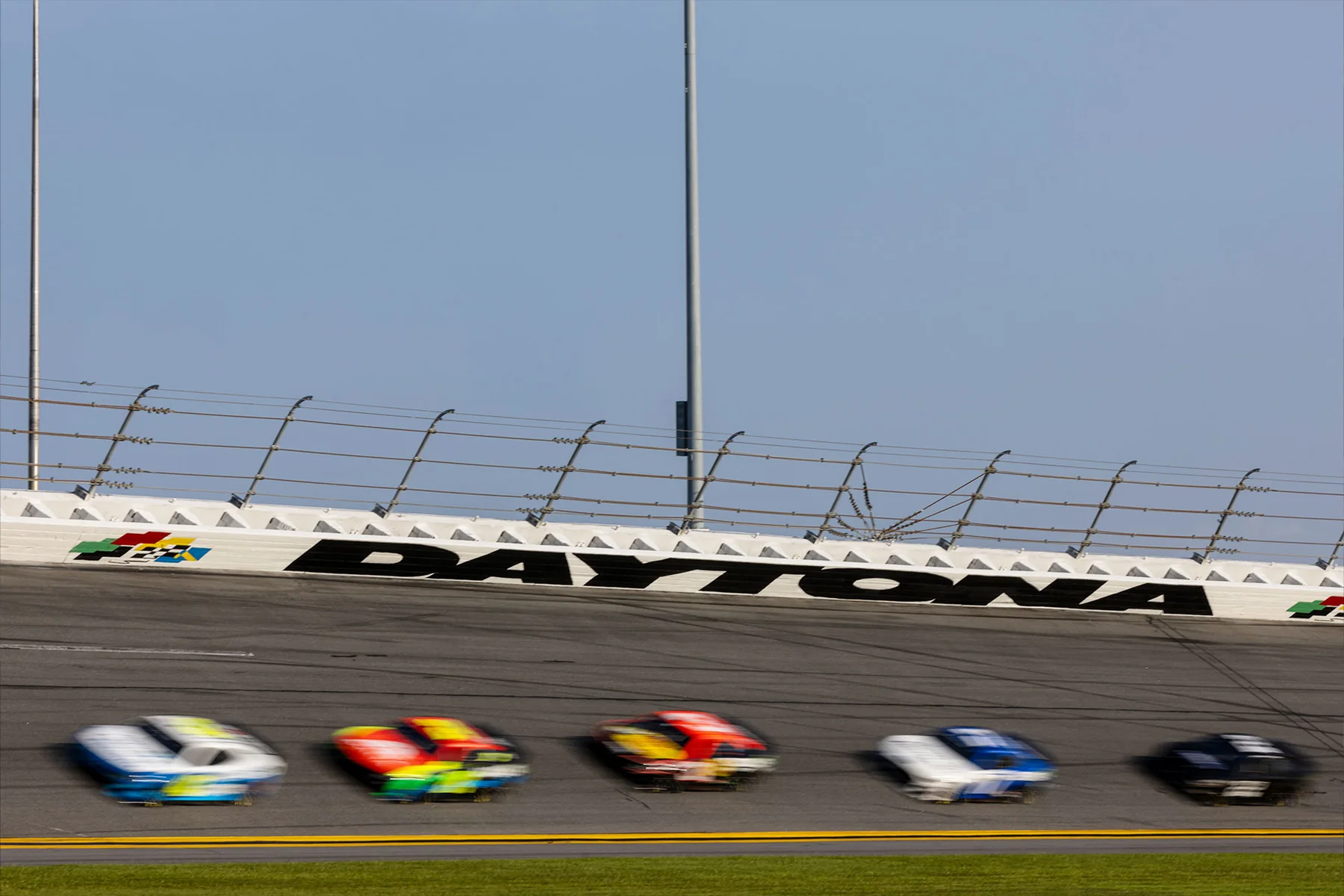
A run is a developing closing-speed advantage; momentum is the speed a driver is trying to carry into the next move. A slingshot uses a run from the draft to attempt a pass. Pulling out exposes the car to different airflow, so catching the leader does not guarantee clearing it. Watch whether another car follows the attacker: losing drafting support can make a promising move stall.
The useful distinction is the limiting factor. When resistance limits straight-line speed, a draft can help. When available grip limits corner speed, disturbed air can hurt. The same following position can offer both effects during one lap. Neither phrase means every car in traffic experiences the same aerodynamic change.
Track vocabulary: grooves, banking and the marbles
A groove is a usable racing path, while the preferred groove is the line offering the best combination of grip and speed at that moment. The bottom, inside or low line is nearer the infield on an oval; the top, outside or high line is nearer the outer wall. Running the fence means carrying the car very close to that wall, not driving on it.
Banking is the slope across the racing surface. Progressive banking changes that slope across different lanes. The low path covers less distance, but the outside can offer a larger turning radius and let a car retain more speed. When two cars remain door-to-door through a corner, compare the way each exits onto the straight rather than assuming the shorter route must win. Surface condition and tire behavior can change the answer during a race.
Rubbering in describes rubber building onto the surface through repeated running. Marbles are loose pieces of shed tire rubber that accumulate away from the well-used line. These are different conditions. Moving into unused pavement can mean less dependable grip, which explains why a driver suddenly slows after being forced wide. A green track describes a surface with little accumulated race rubber; it does not mean the starter is currently waving green.
The apron is the paved area inside the main racing surface, often flatter than the banked turns. Whether a driver may race there depends on the venue's boundaries and instructions. At Daytona, Talladega and EchoPark Speedway, the double-painted boundary has an officiating role; extra pavement below it is not simply another passing lane. Track limits describe the permitted competitive surface, not merely where asphalt ends.
A slide job describes a car entering below a rival and moving up across its path through the corner. A crossover is the response of turning back underneath as the attacker goes wide. Door-to-door means alongside; three-wide means three cars occupying neighboring lanes. Those words describe geometry, not a guarantee of contact or a declaration that every move was legal. Use the race calendar to identify the venue before applying something heard at one track to another.
Pit-road language: tires, fuel and the pit cycle
Pit road is the service lane; a pit box or pit stall is a team's assigned working space. A pit stop is the actual service. Pit-road time can include the longer journey from entry to exit, while a televised stop time may measure only stationary work. Compare like measurements before deciding which team gained the most time.
Stickers, scuffs, falloff and a two-tire call
Stickers are unused tires; scuffs have already run on track. That description tells you history, not their precise remaining performance. Falloff is the loss of pace as tires age through a run. Physical wear and lost grip are related but not interchangeable: a crew may be concerned about slower laps, remaining tread, or both. A report that a tire is corded means wear has exposed its underlying reinforcement.
A four-tire stop replaces all four tires. A two-tire call replaces only two, often the right-side pair on an oval. A fuel-only stop changes none. Taking fewer tires can shorten service, but it does not guarantee a fixed time saving because refueling may be the longest job. The trade is track position now against the car's grip and balance afterward. Listen for the number of laps on the tires the crew leaves fitted.
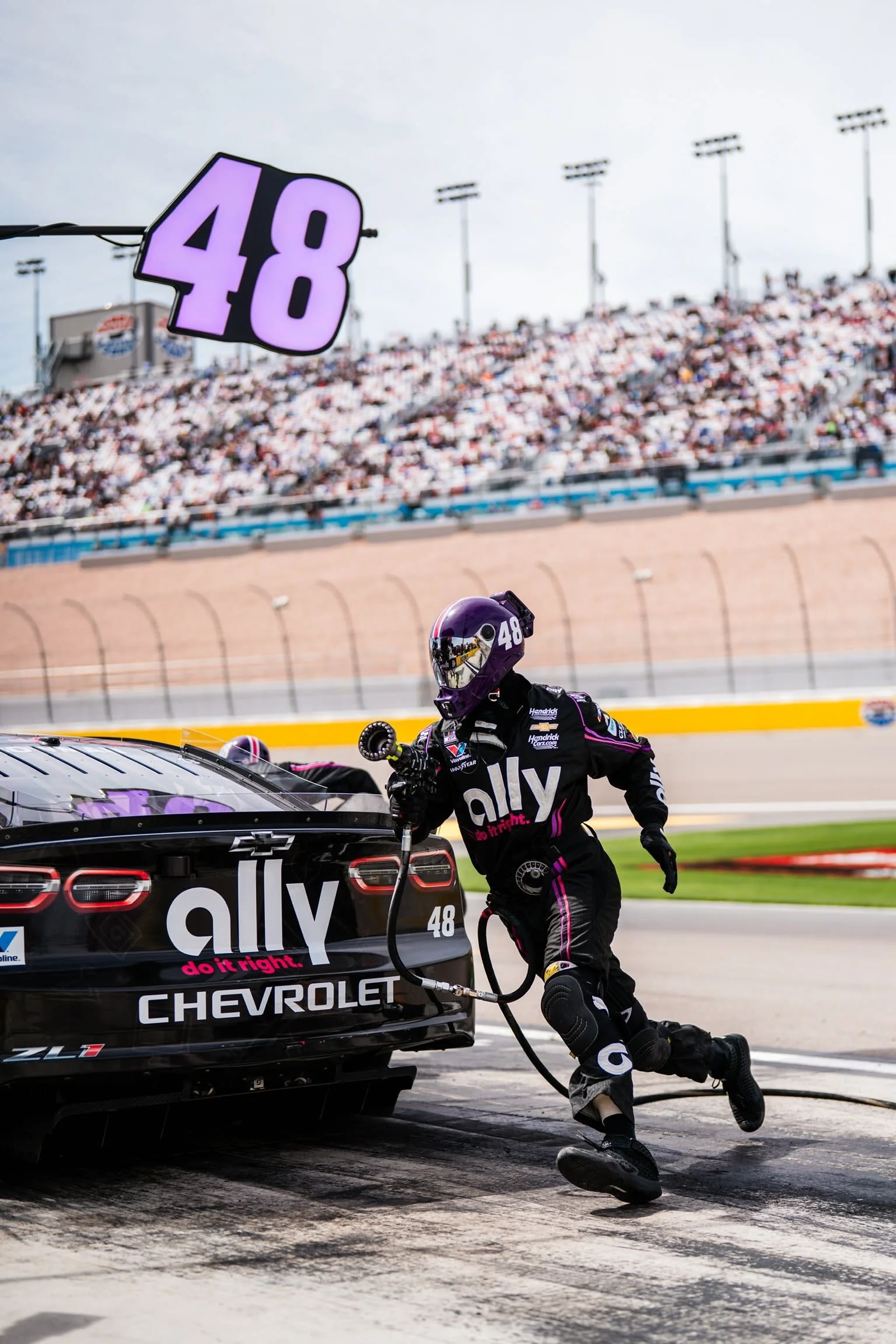
Short-pitting, a fuel window and a splash-and-go
Short-pitting means stopping earlier than the expected or rival pit window, commonly to gain time on fresh tires. An undercut describes the position gain that early service can create once rivals stop. Staying out means skipping that opportunity for service. Neither is inherently conservative: the early stop risks an ill-timed caution, while staying out risks losing time on old tires or exhausting fuel.
A fuel window is the range a car can cover under a particular consumption assumption. Saving or stretching means reducing consumption to extend that range. Lift and coast describes releasing the accelerator earlier before braking or turning. A splash-and-go is a brief fuel-only visit to cover a shortage. These are not universal lap counts; a drafting pack, a clear track and caution-speed running create different demands.
A pit cycle is the period during which competing cars complete their stops. The cycle leader or net leader is the car expected to lead once everyone has made comparable service. A car can lead the timing screen simply because it has not stopped yet. Before celebrating an apparent charge from twentieth to first, check tire age, the last-stop lap and who still owes a visit to pit road.
Race-control terms: cautions, restarts and lap recovery
Race control, often called the tower, is the officiating operation directing the event. Green means racing; yellow or caution means slow and follow the prescribed order and instructions; red stops the competition. A green-flag run is an uninterrupted spell of racing between cautions. The words describe the race's state, not a driver's personal pace.
The white flag signals the leader's final lap. The black-and-white checkered flag marks completion, while the green-and-white checkered signal identifies a stage finish. A black flag directs a specific car to report for an issue or penalty. A pass-through requires a trip through pit road; tail of the field describes losing restart position. Penalties and service are separate reasons to visit the pits.
A restart returns the field to racing after caution. The restart zone is the marked area governing the launch. The choose rule allows eligible drivers to select a restart lane at the designated point. Choosing a less popular lane can move a driver closer to the front without improving the car's official running position before that choice. Watch both the row and the lane before deciding who gained an advantage.
The free pass is not the wave-around
The lead lap means having completed the same number of laps as the leader; one lap down means one fewer. The free pass, commonly called the lucky dog, gives one eligible lapped car one lap back during a caution. Race control identifies that car. Recovering one lap does not necessarily restore lead-lap status if the car had been several laps behind.
A wave-around is a different recovery procedure involving lapped cars that stay out and become positioned ahead of the leader during a caution pit sequence. They can be directed around to the rear, recovering a lap while surrendering the chance for service until green. A driver may therefore have the same lap status as a free-pass recipient but very different tires and fuel.
Overtime, also called a green-white-checkered finish, extends the scheduled distance for a late restart attempt. If the leader completes the first lap under green, the next flag ends the race; an earlier caution can require another attempt. There is no fixed three-attempt ceiling. For eligibility, scoring exceptions and the complete sequence, use the NASCAR rules guide alongside these short definitions.
Results and radio shorthand: read the whole message
Broadcast graphics compress several different stories into a few columns. A driver can have excellent speed, a poor finish and useful stage points on the same afternoon. The quickest way to avoid confusion is to identify what each number measures before comparing it with another one.
| Term | Meaning when reading a race |
|---|---|
| Position / P1, P2 | Place in the running order; P1 is first. |
| Gap / interval | Usually time to the leader / time to the preceding car; check the graphic's label. |
| Laps led | Completed laps scored in first place, rather than distance spent near the front. |
| DNF | Did not finish; a retired car can still have a classified finishing position. |
| DNS / DNQ | Did not start / did not qualify. These describe different points in participation. |
| Stage points | Points earned at designated in-race scoring checkpoints. |
| As they run | A provisional projection using the current running order, not the final standings. |
A crew chief leads the car's competitive operation, including setup and race strategy. A spotter reports traffic and hazards from an elevated viewing position; additional viewpoints can be needed on a road course. Inside, outside and clear are immediate spatial information. Check up tells the driver that traffic is slowing. A scanner lets fans listen to that radio conversation, adding context beyond the selected clips played on television.
Some familiar phrases belong to an older era. Next Gen or Gen 7 means the Cup platform introduced in 2022. A track bar appears in many older glossaries, but that adjustment is not part of the independent rear suspension on the Next Gen Cup car. Likewise, its single center-lock wheel fastener differs from the older five-lug arrangement. The stock-car explainer supplies the hardware context without asking a dictionary entry to cover every generation.
Chase, playoffs and cut line need a year attached. For 2026, Cup uses a ten-race Chase with no elimination rounds. Championship 4 and Round of 12 describe the previous elimination format when encountered in older coverage. The current NASCAR standings show the relevant points picture; a historical clip does not establish today's format.
Put the words back into a sequence while watching: who is reporting, what changed, and what decision follows? A spotter warning about the outside lane, a driver describing loose exit, and a crew chief discussing fuel are three separate messages. Use the TV schedule to find the next broadcast and the race results afterward to connect those messages to the outcome.
About the author
NASCAR Schedule Editorial Team
The NASCAR Schedule editorial team turns verified schedules, timing and scoring, official announcements and race-weekend context into direct answers for fans.
View all articles by this author →Join the discussion
Comments
Sign in with Google to comment. Keep it race-focused; new comments are reviewed before publication.
Loading comments…