NASCAR Swear Jar 2026: How to Enter, Rules, Prize and Results
The NASCAR Swear Jar turns full-field Cup Series radio language into a growing cash prize. This guide explains the weekly predictions, scoring, schedule, eligibility, first-race result, and the details fans should verify in the official rules.
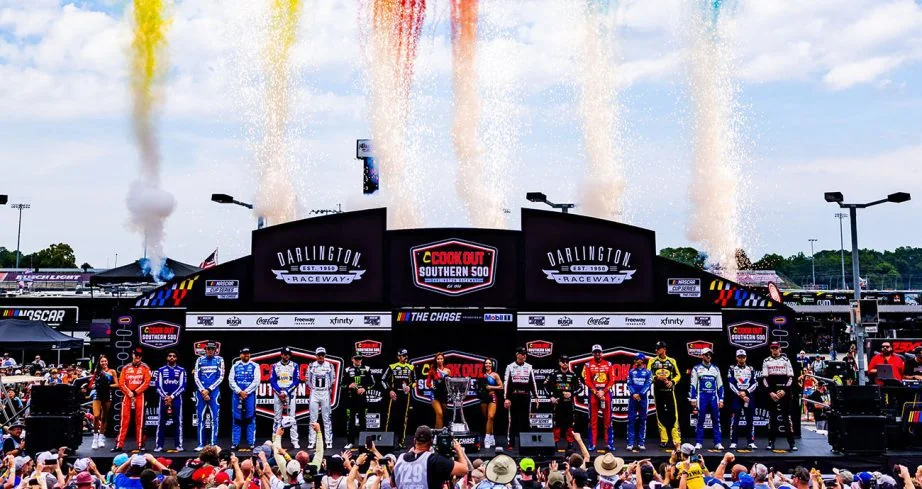
Yes, the NASCAR Swear Jar is a real 2026 promotion. Fans make two predictions before each eligible NASCAR Cup Series race: the total number of words that will be counted across the full-field team audio and the word category that will occur most often. NASCAR then turns the official count into a growing cash prize. Nine race-week winners become finalists, and those finalists make one more prediction for the November 8 season finale to decide the prize winner.
This guide was checked against the official rules and promotion counter on September 8, 2026. That date matters: entry windows, the leaderboard and the jar value change as the 2026 Chase progresses. Use this page to understand the system, then use the official promotion site to enter and confirm the latest status.
What is the NASCAR Swear Jar?
The NASCAR Swear Jar is a Cup Series radio-counting promotion wrapped around a prediction contest. Its premise is simple, but it has three separate parts. The official tracker counts selected language heard on NASCAR's full-field audio. Each counted word increases a cumulative cash pot. Eligible fans try to qualify for that pot by predicting both the race total and the most-used word category before an entry window closes.
- Nine public qualifying rounds: one finalist is selected from each eligible Chase race from Darlington through Martinsville.
- One finalist round: the nine finalists predict the November 8 race, and the best finalist wins, subject to verification.
- One growing prize: the same jar accumulates value across all 10 races rather than resetting after each Sunday.
This is tied to the 2026 Cup Series Chase, not to the O'Reilly Auto Parts Series, Craftsman Truck Series, or ARCA. It also is not a replacement for race timing, results, or championship data. A driver can lead the Swear Jar counter without leading a lap, and an entrant can win a weekly prediction without changing the Cup Series standings. Think of the counter as a second-screen view of team communications and the sweepstakes as the separate set of rules that turns those counts into a finalist selection.
How to enter the NASCAR Swear Jar each week
Enter through the official NASCAR Swear Jar site during the open period for the next listed race. Registration and a prediction are related but separate actions: creating an account once does not automatically put a pick into every race. The official rules limit each person to one registration for the promotion and one prediction in each entry period.
- Open the official promotion site and follow its entry link.
- Register with the requested name, physical address, email address, and date of birth.
- Make both parts of the current race prediction.
- Review the numbers and selected word before submitting, because a submitted prediction cannot be changed.
Submit the two-part prediction
The form asks for an estimated total across the entire qualifying audio feed and the word category you expect to appear most often. These are not two optional paths; both belong to one official “Prediction.” Select the most-used word from the choices actually displayed in the current form rather than assuming that any expression you hear will be an eligible category.
After registration, the promotion assigns an alias that can appear on its leaderboard if you become the round's finalist. Use accurate contact details behind that alias. A clever screen name cannot rescue an entry if the administrator cannot verify the person attached to it later.
Enter before the race-day lock
Each public entry period closes at 11:59 a.m. Eastern Time on its race date. That is earlier than the green flag for the listed 2026 rounds, so waiting for pace laps or the television pre-race show is too late. The administrator's computer is the official clock.
Guesses do not carry forward. If you played Darlington, you still need a new submission for World Wide Technology Raceway, then another for Bristol, and so on. A practical habit is to check this weekend's NASCAR schedule when the entry period opens, make the pick before race morning becomes hectic, and save any confirmation the form provides.
How scoring creates nine finalists and one winner
The contest does not simply award the weekly spot to whoever types the nearest total. Every entry is scored on its word pick and count pick, and the highest points in that entry period produce one finalist. The same scoring system returns for the November 8 finalist round.
Points for the word and total-count picks
| Prediction result | Points |
|---|---|
| Correct most-used word category | 5 |
| Exact total word count | 10 |
| Within five of the total, but not exact | 5 |
An exact count and correct word can therefore produce 15 points. A pick that is four away and has the correct word earns 10. The exact-count award does not stack with the within-five award: the rules explicitly reserve the five-point count score for a prediction that was not exact.
That design makes the word choice meaningful. Suppose the official total is 223 and the leading category is F*CK. An entry of 223 plus F*CK earns 15; 220 plus F*CK earns 10; and 223 with another category earns 10. A merely close number is not automatically better than a perfectly chosen category paired with a near count.
Tie-breakers and the one-finalist limit
If entrants tie for the highest weekly score, the administrator's timestamp favors the prediction submitted first. That does not mean rushing an unreviewed guess is smart, but it does remove any advantage from holding an identical prediction until the final minutes.
A fan may be named a finalist only once. If an existing finalist later posts that week's highest score, the next-highest eligible entrant is selected. After all nine public rounds, those nine finalists must return between November 2 and 11:59 a.m. ET on November 8 to predict the season finale. The highest finalist score becomes the potential winner; unlike weekly ties, a tie in that final round is settled by a random drawing among the tied finalists. Eligibility still must be verified before the prize is awarded.
What counts as a swear in NASCAR's tally?
The contest count is based on the promotion sponsor's transcript of NASCAR's designated audio feed. It is not limited to words that make the television broadcast, and it is not limited to the 16 Chase drivers. Eligible word categories are the censored choices displayed by the promotion, with the sponsor retaining control over what qualifies and how the transcript is tallied.
The full-field team audio is broader than driver radio
The rules include captured language from every team member in the full field—not only drivers, but also crew chiefs, spotters, and other team personnel heard on the feed. That distinction is enormous. A TV production may play a handful of selected radio clips, while dozens of cars are continuously exchanging information about traffic, gaps, tire balance, pit entry, fuel saving, damage, and restart lanes.
The qualifying audio window is expected to begin roughly 30 minutes before the race and continue until the live broadcast and team communications end. A word during pre-race radio checks can therefore matter even though no lap has been completed. For fans who normally follow one favorite channel through a scanner, the NASCAR app and scanner guide explains that listening experience—but one channel remains only a slice of the promotion's full-field input.
NASCAR's transcript count controls the result
After the race broadcast, the sponsor compiles the count from its audio transcript. The official counter groups related expressions under censored labels and can display both team totals and category totals. That grouping helps explain why a spelling variation shown beneath a category may contribute to the larger category number.
Your own notebook is useful for entertainment, not for challenging the score. Radio static, overlapping speech, a clipped transmission, or a word that is absent from the promotion's eligible list can make a home count differ. The rules give the sponsor sole discretion over the tally and make that determination non-appealable. For prediction purposes, use the official leaderboard as the result rather than trying to reconcile it with only the clips heard on TV.
How the cash prize grows—and what Darlington added
The jar is cumulative across all 10 promotion races. At the launch rate, each officially counted word was worth $5, so the race contribution was simply the official count multiplied by five. However, the legal rules allow the sponsor to change the per-word value for a specific race. Fans should treat the displayed jar—not a season-long projection—as the current prize reference.
Darlington opened with 223 counted words
The September 6 Southern 500 produced 223 officially counted words. At $5 each, that added $1,115 to the jar. F*CK was the leading displayed category with 106, followed by SH*T with 45 and H*LL with 24. Those figures came from the official counter snapshot checked on September 8; they describe the promotion tally, not NASCAR's race result.
The sporting result had its own pressure points. Christopher Bell won the 367-lap Chase opener after a late rain stoppage split the leaders on tire strategy. Bell restarted on fresh tires, reached leader Kyle Larson quickly and made the decisive pass with 12 laps remaining. Earlier pit-road trouble, contact in traffic, a brief weather delay, and the closing tire call all created the kind of high-load communications that help explain why the full-field radio total can grow rapidly. For the finishing order rather than the language count, use the officially posted NASCAR results.

The rate can change and the winner may owe tax
The official rules permit a value from at least $1 up to $15 per counted word, set by the sponsor for a race. The sponsor can announce an adjustment on the promotion site or NASCAR social channels, and the rate cannot fall below $1. The maximum approximate retail value for the final cumulative prize is $15,000. That ceiling matters more than multiplying the Darlington pace through nine remaining races.
The verified winner receives the jar value by check. Taxes and related costs are the winner's responsibility. If the prize reaches $2,000 or more, the rules say the value will be reported for tax purposes, the winner must provide a valid Social Security number, and an IRS Form 1099 will be issued. That is a prize-claim detail, not a fee to enter.
2026 NASCAR Swear Jar entry schedule
The official rules set nine public entry periods. Each closes at 11:59 a.m. ET on race day, regardless of the scheduled green-flag time. All later periods open at noon ET on the date shown; the first opened at 1 p.m. ET on September 4.
| Round | Cup venue | Entry opens | Entry closes / race date |
|---|---|---|---|
| 1 | Darlington | Sep. 4, 1 p.m. ET | Sep. 6, 11:59 a.m. ET |
| 2 | World Wide Technology Raceway | Sep. 7, noon ET | Sep. 13, 11:59 a.m. ET |
| 3 | Bristol | Sep. 14, noon ET | Sep. 19, 11:59 a.m. ET |
| 4 | Kansas | Sep. 21, noon ET | Sep. 27, 11:59 a.m. ET |
| 5 | Las Vegas | Sep. 28, noon ET | Oct. 4, 11:59 a.m. ET |
| 6 | Charlotte | Oct. 5, noon ET | Oct. 11, 11:59 a.m. ET |
| 7 | Phoenix | Oct. 12, noon ET | Oct. 18, 11:59 a.m. ET |
| 8 | Talladega | Oct. 19, noon ET | Oct. 25, 11:59 a.m. ET |
| 9 | Martinsville | Oct. 26, noon ET | Nov. 1, 11:59 a.m. ET |
| Finalists only | Homestead-Miami | Nov. 2, noon ET | Nov. 8, 11:59 a.m. ET |
Bristol is the calendar trap: its Cup race is Saturday night, so the prediction closes Saturday morning. Homestead-Miami is different for a more important reason—it is not a 10th open qualifier. Only the nine selected finalists can submit in that last window. Use the site's complete NASCAR schedule for weekend planning and the NASCAR TV schedule for current broadcast details. The promotion's own clock and rules remain controlling if a race is delayed, postponed, or otherwise changed.
How to build a smarter race-week prediction
The following is editorial analysis, not a promise of an edge: build a plausible range from the race in front of you, then choose within it. The official outcome depends on what is actually captured and how the sponsor classifies it. No track trend or driver reputation can guarantee a finalist spot.
Start with track type and expected race rhythm
Do not copy Darlington's 223 into every remaining form. The Chase moves through an intermediate oval at Kansas, the Charlotte Roval, a drafting superspeedway at Talladega, the tight short track at Martinsville, and other distinct tests. Those layouts change how often drivers run in traffic, how hard passing becomes, and whether one mistake affects one car or a large pack.
A useful forecast begins with scenarios. A long green-flag race can generate steady balance reports and pit-cycle instructions. A restart-heavy short-track race compresses the field and creates repeated lane calls, contact reports, and emotional reactions. Talladega can be calm for stretches, then produce intense pack communication and a major incident. Forecast the likely rhythm rather than assuming that “short track” or “superspeedway” automatically means a high count.
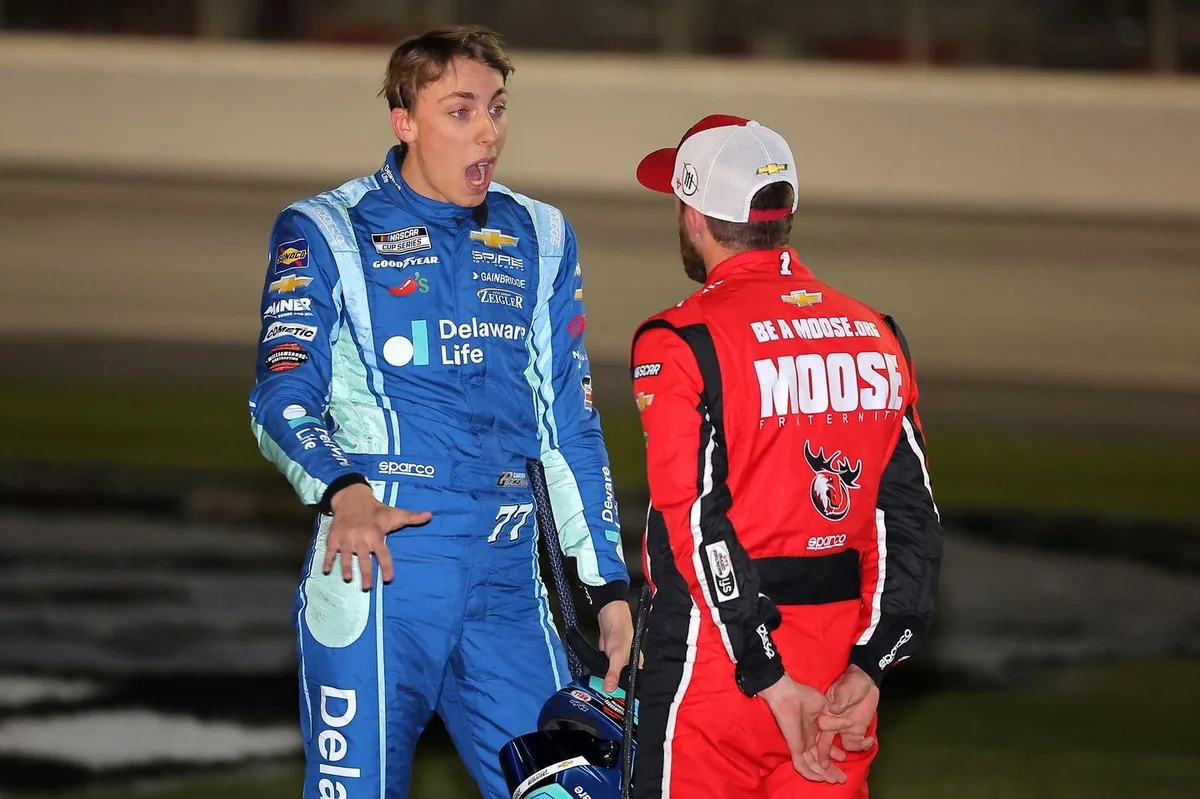
Watch radio exposure, cautions, and pit-cycle pressure
Adjust a range only for information known before the lock. Weather risk, a condensed practice program, unusual tire wear, or a lineup that puts fast cars deep in traffic can change the likely workload. More cautions can mean more restart decisions and damage discussion; fewer cautions can create green-flag stops where missing pit entry or losing seconds on service becomes the flash point. Both produce radio, just of different kinds.
Remember the population: the official tally can hear captured personnel throughout the field. Focusing on one famously animated driver ignores dozens of crew-chief, spotter, and driver channels. The better question is whether the whole race is likely to demand frequent urgent communication.
Treat one race's leaderboard as a sample, not a guarantee
Darlington is a baseline, not a law. Its 223 total was spread across 35 displayed car numbers, while the highest single team count was 20. That distribution shows why a full-field estimate cannot be reverse-engineered from one personality. It also says nothing certain about the next venue's caution count, weather, audio clarity, or competitive incidents.
Use completed rounds to update a range, not to chase the last exact number. Check the upcoming NASCAR TV schedule, review practice and qualifying developments before the morning cutoff, and submit a defensible number. The contest still contains chance; disciplined uncertainty is more honest than a false “best pick.”
Eligibility and fine-print checks before you submit
The promotion is free, but it is not open to everyone. Read the official rules before entering; the short checklist below highlights common tripwires and does not replace the legal document. An accurate prediction can still be disqualified if the entrant is ineligible, exceeds a limit, or cannot complete verification.
Who can enter and how often
Entrants must be legal residents of one of the 50 United States or the District of Columbia and at least 18 years old on the entry date. The promotion is void where prohibited. Employees, officers, and directors of the sponsor, administrator, NASCAR, and specified related organizations are excluded, as are defined immediate-family and household members.
The limit is one registration per person for the full promotion and one prediction per person in each public entry period. That means a fan may legitimately return every race week, but may not create a second identity to submit another number. If identity is disputed, the rules look to the registered holder of the email account, and proof can be required.
No bots, no duplicate accounts, and watch your email
Do the entry yourself. The rules say registrations or predictions produced by artificial intelligence, scripts, macros, programmed tools, robots, or other automated means are void and may be disqualified. Using false contact information, multiple accounts, or more than the permitted number of submissions also risks removal. Research tools can help a fan understand race context, but the fan must make and submit the actual prediction.
Finalists are responsible for checking the leaderboard and responding if additional verification is requested. The potential winner is contacted through the details supplied at registration and may have only three days from notification to return the required eligibility, liability-release, and prize-acceptance declaration. Use an inbox you monitor, keep its spam filter in mind, and do not treat an alias appearing on a public leaderboard as the end of the claim process.
NASCAR Swear Jar FAQ
Is the NASCAR Swear Jar free to enter?
Yes. The official rules state that no purchase is necessary and that buying something does not improve the chance of winning. A participant still has to satisfy the eligibility terms, register correctly, and submit a compliant prediction inside the current entry window. Free does not mean automatic entry.
Are drivers actually fined for swearing?
Not by this promotion's per-word calculation. The Swear Jar rules say the sponsor deposits money into the prize pool according to the official count and race rate. They do not say that the counted driver, crew chief, or spotter pays that amount. The launch language about paying is promotional wordplay; it should not be read as a $5 deduction from a competitor for every category hit. Separate NASCAR conduct decisions, if any, would be a different issue and are not determined by this contest.
Can fans outside the United States enter?
No, not under the published 2026 eligibility rule. Entry is limited to legal residents of the 50 United States and the District of Columbia who are at least 18 when they enter. International fans may be able to view public coverage or the leaderboard where available, but viewing does not create eligibility to win.
Where can I see the live Swear Jar leaderboard?
Use the official leaderboard at swearjar.nascar.com/leaderboard. It shows the jar total and race-level category/team information supplied by the promotion. During a race, allow for processing and connectivity delays; after a race, rely on the finalized promotion count for scoring. The leaderboard is useful evidence, but the official rules remain controlling if a display, news report, or summary conflicts with them.
The broader lesson is simple: enter on time, make both picks, and keep the contest separate from the race classification. The Swear Jar can make team radio a fun second screen, but the checkered flag, championship points, and promotion score each answer a different question.
About the author
NASCAR Schedule Editorial Team
The NASCAR Schedule editorial team turns verified schedules, timing and scoring, official announcements and race-weekend context into direct answers for fans.
View all articles by this author →Join the discussion
Comments
Sign in with Google to comment. Keep it race-focused; new comments are reviewed before publication.
Loading comments…