Why Shane van Gisbergen Can’t Finish Higher Than 17th in the 2026 NASCAR Standings
A rule-first explanation of Shane van Gisbergen’s 17th-place ceiling after missing the 2026 NASCAR Chase by 17 points, including the Hamlin criticism and the competitive consequences.
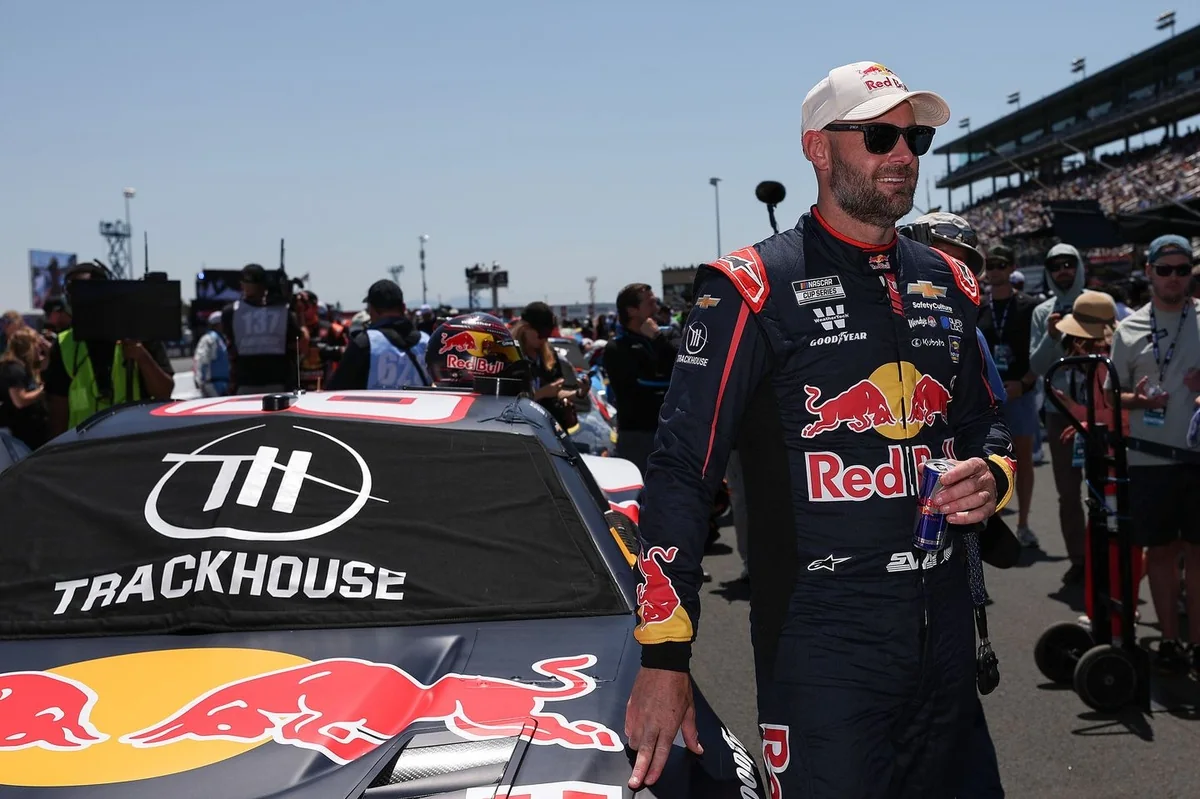
Shane van Gisbergen missed NASCAR’s 2026 Cup Series Chase by 17 points after Ryan Preece won the regular-season finale at Daytona. The consequence reaches beyond championship eligibility: SVG cannot finish higher than 17th in the final driver standings, even if he wins races during the ten-event Chase. The rule preserves positions 1 through 16 for Chase qualifiers while allowing non-qualifiers to compete for weekly results and the order below that boundary. Denny Hamlin’s blunt objection turned an obscure classification detail into a live fairness debate. Here is what the rule does, how SVG ended up outside the field and what remains at stake.
Why 17th Is Shane van Gisbergen’s Best Possible 2026 Points Finish
Shane van Gisbergen can still race, score points and win during the final ten NASCAR Cup Series events of 2026, but he cannot finish higher than 17th in the official driver standings. The ceiling exists because the 16 drivers who qualified for The Chase now compete inside the championship group. SVG finished the 26-race regular season outside that group, so his remaining points determine where he ranks among the non-Chase drivers rather than allowing him to pass a Chase qualifier in the final classification.
That distinction is easy to miss when looking at a normal race result. Van Gisbergen remains eligible to win an event, collect the 55 finishing points awarded for a victory, earn stage points and take the eligible fastest-lap bonus. Those points still matter inside his side of the standings. What they cannot do is move him across the boundary that NASCAR fixed after Daytona: positions 1 through 16 belong to the Chase field, while 17th is the highest position available to everybody who failed to qualify.
The rule also does not guarantee SVG 17th. If another non-Chase driver outscores him across the closing races, he can fall to 18th or lower. “Capped at 17th” therefore describes his best possible championship classification, not a protected finishing place. Fans should use the current NASCAR standings to follow both competitions: the title fight among the 16 reseeded contenders and the race for best-of-the-rest among everyone below them.
This is why a hypothetical run of several SVG victories would create an unusual-looking result. He could be one of the strongest drivers during the Chase and still appear 17th at season’s end. NASCAR would recognize each race win and its points, but the championship table would continue to preserve the qualification decision made after Race 26. The debate is not about whether his late results count. It is about what those results are allowed to change.
How the 2026 Chase Splits the Cup Standings After Daytona
NASCAR used the first 26 Cup races to decide who qualified, then changed the accounting basis for the final ten. The top 16 in regular-season points entered The Chase; a victory alone did not provide an automatic berth. Once Daytona’s regular-season finale became official, those qualifiers received new starting totals based on their seed. Everybody then continued racing on the same track, but only those 16 could accumulate points toward positions inside the championship group.
The one-time reset for the 16 Chase drivers
The regular-season champion began The Chase with 2,100 points. Second started at 2,075, third at 2,065, and the scale dropped by five points per position from there until the 16th seed opened at 2,000. NASCAR applies that reset once; there are no three-race elimination rounds and no later reset that erases a bad result. The highest total after the tenth Chase race wins the championship.
The seed gaps preserve some value from the first 26 races. A 100-point spread separates first from 16th at the opening, while the 25-point advantage from first to second gives the regular-season champion a meaningful cushion. Normal race and stage points then accumulate on those reseeded totals. Our complete 2026 NASCAR Chase format lists every seed and explains why Bristol, the Charlotte oval and Martinsville are Chase races rather than cutoff events.
What happens to drivers outside the Chase
Non-qualifiers do not receive one of the 2,000-series Chase totals and cannot enter the top-16 classification later. They keep competing for race results and for order within the non-Chase group. That creates a hard sporting boundary: the lowest Chase qualifier can struggle through the final ten and remain classified ahead of the strongest non-qualifier, even if the latter scores substantially more during that stretch.
The split should not be confused with an elimination from weekly competition. SVG can lead laps, influence strategy, race Chase drivers for wins and collect the same event points available to another eligible Cup driver. His results can also affect the title indirectly by taking stage points or the 55-point win away from a contender. For the arithmetic behind those event awards, see the 2026 NASCAR points system. The restriction applies only when NASCAR converts all 36 races into the final championship order.
How SVG Lost the Final Chase Spot by 17 Points
The 17 in this story first describes the margin by which van Gisbergen missed The Chase. He arrived at Daytona 31 points ahead of Ryan Preece for the last provisional berth, yet left 17 behind. That was a 48-point reversal in one race. NASCAR’s final accounting gave Preece 67 points and SVG 19, exactly the swing required to turn the No. 88 team’s cushion into elimination.
Ryan Preece’s Daytona win changed the cutoff
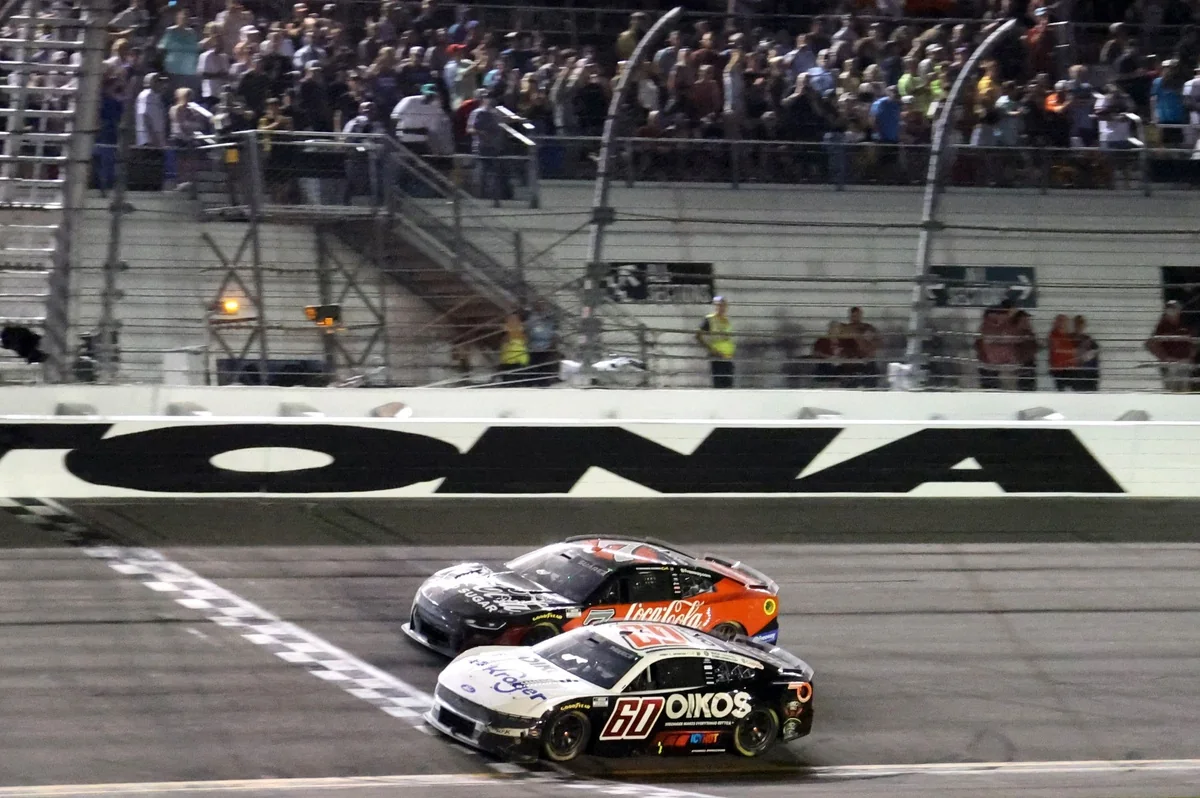
Preece did not receive an automatic Chase invitation merely for winning. The revised system had abolished “win and you’re in.” Instead, the 55-point winner’s award, plus the other points he collected during the night, lifted his 26-race total above SVG’s. The distinction matters: Preece qualified by finishing 16th in regular-season points, and the victory was the unusually large score that carried him there.
That outcome looked unlikely during portions of the Coke Zero Sugar 400. Van Gisbergen won Stage 1—his first stage victory on an oval—and banked ten points while Preece dealt with damage after sliding through the grass. But Daytona remained volatile. Preece’s RFK Racing team repaired the No. 60, positioned it for a fuel-sensitive finish and survived overtime. He led only five laps, yet was in front of Daniel Suárez when the race-ending caution froze the order. SVG finished 28th.
The final numbers explain why a win mattered so much under a points-only qualification rule. First pays 55 finishing points while second pays 35, creating a 20-point premium before stage points are added. Preece’s 67-point total was not a special postseason pass; it was an exceptional points day at the exact moment the cutoff became permanent. The official NASCAR results are the correct basis for that calculation, not an earlier live-running order.
SVG’s late regular-season losses were bigger than one race
Van Gisbergen’s assessment that one night did not sum up his season is supported by the wider record. NASCAR’s post-cutoff analysis credited him with major progress on ovals and two road-course victories, at Watkins Glen and Sonoma. It also identified eight finishes of 30th or worse, including three one-point days. He recorded no top-10 finish in the final five regular-season events.
Naval Base Coronado was especially costly because a crash ended a race at a street circuit where his skill set made a large score plausible. New Hampshire then took another 19 points out of his buffer when he finished 20th. Those results do not make Daytona irrelevant, but they explain why a driver with two victories reached Race 26 vulnerable to one opponent’s huge night.
The fairest reading is therefore two-part. Preece earned the final position with a remarkable recovery and first Cup points win. SVG lost it by only 17 after a season containing both elite road-course performance and too many low-scoring finishes. The classification rule became controversial afterward, but the qualification margin itself came from points earned across all 26 regular-season races.
Why Denny Hamlin Called the Rule Unfair
Denny Hamlin’s complaint was narrower than a rejection of The Chase. At NASCAR’s September media day, he was told that SVG could not improve beyond 17th after missing the field. Hamlin responded bluntly, then said his notes from prior discussions had led him to believe that non-Chase drivers would still be allowed to advance within the broader season standings. His objection centered on freezing their upward mobility, not on inserting SVG into the championship after the deadline.
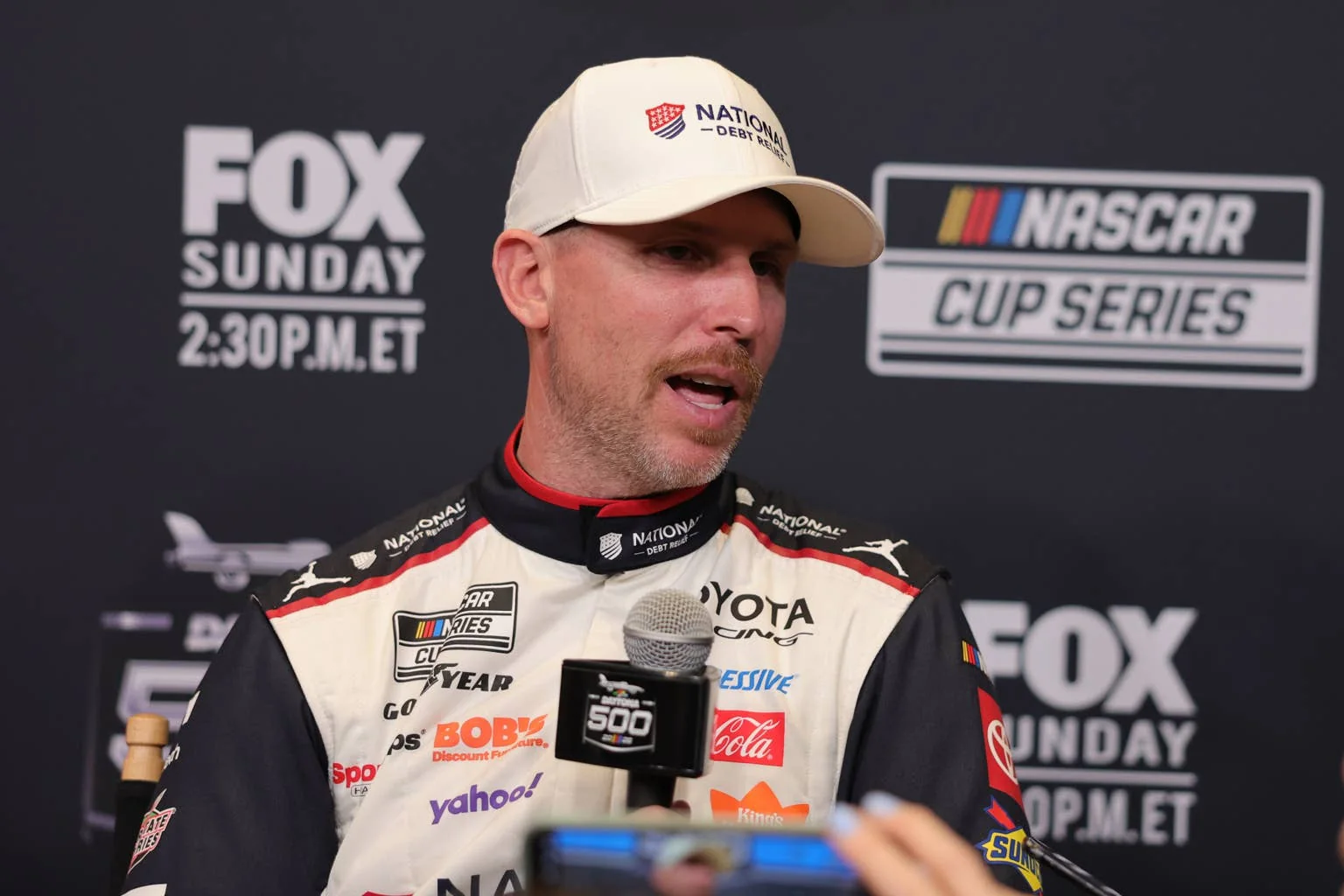
That difference gets lost when the reaction is reduced to its profanity. Hamlin accepted that Preece had qualified and SVG had not. What he challenged was the idea that the remaining ten races could show a non-qualifier outperforming several Chase drivers without the final table reflecting it. In his example, a driver who missed by a handful of points might produce an excellent closing run yet remain behind every qualifier by rule.
The concern touches two ways of reading “standings.” NASCAR uses the final order to crown a champion under a defined postseason structure. Hamlin was treating the same list as a season-long ranking of performance. Those purposes can conflict. Protecting the top 16 preserves the consequence of qualifying for The Chase; allowing everybody to move freely would make positions below the champion more responsive to all 36 races.
His position carries additional practical weight because he sees the sport as both a driver and a team owner. Final standings can shape how a season is described to sponsors, partners and fans, even when the championship itself is not at stake. A 17th next to a driver’s name communicates something different from 12th, regardless of whether both were outside the title fight.
No public NASCAR announcement located as of September 8 confirmed that the procedure would be altered during 2026. The reliable conclusion is therefore limited: Hamlin believed the restriction was unfair and thought a different treatment had been discussed, while the active format continued to separate the 16 Chase drivers from everyone else. The broader Chase guide remains the reference for the rules that are actually in force.
The Best Arguments For and Against the 17th-Place Ceiling
The rule can be internally consistent and still produce a final order that some fans dislike. Its defenders begin with qualification: if finishing in the top 16 after 26 races is supposed to matter, those who clear the cutoff should receive more than permission to chase first place. Its critics begin with measurement: if the final standings appear to rank an entire 36-race season, the order should respond to what every driver does in all 36.
The case for protecting the Chase field
A protected top 16 creates a clear reward for regular-season execution. Drivers cannot rely on one victory to rescue months of weak points because “win and you’re in” is gone. They must accumulate enough finishes and stage points to reach the cutoff. Once they do, the reseed and the guaranteed top-16 classification become the earned benefits of that work.
This structure also keeps the postseason legible. The audience can follow one group competing for the championship across ten races without wondering whether a non-qualifier has crossed back into that group. NASCAR explicitly designed the revised Chase to value consistency while increasing the reward for winning. A firm boundary supports that design: Race 26 is a real deadline rather than a soft checkpoint.
There is a competitive-incentive argument as well. A team hovering around 15th in August knows that missing by one position affects its best possible year-end ranking. That raises the cost of a speeding penalty, a poor stage decision or an avoidable crash before Daytona. The regular season has teeth precisely because the consequences cannot be completely repaired afterward.
The case for letting every driver keep climbing
The strongest objection is that championship eligibility and final ordinal ranking do not have to be identical. NASCAR could reserve the title for the 16 qualifiers while still allowing all drivers to move through positions below the champion according to their full-season performance. Under that approach, missing the cutoff would permanently end SVG’s title chance but would not force a ten-race hot streak to stop at 17th.
That alternative would make the table more descriptive. Suppose a non-Chase driver wins twice, scores consistently and overtakes the raw total of several lower Chase seeds. Listing that driver ahead of them would communicate the performance seen on track, while a separate marker could show that he was ineligible for the championship. Other sports routinely distinguish postseason qualification from broader records; NASCAR could make the same conceptual separation.
It could also sustain a more visible points incentive for eliminated teams. Wins always matter, and crews have sponsors, bonuses and pride to race for, but the ability to gain every attainable standings position supplies a simple season-long objective. Fans do not need an artificial reason to value a win; they may still prefer a table in which ten excellent late races can materially repair an earlier slump.
Neither view changes the 2026 result. The case for the ceiling values the integrity of the cutoff, while the case against it values the accuracy of the full final order. The controversy persists because both principles fit NASCAR’s stated effort to reward consistency. The dispute is about which portion of the season should control positions 2 through 36, not about whether the champion must come from The Chase.
What SVG Can Still Accomplish in the Final Ten Races
Missing The Chase removed van Gisbergen from the 2026 championship fight; it did not turn the closing schedule into exhibition races for the No. 88. Every event remains a points-paying Cup race with its own trophy, purse, stage battles and official result. SVG can add victories to his record, defend 17th against other non-qualifiers and help Trackhouse Racing develop its oval program for 2027.
The immediate schedule supplies different tests. Gateway rewards braking control and the ability to rotate through flat corners without abusing the rear tires. Bristol compresses the field into traffic and makes rhythm, tire behavior and pit-road execution decisive. Kansas and Las Vegas test intermediate-track speed, while Talladega creates a drafting problem in which alliance, fuel saving and late-lane decisions can outweigh a car’s isolated pace.
The Charlotte Roval is the obvious circle on SVG’s calendar because it restores a road-course setting to the closing stretch. His 2026 victories at Watkins Glen and Sonoma establish why he will command attention there. They do not make another win automatic: qualifying position, stage strategy, cautions and the balance between short-pitting and scoring stage points can all overturn a raw road-racing advantage.
His oval races matter just as much to the longer project. NASCAR highlighted a career-best Cup oval finish at Nashville earlier in 2026, evidence of meaningful progress beyond his specialist reputation. Trackhouse can use the final weeks to measure whether that improvement transfers across a flat one-mile track, a concrete half-mile, intermediate ovals and a superspeedway. A clean run at Gateway may say more about the team’s baseline than another fast Roval weekend.
SVG also remains part of the championship environment. If he wins a stage, those points are unavailable to a Chase contender. If he races a title candidate for the lead, neither driver receives special on-track immunity. Teams may manage risk differently, but the non-Chase car has every right to compete for the same checkered flag. That interaction is one reason the lower group cannot simply disappear from coverage.
Fans following his closing run should judge four things: race finishes, stage scoring, oval pace relative to Trackhouse teammates and execution on pit road. The remaining NASCAR schedule shows when each test arrives, while the results hub records what actually happened. A strong finish cannot reopen the championship, but it can materially change the story of SVG’s second full Cup season.
Could NASCAR Change This Rule for 2027?
NASCAR can revise how non-Chase drivers are classified, but no official announcement located by September 8, 2026 confirms a change for 2027. The current championship format was introduced for 2026 and beyond. Hamlin’s statement shows that a different treatment was discussed or advocated in industry conversations; it does not prove that NASCAR approved it.
A future adjustment would not require NASCAR to abandon The Chase. Officials could keep the top-16 cutoff, the one-time reseed and exclusive championship eligibility while changing only how positions beneath the champion are ordered. One possible model would allow raw post-Daytona performance to reorder non-champion positions, with a symbol identifying which drivers had qualified. Another would preserve positions 1 through 16 but create a separately promoted season-points table. Those are editorial possibilities, not announced plans.
The first season under a major format change naturally exposes edge cases that were less visible on announcement day. SVG is a particularly clear example because two victories make the 17th-place ceiling feel counterintuitive, while Preece’s dramatic Daytona win demonstrates why a hard qualification deadline can create compelling stakes. NASCAR now has actual results, driver feedback and fan reaction to evaluate rather than simulations alone.
Until officials publish a bulletin, the practical advice is simple: treat SVG as ineligible for positions above 17th, and treat any claim of a 2027 correction as unconfirmed. Watch NASCAR’s formal competition announcements and the live standings page for an implemented change. The rule may remain controversial, but clarity requires separating what Hamlin wants from what the scoring system presently does.
About the author
NASCAR Schedule Editorial Team
The NASCAR Schedule editorial team turns verified schedules, timing and scoring, official announcements and race-weekend context into direct answers for fans.
View all articles by this author →Join the discussion
Comments
Sign in with Google to comment. Keep it race-focused; new comments are reviewed before publication.
Loading comments…