NASCAR Rainout Qualifying Rules for 2027: How Owner Points Set the Starting Grid
When NASCAR cancels qualifying in 2027, owner points will set the starting order. The 2026 Kansas example shows why the rule changed and what to check before race day.
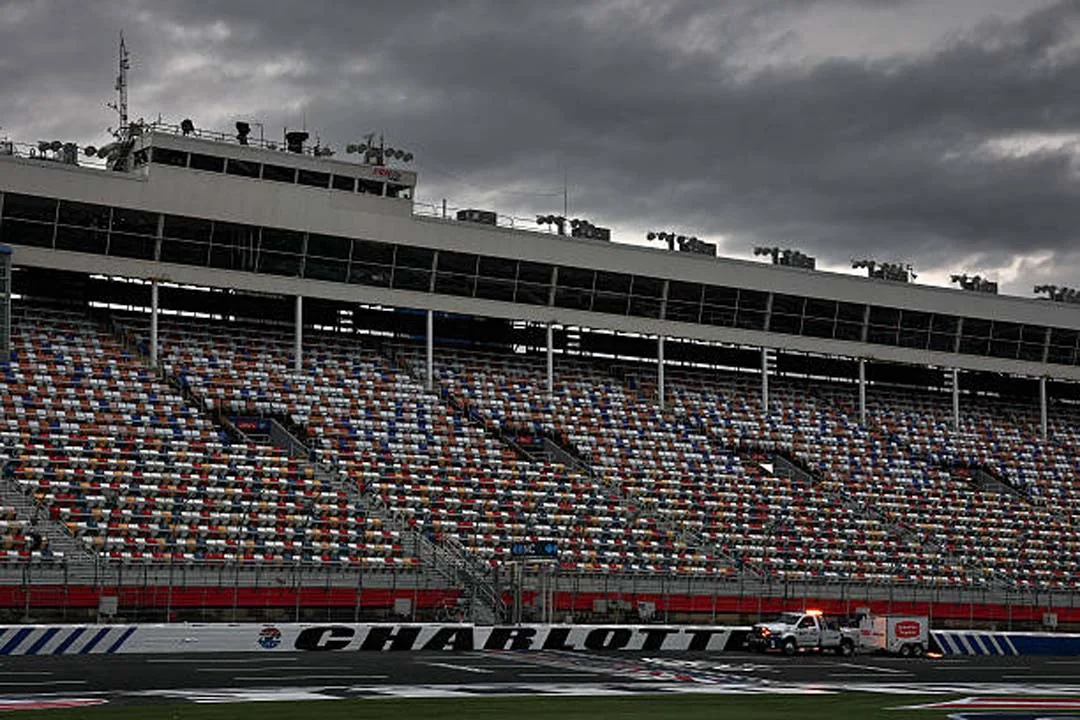
NASCAR will set the 2027 starting lineup by owner points when it cancels qualifying under its standard weather procedure. The change, confirmed by NASCAR event management president John Probst on Nov. 6, 2026, replaces a fallback that put 70 percent of its weight on how the car finished the previous race. This matters most when rain wipes out Cup time trials and teams go straight into a points race with positions assigned on paper. The 2026 Kansas front row shows how much a single finish could swing the old calculation. To check the grid on race weekend, start with the official cancellation notice and read the lineup for the correct series.
What sets the NASCAR starting lineup when qualifying is rained out in 2027?
Owner points become the deciding input when officials call off Cup qualifying and use the standard rainout procedure. NASCAR’s president of event management, John Probst, confirmed the change on Nov. 6 following the State of the Sport news conference at Homestead-Miami. His explanation simplified a question that had become unusually visible during the 2026 Chase. When qualifying disappeared from the weekend, what part of an entry’s record should determine its starting position? For 2027 the answer is the owner standings.
The change takes a separate previous-race finish calculation out of the canceled-session grid. A car’s finish still has its normal impact on the owner championship because the race awards points. That result now reaches a rainout lineup through the accumulated standings. It no longer carries its own additional weight in the formula that puts the cars in order for the start.
The weather call comes first. A wet Saturday forecast can mean a delayed session, a different track schedule or ultimately a cancellation. Officials may still find a window for practice after cutting time trials, as NASCAR did at North Wilkesboro in July 2026. Once NASCAR declares a qualifying cancellation, check the race’s published starting lineup for the positions it has assigned.
A canceled session and a completed time trial answer different questions
A completed qualifying session produces results from the timed runs or other qualifying procedures NASCAR specifies for that event. Before it starts, the qualifying order says when a car was due to make its attempt. The practice sheet has another purpose. It helps teams see how their cars are working and gives fans clues about speed and balance. Only the starting lineup tells you the positions assigned for the race.
That distinction matters if a live feed shows some timing activity before the weather stops the program. NASCAR's 2026 Nashville weekend page, for example, reported a mid-session Truck qualifying cancellation and still posted a rule-book lineup. The page for that weekend kept practice data, the planned order and the lineup in separate fields for each series. For 2027, use the official call for your session and then open the grid. The guide to NASCAR qualifying formats explains how these documents fit together when the cars do get to run.
Why owner points follow the car
Owner points are the championship record for an entry. Driver points track an individual’s championship campaign. If the same driver starts every race in the same car, the two records can look almost identical. A replacement driver, a team with several entries or a separate points-eligibility status calls for a closer look at NASCAR’s standings.
The number in the entry list is the place to begin. Team Penske can appear more than once in an owner table, just as Hendrick Motorsports can. Each row describes its own entry, with its own starts and results. A second car in the same organization has a separate points rank. In a cancellation, the record that follows the entered car gives the useful reference.
What to look up when a car has a substitute driver
Consider Hendrick's No. 48 in 2026. Alex Bowman missed four races early in the season, and Justin Allgaier and Anthony Alfredo drove the car during that stretch. NASCAR reported that the No. 48 finished 24th in the owner standings. Bowman, whose championship record covers his own starts, finished 26th in driver points. Those different positions show why looking up the driver alone can give a reader the wrong answer on a wet weekend.
If a fill-in is entered in a car on Saturday, first identify the number and team on that weekend's entry list. Then find the matching entry in the owner standings. A substitute can take the green from a grid position assigned through that car's standings even if the driver has a different championship rank or appears only intermittently in Cup. The two points tables still describe separate championships.
Which points table to use on race weekend
NASCAR's Cup standings divide the season into Driver, Owner and Manufacturer views. Use Owner and check the date on the table before comparing entries. For a Cup race, an owner table from the O'Reilly Auto Parts Series or the Truck Series will describe a different competition. A final table from the previous season can be useful historical context, especially during the winter. The applicable 2027 table and event procedure are what you need for a live starting grid.
Once racing begins, finishing positions and stage results build the underlying record again. The NASCAR points system explained breaks down the scoring structure in use when owners and drivers put up the 2026 numbers. Look at those separate standings before treating someone's rank on a broadcast graphic as their likely position in a rainout field.
The 2026 Kansas example shows what the 70/30 formula changed
The 2026 Hollywood Casino 400 gives the two procedures a common set of inputs. Joey Logano had just won the Bristol Night Race in Team Penske's No. 22 Ford, with Kyle Larson second in Hendrick Motorsports' No. 5 Chevrolet. Each brought a strong recent finish to Kansas. The two comparable results are what make the example useful. The old score could put the Bristol winner ahead even though the published weights imply a better owner rank for Larson’s entry.
NASCAR’s 2026 calculation combined two position numbers. It multiplied the previous race finish by 0.70 and the owner rank by 0.30. Lower scores were stronger. Kansas’s published qualifying order had Logano at 1.600 and Larson at 1.700. Because their finishing positions at Bristol are known, the owner rank in each calculation can be derived from the two documented scores. The No. 22’s result fits third place in owner points, while the No. 5’s result fits first.
The arithmetic is short. Logano had 0.70 × 1 plus 0.30 × 3, which equals 1.60. Larson had 0.70 × 2 plus 0.30 × 1, which equals 1.70. The first-place finish at Bristol was worth seven tenths of a metric point in the comparison. The No. 5’s advantage of two positions in the owner table counted for six tenths. Logano came out one tenth ahead.
| Cup entry | Bristol finish | Implied owner rank | Published score | Kansas start |
|---|---|---|---|---|
| No. 22 Joey Logano | 1st | 3rd | 1.600 | 1st |
| No. 5 Kyle Larson | 2nd | 1st | 1.700 | 2nd |
Before the cancellation, the numbers had a different job. Logano was due to run 36th in the scheduled session, and Larson was due to run 35th. Rain erased those runs. The rule-book grid promoted the strongest of those same metric scores to first place for the race. Anyone trying to read the original session sheet as a starting lineup would have put both cars at the wrong end of the field.
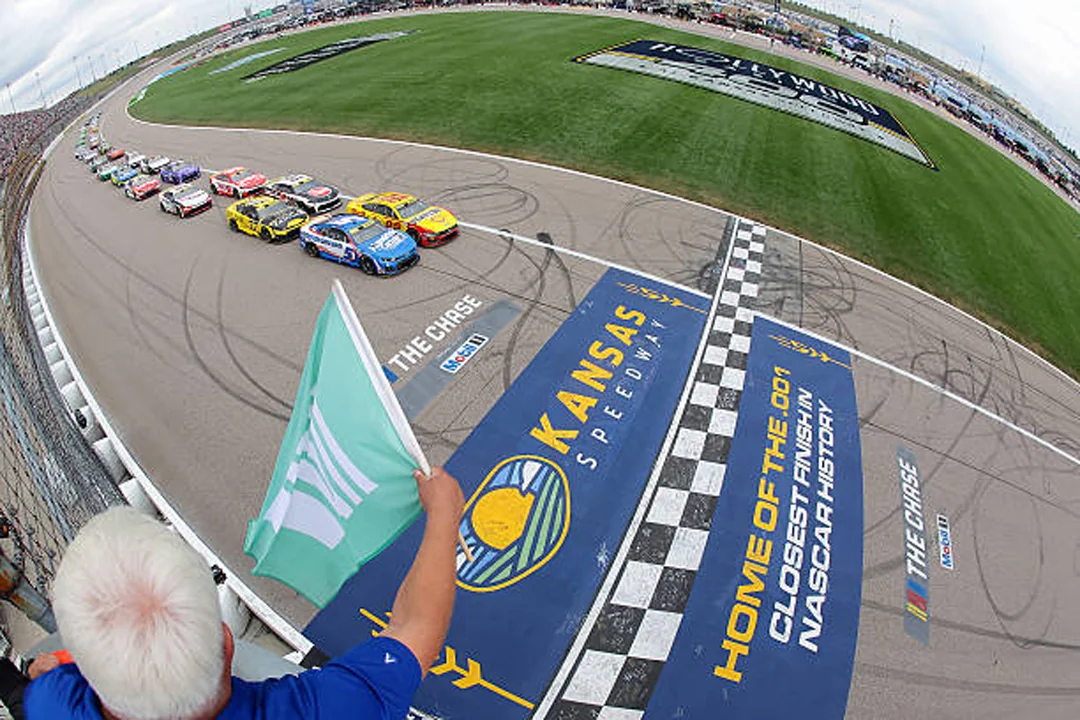
Apply the announced owner-points criterion to just this pair and the relative order flips. The No. 5’s first-place owner rank would put it ahead of the No. 22’s third-place rank. This is a comparison using 2026 numbers. It describes how the selection works and leaves the rest of the field, the applicable event procedure and the race result outside the calculation.
The actual result underscores why the distinction matters. Logano started first and finished 20th. Larson started second and won. Their starting positions show what the cancellation rule did. Their finishes show the outcome after a full race. The 2026 NASCAR Chase rainout metric adds the rest of the historical context, and the NASCAR Cup Series results archive records where the cars actually finished.
Why the rule matters for track position and Chase points
Starting position buys time. A driver who begins near the front can spend the opening green-flag run evaluating balance and watching the leaders. A driver deep in traffic has to work through cars with different speeds and lines before reaching the same part of the field. On a narrow track, a missed run off the corner can leave a faster car stuck for another lap. Starting position can therefore affect which teams have a realistic shot at early stage points.
That consequence drew more attention in the 2026 Cup Chase because four of the first six races lost qualifying to weather. The canceled sessions came at Darlington, Bristol, Kansas and Charlotte. Under the 2026 scoring format, the first two stages paid from ten points for first down to one for tenth, and those points counted toward the Chase. A bad slot on the grid had a cost that could start accumulating well before the checkered flag.
A pre-race washout also reduces the time crews have to test their setups when it takes away practice. Before the 2026 Charlotte race, crew chief Charles Denike explained that extra changes once the race starts can cost track position on pit road. A car with good baseline balance might let its driver ride close enough to the front to stay flexible on a caution. A team struggling with turn-in or rear grip must decide how much time to spend solving it. Either crew can find speed during the race, and the race can still turn on a tire call or on how a restart sorts out.
How a bad finish could follow a team to the next race
Darlington was the sharpest early example. Six Chase drivers were assigned 20th or worse for the 2026 Southern 500. Carson Hocevar started 34th and Chris Buescher started 35th after trouble in the previous race at Daytona. Tyler Reddick lined up first when weather cut the on-track program. Drivers near the back still had options. NASCAR reported that Ryan Blaney advanced from 24th on the grid to fifth at the first stage checkpoint.
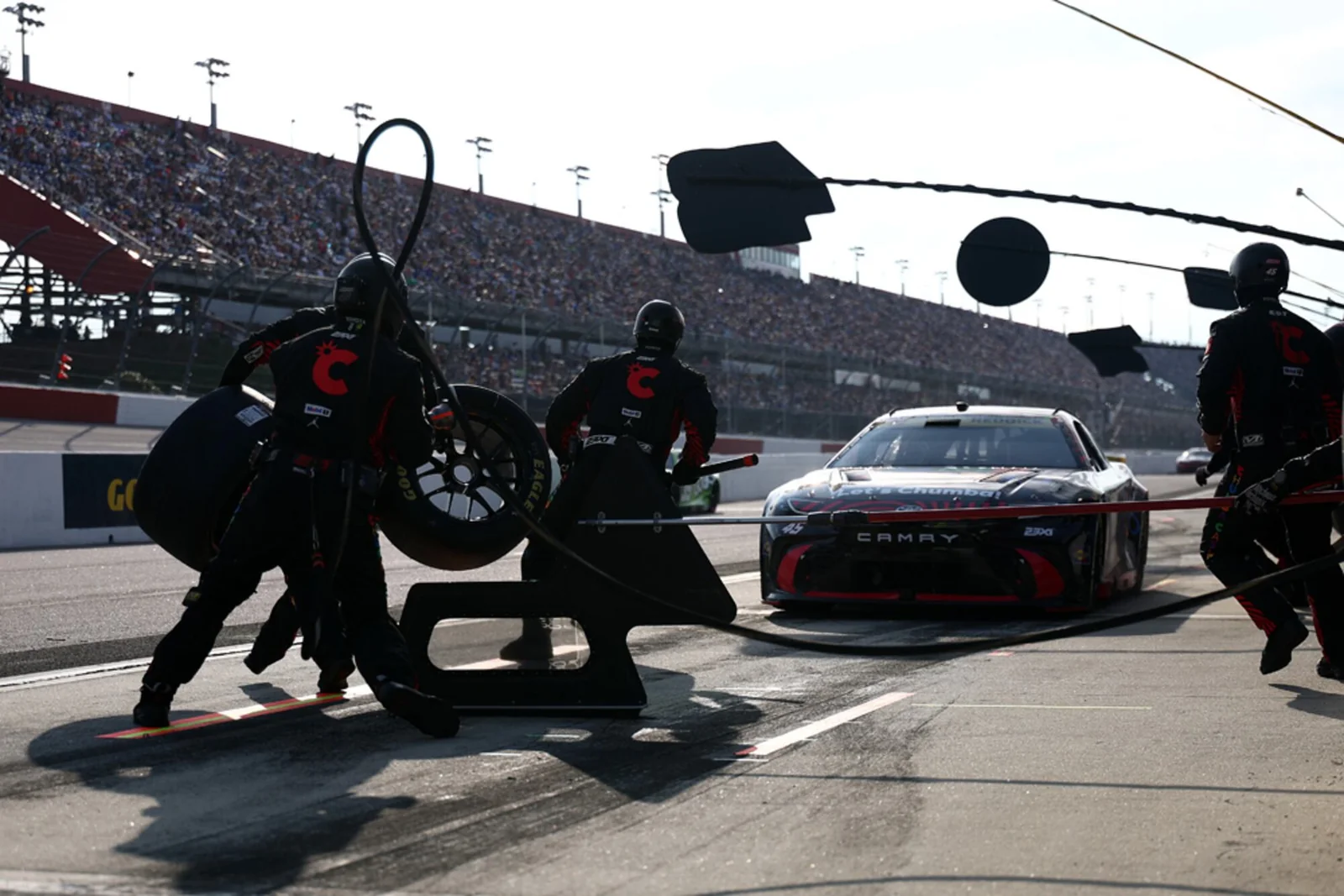
The old formula made an incident at one track unusually consequential at the next if the weather intervened. With owner points as the fallback, the standings still absorb the bad finish, alongside the other races that built the entry’s position. Some fans welcomed the wider sample. Others pointed out that a lopsided points leader could be handed a useful starting spot more than once. Both reactions recognize how valuable a front row can be when qualifying has disappeared. The 2027 decision gives sustained results the deciding role in assigning that starting position.
How to check the official grid after a qualifying cancellation
Start with the event name and the correct series. A single track can run a Cup race, an O'Reilly Auto Parts Series race and a Truck race on different days, with weather decisions for each program. The 2027 NASCAR schedule gives you the weekend and race to look up. Then check the latest official notice for the series you want. During a delay, the scheduled session may still happen. The rule becomes relevant when officials say qualifying has been canceled and the event is going straight to a rule-book grid.
- Open the current race-weekend announcement and verify that it covers the right event, series and date.
- Find the starting-lineup release, which the event hub may mark as set by rule book. Use its positions as the official assignments.
- Open the matching owner standings to understand the basis for the order. Keep the qualifying-order sheet nearby only as a record of the original plan.
- Check the latest race-day updates before the start. Where available, the pit-stall assignment is its own document and may answer a different question.
Occasionally the starting order is released before every loose end has been resolved. Keep the time of the update in view if several copies of the grid circulate. An entry list can show who intends to run, the published lineup gives the starting assignments, and a later pre-race update can affect who actually rolls to the green from a particular spot. NASCAR's 2026 Kansas weekend hub shows how those records were kept apart during a real cancellation.
Check the event instructions for the Daytona 500, the Clash and early-season weekends
Daytona Speedweeks has several sessions with separate jobs. The Feb. 13 Clash is an exhibition with a qualifying lap plus a timed pit stop under the format NASCAR announced in November. The Feb. 17 time trials and Feb. 18 Duel races are listed separately for the Feb. 21 Daytona 500. In 2026 the timed laps set the first row and the Duels set most of the remaining positions. The Daytona 500 qualifying and Duels guide explains how that process works and why a change to one session could affect the rest of the week.
The November announcement gives a standard 2027 rainout criterion. Early in the season, the applicable points snapshot matters especially when a team is new, standings are tied, or an event has a separate process for admission to the field. An advance schedule establishes the intended program. For open entries, tied points, a partially completed session or a weather change at a special event, look for the event's competition instructions and then the latest official lineup.
About the author
NASCAR Schedule Editorial Team
The NASCAR Schedule editorial team turns verified schedules, timing and scoring, official announcements and race-weekend context into direct answers for fans.
View all articles by this author →Join the discussion
Comments
Sign in with Google to comment. Keep it race-focused; new comments are reviewed before publication.
Loading comments…