NASCAR Points System History: From 2003 and the Latford Era to the Modern Chase
A season-by-season guide to NASCAR Cup scoring explains Matt Kenseth in 2003, the first Chase, playoff eliminations, stage points and the 2026 reset.
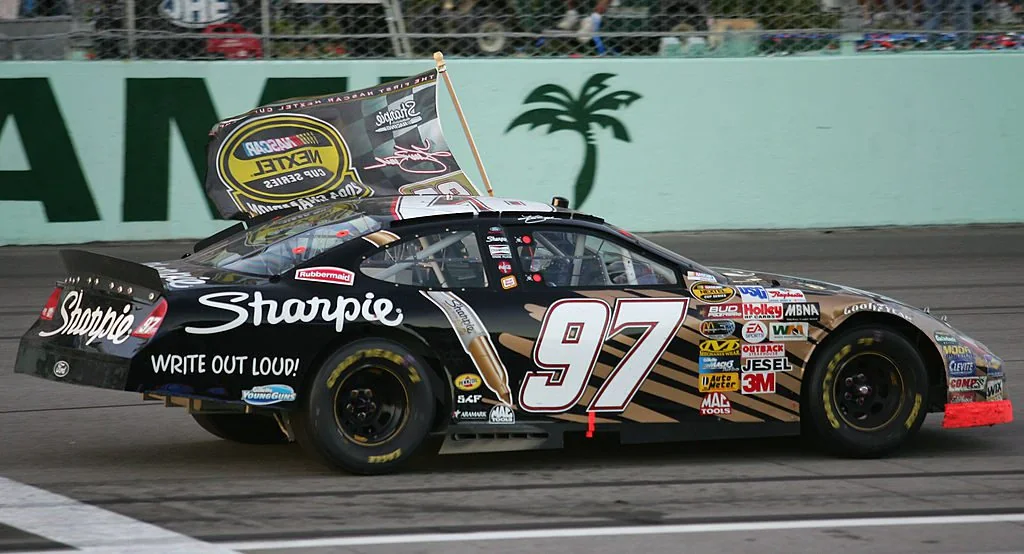
NASCAR Cup points have measured several different things. In 2003, every race contributed to one season total. The original Chase reseeded the contenders once for the final 10 races in 2004. From 2014 through 2025, the playoff field shrank in rounds until four drivers settled the title in the finale. NASCAR brought back a 10-race points Chase in 2026, along with a bigger reward for a race win.
That history explains why a runner-up could match a race winner’s points in 2003 and why a driver could take the 2026 title without winning the last race. Start with the finish table, then check when NASCAR carried points forward or reset them.
What did a NASCAR points finish mean in 2003?
A good finish in March helped the championship in November. In 2003, the NASCAR Cup Series, then known as Winston Cup, used Bob Latford’s finish-and-bonus system. Drive a strong race and the points you earned went into the same running total as every other points race. The driver with the most at the end of the 36-race season won the championship.
How the Latford race table rewarded finishes and laps led
The winner started with 175 finishing points, second place earned 170, and third earned 165. The gaps tightened lower down the order, with five points per position through sixth, four through 11th and three from 12th on. NASCAR added five points for leading a lap and another five for leading the most laps. The winning driver led the final lap, so even a late pass for the lead added five points to the 175 listed for first place. Contemporary AP reporting on the 2003 points table.
Imagine the runner-up leading most of the afternoon and losing the lead on the final lap. The winner takes 180 points (175 plus five), and the runner-up also takes 180 (170 plus both five-point bonuses). The race still has one winner. The points award records what each driver did on the way to the finish.
How Matt Kenseth won the title with one race victory
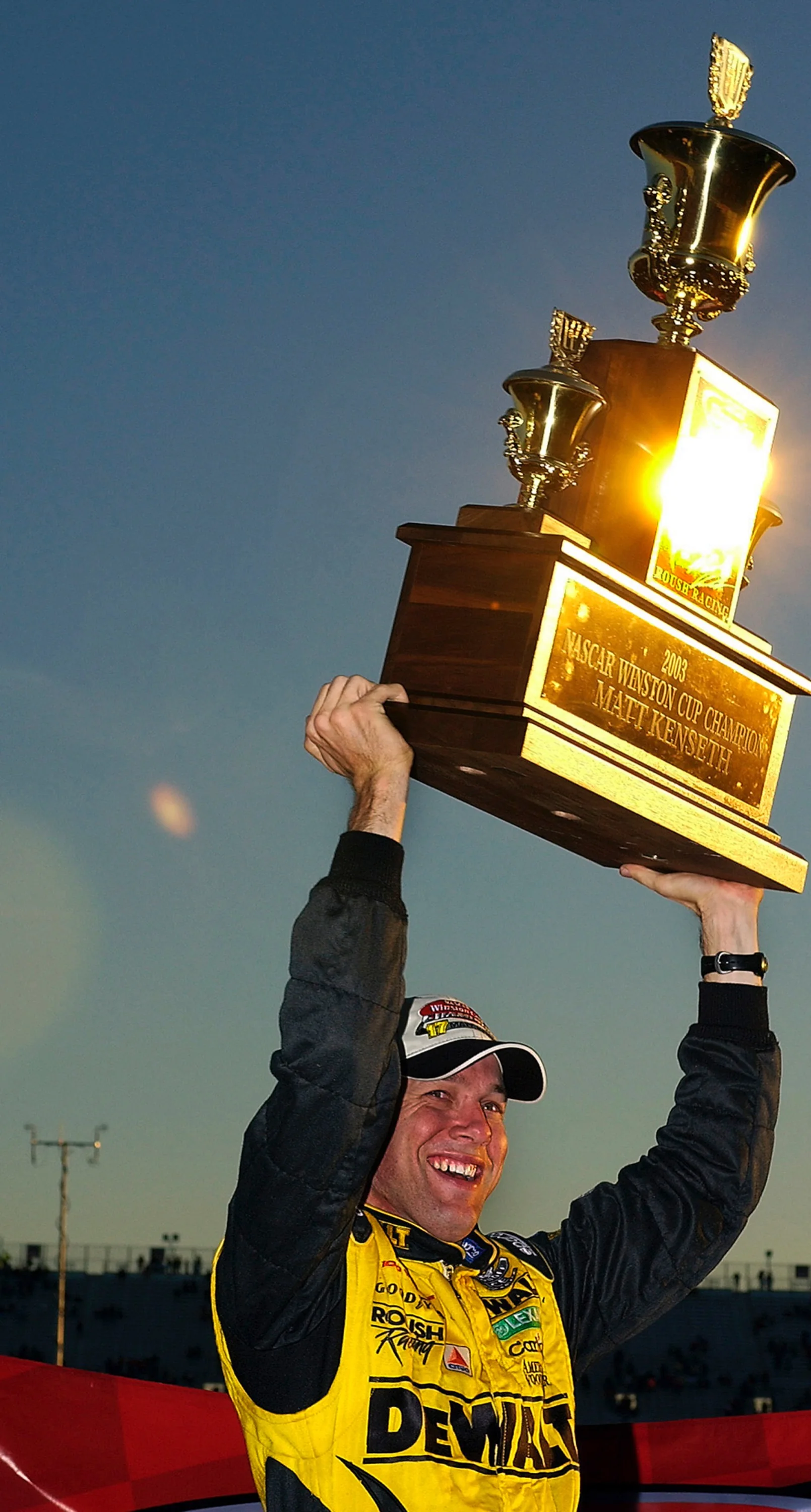
Matt Kenseth won once in 36 starts and posted 25 top-10 finishes. Jimmie Johnson won three races, had 20 top 10s and finished 90 points behind, 5,022 to 4,932. Ryan Newman won eight races and placed sixth in the standings. Those totals show how much ground a driver could cover through finishes across the calendar. Kenseth led the points for the last 32 weeks, and NASCAR was already discussing scoring changes by August of that year. Final 2003 standings and NASCAR’s Kenseth biography.
For later champions who raced for the title under different systems, see the Cup Series champions by year.
What did NASCAR reset when the original Chase began?
In 2004, the first 26 races established who got to race for the championship. The top 10 qualified, and anybody else within 400 points of the leader could join them. NASCAR moved the leader to 5,050 points and gave the next drivers 5,045, 5,040 and so on in five-point steps. The contenders then added the points they earned in each of the last 10 races. Whoever had the highest total after those 10 won the title. NASCAR’s 2004 format announcement.
Picture a leader 130 points clear of second after Race 26. At the Chase reset, those two would be five apart. The second-place driver would still have ground to make up, but a single good afternoon could cover it. An additional rule mattered even if you missed the Chase: first place in the race paid 180 base points in 2004, up from 175, with the lap-leading bonuses still available.
Kurt Busch started the first Chase seventh. By the Homestead finale he led Jimmie Johnson by 18 points. Busch lost a right-front wheel, stayed on the lead lap after a caution, and recovered to finish fifth. Johnson finished second, shrinking the championship margin to eight. Greg Biffle won the race while Busch kept the title lead. Under the scoring of that season, the positions recorded in the Cup Series race results and the points gaps answered different questions. NASCAR Hall of Fame account of the inaugural Chase.
Why a later Chase table can use a different points scale
In 2007, NASCAR expanded the field to 12 and dropped the 400-point option. The top 12 qualified by points, then each received a 5,000-point base and 10 extra for every regular-season win. A driver who qualified with two wins started the Chase at 5,020, while a qualifier with zero wins started at 5,000. NASCAR also boosted the race win itself to 185 base points. NASCAR’s 2007 rule changes.
If a standings screenshot shows one driver jumping above another at the reset, identify the season before checking the math. In 2004, the reset preserved the contenders’ order going in. In 2007, a driver lower in the regular-season standings could jump ahead at that moment by bringing more wins into the Chase.
How did the 2014 eliminations change the title race?
NASCAR kept a 10-race postseason in 2014 and introduced three elimination rounds. Sixteen drivers started the Chase. Twelve remained after the first three races, eight after six and four after nine. The contenders who survived received a new starting total at each cut. That meant the title race could change abruptly even if the calendar still showed 10 events. By the time the field reached Homestead, only the four finalists could become champion. NASCAR’s 2014 format announcement.
How wins and points advanced drivers through the rounds
In each of the first three rounds, a win automatically advanced a driver who was still in contention. Points earned in that round decided the remaining spots. A contending driver who won the first race of a three-race round could look ahead to the next round. A winless driver sitting near the cutoff had to watch both the points gap and which competitors were winning. Four drivers lost title eligibility at the end of every three-race round, even though they kept racing for results and their final standing.
The inaugural elimination season showed both routes to the same finale. Kevin Harvick won at Phoenix in the last three-race round to claim a Championship 4 berth. Ryan Newman reached Homestead on points without a victory that season. The other two finalists were Denny Hamlin and Joey Logano. NASCAR’s 2014 Championship 4 preview.
Why the Championship 4 finale carried different stakes
The four contenders started Homestead level at 5,000. The champion would be the highest official finisher among those four. If a driver outside the Championship 4 won the race and the four eligible drivers finished second, fourth, sixth and seventh, the runner-up in the race would win the championship. Lap-leading bonuses and wins from earlier in the year carried no advantage in that final contest.
At Homestead in 2014, Harvick won the race and the title. Newman finished half a second behind him in second. Hamlin finished seventh and took third in the championship, with Logano 16th in the race and fourth for the season. Compare those two sets of positions with the 2026 Chase format, where the finale completed a 10-race points total. NASCAR’s account of the first Championship 4 finale.
What was the difference between stage points and playoff points?
In 2017, NASCAR added scoring checkpoints within a race and a new way to reward wins in each of the first three playoff rounds. Stage points went into the driver’s championship points total right away. Playoff points were banked for resets if the driver made and kept advancing in the postseason. You could earn both for the same stage win, then see them show up in the standings at different times. NASCAR’s 2017 stage format announcement.
Stage points changed the value of running near the front
For a typical Cup race in 2017, finishing first in one of the first two stages paid 10 points. Second paid nine, and the scale ran down to one for 10th. Imagine a driver winning Stage 1, finishing fifth in Stage 2 and crossing the line fourth. The two stages paid 10 and six points, and fourth at the finish paid 33. Add them up and the driver earned 49 race points with a fourth-place finish. A race winner who scored only the 40 finishing points could leave that day with a smaller points haul.
That structure gave teams a fresh calculation at tracks where they could pit before a stage ended. Staying on track could preserve a top-10 stage finish. Pitting early could help a team regain track position when rivals stopped after the stage. The decision could pay off in one part of the race and cost points in another. The end of the last stage still determined the official race finish. NASCAR’s 2017 stage and scoring FAQ.
Playoff points changed a contender’s next reset
The Stage 1 winner in that example also earned one playoff point. The race winner earned five. A driver could build the playoff-point total from stage wins and race wins throughout the season, and the regular-season standings offered an additional bonus to the top 10. The regular-season leader earned 15 playoff points and the runner-up earned 10.
A qualifier taking 17 playoff points into the 2017 postseason started at 2,017, with the bonus added to the 2,000-point base. Those playoff points continued to matter at the Round of 12 and Round of 8 resets if the driver survived. The Championship 4 started level at Homestead. The 2026 scoring explainer shows how NASCAR later kept stage points while dropping that playoff bonus system. NASCAR’s 2017 playoff rules.
What returned with the 2026 Chase?
NASCAR brought back a 10-race points Chase for the Cup Series in 2026. The 16 highest drivers in regular-season points qualified, with no automatic berth for winning a race. NASCAR reseeded the field after Race 26, then counted points across all 10 remaining races. The leading driver among those 16 after the finale won the Cup title. NASCAR’s 2026 championship announcement.
A single reseed gives the leader a head start
The regular-season leader started with 2,100, second place with 2,075 and third with 2,065. From there, each seed started five points lower, down to 2,000 for 16th. The leader’s 25-point advantage over second exceeded the 20 base points between first and second in any one race. Stage points and the fastest-lap bonus could change the net swing. Every driver in the Chase kept the points they earned across its 10 races and remained eligible while mathematically in reach.
The 2026 Chase race order shows where the reset occurred, and the 2026 Cup standings show where the drivers ended up. A snapshot from before the reset describes a different margin from the one those drivers took into the first Chase race. NASCAR’s complete 2026 seeding table.
Work through a race under the 2026 Cup rules
Give the driver who makes a late pass 55 points for winning and assume they scored zero stage points. The runner-up starts with 35. If the runner-up won the first stage and finished second in the second, they add 10 and nine for 54. The fastest eligible lap would add one more point and leave both drivers at 55. As in the 2003 example, they could leave with the same race points, but the available bonuses and the starting gap changed.
The fastest-lap point rewards one eligible timed lap. In 2026 Cup races, time set after the car had been repaired in the garage could no longer earn the bonus, though an otherwise eligible lap set earlier in the race, before the car went to the garage, could still count. A driver who led lots of laps earned stage points only by placing high enough when a scoring stage ended. NASCAR’s 2026 fastest-lap eligibility update.
The final race showed how the title and race result could split. Kyle Larson clinched the championship on his points after Stage 1 at Homestead. Ryan Blaney won the race. NASCAR’s 2026 finale recap.
How should you compare standings from different eras?
Start with the season and series. A 16-driver Cup Chase in 2026 appears alongside a 12-driver field in the O’Reilly Auto Parts Series and a 10-driver field in the Craftsman Truck Series. If a chart tracks owners, switch to the drivers’ standings before reading it as a driver championship table. The official Cup standings give you a starting point for that distinction.
Next, identify when the points were posted. A regular-season points table measures the races that qualified and seeded a driver. An opening Chase table in 2004 or 2026 shows the assigned starting totals. A standings snapshot during the 2014 elimination era may show a driver on the cutoff with a race still to go in the round. A 20-point deficit in a three-race round leaves a different set of options from a 20-point gap with nine Chase races remaining.
Then compare the finish and bonus columns. For a 2003 race, look for laps led and whether the driver led the most. In a stage-era race, check stage finishes before treating the points order as a mirror of the finishing order. One driver can win the race while someone else collects a comparable points total, as the 180-point and 55-point examples show. Across seasons, Matt Kenseth’s final 5,022 in 2003 and the 2,100 that opened the Chase for the 2026 top seed tell you where those drivers were in their own formats. Raw totals compare best within the same rules and the same part of the season.
If you want to compare how the rules affected a particular title fight, look for the last race where the lead changed and check which points were still available. A race win, a stage result or a bonus can matter at very different moments depending on the format.
About the author
NASCAR Schedule Editorial Team
The NASCAR Schedule editorial team turns verified schedules, timing and scoring, official announcements and race-weekend context into direct answers for fans.
View all articles by this author →Join the discussion
Comments
Sign in with Google to comment. Keep it race-focused; new comments are reviewed before publication.
Loading comments…