Why Did NASCAR Warn Fuel-Saving Teams at Talladega? Minimum Speed and Black Flags Explained
NASCAR says teams increased their pace after its October 25 warning. Understand the enforcement sequence, the limits of published speed figures, and the damaged-car distinction.
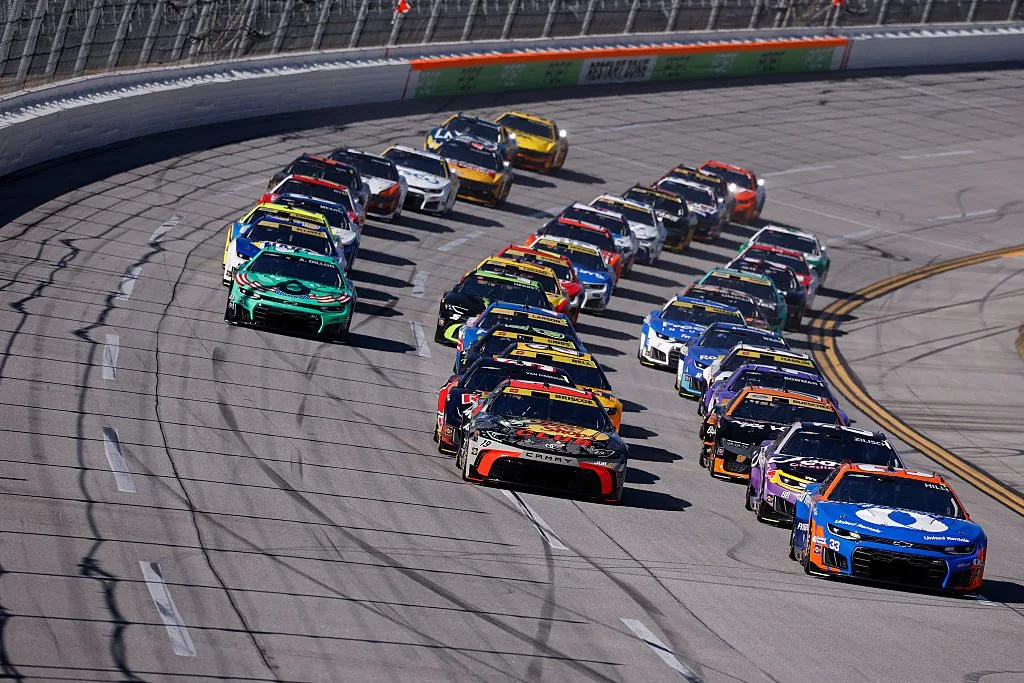
NASCAR warned fuel-saving Cup Series teams at Talladega because their pace had dropped below the event's minimum-speed requirement. No black flags followed because, according to NASCAR's October 27 explanation, teams increased their speed after the warning. The October 25 race did not demonstrate that the minimum-speed rule had disappeared; it demonstrated a warning followed by compliance.
That distinction matters when a television picture shows a tightly packed field going much slower than fans expect. Conserving fuel, failing a pace requirement and being unable to continue safely after damage are related racing issues, but they are not interchangeable. As of October 29, the clearest explanation separates what officials said happened, what published speed figures can establish and what remains a fair debate about the quality of superspeedway racing.
What NASCAR told the fuel-saving field
NASCAR's account is that a warning changed the field's behavior. During Stage 1, officials identified cars running below minimum speed and told teams that intervention would follow if they did not increase the pace. The teams did increase it. That is different from a story in which officials displayed black flags to most of the field and later rescinded them.
The warning went to pit road through Microsoft Teams
Mike Forde, NASCAR's vice president of racing communications, explained that NASCAR can message an individual team or all of pit road through Microsoft Teams. In this instance the warning went to the wider group. It told teams that some cars had not reached the required pace and that NASCAR would have to act if they continued. Forde explicitly connected the subsequent increase in pace with the decision not to black-flag anyone.
A message to teams is an officiating action even when the audience does not see a flag. It gives the pit box information that can be passed to the driver and incorporated into the next lap. A television viewer can therefore miss the intervention while seeing its effect on the field. That does not mean the broadcast picture is wrong; it means part of the communication happened through another channel.
The relevant distinction for a team is whether it can meet the requirement when asked. A fuel-saving instruction can be changed immediately if the car has the necessary performance. That is a different problem from a car whose damage prevents it from achieving a suitable pace. The race strategy guide explains the pit-stop incentives behind saving fuel, while this episode concerns how officials enforced a floor on that choice.
Seventy-five percent was an estimate, not a published penalty list
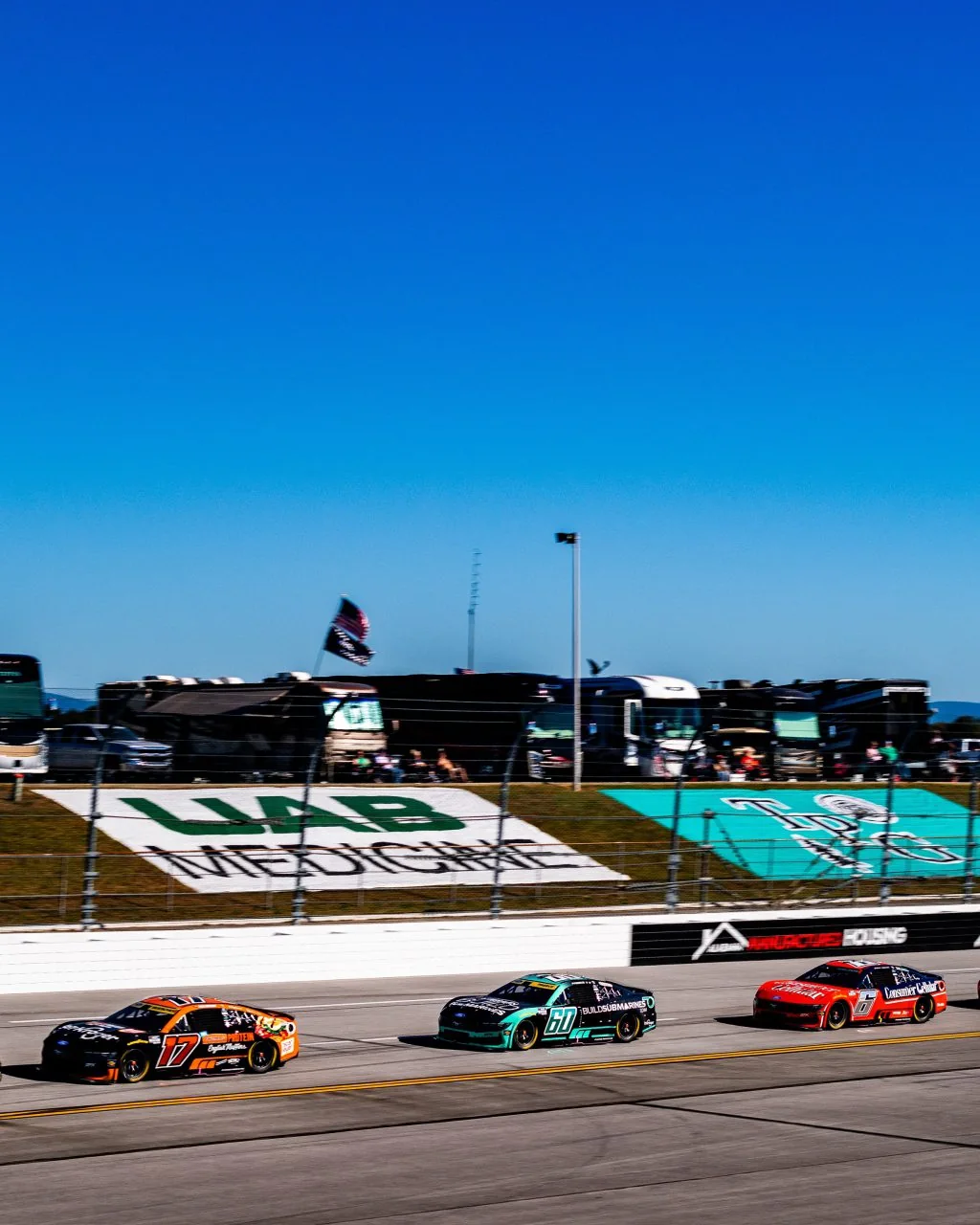
Forde estimated that about three-quarters of the field was below minimum speed at one point. RACER's account describes his estimate as lasting perhaps one or two laps. Those qualifications belong with the headline number. They do not support a claim that precisely that share of the field remained below the requirement throughout the entire stage.
Nor should a percentage be converted into a named list of guilty drivers without the underlying timing and officiating record. Rounding an estimate, multiplying it by the entry count and presenting the result as an official car total creates precision the explanation does not contain. The important confirmed point is that the problem was widespread enough for a message to all of pit road.
Receiving that shared message also does not prove every recipient was individually below the threshold. A group communication can explain an expectation to compliant teams as well as warn the cars needing to respond. To assess a particular driver, fans would need that car's relevant laps and the event's operative limit, rather than only a general view of the pack.
What minimum speed means and why lap time matters
Minimum speed is a lower limit on acceptable pace, not an instruction to run every lap as fast as the car possibly can. NASCAR's public summary describes Talladega's requirement as being within 12.5 percent of the pole position. Motorsport's account expresses the reference as the pole time. Neither wording should be casually rewritten as a demand to match the fastest lap achieved by a drafting pack.
The reference matters because qualifying and race conditions are different. Chase Briscoe's pole lap was 51.466 seconds at 186.065 mph. A car receiving help from the draft can run a very different lap from a car qualifying alone. Comparing a conserving pack with its own fastest assisted lap may show a large strategic slowdown, but it does not by itself establish the numerical limit officials were enforcing.
A percentage of speed is not the same percentage of lap time
Speed and time run in opposite directions over the same distance. A slower lap takes more seconds. More subtly, increasing lap time by 12.5 percent is not mathematically identical to reducing speed by 12.5 percent. That difference is easy to miss when a discussion switches between a timing screen, an mph graphic and an approximate figure in a news report.
| Hypothetical 50-second reference | Calculation | Result |
|---|---|---|
| Allow 12.5 percent more lap time | 50 multiplied by 1.125 | 56.25 seconds |
| Require 87.5 percent of reference speed | 50 divided by 0.875 | About 57.14 seconds |
These are arithmetic examples, not Talladega's declared race-control limit. The first corresponds to about 88.89 percent of the reference speed, because speed is the reciprocal of time for a fixed distance. The second starts with 87.5 percent of the reference speed and therefore produces a different allowed time. A reader checking a claim needs to know which quantity the percentage modifies.
That is why a rounded report of a roughly 57-second minimum should not be treated as a precise published rule sheet, especially when another account attaches a different mph value to it. This article does not declare an exact October 25 threshold from those approximations. The confirmed enforcement account does not depend on resolving a rounded number: NASCAR says cars were below the applicable limit, officials warned them, and the pace increased.
A whole-race average is another separate quantity. Pit stops and caution laps can pull that average down without proving an individual green-flag pace violation. Conversely, a car can record a fast lap earlier and still be below the requirement later. Match the lap, the reference and the phase of the race before using any number as evidence for a black flag.
Why a warning did not automatically become a black flag
A warning gives a team a requirement to meet; it does not mean a penalty has already been issued. The account Forde gave was that officials asked for a pace increase and got it. That sequence explains the lack of black flags without requiring a theory that NASCAR secretly waived the requirement for the field.
Officials gave teams an opportunity to increase the pace
Forde said drivers are usually allowed a lap or two to reach minimum speed, with the timing of a black flag remaining NASCAR's decision. Usually matters here. It describes the approach officials explained, rather than guaranteeing every car a fixed two-lap entitlement under every circumstance. A team still needs to respond to the instruction it actually receives.
This gives enforcement a practical purpose: restore an acceptable pace before escalating the consequence. If the driver can speed up, the immediate problem can be corrected while the car remains in competition. If it cannot, officials face a different decision. That distinction helps explain why the same minimum-speed concept can arise during both a strategy discussion and a damaged-car assessment.
It also avoids confusing a black flag with an automatic disqualification from the final results. The specific instruction and the reason for it matter. In this case, the confirmed outcome is simpler: no one received the proposed minimum-speed black flag after the field responded. Fans do not need to invent a subsequent penalty, appeal or reversal to explain the race record.
Tire falloff can change the relevant context
NASCAR's explanation also used Darlington as an example of why officials account for tire wear. Forde said a long tire run can bring a substantial drop in pace, and officials do not want to remove otherwise raceable cars simply because their tires have aged. NASCAR can adjust its expectation when the amount of wear is greater than anticipated.
That is sensible racing context to distinguish from deliberate conservation. A driver with worn tires may be using the grip available and still turning slower laps than on fresh rubber. Demanding the same pace regardless of the tire's condition could make the test a poor measure of whether that car should remain in the race. This is an explanation of the consideration, not a claim that every slow lap is excused.
Nor does the Darlington example establish that NASCAR changed Talladega's limit during this particular race. The reported October 25 resolution was an increase in the cars' pace after a warning. A general power to account for conditions and a documented use of that power are different facts. Keeping them separate prevents an ordinary contextual explanation becoming an invented mid-race rule change.
Fans can still argue that the floor should be higher or the enforcement faster. That is a proposal about the standard NASCAR ought to use. Whether teams complied with the standard in force is a separate question, answered here by the warning and response. The flags and penalties guide provides the wider procedural context.
Why this was different from repairing a damaged car
Minimum speed also appears in the Damaged Vehicle Policy, or DVP, because a repaired car must be able to race at an acceptable pace. That shared requirement does not place every conserving car under the damage procedure. NASCAR determines whether a vehicle is on DVP following an accident; simply choosing less throttle to save fuel is a different circumstance.
Strategy and raceability answer different questions
A strategic slowdown asks whether the team is complying with the pace requirement while pursuing a fuel objective. A damaged-car assessment asks whether the repaired machine can continue under the applicable conditions. The same timing screen may help answer both questions, but the required actions, repair restrictions and consequences come from the relevant procedure.
The current DVP wording reproduced by Jayski specifies three consecutive green-flag laps to reach the posted minimum speed. A car returning from the designated garage repair area gets one attempt and cannot return there before making that attempt. If it has not met the requirement by the end of the third lap, it cannot continue to be scored or compete. That specific damaged-car provision should not be replaced with the general lap-or-two warning description from the fuel-saving discussion.
Similarly, a repair clock concerns time spent carrying out permitted repairs. It is not a fuel budget and does not decide how long a healthy car may conserve. Fans seeing several different clocks on a broadcast need to identify which question each clock answers: time available for pit-road work, laps available to demonstrate pace, or laps remaining until a strategic pit stop.
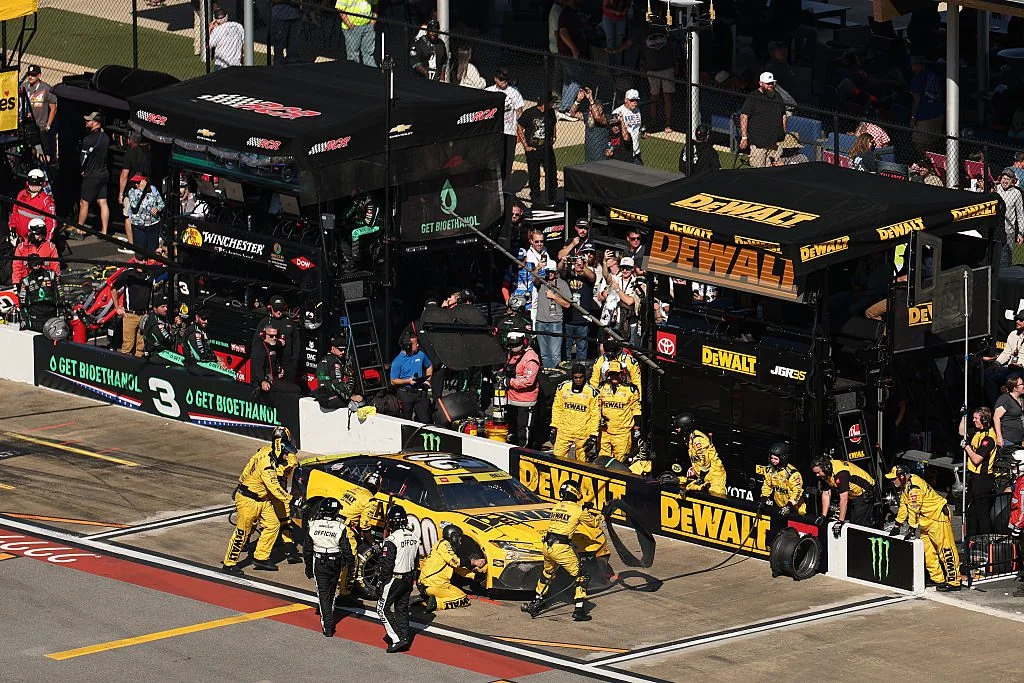
Older accounts can add another source of confusion. Going to the Cup garage is not, by itself, the automatic end of a race under the current framework. NASCAR's January 2026 explanation discusses repaired cars returning from the garage. They still have to satisfy the applicable requirements; the ability to return is not permission to run indefinitely at any speed.
Pace also does not certify every other aspect of a repair. A car could be fast enough while still needing officials to assess its condition, and a team remains responsible for returning a suitable vehicle to competition. The DVP text allows further inspection. None of that turns the Talladega warning into a claim that most of the field had unsafe or damaged cars. It was a response to how teams were choosing to race at that point.
What fans can judge from the race and what needs more evidence
The question behind the complaints is understandable: if the cars can go faster, why spend so much of a stage conserving? The answer involves incentives as well as enforcement. A minimum-speed rule establishes an acceptable floor. It does not remove the strategic value of using less fuel while staying above that floor.
RFK showed that another pace choice was possible
RFK Racing's Chris Buescher, Ryan Preece and Brad Keselowski demonstrated a different approach during the opening stage. NASCAR's race report describes their three-car draft building a large advantage over the conserving field, and they swept the first three places at the stage finish. That is a concrete racing outcome fans can examine, rather than a theoretical argument that nobody could break away.
Stage success should still be measured as stage success. Those positions and their associated points did not guarantee the same finishing order at the end of the race. Later pit cycles, restarts and incidents could change the opportunity. Calling RFK's approach successful in Stage 1 is supported by the result; calling it an unbeatable full-race strategy would need much more evidence.
When reviewing the sequence, watch how the gap changes before and after pit stops. A faster group can build track position but also have a different amount of fuel to replenish. The useful comparison is where cars emerge after comparable service, not only the largest gap shown before they stop. That method explains the tradeoff without assuming access to each team's private fuel calculations.
It also avoids declaring that every other driver could have achieved exactly the same result. Three cooperating cars, the air around them and the decisions of the pack all help shape an opportunity. The observed breakaway supports an argument for racing differently. It does not supply a controlled experiment in which every car had the same fuel use, traffic and execution.
Enforcing a floor does not guarantee flat-out racing
Suppose a team can conserve enough fuel to improve its next stop while remaining above the required pace. Enforcing the existing minimum alone does not eliminate that option. Raising the floor might reduce some conservation, but teams would still evaluate the fastest legal route through the whole stage, including the pit lane. That is racing analysis about incentives, not a declaration that NASCAR has adopted a new rule.
The dissatisfaction also goes beyond people misunderstanding a timing number. Fans can want more sustained competition even when officials obtain compliance. The discussion thread asking whether minimum speed still exists contains both calls for stronger penalties and doubts that a penalty would remove the underlying incentive. Those are examples of the debate, not a poll of the entire audience.
Current reporting quotes Cup managing director Brad Moran identifying fuel-saving changes as an offseason priority and discussing possible tools. Possibilities are not confirmed changes for the next event. Until NASCAR announces a specific revision, this race is best understood through the rules and warning it actually used.
For the next weekend, check the NASCAR schedule and TV listings, and use the Cup results to separate stage performance from the final finish. The question to carry forward is precise: did officials enforce the applicable pace requirement, and did the resulting racing satisfy fans? Those questions can have different answers.
About the author
NASCAR Schedule Editorial Team
The NASCAR Schedule editorial team turns verified schedules, timing and scoring, official announcements and race-weekend context into direct answers for fans.
View all articles by this author →Join the discussion
Comments
Sign in with Google to comment. Keep it race-focused; new comments are reviewed before publication.
Loading comments…