NASCAR History Timeline: From 1948 to the Modern Era
A chronological guide to the tracks, people, television moments, safety changes and championship formats that shaped NASCAR.
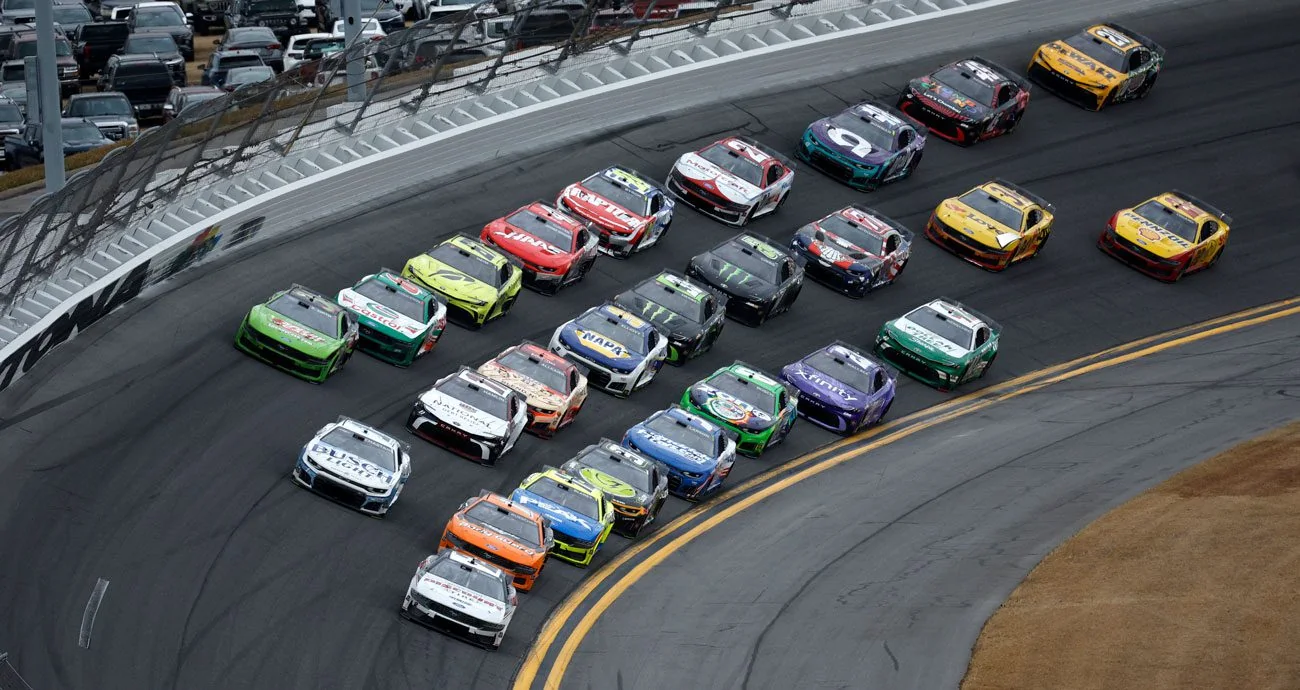
NASCAR's history begins with its first sanctioned racing in 1948; the championship that became today's Cup Series began in 1949. The major turning points after that include paved superspeedways, the modern-era calendar, national live television, stronger safety systems, postseason formats and the Next Gen car.
This timeline follows those changes through October 19, 2026. It emphasizes what each milestone changed for competitors and spectators. Announcements about future seasons are labeled as announcements, while the unfinished 2026 championship remains an open contest.
1948–1949: an organization and a premier championship take shape
Bill France Sr.'s December 1947 meetings at Daytona Beach's Streamline Hotel provided the planning behind NASCAR. The new organization then held its first sanctioned points race on February 15, 1948, on the Daytona Beach-Road Course. Red Byron won in a Ford owned by Raymond Parks. The event connected the familiar beach-racing spectacle with a new system of sanctioned competition.
The important organizational achievement was credibility. Drivers needed purses to be paid, promoters needed dependable race arrangements and a national championship needed a recognizable points system. A famous driver or a well-attended event could generate excitement; sustaining a series required those less visible pieces to work together repeatedly. The Hall of Fame's account of the first trophy places France's recruitment of tracks and promoters alongside the racing itself.
Why the first NASCAR race and first Cup race have different dates
The inaugural 1948 program used Modified Division cars. The Strictly Stock Division followed in 1949, establishing the lineage of the current Cup Series. Its first race took place on June 19 at the old Charlotte Speedway, a dirt track distinct from today's Charlotte Motor Speedway. Jim Roper became the official winner after Glenn Dunaway's car failed inspection for illegal rear springs.
That post-race decision illustrates why the organization mattered. Being first at the checkered flag did not automatically settle the official classification if the car failed the agreed rules. Inspection and enforcement were part of the competitive product from the beginning, rather than modern additions to a supposedly rule-free past. The machinery was more closely related to passenger cars, but regulation still defined the contest.
Byron won the first Strictly Stock championship in 1949, adding another milestone to his earlier NASCAR success. The dates therefore answer different questions: 1947 for the organizing meetings, 1948 for sanctioned racing and 1949 for the premier championship's beginning. The NASCAR founding and name guide develops that distinction in detail. A chronological history should preserve all three steps instead of trying to force every beginning into one date.
1950–1969: paved speedways change the scale of stock-car racing
Darlington Raceway's first Southern 500 on September 4, 1950, established a major endurance test for stock cars on a paved speedway. Johnny Mantz won the inaugural event. The race demanded more than a short burst of speed: tires and the ability to keep the car running over a long distance became central to the result.
Daytona International Speedway raised the scale again. The first Daytona 500 took place on February 22, 1959, on the new high-banked 2.5-mile track. Lee Petty was declared the winner after officials examined the finish evidence over the following days. The delayed decision is part of the inaugural race's history, showing that the spectacle could exceed the immediate clarity of the available scoring evidence.
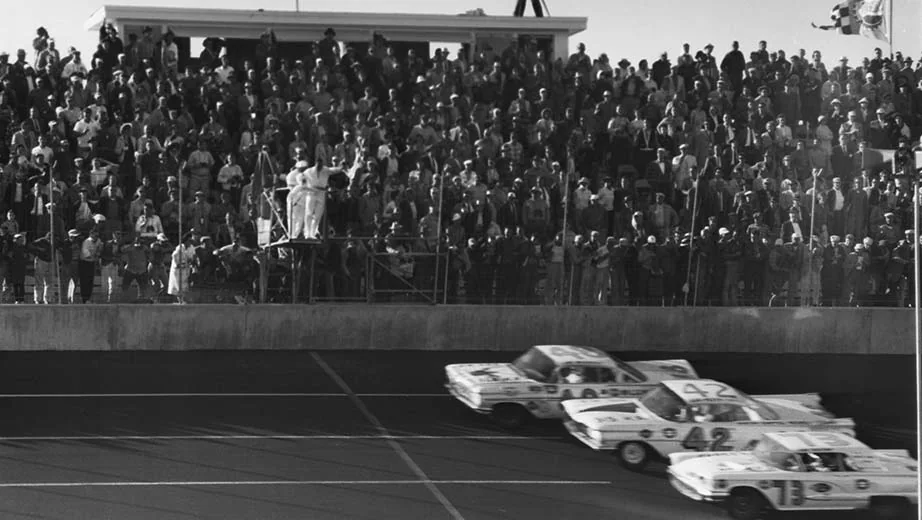
These speedways changed the engineering problem. Longer periods at high speed put emphasis on engines, tires, cooling and airflow. They also changed the spectator's view: following a race around a large oval required understanding gaps, groups and pit cycles across a much wider space. NASCAR did not abandon every smaller venue, but its premier events were no longer defined only by the rough, compact tracks associated with its beginnings.
The decade also contains a milestone about opportunity rather than track construction. On December 1, 1963, Wendell Scott won at Jacksonville's Speedway Park, becoming the first Black driver to win in NASCAR's premier division. The achievement occurred amid discrimination and delayed recognition. It should be remembered as Scott's accomplishment against those barriers, rather than evidence that equal opportunity had already been achieved throughout the sport.
Talladega's arrival in 1969 extended the superspeedway ambition. Richard Brickhouse won its inaugural Grand National race. Taken together, Darlington, Daytona and Talladega show a series willing to build larger stages and confront new performance limits. The result was a wider range of racing problems, not one universal definition of speed: a setup and driving approach that worked at a short track did not automatically solve a long, high-banked superspeedway.
1971–1979: the modern era reaches a national audience
The beginning of the Winston sponsorship, the start of the modern-era calendar and the landmark Daytona television broadcast were separate developments. They belong together because they changed how NASCAR sustained a season and presented it to spectators. Treating them as one sudden transformation loses the sequence that made the growth possible.
A shorter calendar and a new commercial foundation
R.J. Reynolds began backing the premier series in 1971, creating the Winston Cup identity. In 1972, the championship ran 31 points races, a shorter program associated with the beginning of NASCAR's modern era. Bill France Jr. also succeeded his father as NASCAR president in January 1972. Commercial support, schedule concentration and leadership continuity therefore developed together, while remaining different parts of the story.
A shorter championship changed the relationship between each event and the overall season. For readers comparing old records, the number of opportunities matters: a win total from a dense earlier calendar should not be interpreted as though every season offered exactly the same starts. This does not diminish the earlier accomplishments. It makes the comparison more precise by attaching the record to its competitive setting.
The commercial foundation also extended beyond a name on the championship trophy. Series support and track promotion helped turn individual race weekends into a more recognizable ongoing product. The broader historical point is that a sport needs both compelling competition and a structure capable of presenting it repeatedly. The 1970s strengthened that connection.
The 1979 Daytona 500 changes the television story
On February 18, 1979, CBS carried the Daytona 500 live from start to finish. The precise distinction matters: this was not the first time NASCAR had appeared on television. Earlier races had substantial televised coverage. The new milestone was the complete live national-network presentation of the 500-mile event, allowing viewers to follow the race's development rather than only its closing portion.
The ending supplied unforgettable drama. Cale Yarborough and Donnie Allison crashed while fighting for the lead, Richard Petty went on to win, and the subsequent infield confrontation also involved Bobby Allison. The broadcast connected the competition, recognizable personalities and an unscripted aftermath in front of a national audience.
Its significance reaches beyond the fight. Watching a full race lets spectators understand how a position was earned, lost and recovered over hundreds of miles. That remains one reason race strategy is richer than a highlights clip. Later in 1979, Petty added his seventh championship, making the season a landmark both in the sport's public reach and in its competitive record.
1980–1999: star drivers and bigger stages reshape the sport
The 1980s and 1990s connected established legends with new national stars. Richard Petty earned his 200th and final premier-series victory at Daytona on July 4, 1984. Dale Earnhardt then matched Petty's seven championships in 1994. Those records became reference points for later generations, while the sport's calendar and audience continued to expand.
The records answer different questions. Petty's 200 measures individual race victories, while the seven-title mark counts complete championship campaigns. A history timeline needs both without confusing them. The all-time Cup race winners list provides the detailed victory record; the broader historical question is how successive stars gave fans a connection across changing machinery and venues.
The 1992 Atlanta finale connects two generations
November 15, 1992, is a particularly useful marker. Richard Petty made his final Cup start and Jeff Gordon made his first in the same Atlanta race. Alan Kulwicki won the championship as an owner-driver, while Bill Elliott won the event. The combination of a departing legend, an arriving future star and a close title contest makes the day more than a convenient change of decades.
Kulwicki's title also explains the importance of the scoring details. He led one more lap than Elliott, earning the bonus for most laps led, and finished the season ten points ahead. Fans watching only the race winner would miss the championship calculation. The race and the title were being decided together through related but distinct objectives.
On August 6, 1994, Gordon won the inaugural Brickyard 400 at Indianapolis Motor Speedway. The occasion placed stock cars at one of motor racing's most recognizable venues. It represented another kind of expansion from building a new superspeedway: NASCAR was bringing its competition to an established stage with its own traditions and audience.
NASCAR's national racing program also broadened beyond Cup. The Truck Series began championship competition in 1995, with Mike Skinner winning the opening event at Phoenix on February 5. That matters when reading the organization's history: a new national series did not reset the Cup record, and a Truck victory was not a Cup victory. The organization was growing through parallel competitions as well as through the reach of its premier championship.
2001–2022: safety, championship formats and the car evolve
Three major kinds of change overlap in this period: the safety system surrounding the driver, the rules used to reward performance and the architecture of the race car. They influenced each other, but should not be collapsed into a claim that one new device or one new format transformed everything overnight.
Safety becomes a system-wide engineering task
Dale Earnhardt died in the Daytona 500 on February 18, 2001. His death, following other fatal crashes in NASCAR's national series, intensified the drive for coordinated safety research. NASCAR mandated head-and-neck restraint devices in 2001, and energy-absorbing SAFER barriers began appearing at tracks in 2002. These were steps in an evolving system, not proof that danger had disappeared.
That system includes the track, the car and the driver's restraint equipment. A barrier manages impact differently from a harness or head-and-neck restraint. Crash investigation, data collection and emergency response add further layers. Understanding those roles is more useful than treating a damaged car's appearance as a complete measure of what happened to the person inside it.
Race procedure also changed. In 2003, the field began being frozen when a caution was called, ending the practice of racing back to the line under yellow. The free-pass procedure provided a controlled way for an eligible lapped driver to regain a lap. This is an example of safety changing how fans interpret a familiar racing moment, as well as changing physical equipment.
The Chase, eliminations and stage points change incentives
The Chase arrived in 2004, concentrating the championship contest into a closing ten-race postseason after qualification and a points reset. In 2014, an elimination structure narrowed the field to four title-eligible drivers for the final race. A strong season and a decisive late performance became connected through a different framework from the pre-Chase points championship.
Stage racing followed in 2017, awarding points at designated intermediate finishes as well as at the end of the race. Teams now had to weigh track position and stage points against a pit strategy designed for the final result. A stop that sacrificed a stage finish could still improve a later opportunity, making the timing of points part of the tactical story.
Next Gen reaches competition in 2022
Manufacturers unveiled their Next Gen models in 2021 before the platform entered Cup competition in 2022. The February 6 Clash at the Los Angeles Memorial Coliseum introduced it in an exhibition setting, followed by the championship season. Unveiling, testing and competition debut are distinct milestones, even when summaries use the word “launch” for all three.
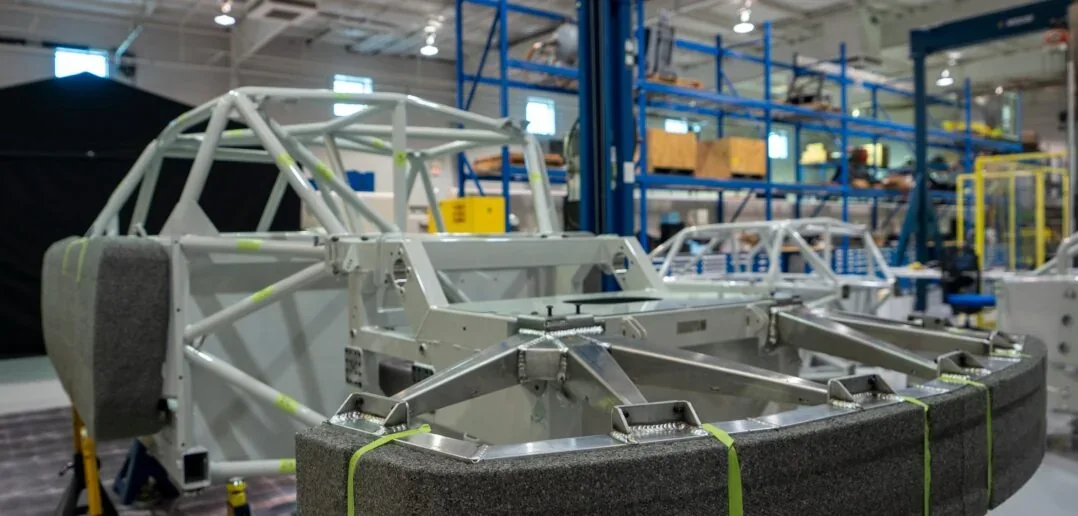
Independent rear suspension, larger wheels with a single center-locking fastener and a sequential gearbox were among the hardware changes. Pit crews and setup teams had to adapt their work to the new platform. The NASCAR car generations guide explains the machinery in depth. Historically, the key point is that today's stock car developed through repeated redesigns; it is not simply a showroom car made louder and faster.
2023–2026: new venues and another championship turning point
On July 2, 2023, Shane van Gisbergen won the inaugural Chicago Street Race in his Cup debut. The event gave the premier series a new kind of setting: a temporary street course inside a major city. The historical first belongs specifically to Cup street racing, rather than to every form of competition NASCAR had sanctioned.
A new venue can change more than the backdrop. Street layouts place a different emphasis on braking, surface changes and the consequences of a missed corner, while temporary event operations create their own demands for teams and spectators. Chicago belongs in the timeline because the sport was testing how to bring its established race cars and championship into a different physical environment.
The 2026 season brought another venue experiment at Naval Base Coronado in San Diego. Its significance is the setting at an active military installation and the continued development of temporary-course events. It should not be described as a traditional oval simply because it hosts stock cars. Nor should the existence of one new event imply that the entire calendar has abandoned its established speedways.
The championship also changed again in 2026. Cup returned to a modified ten-race Chase with 16 drivers qualifying through regular-season points. Scheduled round eliminations and automatic qualification through a race win were removed. Wins still matter through a larger points award, but the incentive structure differs from the elimination years. The current Chase explainer sets out those rules without applying an outdated bracket to the season.
On August 26, 2026, NASCAR published the complete national-series schedules for 2027. San Diego's return and a revised Chase calendar were future plans announced during 2026, rather than races already completed. That distinction is especially important near the end of a timeline, when a confirmed date can easily be mistaken for a historical result.
As of October 19, the 2026 Cup championship is still underway. Use the current NASCAR schedule to follow what remains. The history so far shows repeated changes in tracks, rules, machinery and presentation, while the core competitive task continues: turn a prepared car and a race plan into the best result under the rules of that day.
About the author
NASCAR Schedule Editorial Team
The NASCAR Schedule editorial team turns verified schedules, timing and scoring, official announcements and race-weekend context into direct answers for fans.
View all articles by this author →Join the discussion
Comments
Sign in with Google to comment. Keep it race-focused; new comments are reviewed before publication.
Loading comments…